
Goa — Beaches, Portuguese heritage, and slow village life
India’s smallest state has two very different sides: the buzzing North with its nightlife and flea markets, and the quiet South with palm-fringed bays and beach-shack mornings. Plus Portuguese churches, Latin quarters, and a four-tier waterfall in the jungle.
Goa, at a glance
Goa is small — just 105 km top to bottom — but the vibe changes completely between regions. North Goa (Baga, Calangute, Anjuna, Vagator, Morjim) is the party belt: nightlife, flea markets, beach clubs, busier beaches. South Goa (Palolem, Agonda, Patnem, Colva, Cavelossim) is quieter, with long empty beaches and slow-paced beach-shack life. The interior holds Portuguese-era churches in Old Goa, the colonial Latin Quarter of Panjim, spice plantations, and the four-tier Dudhsagar Falls. Most first-time visitors split their stay between North and South.
Six places that capture the range of Goa
A mix of beach regions and inland heritage — enough to plan a 4 to 7 day trip without rushing.
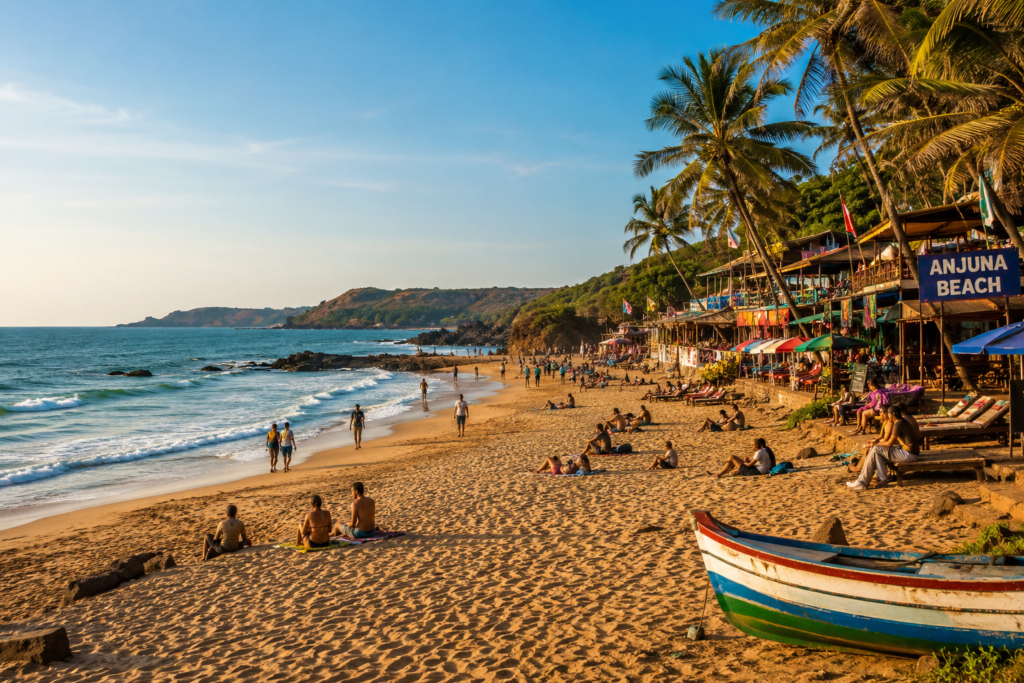
North Goa — Beaches & Nightlife
The Baga–Calangute–Anjuna belt is the busy face of Goa: beach clubs, water sports, the Wednesday Anjuna flea market, Saturday Arpora night market, and the Chapora and Aguada forts overlooking the coast.
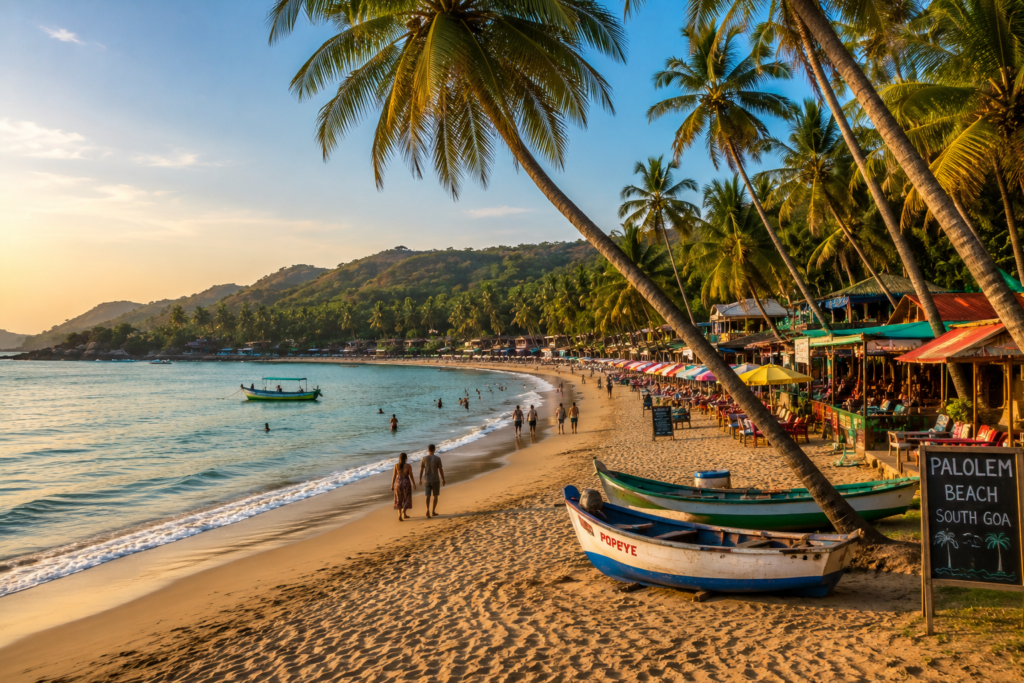
Palolem — The Postcard Bay
South Goa’s most photographed beach — a perfect crescent of palm-fringed sand. Silent discos, kayak hire, dolphin trips, and beach huts you can sleep in. Quieter than the North but still has buzz in season.
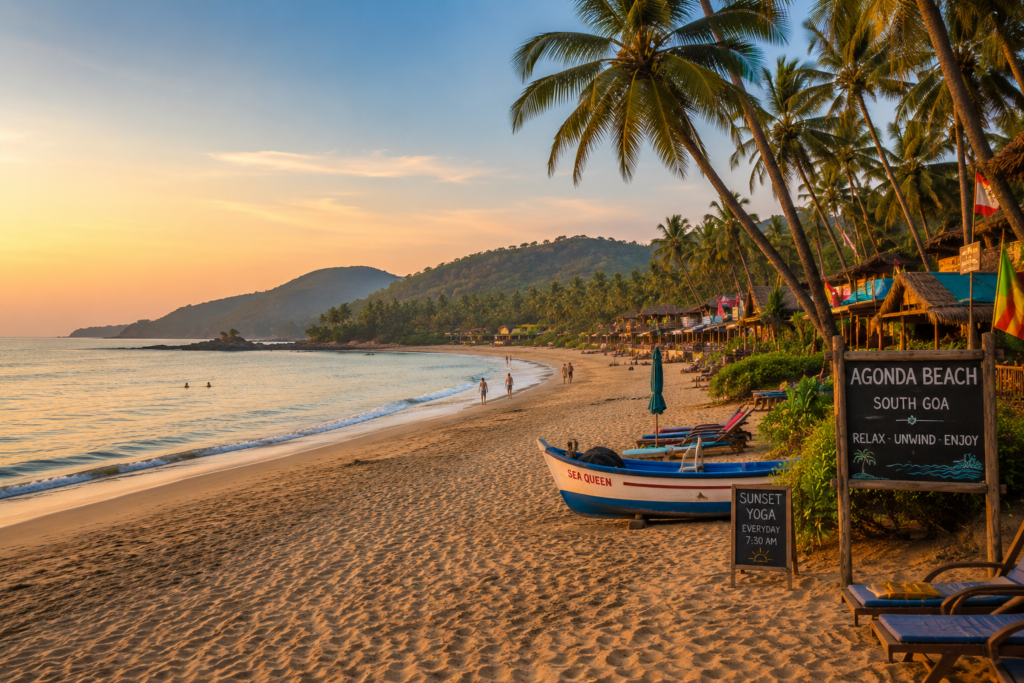
Agonda — Quiet South
A 3 km strip of empty beach 10 km north of Palolem. No clubs, no jet-skis — just yoga, long walks, sea-turtle nesting (Oct–Mar), and beach huts under casuarinas. The best of slow Goa.
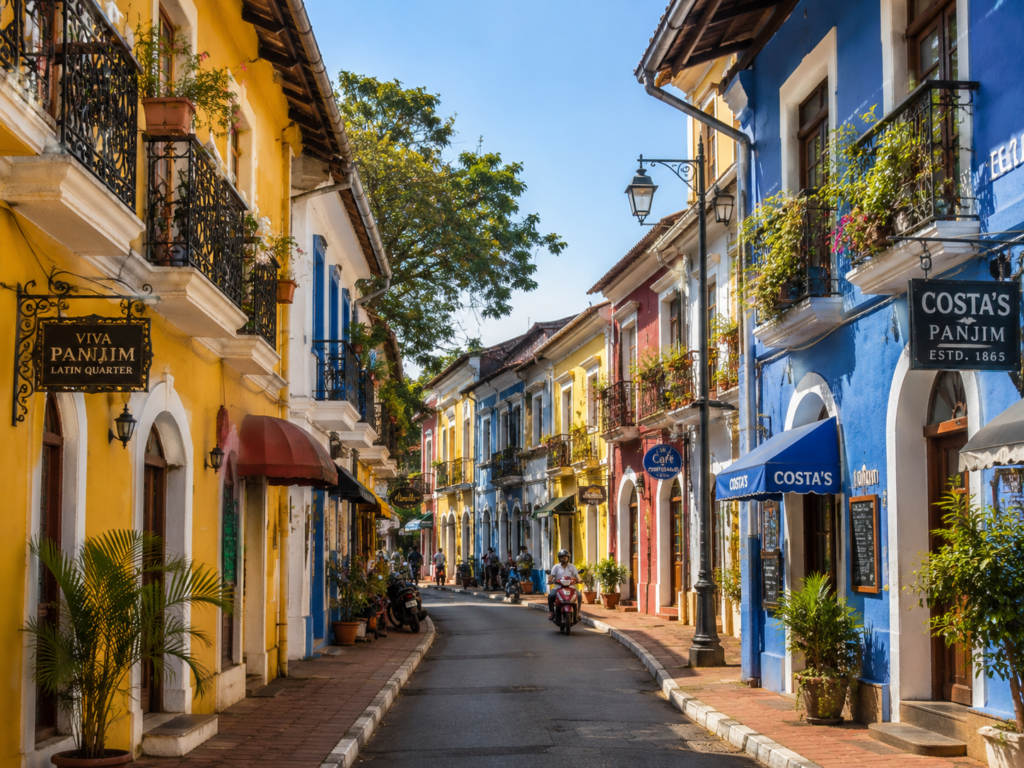
Panjim & Fontainhas — Latin Quarter
Goa’s capital is small and walkable. Fontainhas — the Latin Quarter — is rows of yellow, blue, and ochre Portuguese houses, tiled roofs, and Indo-Portuguese cafes. A morning here is the easiest taste of old-Goa culture.
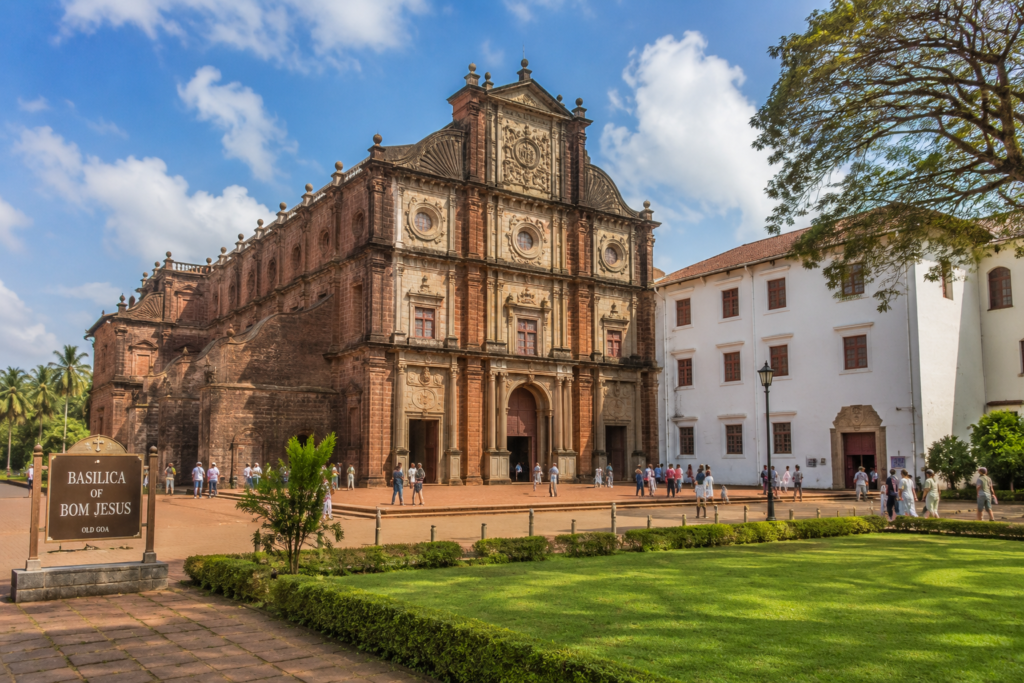
Old Goa — UNESCO Churches
10 km east of Panjim. The former Portuguese capital, now a complex of 16th–17th century churches — the Basilica of Bom Jesus (with the relics of St Francis Xavier), Sé Cathedral, and the Church of St Cajetan — all UNESCO listed.
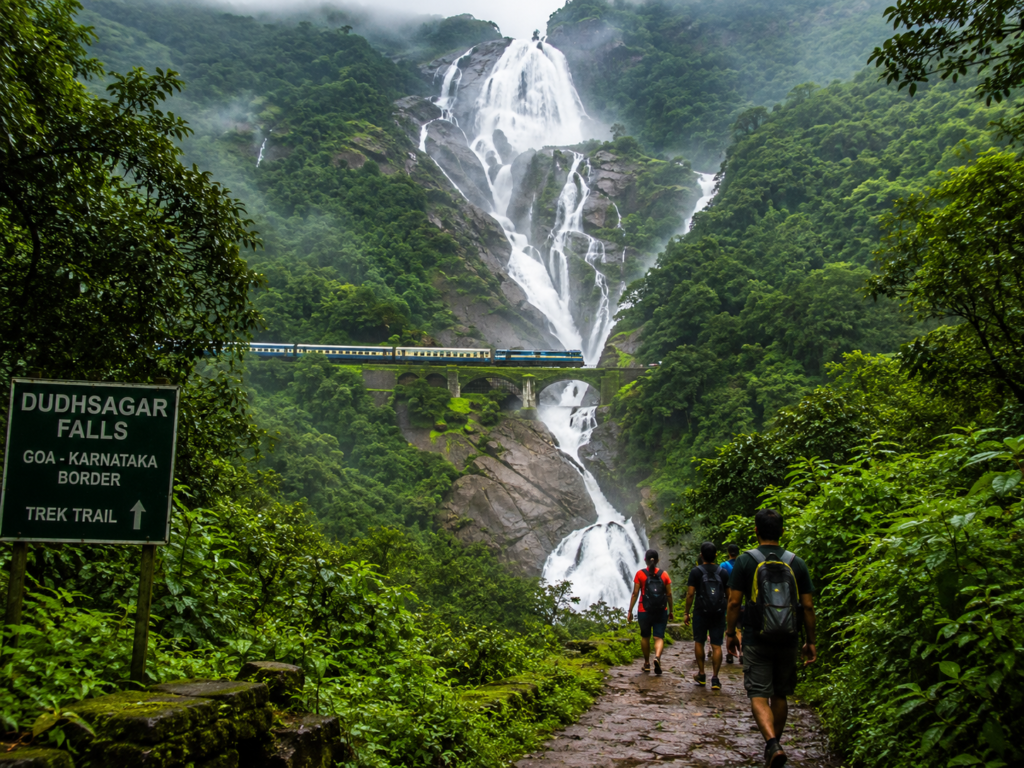
Dudhsagar Falls — Jungle Cascade
India’s fifth-tallest waterfall (310 m), inside the Bhagwan Mahavir sanctuary near the Karnataka border. Best in monsoon and just after (Jul–Dec). Reach by 4×4 jeep safari from Mollem; no private vehicles allowed inside.
Pick a route that matches your time
Goa is small, but North-to-South drives can take 2–3 hours. Pick one base per region to avoid daily packing.
Beach & heritage classic
North Goa (2 nights, Baga/Anjuna belt) · Panjim & Old Goa day trip · Palolem (1–2 nights). The shortest meaningful Goa trip.
North + South split
North Goa (3 nights: beaches, flea markets, fort sunset) · Panjim/Fontainhas + Old Goa (1) · Palolem or Agonda (2). The most popular pattern.
Full coast + interior
North Goa (3) · Panjim (1) · Dudhsagar Falls + spice plantation day trip · Palolem (2) · Agonda (2). Beach time, heritage, and a jungle day.
Six things worth building the trip around
- Watch sunset from Chapora Fort or Aguada Fort with the Arabian Sea below.
- Walk the Fontainhas Latin Quarter in Panjim on a Sunday morning.
- Take a kayak out at dawn in Palolem before the beach wakes up.
- Stop in at the Wednesday Anjuna flea market or the Saturday Arpora night market.
- Do a 4×4 jeep safari to Dudhsagar Falls inside the Bhagwan Mahavir sanctuary.
- Eat a full Goan thali — fish curry, rice, sol kadhi, and a dollop of pickle — at a local family-run place.
Where to stay
North Goa: 5-star resorts in Candolim and Sinquerim, boutique villas in Assagao and Siolim, and budget rooms across Baga and Anjuna. South Goa: beach huts on Palolem and Agonda (Nov–May only), luxury hotels in Cavelossim and Mobor, family resorts in Varca and Benaulim. Panjim has heritage guesthouses in Fontainhas — great for one or two nights.
How to get around
Fly into Manohar International Airport (GOX, Mopa) in the north or Dabolim (GOI) in the centre. Rent a scooter (₹300–500/day) or a self-drive car if you have a valid licence. Pre-paid taxis from the airport are reliable; in-town taxis can be expensive due to local taxi unions. Uber and Ola work in some areas but are limited. The Konkan Railway from Mumbai is scenic and overnight.
What to eat
Goan food is Indo-Portuguese with a Konkani base. Worth trying:
- Fish curry rice
- Vindaloo
- Sorpotel
- Xacuti
- Prawn balchão
- Choris pao
- Bebinca
- Feni
Small things that make a big difference
Do this
- Visit in the dry season (Nov–Feb) for the best beach weather and full shack season.
- Always wear a helmet on a scooter — police checks are routine and the fine is real.
- Carry your driving licence and passport copy; scooter rental shops ask for ID.
- Pick one base per region (one North, one South) rather than moving every day.
Avoid this
- Don’t plan a beach-shack trip in monsoon (Jun–Sep) — most shacks close.
- Don’t haggle with local taxi unions at airports or stands — use pre-paid counters.
- Don’t leave valuables on the beach while you swim, especially in busier North beaches.
- Don’t expect to drive your own car to Dudhsagar — you must switch to a forest-department 4×4 at Mollem.
Common Goa questions
When is the best time to visit Goa?
November to February is peak season: dry, sunny, all the shacks are open, and the sea is calm. October and March are shoulder months — a little hotter but quieter. Monsoon (Jun–Sep) is lush and atmospheric but most beach shacks close and the sea is rough. Dudhsagar is best Jul–Dec.
North Goa or South Goa — which is right for me?
North Goa for nightlife, flea markets, water sports, and a livelier crowd. South Goa for empty beaches, yoga, slow mornings, and beach huts. Most trips do both: 2–3 nights in the North, then 2–3 nights in the South.
Is Goa family-friendly?
Yes — South Goa especially. Resorts in Varca, Benaulim, and Cavelossim are set up for families, with calmer beaches than the North. The Latin Quarter walks, Old Goa churches, and a Dudhsagar safari all work well with kids. Avoid Baga–Calangute for late-night family stays.
Can I visit Goa during monsoon?
Yes — it’s a different Goa. The landscape is green, hotels are cheap, and Dudhsagar Falls is at full thunder. But most beach shacks close, swimming isn’t safe, and many South Goa hut villages are dismantled until October. Go in monsoon for nature and Portuguese heritage, not for the beach.
How do I get around — scooter, taxi, or self-drive?
A scooter is the cheapest and most flexible (₹300–500/day). A self-drive car is good for families. Taxis are reliable but expensive because of local taxi unions — Uber and Ola work in some places. The Goa Miles app is the official taxi alternative. Always wear a helmet and carry your licence.
Plan your Goa trip with Travel India
Whether you want a busy North-Goa party week, a slow South-Goa beach-hut break, or a mix of beaches and Portuguese heritage, I can help you split your time and pick the right bases.

Written by Ashvinee Nagle
I travel India slowly and write it down honestly - practical guides and real itineraries from someone who lives here.
About Ashvinee →