
Madhya Pradesh — Tigers, temples, and the quiet heart of India
India’s best tiger country, thousand-year-old temple towns, riverside forts, marble gorges, and a hill station the crowds forgot. Here’s everything you need to plan it well.
Madhya Pradesh, at a glance
Madhya Pradesh sits at the centre of the country and somehow stays off most first-time itineraries — which is exactly why it’s worth your time. This is the state with India’s highest tiger numbers, the carved temples of Khajuraho, the river island fort of Orchha, Buddhist stupas older than most countries, and food streets that stay open past midnight. Distances are manageable, crowds are thinner, and the pace is slower. If you want India without the queues, start here.
Six places that make a classic Madhya Pradesh trip
You don’t need to cover the whole state in one trip. Pick three or four of these, give each a couple of nights, and let central India set the pace.
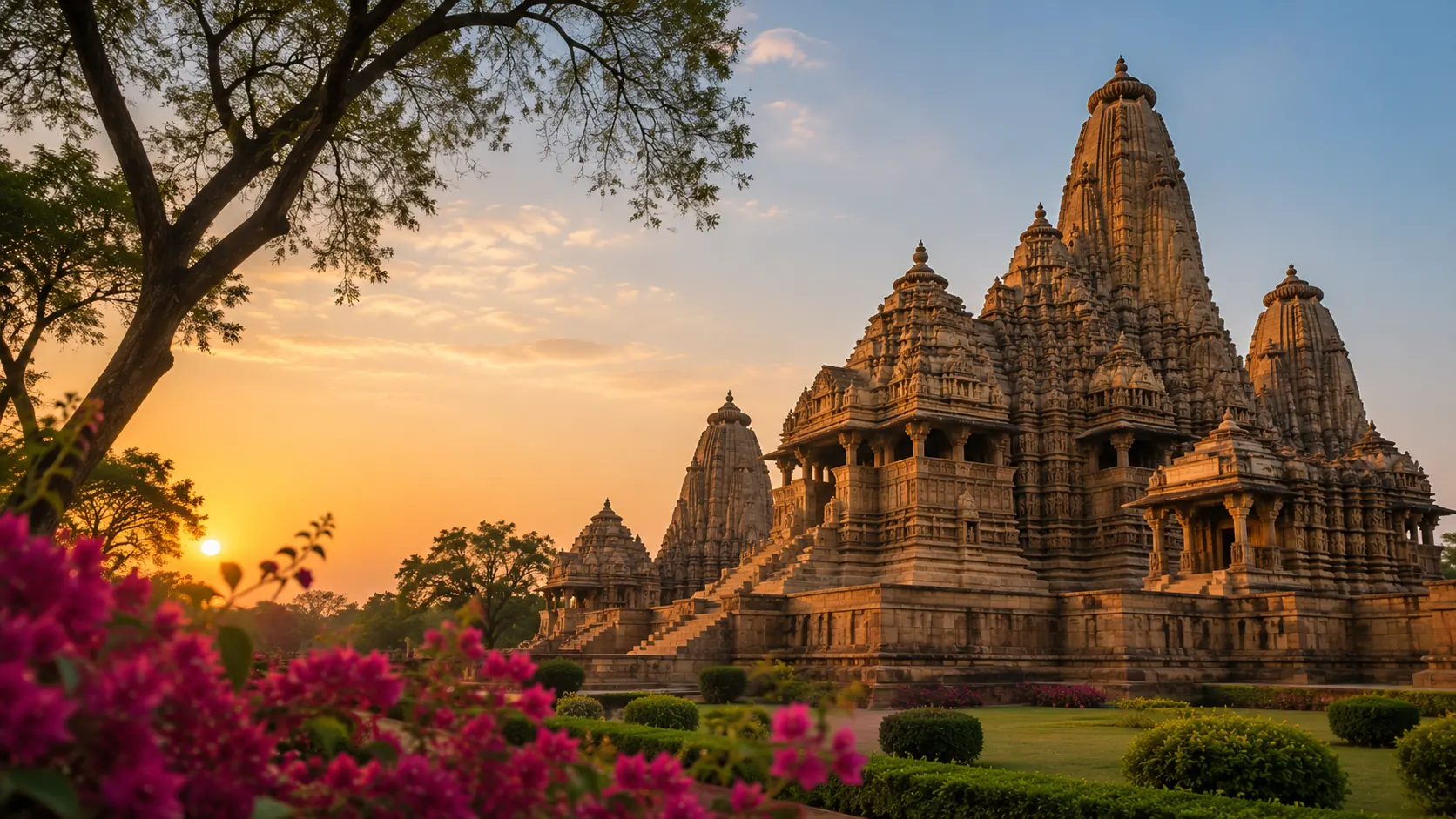
Khajuraho — The Temple Town
A UNESCO World Heritage group of 1,000-year-old temples covered in extraordinary carving. Come for sunrise at the Western Group, stay for the evening sound-and-light show.
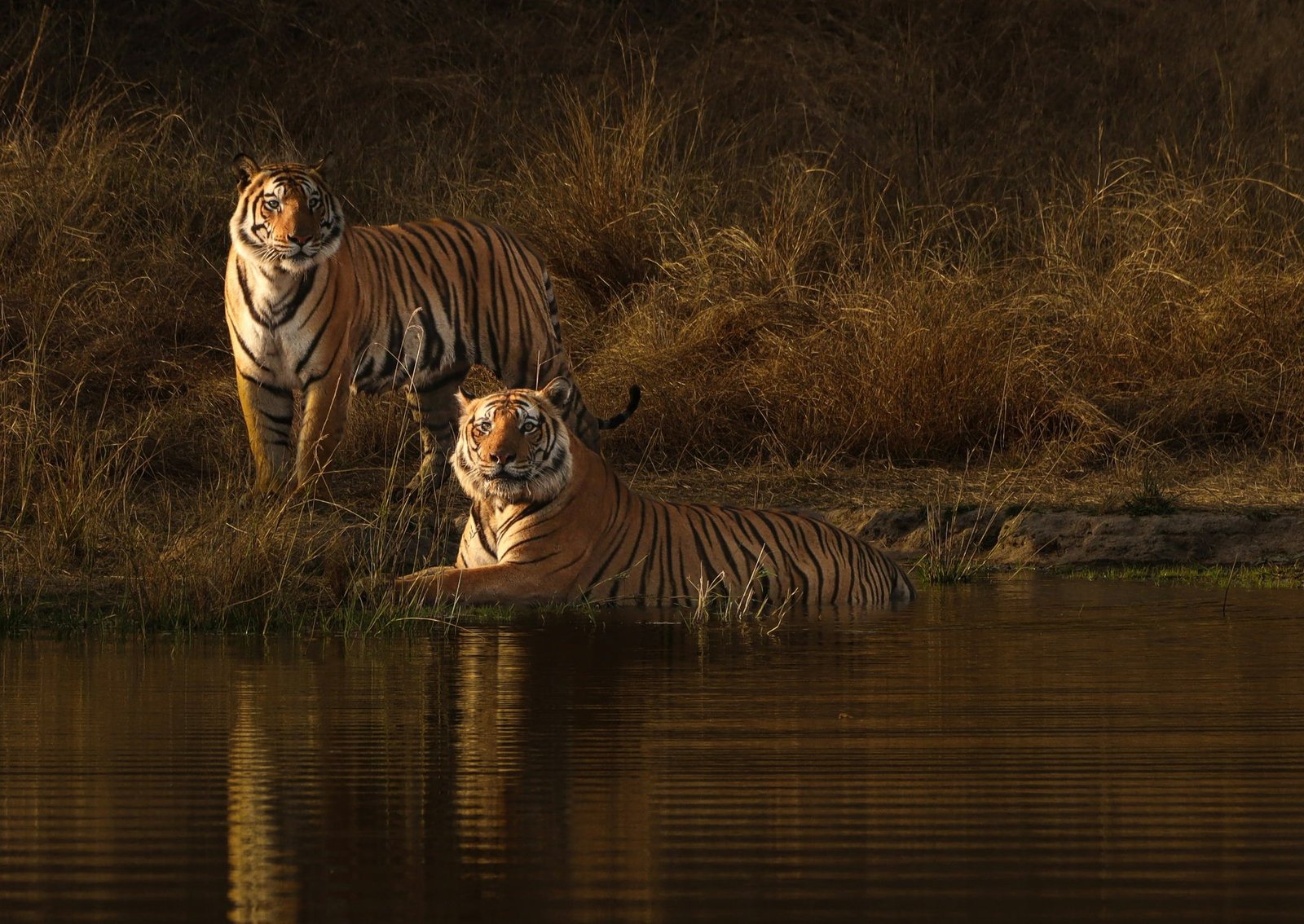
Bandhavgarh — The Tiger Reserve
One of the highest tiger densities in India, set around an ancient hilltop fort. Two or three safaris here give you a genuinely good chance of a sighting.
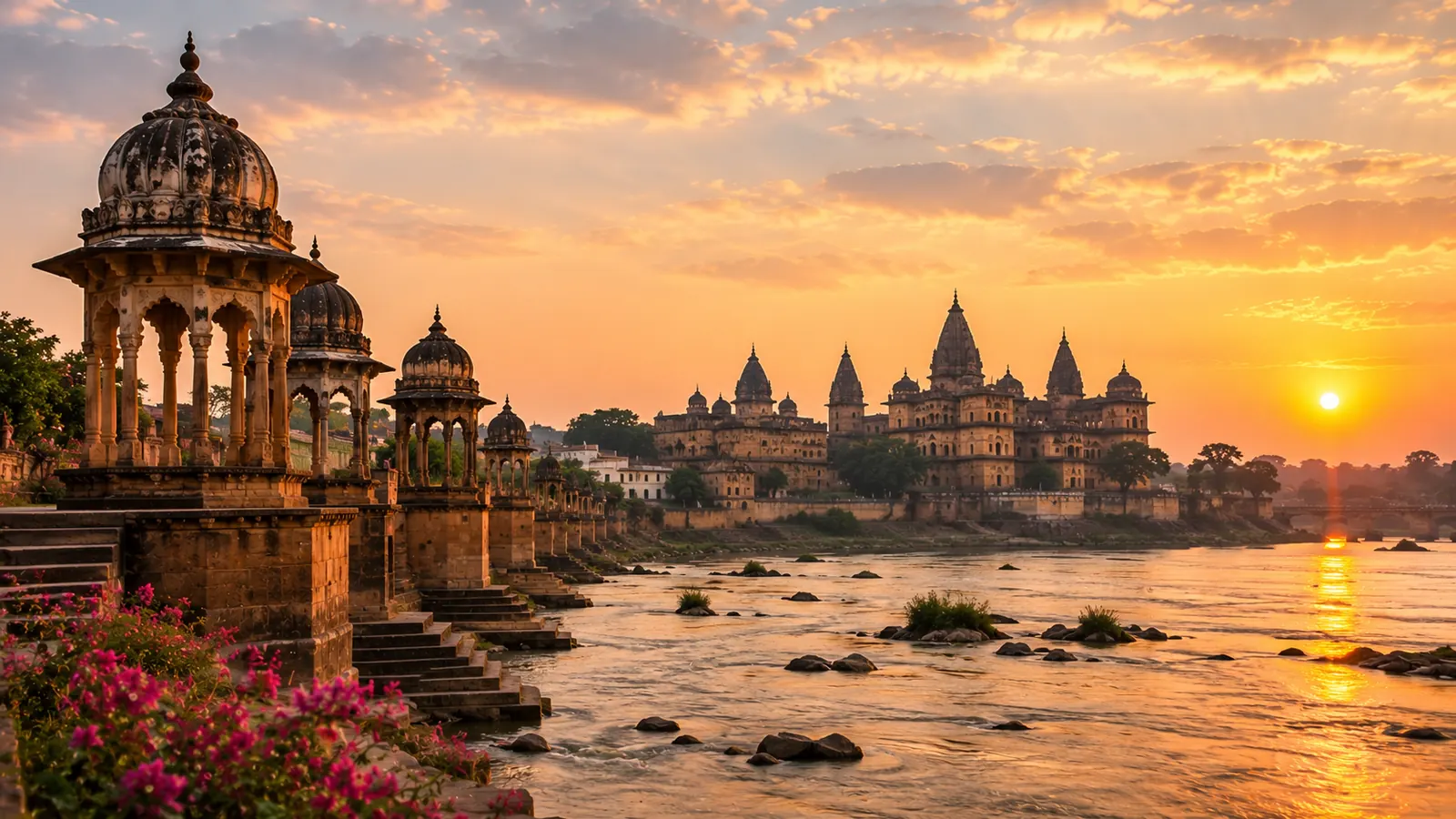
Orchha — The Riverside Fort Town
Palaces, cenotaphs, and temples on the banks of the Betwa river, with a fraction of the visitors its architecture deserves. Sunset by the chhatris is the moment.
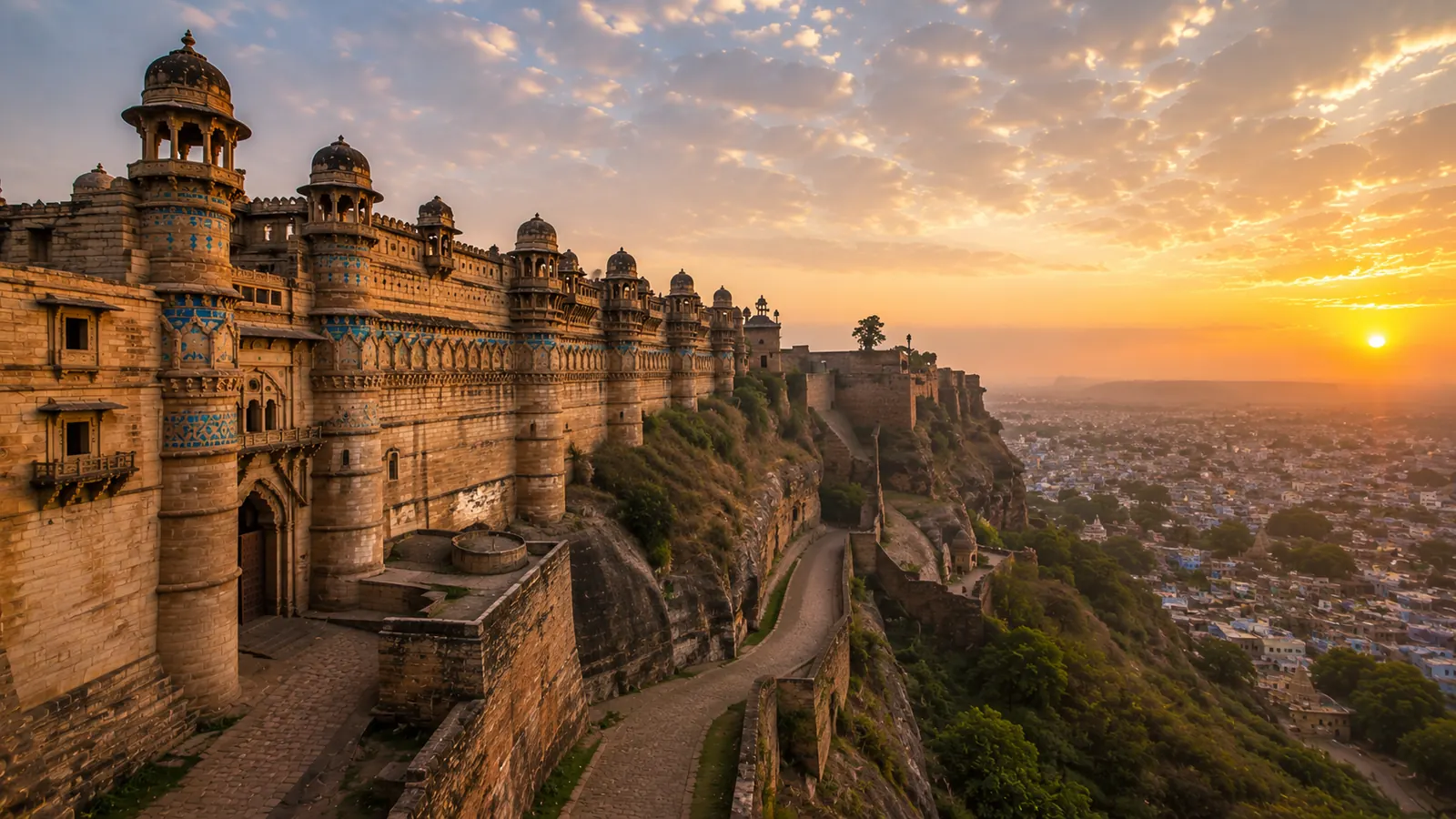
Gwalior — The Hill Fort City
A massive sandstone fort described as the pearl among Indian fortresses, plus palaces, rock-cut Jain sculptures, and one of India’s great musical traditions.
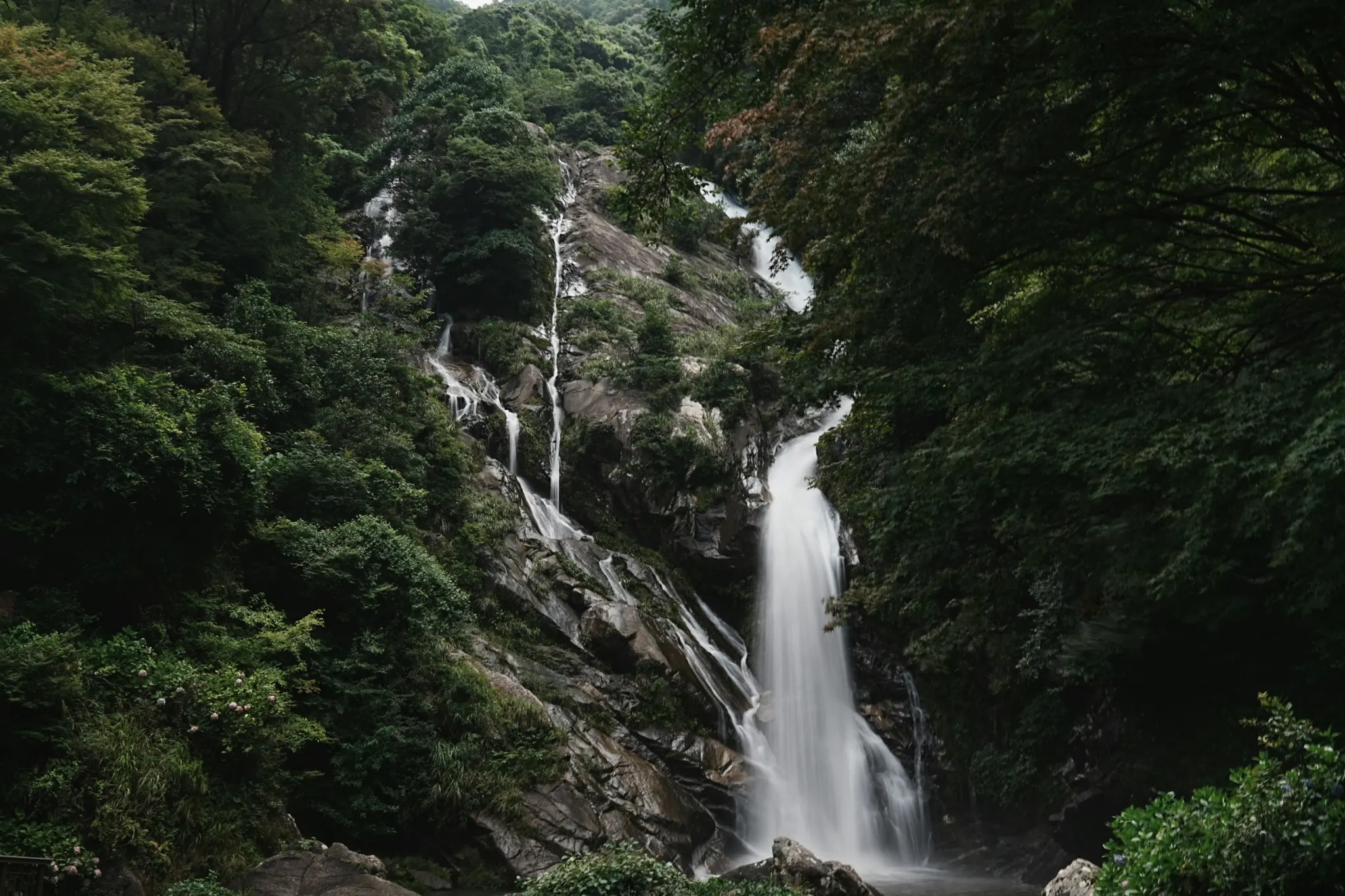
Pachmarhi — The Forgotten Hill Station
The state’s only hill station — waterfalls, cave temples, forest walks, and colonial-era quiet in the Satpura range. A gentle break between heritage stops.
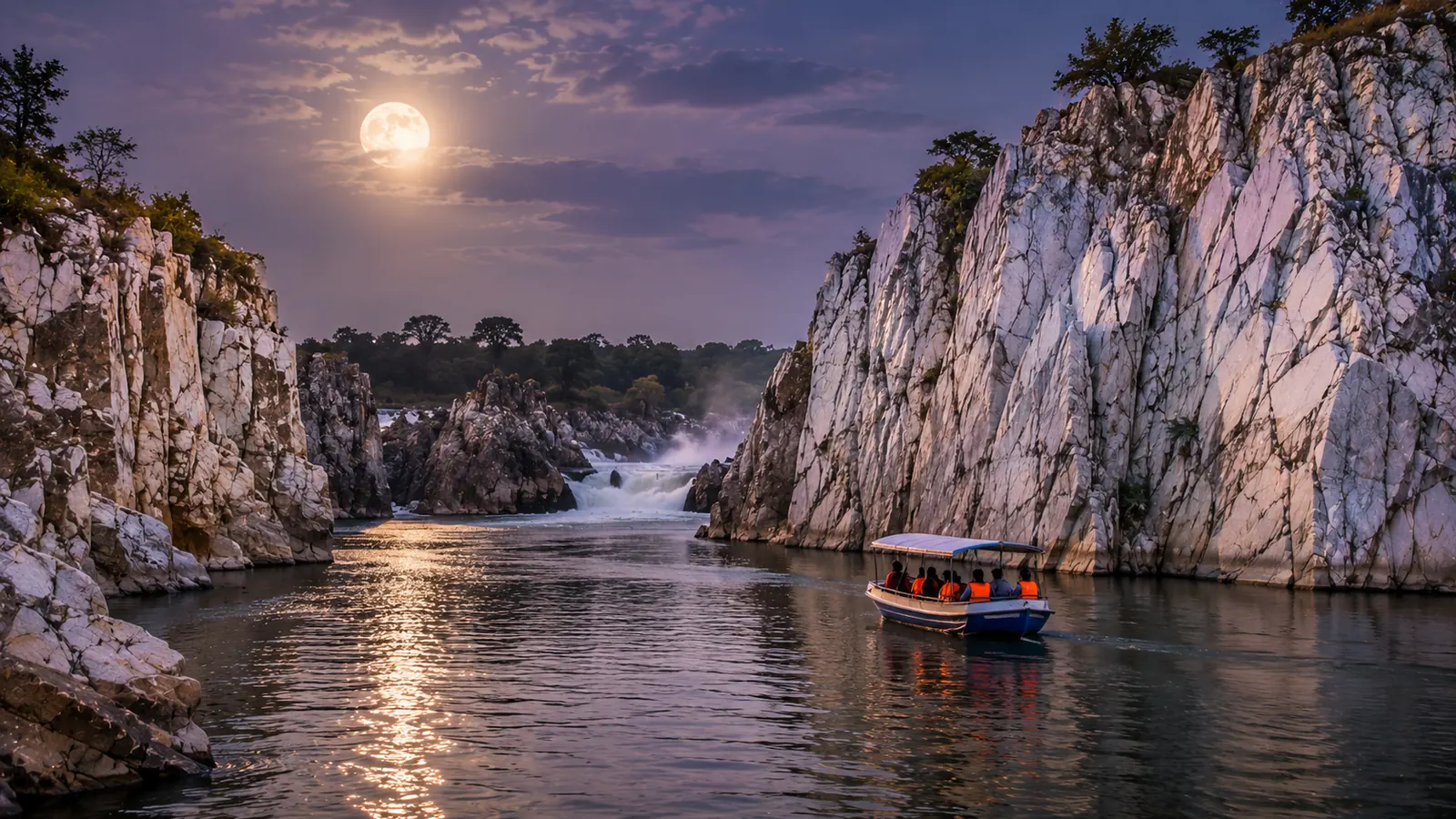
Jabalpur — The Marble Rocks
Boat rides between the white marble cliffs of Bhedaghat on the Narmada, with Dhuandhar Falls thundering nearby. Magical on a full-moon evening.
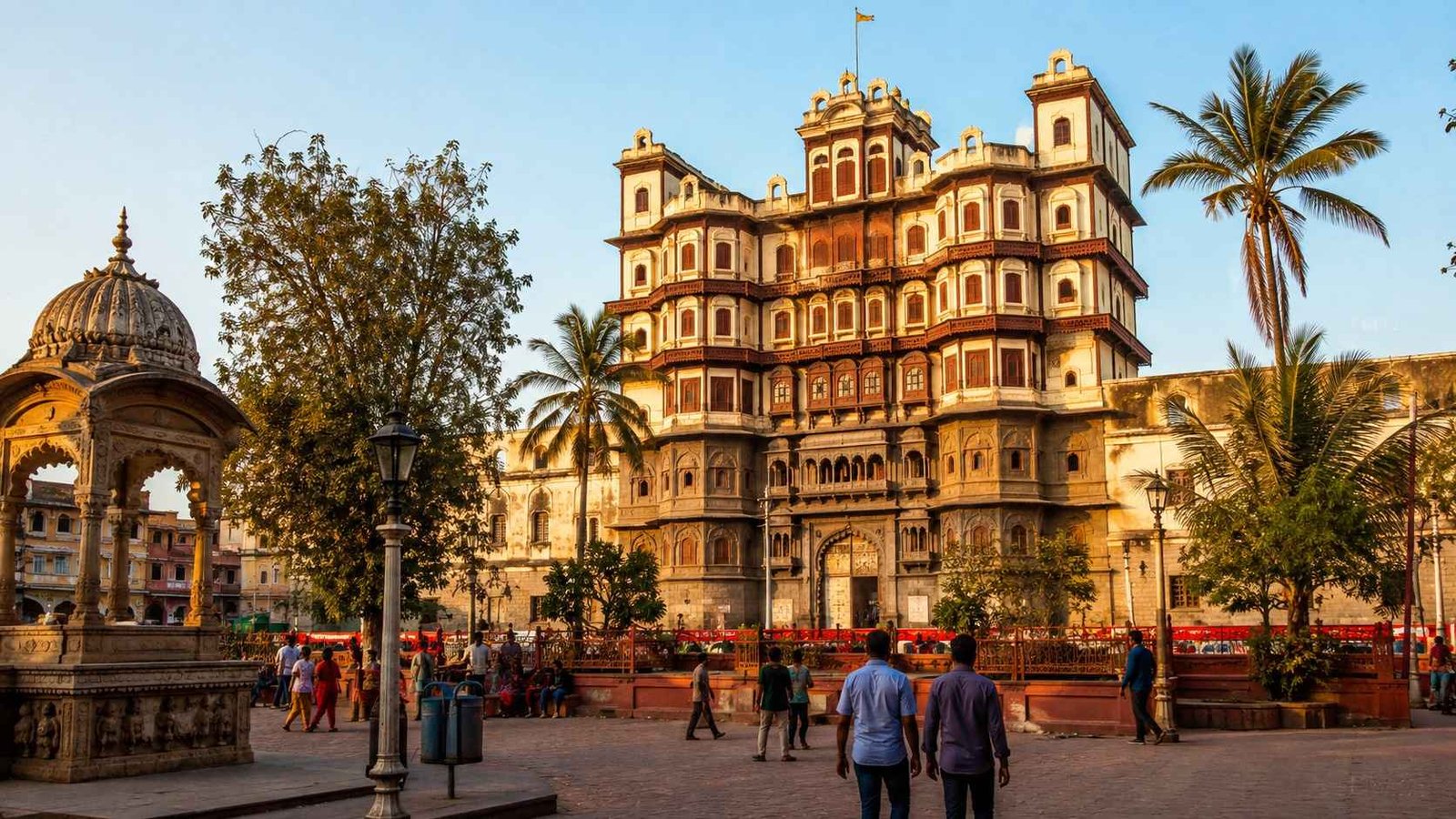
Indore — India’s Street-Food Capital
MP’s biggest, cleanest city, famous for its nightly food bazaars at Sarafa and Chappan Dukan, Holkar-era palaces, and easy trips to Mandu and Maheshwar.
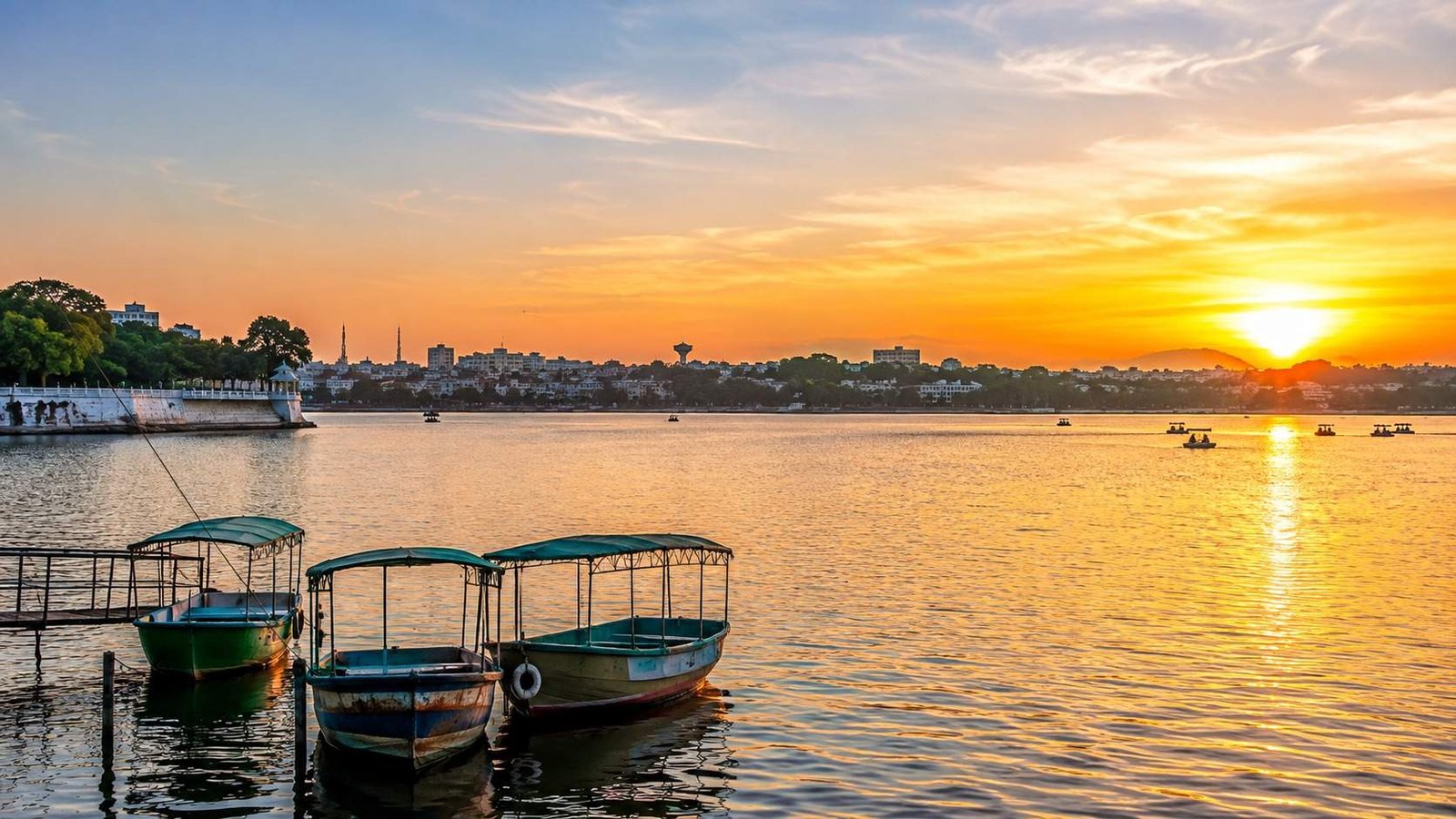
Bhopal — The City of Lakes
MP’s relaxed, green capital of lakes and Begum-era mosques, with world-class museums and the UNESCO sites of Sanchi and Bhimbetka within an hour.
Pick the route that fits your dates
Madhya Pradesh works at three different lengths. Trains via Jhansi make the heritage circuit easy; the tiger parks reward an unhurried pace.
The heritage taster
Orchha · Khajuraho. Two nights in each, connected by road — forts, river sunsets, and temple carving without any rush.
Temples and tigers
Orchha · Khajuraho · Bandhavgarh. Adds two nights and three safaris in India’s most famous tiger reserve.
The full picture
Gwalior · Orchha · Khajuraho · Bandhavgarh · Jabalpur. Forts, temples, tigers, and the marble rocks — with slow afternoons built in.
Six things worth building the trip around
- Take an early-morning tiger safari in Bandhavgarh or Kanha — book zones in advance.
- Watch sunrise light up the carvings at Khajuraho’s Western Group of temples.
- See the cenotaphs of Orchha glow at sunset from the banks of the Betwa.
- Glide between the marble cliffs of Bhedaghat by boat — unforgettable under a full moon.
- Stand before the Great Stupa at Sanchi, more than 2,000 years old.
- Eat your way through Indore — poha-jalebi at breakfast, Sarafa Bazaar after dark.
Where to stay
Madhya Pradesh has heritage hotels inside old palaces, excellent jungle lodges around Bandhavgarh, Kanha, and Pench, riverside guesthouses in Orchha, and solid mid-range hotels in Gwalior, Bhopal, and Indore. Around the tiger parks, stay close to the gate of the zone your safari is booked in — morning entry times are early.
How to get around
Trains via Jhansi connect the heritage circuit — Gwalior, Orchha, and onward to Khajuraho — while private cars work best for the tiger parks and smaller towns. Bhopal and Indore are the main flight hubs, with Jabalpur and Khajuraho also served by air. Within towns, autos and local drivers cover everything.
What to eat
Central Indian food is homely, wheat-based, and quietly addictive. Try these at least once:
- Poha-jalebi
- Dal bafla
- Bhutte ka kees
- Sabudana khichdi
- Seekh and kebabs in Bhopal
- Mawa bati
- Sarafa Bazaar street food
- Masala chai
Small things that make a big difference
Do this
- Book tiger safari permits well in advance — core zones sell out in season.
- Plan heritage sightseeing for early morning; the light and the quiet are both better.
- Carry cash for small towns, park tips, and local eateries.
- Add a rest afternoon between safari days — 4am starts add up.
Avoid this
- Don’t plan safaris between July and September — core zones close for monsoon.
- Don’t travel in April–June unless you’re here only for wildlife — the heat is fierce.
- Don’t under-budget road time; some park transfers are longer than they look.
- Don’t skip modest clothing at temples and in smaller towns.
Common Madhya Pradesh questions
What is the best time to visit Madhya Pradesh?
October to March is the best time — cool, clear weather for temples, forts, and safaris. April to June is very hot but offers the best tiger sightings; July to September is monsoon, when park core zones close.
How many days are enough for Madhya Pradesh?
Five days cover Orchha and Khajuraho comfortably. Seven days let you add Bandhavgarh for safaris, and ten days fit the full Gwalior-to-Jabalpur circuit without rushing.
Is Madhya Pradesh the best state for tiger safaris?
It’s one of the strongest choices in India. Bandhavgarh, Kanha, and Pench together hold some of the country’s highest tiger numbers, and lodge quality around the parks is excellent.
Is Khajuraho worth visiting?
Yes — the temple carving is among the finest in India and the site is far less crowded than comparable monuments elsewhere. Pair it with Orchha for a relaxed heritage circuit.
How do I reach Madhya Pradesh?
Fly into Bhopal, Indore, Jabalpur, or Khajuraho, or take a train to Jhansi for the Orchha–Khajuraho circuit. Gwalior is a short train ride from Delhi and Agra, which makes it easy to link with a Golden Triangle trip.
Plan your Madhya Pradesh trip with Travel India
Whether you want a temples-and-tigers week, a slow heritage circuit through Gwalior and Orchha, or a full central India journey, Madhya Pradesh can be planned around your dates, budget, and travel style.
Written by Ashvinee Nagle
I travel India slowly and write it down honestly - practical guides and real itineraries from someone who lives here.
About Ashvinee →