
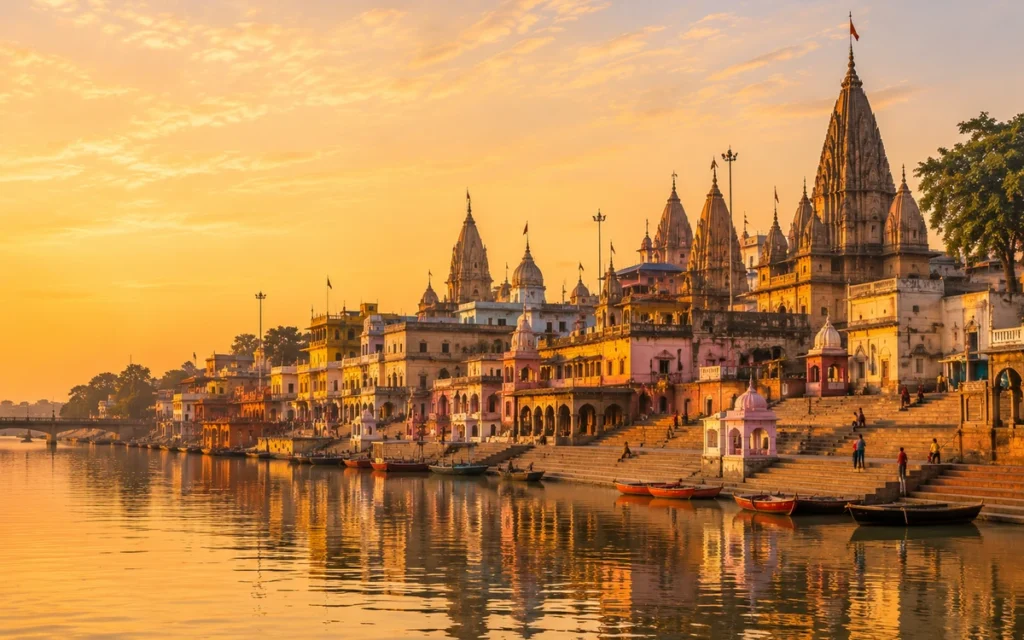
Travel to Ayodhya: A First-Timer’s Guide to the Ram Mandir & the Sarayu
An honest, no-fluff guide to Ayodhya for first-time visitors — how the Ram Mandir darshan and free e-pass actually work, Hanuman Garhi and Kanak Bhawan, the Sarayu ghats and the Ram Ki Paidi aarti, when to go, and a relaxed 1–2 day plan.
Ayodhya has transformed. Believed to be the birthplace of Lord Ram, this ancient town on the Sarayu river has become one of India’s most visited pilgrimage destinations since the grand Ram Mandir opened, drawing enormous crowds of devotees from across the country. The temple is the reason most people come, but the town rewards a slower look — the monkey-fort temple of Hanuman Garhi, the jewel-box Kanak Bhawan, and the evening aarti on the ghats of the Sarayu. It’s a place of devotion first and sightseeing second, so come with patience, modest clothes, and time to spare for the queues.
Ayodhya is the birthplace of Lord Ram and home to the new Ram Mandir, now one of India’s biggest pilgrimage draws. Book the free Sugam Darshan e-pass online before you go, carry as little as possible (no electronics are allowed inside), and pair the temple with Hanuman Garhi, Kanak Bhawan and the Sarayu ghats. It’s doable in a focused day, better over two. Come October to March and fold it into the rest of Uttar Pradesh, often with Varanasi and Prayagraj.
Why visit Ayodhya
Three reasons this once-quiet temple town has become one of India’s defining pilgrimage stops — and what makes it worth the queues.
The Ram Mandir
The vast new temple to Lord Ram is the reason Ayodhya is on every pilgrim’s map. Whatever your beliefs, the scale of the complex and the intensity of devotion around it make for a powerful, unforgettable experience.
A deeply sacred town
One of Hinduism’s seven holiest cities, Ayodhya is dense with temples and ghats beyond the Ram Mandir. Hanuman Garhi, Kanak Bhawan and Nageshwarnath each add to the layers of faith and history.
The Sarayu at dusk
The riverfront ghats, and the aarti at Ram Ki Paidi, give the town a calmer, reflective counterpoint to the temple crowds — lamps on the water as the sun goes down.
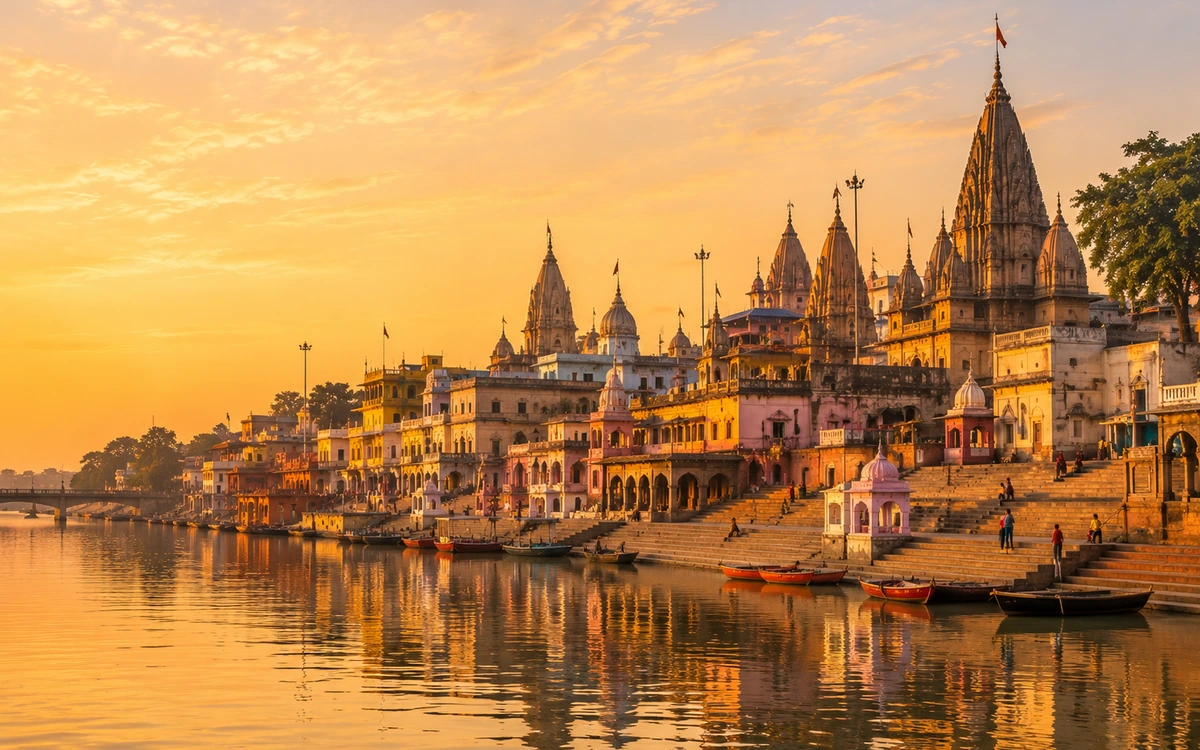
The Sarayu ghats at dusk — the town’s calm counterpoint to the temple crowds.
When to go
October to March (the sweet spot): cool, comfortable weather for standing in darshan queues and walking between temples. This is by far the best window, and it also takes in Ayodhya’s spectacular Deepotsav around Diwali.
Deepotsav (around Diwali, Oct–Nov): the ghats are lit with hundreds of thousands of lamps — extraordinary, but the town is at its most crowded. Book far ahead.
Ram Navami (Mar–Apr): the festival of Ram’s birth brings huge pilgrim numbers and long waits. Deeply atmospheric, but not the easiest first visit.
April to June (hot): the plains bake past 40°C and the queues become punishing. Do darshan early and rest in the afternoon if you must come.
For the Ram Mandir, book the free Sugam Darshan e-pass online in advance and travel light — phones, cameras and other electronics are not allowed inside, and there are cloakrooms for bags. Timings and rules can change, so check the official temple trust site before you go.
Top things to do in Ayodhya
From the great new temple to a lamp-lit riverbank, here is what fills a day or two.
Ram Mandir darshan
The centrepiece of any visit. Book the free Sugam Darshan e-pass online, arrive early, and leave phones and bags in the cloakroom. Expect security checks and long but well-managed queues — and an atmosphere of intense devotion.
Hanuman Garhi
A beloved 10th-century temple to Hanuman, reached by climbing 76 steps to a small fort-like shrine. Many pilgrims visit here first, before the Ram Mandir. Lively, joyful and central to Ayodhya’s devotional life.
Kanak Bhawan
A beautiful temple said to have been gifted to Sita, filled with gold-adorned idols of Ram and Sita. Quieter and more intimate than the big sites, and one of the most charming spots in town.
Sarayu ghats & Ram Ki Paidi aarti
The steps along the Sarayu are where Ayodhya slows down. Come at sunset for the aarti at Ram Ki Paidi, when the ghats glow with lamps — the town’s most peaceful, photogenic hour.
Nageshwarnath Temple
One of the oldest temples in Ayodhya, dedicated to Shiva and traditionally linked to Ram’s son Kush. A quieter, historic stop that comes alive during Shivratri.
Dashrath Mahal & the temple lanes
Wander the lanes around Dashrath Mahal, said to mark the palace of Ram’s father, and the countless small temples in between. A gentle way to feel the town’s devotional rhythm beyond the headline sites.
What to eat in Ayodhya
Ayodhya’s food is simple, vegetarian and satvik — pilgrim fare, eaten without onion or garlic near the temples. Come for the devotion, not fine dining, and enjoy the honest local sweets.
Satvik vegetarian meals
Simple, wholesome thalis of dal, sabzi, rice and roti, cooked without onion or garlic. Clean, filling and cheap — exactly what most pilgrims eat.
Chaat & kachori
The usual North-Indian street favourites — aloo tikki, kachori-sabzi and samosas — are reliably good around the bazaars for a quick, tasty bite.
Local sweets & peda
Pick up peda, laddoo and other milk sweets, often bought as prasad. A small box makes an easy, traditional gift to take home.
Chai & jalebi
A glass of hot chai with fresh jalebi is the perfect start to an early darshan — cheap, everywhere, and always welcome after a long queue.
Meat and alcohol are effectively off the menu in this holy town, and many eateries cook satvik food only. Carry water and some cash in small notes for the temple lanes, where card payments aren’t always accepted.
Where to stay
Accommodation has expanded fast, from simple dharamshalas to new hotels, but it still fills up around festivals — book ahead.
Near Ram Janmabhoomi
Guesthouses and newer hotels within walking distance of the Ram Mandir. The most convenient base for an early darshan, though it books out fastest.
Dharamshalas & guesthouses
Basic, budget-friendly pilgrim lodging near the main temples. No frills, but authentic, cheap and central to the devotional core of Ayodhya.
Newer hotels & Faizabad
A growing crop of mid-range hotels, plus more choice in adjacent Faizabad (Ayodhya Cantt), a short drive away. Best if you want modern comforts.
How to get to Ayodhya & around
Ayodhya is far better connected than it used to be, with a new airport and upgraded railway station built for the pilgrim surge.
The temple core is often closed to vehicles, so expect to walk or take an e-rickshaw the last stretch. On festival days, roads are managed with diversions and shuttle points — follow the crowd-control signage and allow plenty of extra time.
A simple 2-day plan
One day for darshan and the main temples, a second for the ghats and the quieter shrines.
Ram Mandir & the temples
Start early with Ram Mandir darshan on your e-pass, then visit Hanuman Garhi and Kanak Bhawan nearby. Rest through midday, and end at the Sarayu ghats for the evening aarti at Ram Ki Paidi.
Quieter shrines & the river
Visit Nageshwarnath and the lanes around Dashrath Mahal, take a boat on the Sarayu if the water allows, and shop for prasad — or move on to the rest of Uttar Pradesh.
Practical tips that actually help
Book the e-pass first
Reserve the free Sugam Darshan e-pass online before you travel — it smooths entry and saves time in the queues.
Travel light
No phones, cameras or electronics are allowed inside the Ram Mandir — carry as little as possible and use the cloakrooms.
Go at opening
Arrive for the first darshan slot to beat the heat and the biggest crowds — mornings are calmest.
Dress modestly
Cover shoulders and knees, and be ready to go barefoot in the temples — this is a deeply devotional town.
Carry small cash
Keep coins and small notes for offerings, shoe stands and e-rickshaws, where cards often aren’t accepted.
Mind festival crowds
Deepotsav and Ram Navami are magical but extremely busy — book beds early and expect long waits.
Mistakes first-time visitors make
- Turning up without an e-pass. Booking the free Sugam Darshan slot ahead saves long delays at the temple.
- Carrying electronics to the temple. Phones and cameras aren’t allowed inside — leave them at your hotel or the cloakroom.
- Underestimating the crowds. On festival days, queues and road diversions add hours — plan generously.
- Visiting in peak summer. May–June heat plus long open-air queues is genuinely tough — aim for the cool season.
Planning Uttar Pradesh beyond Ayodhya?
Ayodhya sits naturally on a sacred circuit with the ghats of Varanasi and the river confluence at Prayagraj, and pairs well with the Nawabi food of Lucknow nearby. Tell me your dates and pace, and I’ll map an Uttar Pradesh route around the temple towns and the Ganga.
Plan my Uttar Pradesh trip →Ayodhya FAQs
How many days do you need in Ayodhya?
A focused day covers Ram Mandir darshan, Hanuman Garhi, Kanak Bhawan and the evening aarti. A second day lets you add the quieter shrines and the Sarayu ghats without rushing through the queues.
Do I need to book anything for the Ram Mandir?
It’s strongly recommended to book the free Sugam Darshan e-pass online in advance. Darshan itself is free; the pass simply makes entry smoother. Check the official temple trust website for current timings and rules before you go.
Can I take my phone into the Ram Mandir?
No — phones, cameras and other electronics are not permitted inside the temple. Travel light and use the cloakrooms provided for bags and devices.
When is the best time to visit Ayodhya?
October to March, when the weather is cool enough for long darshan queues. Deepotsav around Diwali is spectacular but extremely crowded; summers are very hot on the plains.
How do I get to Ayodhya?
Ayodhya now has its own airport (Maharishi Valmiki International, AYJ) and an upgraded railway station, plus good road links — it’s about 2.5–3 hours from Lucknow by car.
Related guides
Keep planning your Uttar Pradesh trip with these:
Uttar Pradesh Travel Guide
The Taj, the Ganga, Nawabi food and temple towns — how to string an Uttar Pradesh trip together.
Plan my Uttar Pradesh trip
Share your dates, pace and starting city, and I’ll suggest an Ayodhya–Varanasi–Prayagraj route that fits.

Written by Ashvinee Nagle
I travel India slowly and write it down honestly - practical guides and real itineraries from someone who lives here.
About Ashvinee →Plan your India trip with us
Get one short, honest India travel guide a week — plus a free 7-day Rajasthan itinerary to start.
Free. Unsubscribe any time.