
Travel to Jim Corbett: A First-Timer’s Guide to India’s Oldest National Park
A practical, no-fluff guide to Jim Corbett for first-time visitors — tiger safaris and how the zones work, booking permits and Dhikala stays, the Ramganga and its wildlife, where to stay near Ramnagar, when to go, and an easy 2-day plan.
Jim Corbett is where the Himalayan foothills loosen into sal forest, tall grassland and the braided channels of the Ramganga — and where, back in 1936, India created its very first national park. Named for the hunter-turned-conservationist who helped save it, Corbett is the country’s most storied tiger reserve, the birthplace of Project Tiger and still one of the best places to feel the electric hush of a forest holding its breath.
Jim Corbett is India’s oldest national park — a sal-and-grassland reserve on the Ramganga famous for tigers, elephants and birds. The experience is the safari, by jeep or canter, across zones like Dhikala, Bijrani and Jhirna, each with its own permits and character. Two days lets you do a couple of safaris and ideally a night inside Dhikala. Go November to June (core zones close in the monsoon), pre-book permits, base near Ramnagar, and pair it with Nainital on the same Uttarakhand trip.
Why visit Jim Corbett
Three reasons Corbett is the wildlife anchor of almost every Uttarakhand trip — and a thrill for first-timers.
India’s oldest park
Established in 1936 and the launchpad of Project Tiger in 1973, Corbett is living conservation history — and one of the country’s best chances of seeing a wild Bengal tiger in its own forest.
The safari & the zones
The park is split into safari zones — grassy Dhikala, dense Bijrani, year-round Jhirna and Dhela — each with its own gate, permits and feel. Explore by open jeep or shared canter, morning and afternoon.
Far more than tigers
Wild elephants, leopards, deer and langur, gharial and mugger crocodiles in the Ramganga, otters, and more than 600 bird species — Corbett is one of India’s richest wildlife mosaics.
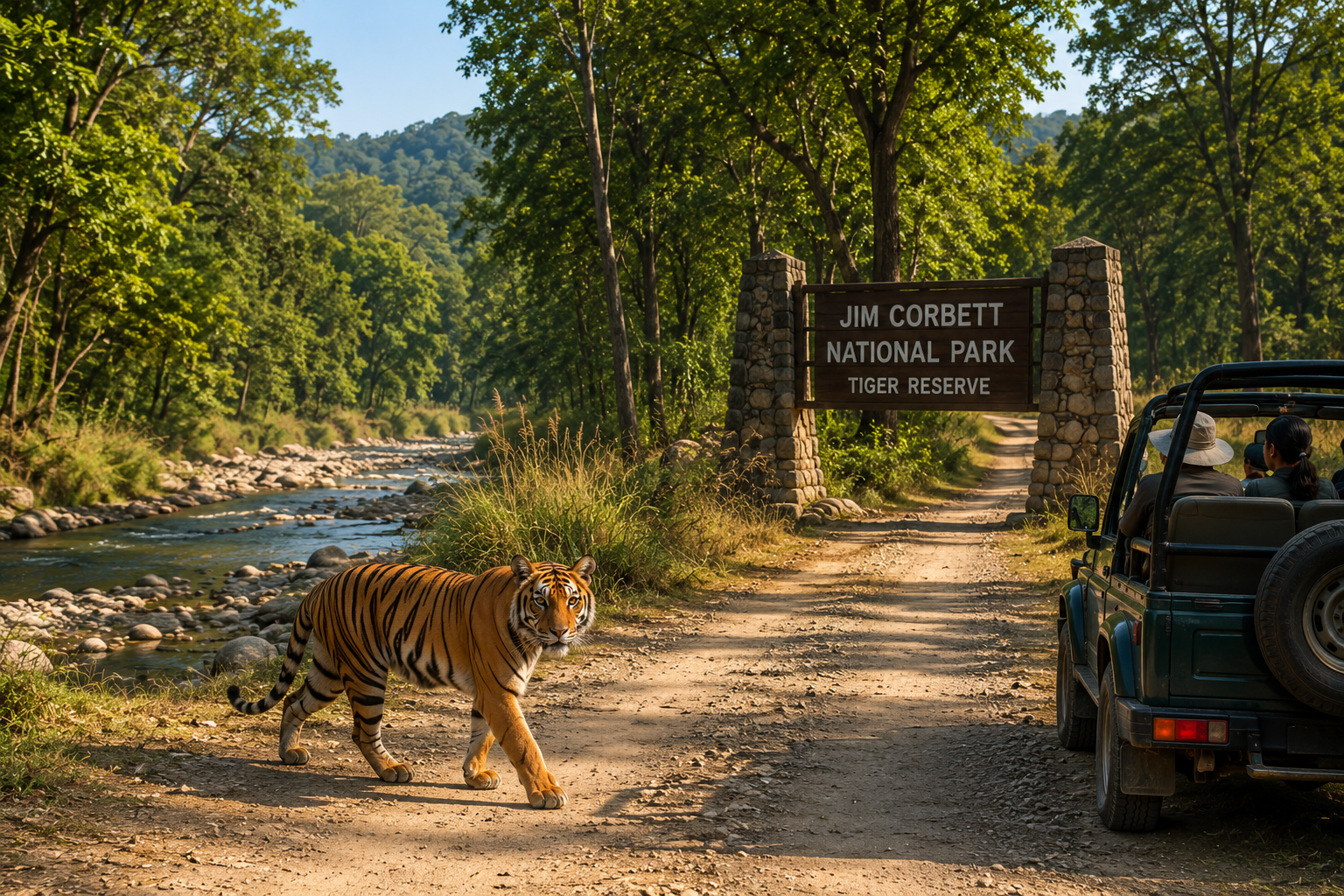
Grassland, sal forest and the Ramganga — the classic Corbett landscape that tigers call home.
When to go
November to February (cool & birding): pleasant days, misty mornings and superb birdlife, with the migratory species in. Comfortable safaris and a good chance of sightings.
March to mid-June (best for tigers): hot and dry, but as water shrinks the animals gather at the rivers and pools — the peak window for tiger sightings before the monsoon closes the core.
Mid-June to mid-November (monsoon): heavy rain floods the rivers and the premier zones close. The buffer zones of Jhirna and Dhela stay open year-round for the determined.
Shoulder days: just after the core reopens (around mid-October to November) the forest is green, lush and far less crowded than peak winter weekends.
The premier zones such as Dhikala typically close mid-June to mid-November; Jhirna and Dhela run year-round. And remember — sightings are never guaranteed. This is a wild forest, not a zoo, and patience is part of the deal.
Top things to do in Jim Corbett
From a dawn jeep safari to a night inside the forest, here is what fills two days at Corbett.
Jeep safari in Bijrani or Dhela
The signature Corbett experience — a shared open Gypsy with a licensed guide on a morning or afternoon slot. Bijrani’s mix of forest and grassland is a reliable tiger zone; Dhela is the newer, easy-access option.
Dhikala day-visit or night stay
Dhikala, deep in the grasslands, is the park’s prized zone — best experienced as an overnight in its forest rest house, with a watchtower over the Ramganga reservoir. Day permits and stays sell out far ahead.
Canter safari into Dhikala
No Dhikala stay booked? A shared 16-seater canter runs day safaris deep into the zone — the budget-friendly way to reach the grasslands and the watchtowers without an overnight permit.
Birdwatching on the Ramganga & Kosi
With 600-plus species, Corbett is a birder’s dream — from fishing eagles and hornbills to kingfishers along the water, plus gharial, mugger crocodiles and the odd otter on the river edges.
Garjia Devi Temple & Corbett Falls
Just outside the park, the Garjia Devi temple perches on a rock midstream in the Kosi, and the small Corbett Falls makes a leafy stop — both easy fillers between safari slots.
Sitabani buffer & nature walks
The Sitabani forest in the buffer zone needs no core permit — good for guided nature walks, birding and a quieter, on-foot taste of the jungle when core slots are full.
What to eat at Jim Corbett
Most meals here happen at your lodge — there are no restaurants inside the park — so the food scene is really about resort kitchens and Ramnagar’s roadside dhabas.
Resort buffets
The lodges along the Kosi run generous multi-cuisine buffets — Indian, Continental and barbecue evenings. Since you’ll eat most meals in, the kitchen is worth checking before you book.
Kumaoni / Garhwali thali
Ask for a hill thali — bhatt ki churkani, aloo ke gutke, mandua roti — for an earthy, regional change from the standard buffet line-up.
Ramnagar dhabas
Honest North Indian dhaba fare — dal, butter chicken, tandoori roti — along the Ramnagar road, handy if you’re staying in town near the booking office.
Chai & pakoras
A pre-dawn glass of hot chai and a few pakoras before the morning safari gate opens — the small ritual that gets you through the cold first hour.
There are no eateries inside the park (bar the Dhikala canteen for those staying in), so pick a resort with good food — you’ll be eating most meals there.
Where to stay
Choose between the riverside resort belt, a forest rest house inside the park, or budget hotels in Ramnagar town.
Dhikuli riverside resorts
The main resort belt along the Kosi, from boutique to luxury, with pools, big breakfasts and easy access to the Bijrani and Dhikala gates. The most comfortable base.
Forest Rest Houses
Basic government rest houses deep inside the reserve — simple rooms, but you wake up surrounded by jungle. Book early through the official portal; location beats luxury here.
Ramnagar town hotels
No-frills hotels in town, close to the railway station and the safari booking office — the practical, wallet-friendly pick if you’re keeping costs down.
How to get to Jim Corbett & around
Corbett is an easy run from Delhi, with Ramnagar the gateway town for trains, booking and safaris.
Pre-book your safari permits and any Dhikala stay the moment the window opens — the popular zones sell out weeks in advance, especially on weekends and holidays. Carry the same ID you booked with.
A simple 2-day plan
Two days built around the safaris, with a riverside add-on between slots.
Arrive & afternoon safari
Reach Ramnagar or your Dhikuli resort by midday, settle in, then head out on an afternoon jeep safari in Bijrani or Dhela. On the way back, stop at Garjia Devi or Corbett Falls before dinner at the lodge.
Dawn safari & onward
Take an early morning safari (or a full-day canter into Dhikala) when sightings are best, then some birding by the river. In the afternoon drive on to Nainital or back into the rest of Uttarakhand.
Practical tips that actually help
Book permits early
Reserve safaris and Dhikala online well ahead — popular zones sell out, especially on weekends.
Match zone to goal
Dhikala and Bijrani for tigers and grassland; Jhirna and Dhela when the core is closed or full.
Go at dawn
Morning safaris give the best sightings — and the coolest, clearest light for photos.
Dress for the jungle
Muted greens and browns, warm layers for the open jeep at dawn, and no strong perfume.
Carry binoculars
A pair of binoculars and a zoom lens transform the experience — much of the wildlife is at distance.
Respect the forest
No plastic, no noise, no stepping out of the vehicle — follow your guide and keep the park wild.
Mistakes first-time visitors make
- Turning up without permits. Gates don’t sell on the spot in peak season — book your safaris online before you travel.
- Expecting a guaranteed tiger. Sightings are luck and patience; come for the whole ecosystem, not a single animal.
- Visiting in monsoon for Dhikala. The core zones close mid-June to mid-November — only the buffer zones stay open.
- Doing just one safari. Two or three slots across different zones hugely improve your odds and your experience.
Planning Uttarakhand beyond Jim Corbett?
Corbett pairs naturally with the lakes of Nainital, the hills of Mussoorie, and the holy cities of Haridwar and Rishikesh. Tell me your dates and pace, and I’ll map an Uttarakhand route that links the jungle to the mountains.
Plan my Uttarakhand trip →Jim Corbett FAQs
How many days do you need at Jim Corbett?
Two days works well — one for arrival and an afternoon safari, and a second for an early morning safari or a full-day canter into Dhikala. Add a third if you want to cover more than one zone.
What is the best time to visit Jim Corbett?
November to February is comfortable and excellent for birds, while March to mid-June is the peak window for tiger sightings as animals gather at water. The premier core zones close during the mid-June to mid-November monsoon.
Which safari zone is best in Jim Corbett?
Dhikala is the prized grassland zone, ideal as an overnight; Bijrani and Dhela are strong jeep-safari zones for tigers; and Jhirna and Dhela stay open year-round when the core is closed. Each needs its own permit.
How do you book a Corbett safari?
Safaris are booked online through the official Uttarakhand forest department portal — a private jeep (Gypsy) for most zones, or a shared canter for Dhikala day visits. Book early and carry the ID used in the booking.
How do you get to Jim Corbett from Delhi?
The gateway town of Ramnagar has direct trains from Delhi (around five to six hours), or it is about 250 km and five to six hours by road. The nearest airport is Pantnagar, roughly 80 km away.
Related guides
Keep planning your Uttarakhand trip with these:
Uttarakhand Travel Guide
Rivers, hill stations, wildlife and the Char Dham — how to string Uttarakhand together.
Travel to Nainital
Boating on Naini Lake, the Mall Road buzz and hilltop viewpoints — the classic pairing with a Corbett safari.
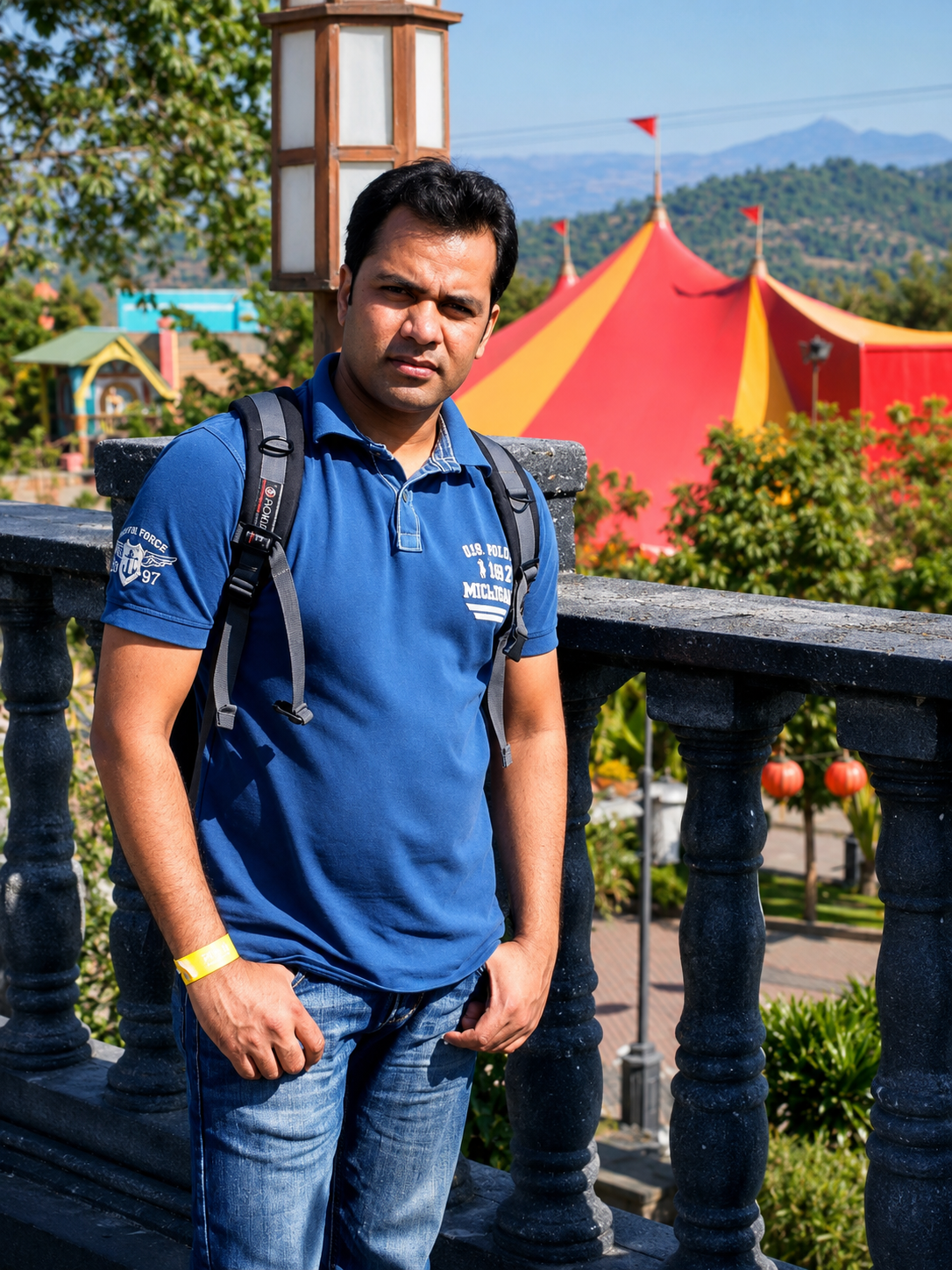
Ashvinee Nagle
I’m Ashvinee — I help first-time travellers plan India trips that actually work. I’ve spent years exploring the country’s regions, from Rajasthan’s forts to Kerala’s backwaters, and I write the guides I wish I’d had on my own first trips.
Written by Ashvinee Nagle
I travel India slowly and write it down honestly - practical guides and real itineraries from someone who lives here.
About Ashvinee →Plan your India trip with us
Get one short, honest India travel guide a week — plus a free 7-day Rajasthan itinerary to start.
Free. Unsubscribe any time.