
Travel to Rishikesh: A First-Timer’s Guide to India’s Yoga Capital
A practical, no-fluff guide to Rishikesh for first-time visitors — the Ganga aarti, yoga and ashrams, white-water rafting, the Beatles Ashram and the famous bridges, where to stay and eat, how to get there, and a relaxed 2-day plan.
Rishikesh is where the Ganga finally breaks free of the Himalayas and spills onto the plains — cool, green and fast, with forested hills rising on both banks. It is two towns in one: a centuries-old pilgrimage centre of temples, ashrams and evening aarti, and a buzzing hub of rafting, yoga retreats and riverside cafes. Few places in India pack spirituality and adventure so tightly into one bend of a river.
Rishikesh is the Himalayan gateway on the Ganga — the “yoga capital of the world.” Come for two or three days of riverside calm and a little adrenaline: morning yoga, the Ganga aarti at Parmarth Niketan or Triveni Ghat, a half-day of white-water rafting, and a wander across the Lakshman and Ram Jhula bridges to the Beatles Ashram. Go September to April, base yourself in Tapovan, and pair it with nearby Haridwar on the same Uttarakhand trip.
Why visit Rishikesh
Three reasons Rishikesh sits at the top of almost every Uttarakhand itinerary — and why first-timers fall for it.
The yoga capital
Ashrams and schools line both banks, from drop-in morning classes to month-long teacher trainings. Even if you have never unrolled a mat, a sunrise session by the river is one of those things that simply lands here.
Adventure on the Ganga
This is India’s white-water capital — grade II–IV rapids, riverside beach camps, cliff jumps, bungee and zip-lines. The cold green river makes the heat-of-the-plains feel a world away.
Ritual & river
At dusk the ghats fill with lamps, bells and chanting for the Ganga aarti. Add the iconic suspension bridges, hillside temples and the overgrown Beatles Ashram, and you have a town that rewards slow days.
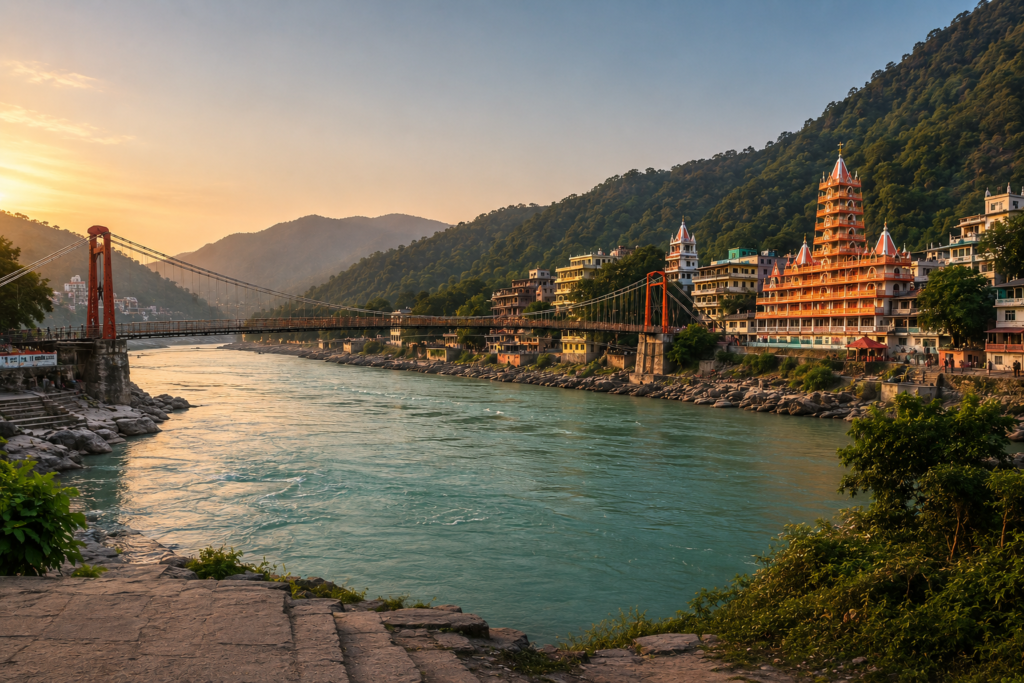
The Ganga leaving the mountains at Rishikesh, with the foothills rising behind.
When to go
September to November (best): post-monsoon, the river runs clear, the hills are green and the days are warm and bright — prime time for rafting and riverside evenings.
February to April: the other sweet spot — mild, blossoming and busy with the international yoga crowd. Early March brings the International Yoga Festival.
May to June: hot on the plains but Rishikesh stays bearable by the water; rafting usually runs until the monsoon arrives.
July to August (monsoon): the Ganga swells and browns, rafting is suspended for safety, and the hills are lush but slippery. Quiet and cheap, but plan around the rain.
Rishikesh is a vegetarian and alcohol-free town — no meat, fish or alcohol is sold within the holy precincts. Rafting season is typically late September to June, pausing for the monsoon.
Top things to do in Rishikesh
From sunrise yoga to white water, here is what fills two unhurried days on the Ganga.
Ganga aarti at Parmarth Niketan or Triveni Ghat
As the sun drops, lamps are lit and the riverbank fills with bells and chanting. Parmarth Niketan’s aarti is led by ashram students and feels intimate; Triveni Ghat’s is larger and more local. Either way, arrive early and sit on the steps.
White-water rafting
The defining Rishikesh thrill — stretches from a gentle 9 km float to a punchy 16–26 km run through rapids with names like Roller Coaster and Golf Course. Operators cluster at Tapovan and Shivpuri; book a licensed one and go early before the water traffic builds.
A yoga or meditation class
Drop into a morning hatha class at an ashram, try a sound-bath, or sit a guided meditation by the water. Parmarth Niketan, Sivananda and the schools around Tapovan all welcome beginners — no experience needed.
Lakshman Jhula, Ram Jhula & the Beatles Ashram
Cross the famous suspension bridges swaying above the Ganga, browse the temple-and-cafe lanes on either side, then walk to the Beatles Ashram (Chaurasi Kutia) where the band wrote much of the White Album — now graffiti-covered domes in the forest.
Neelkanth Mahadev Temple
A revered Shiva temple set high in the forested hills about 32 km away, reached by a winding drive (or a steep trek for the devout). Pair the journey with viewpoints over the valley and a quieter, pilgrim side of Rishikesh.
Cafes, waterfalls & a short trek
Linger in Tapovan’s rooftop cafes, walk to a seasonal waterfall like Neer Garh, or take the short hike to Kunjapuri Devi temple for a sunrise Himalayan panorama — Nanda Devi and the high peaks on a clear morning.
What to eat in Rishikesh
This is a sattvic, vegetarian town — think wholesome thalis, healthy cafe food and endless chai, with no meat or alcohol anywhere in the holy zone.
Sattvic thali
A simple, satisfying plate of dal, sabzi, rice, roti and curd — cooked without onion or garlic in the ashram tradition. Honest, cheap and exactly right after yoga.
Riverside cafe bowls
Banana pancakes, hummus platters, smoothie bowls and wood-fired pizza with a Ganga view — the backpacker-cafe scene Rishikesh does so well.
Chotiwala
The decades-old thali landmark by Ram Jhula — a North Indian veg spread that has fed pilgrims for generations. Touristy, yes, but part of the ritual.
Aloo puri & chai
Hot puris with spiced potato, a glass of ginger chai, and a sweet jalebi from the market — the pilgrim breakfast that costs almost nothing.
Don’t arrive expecting meat, fish or a cold beer — Rishikesh is strictly vegetarian and dry. Lean into the thalis, cafe food and fresh juices instead.
Where to stay
Pick your scene: an ashram for the full experience, Tapovan for cafes and yoga, or a riverside resort for comfort.
Ashram stay
Simple rooms, set routines, yoga and satsang at Parmarth Niketan, Sivananda and others. Cheap, atmospheric and the real Rishikesh — just expect rules and early starts.
Tapovan guesthouse
Walkable to cafes, yoga schools and the bridges, with a good range of guesthouses and boutique stays. The most convenient area for first-timers.
Riverside resort
Spa resorts and luxury camps along the river above town, trading the bustle for quiet, pools and big Ganga views. The splurge pick.
How to get to Rishikesh & around
Rishikesh is one of the easiest Himalayan towns to reach from Delhi — and small enough to explore on foot and by auto.
Base yourself in Tapovan and you can walk to yoga, cafes and the bridges — saving on autos. For sightseeing further out (Neelkanth, Kunjapuri), share a taxi for the day.
A simple 2-day plan
Two days that balance the spiritual and the active sides of Rishikesh.
River, bridges & aarti
Ease in with a morning yoga class, then cross Lakshman and Ram Jhula and explore the cafe-and-temple lanes. Walk out to the Beatles Ashram in the afternoon, and end at the Ganga aarti at Parmarth Niketan or Triveni Ghat.
Practical tips that actually help
Book licensed rafting
Use a registered operator with proper gear and a trained guide — cheaper is not worth it on grade-IV water.
Dress modestly
It is a holy town — cover shoulders and knees at temples, ghats and ashrams, and remove shoes where asked.
Carry cash
Many cafes, autos and small ashrams are cash-first; UPI works in most places but keep notes handy.
Aarti starts early
Get to the ghats 30–45 minutes before sunset for a spot on the steps — it fills up fast.
Mind the monsoon
Rafting stops in July–August and the river runs high — plan adventure for the dry months.
Respect the river
The Ganga is fast and cold even at the banks — swim only at supervised beaches and mind the current.
Mistakes first-time visitors make
- Treating it as a quick stop. A single night barely covers the aarti — stay two so you can raft, do yoga and slow down.
- Coming in peak monsoon for adventure. Rafting is suspended in July–August; check the season before you build the trip around it.
- Expecting nightlife. This is a dry, early-to-bed town — the “buzz” is cafes and chanting, not bars.
- Ignoring the temple dress code. Shorts and bare shoulders feel out of place at the ghats and ashrams.
Planning Uttarakhand beyond Rishikesh?
Rishikesh pairs naturally with Haridwar’s ghats, Mussoorie’s hills and a high-Himalayan leg to Auli. Tell me your dates and pace, and I’ll map an Uttarakhand route that links them up.
Plan my Uttarakhand trip →Rishikesh FAQs
How many days do you need in Rishikesh?
Two to three days is ideal. That gives you time for the Ganga aarti, a yoga class, a half-day of rafting, the bridges and Beatles Ashram, and a temple or sunrise viewpoint without rushing.
What is the best time to visit Rishikesh?
September to November and February to April are best — clear weather, green hills and full rafting season. May–June is hot but bearable by the river, while the July–August monsoon suspends rafting.
Is rafting in Rishikesh safe for beginners?
Yes — operators run graded stretches, from gentle floats to bigger rapids, with licensed guides, helmets and life jackets. Choose a registered operator and the season runs roughly late September to June.
How do you get to Rishikesh from Delhi?
It is about six hours by road, or take the Vande Bharat express to Dehradun (then ~1 hour by taxi). The nearest airport is Dehradun (DED), 35 km away, and Haridwar is the closest major railhead, 25 km away.
Is alcohol and non-veg food available in Rishikesh?
No — Rishikesh is a holy town and is strictly vegetarian and alcohol-free within the main precincts. Expect sattvic thalis, healthy cafe food and plenty of chai instead.
Related guides
Keep planning your Uttarakhand trip with these:
Uttarakhand Travel Guide
Rivers, hill stations, wildlife and the Char Dham — how to string Uttarakhand together.
Travel to Haridwar
Har Ki Pauri, the grand Ganga aarti and the gateway to the Char Dham — Rishikesh’s holy twin.

Ashvinee Nagle
I’m Ashvinee — I help first-time travellers plan India trips that actually work. I’ve spent years exploring the country’s regions, from Rajasthan’s forts to Kerala’s backwaters, and I write the guides I wish I’d had on my own first trips.

Written by Ashvinee Nagle
I travel India slowly and write it down honestly - practical guides and real itineraries from someone who lives here.
About Ashvinee →Plan your India trip with us
Get one short, honest India travel guide a week — plus a free 7-day Rajasthan itinerary to start.
Free. Unsubscribe any time.