
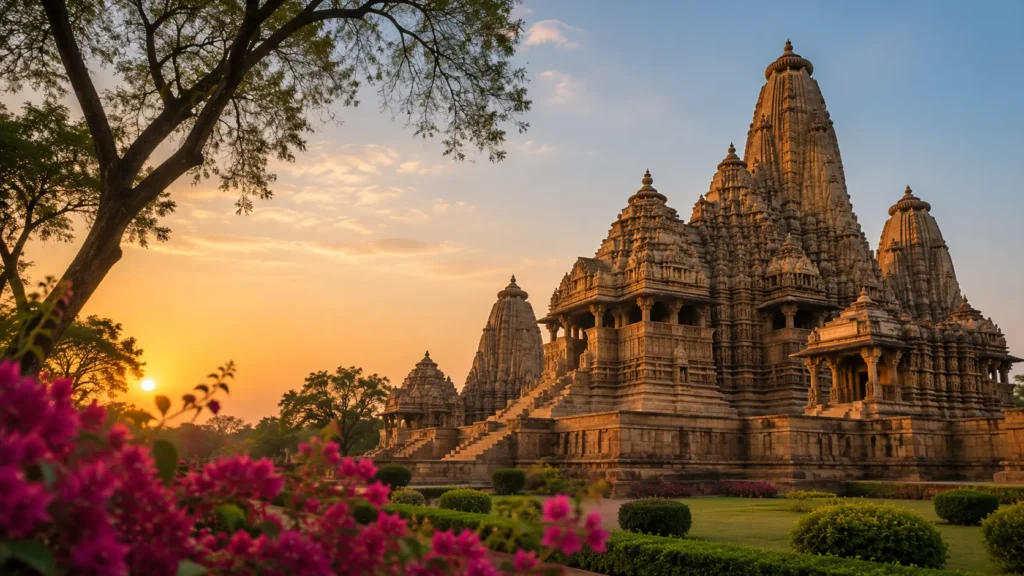
Travel to Khajuraho: A First-Timer’s Guide to India’s Greatest Temple Art
An honest, no-fluff guide to Khajuraho for first-time visitors — how to actually see the Western Group, the truth about the famous carvings, the evening sound-and-light show, easy add-ons like Panna’s tigers and Raneh Falls, when to go, and a relaxed 2-day plan.
Some places are famous for the wrong reason, and Khajuraho is one of them. Most people arrive expecting a village of “erotic temples” and leave slightly stunned that the carvings they came to giggle at are a footnote — maybe a tenth of the sculpture — on some of the most breathtaking temple architecture ever built in India. Raised by the Chandela kings between roughly 950 and 1050 CE, then swallowed by forest for centuries until a British surveyor stumbled on them in 1838, these honey-coloured sandstone temples are now a UNESCO World Heritage Site and, quietly, one of the most rewarding stops in central India.
Khajuraho is a small town in northern Madhya Pradesh built around three groups of 1,000-year-old temples covered in extraordinary carving. The Western Group is the star — go at opening for the best light and the fewest people — and the evening sound-and-light show is worth staying for. One full day covers the temples comfortably; a second lets you add the Jain temples, the museum, and a trip to Panna’s tigers or Raneh Falls. Come October to March, hire a guide for an hour to read the stories in the stone, and pair it with the rest of Madhya Pradesh.
Why visit Khajuraho
Three reasons Khajuraho earns its place on a Madhya Pradesh trip — and surprises almost everyone who comes.
The finest carving in India
The Kandariya Mahadeva temple alone carries more than 800 sculptures. Up close, the detail — the fold of a sari, a musician mid-note, an elephant’s eye — is almost unbelievable for stone worked a thousand years ago.
Far more than its reputation
Yes, some carvings are erotic. But most celebrate ordinary life — women at their mirrors, teachers, dancers, gods and battles. Come for the whole sweep of a medieval world in sandstone, not the handful of panels on the postcards.
A calm, walkable town
After the crush of bigger sights, Khajuraho feels like an exhale. The main temples sit in a manicured garden you can stroll in an afternoon, and the village around it is small, green and easy.
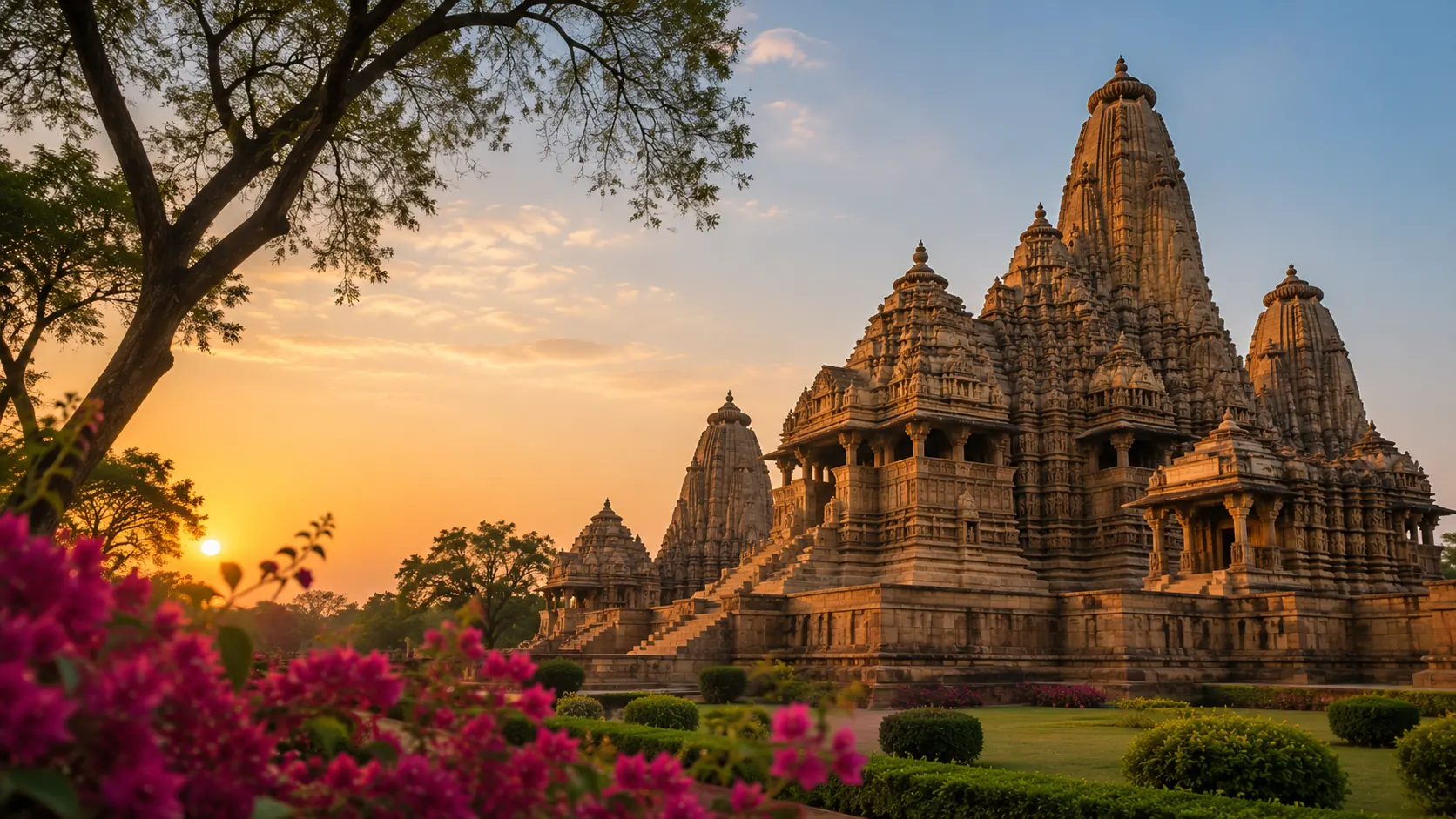
The soaring shikharas of the Western Group at first light — the best hour to have them almost to yourself.
When to go
October to March (the sweet spot): cool, clear days made for wandering the temple gardens and long evenings for the light show. This is peak season for good reason — and the most comfortable time by far.
February (the dance festival): for about a week the Khajuraho Dance Festival stages classical Indian dance against the floodlit Western Group. If your dates line up, it’s the most magical time to be here — but book beds well ahead.
April to June (hot): central India bakes, and midday at the temples is punishing. If you must come, do the temples at opening and hide from the afternoon.
July to September (monsoon): fewer visitors and a lush green setting, with the bonus that nearby Raneh Falls and the Ken river are in full flow. Panna’s core safari zones, though, close for the rains.
The Western Group is open every day, but the light is everything here — the low sun of early morning and late afternoon lifts the carving out of the stone. A flat midday visit shows you the same temples at a fraction of their beauty.
Top things to do in Khajuraho
From sunrise at the great temples to a tiger safari an hour away, here is what fills a day or two.
The Western Group at sunrise
The largest, finest and best-kept temples — Kandariya Mahadeva, Lakshmana and Vishvanatha — stand together in one ticketed garden. Arrive at opening, walk it slowly, and let the early light do the work.
The sound-and-light show
Each evening the Western Group is floodlit while a narrated show tells the story of the Chandelas and their temples. It’s a touch old-fashioned, but seeing the spires glow against the night sky is genuinely special.
The Eastern Group & Jain temples
A short cycle or auto ride east, the Jain temples — Parsvanath above all — match the Western Group for carving with a fraction of the crowd. This is where you slow down and really look.
The Southern Group
Duladeo and Chaturbhuj sit apart to the south and see the fewest visitors of all. Chaturbhuj is unusual for having no erotic carving at all — and, rarely for Khajuraho, catches the best light at sunset.
The Archaeological Museum
A small, well-kept collection of sculpture rescued from the ruins, right by the Western Group. Half an hour here — ideally before you see the temples — makes everything you look at afterwards click into place.
Panna tigers & Raneh Falls
Under an hour away, Panna National Park offers real tiger safaris, and the Raneh Falls canyon cuts a ribbon of coloured rock through the Ken river gorge. Together they make an easy, wild counterpoint to the temples.
What to eat in Khajuraho
This is a small town, so the food scene is modest — a cluster of traveller cafes near the Western Group, a few honest local kitchens, and your hotel. Come for the temples, not a food tour, but a few things are worth seeking out.
Rooftop cafes
A row of rooftop cafes looks straight out at the temples — the spot for a slow breakfast or a cold drink after the morning walk, with a mix of Indian and traveller-friendly dishes.
Bundelkhandi thali
Ask for a regional Bundelkhandi thali — wheat rotis, local dals and seasonal vegetables — for an earthy, home-style meal that beats the tourist menus.
The cafe scene
Long-running traveller cafes do the familiar comfort spread — from thalis to pasta and pancakes — handy if you’ve been on the road and want something easy.
Poha, jalebi & chai
Do as central India does and start with a plate of poha and a hot chai from a market stall before the temples open — cheap, quick and exactly right.
Khajuraho is small and low-key after dark — most people eat near the Western Group and turn in early for the sound-and-light show or an early start. Don’t expect nightlife; expect quiet.
Where to stay
Everything clusters around the Western Group, so wherever you stay you’re close to the temples. It’s really a choice of budget and whether you want to fold in a Panna safari.
Boutique & heritage hotels
A handful of characterful mid-to-upscale hotels sit within walking distance of the main temples, with gardens, pools and easy access to the light show. The most comfortable base.
Village guesthouses
Simple, friendly guesthouses and small hotels in the village give you clean rooms, rooftop views and local know-how at a fraction of the price. The traveller’s pick.
Panna jungle lodges
If tigers are on the list, a night at a lodge near Panna lets you do a dawn safari properly rather than rushing there and back. Best combined over two days.
How to get to Khajuraho & around
Khajuraho is more connected than its size suggests, with its own small airport and station — though many people still arrive overland from Orchha and Jhansi.
Khajuraho slots neatly onto the Jhansi–Orchha–Khajuraho heritage circuit — take a fast train to Jhansi, spend a night or two in Orchha, then drive on. If you want tigers, add a night near Panna rather than trying to squeeze a safari into a single day.
A simple 2-day plan
One day for the temples done well, a second for the quieter groups and a wild add-on.
The Western Group & the light show
Start at the Archaeological Museum, then walk the Western Group at opening while the light is soft and the crowds are thin. Rest through the midday heat, explore the market, and return in the evening for the sound-and-light show.
Quiet temples & a wild add-on
Cycle out to the Eastern (Jain) temples early, then the Southern Group. In the afternoon, drive to Panna for a safari or Raneh Falls for the gorge — or continue on to the rest of Madhya Pradesh.
Practical tips that actually help
Chase the light
See the Western Group at opening or late afternoon — low sun brings the carving alive; midday flattens it.
Hire a guide for an hour
A good licensed guide turns rows of figures into stories — myths, symbolism, daily life. Well worth it, at least for the Western Group.
Rent a cycle
The town is flat and small; a bicycle is the perfect way to reach the Eastern and Southern temples at your own pace.
Give it two days
Rushing Khajuraho as a half-day stop sells it short — the quiet groups and a Panna trip are half the reward.
Keep your ticket
Hold on to the Western Group ASI ticket — it can cover same-day entry to the site museum. Carry a little cash for the smaller temples.
Dress for temples
These are living heritage sites — modest, comfortable clothing and shoes you can slip off easily make the day smoother.
Mistakes first-time visitors make
- Treating it as a half-day tick-box. Khajuraho rewards a slow full day at least — and a second for the quieter temples and Panna.
- Fixating on the erotic carvings. They’re a small part of the story; miss the rest and you miss the point of the place.
- Skipping a guide entirely. Without one, it’s beautiful but silent. An hour of context changes the whole visit.
- Coming in peak summer. April to June is brutally hot with little shade — aim for the October-to-March window.
Planning Madhya Pradesh beyond Khajuraho?
Khajuraho pairs naturally with Orchha’s riverside forts, the tigers of Panna and Bandhavgarh, and the temples of the wider heritage circuit. Tell me your dates and pace, and I’ll map a Madhya Pradesh route that links the carving to the jungle.
Plan my Madhya Pradesh trip →Khajuraho FAQs
How many days do you need in Khajuraho?
One full day covers the Western Group, the museum and the evening light show comfortably. A second day lets you add the quieter Eastern and Southern temples and a trip to Panna’s tigers or Raneh Falls without rushing.
What is the best time to visit Khajuraho?
October to March, when the weather is cool and clear. February is special if it coincides with the Khajuraho Dance Festival. April to June is very hot, and the monsoon from July to September is green but humid, with Panna’s core safari zones closed.
Are the Khajuraho temples only about erotic sculptures?
No — that’s a myth. The erotic carvings are only a small fraction of the sculpture. Most of it depicts gods, dancers, musicians, teachers, animals and everyday medieval life, on some of the finest temple architecture in India.
How do you reach Khajuraho?
Khajuraho has its own small airport with seasonal flights from Delhi and Varanasi, and a railway station with some direct trains. Many visitors also arrive by road from Jhansi and Orchha, about four to five hours away, on the popular heritage circuit.
Is Khajuraho worth visiting?
Yes. The carving is among the finest in the country, the site is far less crowded than comparable monuments, and the town is calm and easy. Paired with Orchha and Panna, it makes one of central India’s most rewarding short trips.
Related guides
Keep planning your Madhya Pradesh trip with these:
Madhya Pradesh Travel Guide
Tigers, temples, forts and marble gorges — how to string a Madhya Pradesh trip together.
Plan my Madhya Pradesh trip
Share your dates, pace and starting city, and I’ll suggest a Khajuraho–Orchha–Panna route that fits.
Ashvinee Nagle
I’m Ashvinee — I help first-time travellers plan India trips that actually work. I’ve spent years exploring the country’s regions, from Rajasthan’s forts to Kerala’s backwaters, and I write the guides I wish I’d had on my own first trips.
Written by Ashvinee Nagle
I travel India slowly and write it down honestly - practical guides and real itineraries from someone who lives here.
About Ashvinee →Plan your India trip with us
Get one short, honest India travel guide a week — plus a free 7-day Rajasthan itinerary to start.
Free. Unsubscribe any time.