
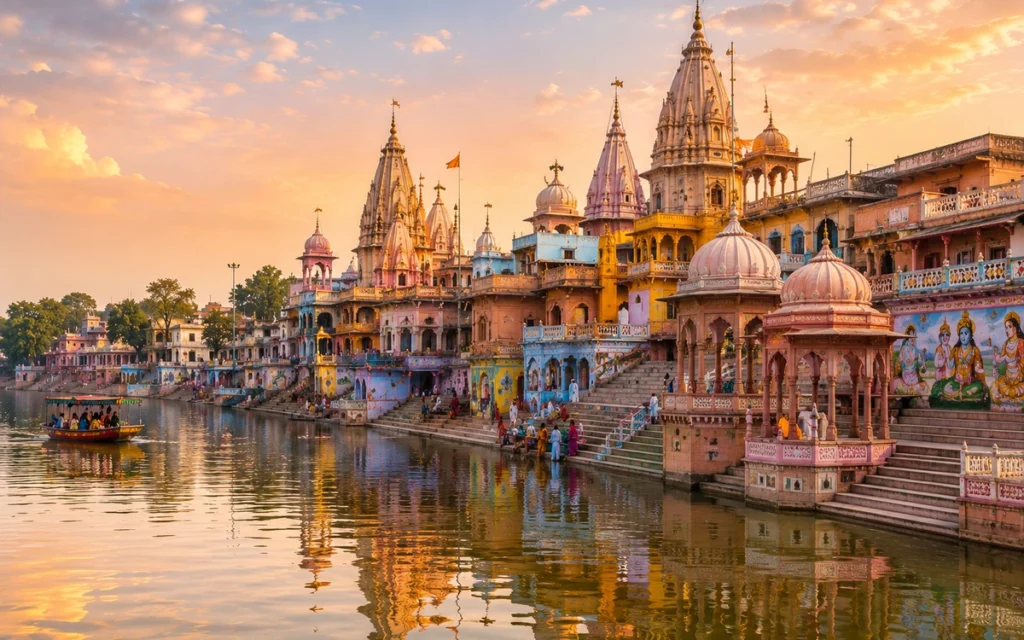
Travel to Mathura & Vrindavan: A First-Timer’s Guide to the Land of Krishna
An honest, no-fluff guide to Mathura and Vrindavan for first-time visitors — Krishna’s birthplace at the Janmabhoomi, Vishram Ghat, Banke Bihari, Prem Mandir and ISKCON, the hill at Govardhan, the world-famous Holi and Janmashtami, when to go, and a relaxed 1–2 day plan.
Mathura and Vrindavan are the twin towns at the heart of Krishna country. Mathura is where Lord Krishna is believed to have been born; Vrindavan, a short drive away, is where he is said to have spent his playful childhood. Together they form one of the most important pilgrimage circuits in India, a dense tangle of temples, ghats, cows and chanting just a couple of hours from both Agra and Delhi. This is devotional India at full volume — especially during the legendary Holi and Janmashtami celebrations, when the whole region overflows. Come with modest clothes, a little patience for the crowds and lanes, and an appetite for the region’s famous milk sweets.
Mathura is Krishna’s birthplace (the Janmabhoomi temple and Vishram Ghat); Vrindavan, 15 km on, is the temple town of his childhood — Banke Bihari, the beautiful Prem Mandir and ISKCON. Add the sacred hill at Govardhan if you have time. The Holi here is world-famous and Janmashtami is the biggest festival, both magnificent but overwhelmingly crowded. It’s an easy 1–2 day trip between Agra and Delhi. Come October to March (or for Holi, if you can handle the crush) and pair it with the rest of Uttar Pradesh.
Why visit Mathura & Vrindavan
Three reasons this twin-town pilgrimage belongs on your Uttar Pradesh route — beyond its easy hop from Agra and Delhi.
The birthplace of Krishna
Mathura is revered as the very spot where Lord Krishna was born, and Vrindavan as the setting of his childhood. Few places in India carry this much mythology and living devotion in such a small area.
Temples at every turn
From the intense Banke Bihari to the dazzling marble Prem Mandir and the global ISKCON, Vrindavan alone has thousands of temples. It’s an immersive, joyful, sometimes overwhelming devotional experience.
India’s most famous Holi
The Holi of Braj — including the playful Lathmar Holi nearby — is celebrated like nowhere else, and Janmashtami turns the towns electric. If you can handle crowds, the festivals here are unforgettable.
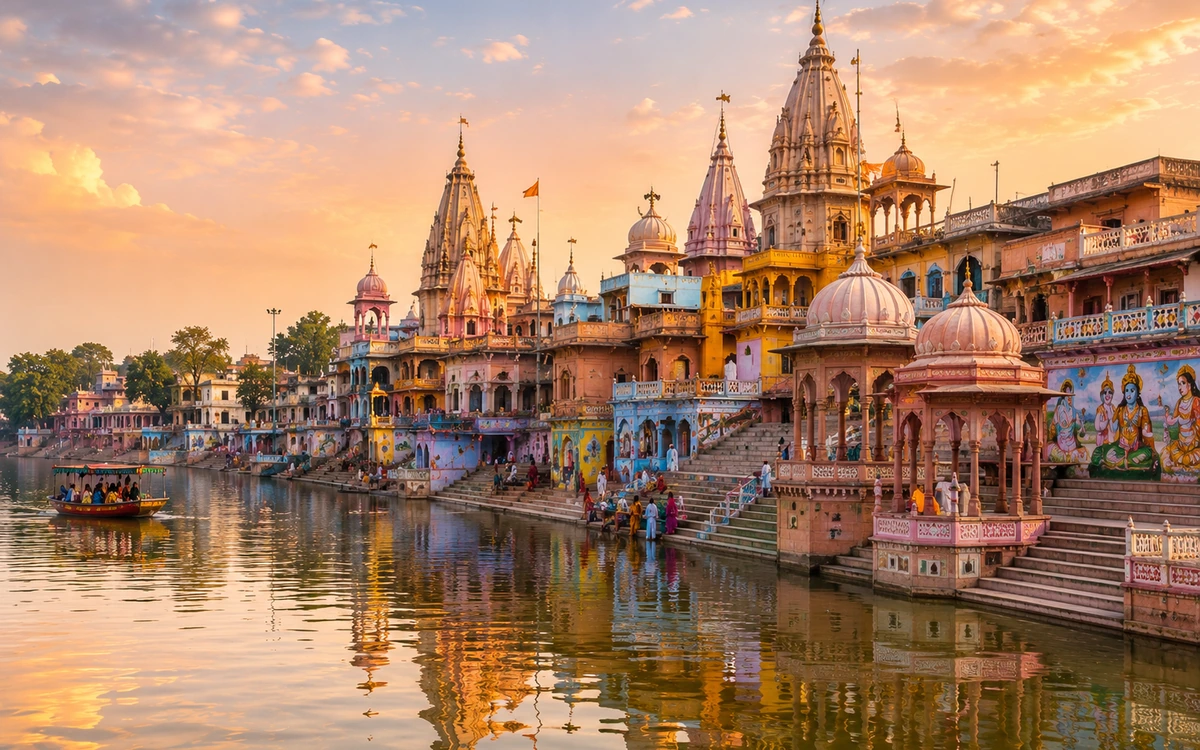
The Yamuna ghats of Braj — the devotional heart of Krishna country.
When to go
October to March (the sweet spot): cool, comfortable weather for temple-hopping between the two towns. This is the most pleasant time to visit, and takes in the joyful Janmashtami season in late summer’s tail and the festive winter months.
Holi (Feb–Mar): the Braj Holi — including Lathmar Holi at nearby Barsana and Nandgaon — is world-famous and utterly unique, starting days before the national date. Spectacular, but extraordinarily crowded and boisterous.
Janmashtami (Aug–Sep): Krishna’s birthday is the biggest festival here, with Mathura and Vrindavan packed to bursting and temples open late into the night. Magical if you’re ready for the crush.
April to June (hot): the plains bake past 40°C and the crowded lanes are stifling — manageable only with early starts and midday rest.
Many temples, including Banke Bihari, close for a few hours in the afternoon and follow seasonal darshan timings. Check the day’s hours before setting out, dress modestly, and be prepared to leave phones and shoes outside.
Top things to do in Mathura & Vrindavan
From Krishna’s birthplace to a marble temple that glows at night, here is what fills a day or two across the twin towns.
Krishna Janmabhoomi (Mathura)
The temple complex built around the prison cell where Krishna is believed to have been born — the spiritual centre of Mathura. Security is tight and phones are not allowed inside, so travel light and expect queues, especially on festival days.
Vishram Ghat (Mathura)
The main bathing ghat on the Yamuna, where pilgrims take boats and watch the evening aarti. The most atmospheric spot in Mathura at dusk, when lamps float on the river and bells ring across the water.
Banke Bihari Temple (Vrindavan)
Vrindavan’s most famous and most fervent temple, where darshan of the Banke Bihari idol is brief, joyful and intense. The surrounding lanes are packed with pilgrims and stalls — go early and mind your belongings.
Prem Mandir (Vrindavan)
A vast, intricately carved white-marble temple set in gardens, illuminated with colour-changing lights in the evening. Spacious, modern and calmer than the old-town shrines — a favourite for its sheer beauty.
ISKCON Vrindavan
The Krishna-Balaram Mandir, hub of the worldwide Hare Krishna movement, is clean, welcoming and full of music and chanting. A gentle, accessible introduction to the region’s devotion, with a good vegetarian restaurant nearby.
Govardhan Hill
The hill Krishna is said to have lifted on one finger, ringed by a revered 21-km parikrama (circumambulation) path. Even a short visit to Govardhan and its kunds gives a feel for Braj beyond the two main towns.
What to eat in Mathura & Vrindavan
This is milk-sweet country, and the food is pure vegetarian, often satvik. Come with a sweet tooth and try the local specialities.
Mathura ke pede
The region’s signature sweet — dense, grainy milk pedas, sold everywhere and often offered as prasad. The one thing you absolutely must try, and take a box home.
Kachori & jalebi
A hearty breakfast of crisp kachori with spiced potato, followed by hot jalebi, is the classic Braj morning — cheap, filling and delicious.
Thandai & lassi
Thick, spiced thandai and creamy lassi are the local drinks, especially refreshing after temple queues. Thandai is particularly associated with Holi here.
Aloo tikki & chaat
Spicy aloo tikki, chaat and samosas are everywhere in the bazaars — a quick, tasty bite between temples when you don’t want a full meal.
Meat and alcohol are effectively off the menu in these holy towns, and the food is entirely vegetarian. Buy pedas from a busy, reputable shop, and carry small notes for the temple lanes.
Where to stay
Vrindavan is the easier, calmer base for most first-timers, though Mathura and even Agra work too given how close everything is.
Vrindavan
Home to most of the big temples and a good range of guesthouses, ashram stays and hotels. Calmer and greener than central Mathura, and the most convenient base for temple-hopping.
Mathura
Busier and more urban, close to the Janmabhoomi and Vishram Ghat. Plenty of budget lodging and dharamshalas, handy if you want to be near the railway station.
Day trip from Agra
With the towns so close to Agra, many visitors come on a day trip while based at the Taj. Efficient if you’re short on time, though you miss the evening aartis.
How to get to Mathura & Vrindavan & around
The twin towns are among the easiest religious sites to reach in the north, sitting right between Agra and Delhi on the Yamuna Expressway.
The old-town temple lanes are narrow, crowded and best explored on foot or by e-rickshaw — cars can’t get close. Hire an auto for the Mathura–Vrindavan hop, and allow extra time on festival days when routes are managed.
A simple 2-day plan
One day for Mathura and the river, a second for Vrindavan’s temples — or compress into a busy single day.
Mathura & the Yamuna
Start at the Krishna Janmabhoomi, then explore the old-town bazaars and buy some pede. In the evening, head to Vishram Ghat for a boat and the Yamuna aarti.
Vrindavan’s temples
Do Banke Bihari early, then visit Prem Mandir and ISKCON, and if time allows, drive out to Govardhan — or move on to the rest of Uttar Pradesh.
Practical tips that actually help
Check darshan timings
Many temples close for a few hours midday — confirm the day’s hours, especially for Banke Bihari, before you set out.
Travel light at temples
Phones and bags are often barred at the Janmabhoomi and other shrines — carry as little as possible and use cloakrooms.
Dress modestly
Cover shoulders and knees, and be ready to go barefoot — these are intensely devotional towns.
Mind your belongings
The temple lanes get very crowded — keep valuables secure and watch for monkeys, which snatch phones and glasses.
Go early
Beat the heat and the biggest crowds by starting at dawn, especially at Banke Bihari and the Janmabhoomi.
Plan festival visits carefully
Holi and Janmashtami are spectacular but overwhelming — book beds far ahead and brace for intense crowds.
Mistakes first-time visitors make
- Ignoring darshan timings. Turning up when the main temples are closed midday wastes hours — check first.
- Carrying phones into the Janmabhoomi. They’re not allowed — leave them at your hotel or the cloakroom.
- Underestimating the monkeys. They routinely snatch glasses and phones around the temples — keep them tucked away.
- Doing Holi unprepared. The Braj Holi is wild and days-long — wear clothes you’ll throw away and protect your camera.
Planning Uttar Pradesh beyond Krishna country?
Mathura and Vrindavan pair perfectly with the Taj at Agra just down the expressway, and connect on to the ghats of Varanasi and the temple town of Ayodhya. Tell me your dates and pace, and I’ll map an Uttar Pradesh route that blends Mughal wonders and sacred towns.
Plan my Uttar Pradesh trip →Mathura & Vrindavan FAQs
How many days do you need for Mathura and Vrindavan?
One full day can cover the highlights of both towns if you start early, but two days is more comfortable — one for Mathura and the Yamuna, one for Vrindavan’s temples and Govardhan.
What’s the difference between Mathura and Vrindavan?
Mathura is the city where Krishna is believed to have been born, home to the Janmabhoomi and Vishram Ghat. Vrindavan, about 15 km away, is the temple town linked to his childhood, with Banke Bihari, Prem Mandir and ISKCON.
Is the Holi here really that special?
Yes — the Braj Holi, including Lathmar Holi at Barsana and Nandgaon, is among the most famous in the world and begins days before the national holiday. It’s spectacular but extremely crowded and boisterous.
When is the best time to visit?
October to March for comfortable weather. For festivals, come for Janmashtami (Aug–Sep) or Holi (Feb–Mar), but be ready for enormous crowds and book accommodation well ahead.
How do I get to Mathura and Vrindavan?
Very easily — Mathura is a major railway junction, and the towns sit on the Yamuna Expressway about an hour from Agra and three from Delhi. Autos and e-rickshaws connect the two towns.
Related guides
Keep planning your Uttar Pradesh trip with these:
Uttar Pradesh Travel Guide
The Taj, the Ganga, Nawabi food and temple towns — how to string an Uttar Pradesh trip together.
Plan my Uttar Pradesh trip
Share your dates, pace and starting city, and I’ll suggest an Agra–Mathura–Vrindavan route that fits.
Written by Ashvinee Nagle
I travel India slowly and write it down honestly - practical guides and real itineraries from someone who lives here.
About Ashvinee →Plan your India trip with us
Get one short, honest India travel guide a week — plus a free 7-day Rajasthan itinerary to start.
Free. Unsubscribe any time.