
Tadoba: India’s most reliable tiger reserve, an hour from anywhere
A grounded guide to Tadoba-Andhari Tiger Reserve — 100+ tigers, six core gates, and the central-India forest that quietly became the country’s best bet for actually seeing a wild tiger.
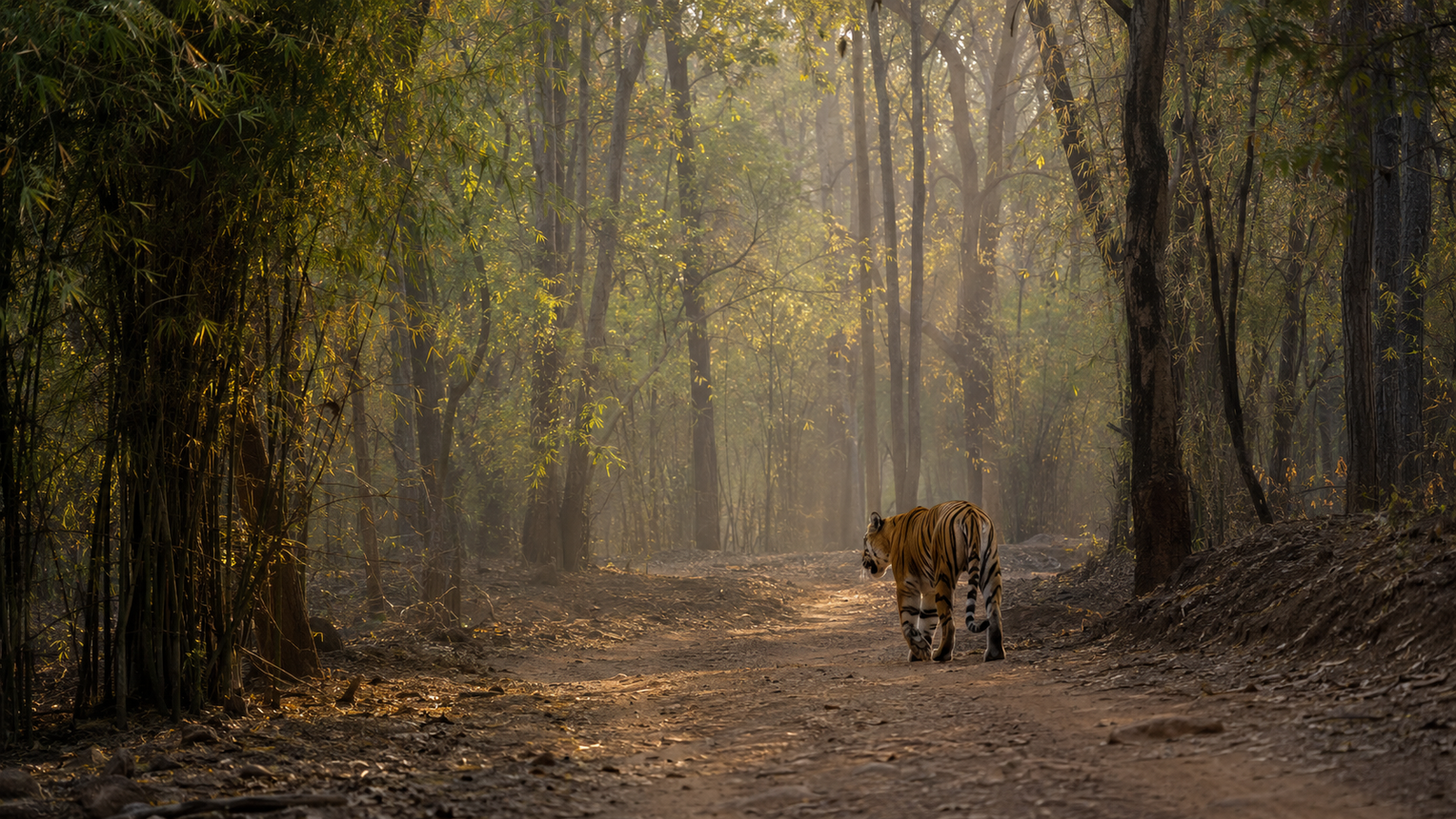
If you came to India hoping to see a tiger, this is the place to go. Not Ranthambhore, where the sightings are legendary but the crowds now match. Not Bandhavgarh, which has the highest density but the longest waiting lists. Tadoba-Andhari Tiger Reserve in Maharashtra’s Chandrapur district has quietly moved into the top spot for actually seeing a wild Bengal tiger — over 100 of them in a 1,727 square kilometre stretch of teak and bamboo, with six core gates, a manageable infrastructure, and a Nagpur airport just 140 kilometres away. The tigers here are not shy. The roads are not crowded. The whole reserve has the unusual feel of a place that delivers exactly what it promises.
Tadoba is India’s most consistently rewarding tiger reserve — over 100 tigers, six core safari gates, and remarkably high sighting rates. Best visited October to mid-June, with April and May being peak tiger months. Closes for the monsoon (core zones shut 1 July to 15 October; buffers stay open). Reach by road from Nagpur (140 km, 3–3.5 hours). Two to three days is right. Book safaris 120 days ahead via the official Maharashtra Forest portal.
In this guide
Why Tadoba
For decades, Tadoba was the wildlife reserve that wildlife people knew about and the general public did not. Bandhavgarh had the romance of the maharajas. Ranthambhore had the photogenic ruins. Tadoba had the tigers, but the tigers were inside a forest that nobody outside Maharashtra had heard of. That has changed in the last five years. The reserve’s tiger population crossed a hundred sometime around 2022. Sightings became so consistent that international wildlife photographers shifted their seasonal rounds. The Maharashtra Forest Department, to its credit, professionalised the booking system early and kept it that way.
What makes Tadoba work is the combination of three things: healthy prey base (spotted deer, sambar, gaur, wild boar — the open meadows are full of them), multiple water sources (Tadoba Lake, Telia Lake, Jamani Lake, plus eighteen smaller water bodies that concentrate animals in summer), and good road density through the core zones, which means a gypsy can actually reach the place where the tiger is. The result is a sighting rate that, in season, runs higher than almost any other reserve in India.
100+ tigers in 1,727 sq km
One of the highest tiger densities in central India, with named, tracked individuals like Maya, Bajrang, Matkasur, and Chota Matka.
Year-round buffer access
Core zones close for monsoon, but buffer gates stay open through July, August, and September — rare among major tiger reserves.
Six core gates, real choice
Moharli, Khutwanda, Kolara, Navegaon, Pangadi, Zari. Different territories, different tigers, different drive times from Nagpur.
When to go
Tadoba has a sharply divided season, and the calendar matters more here than at most reserves. There is no neutral time of year.
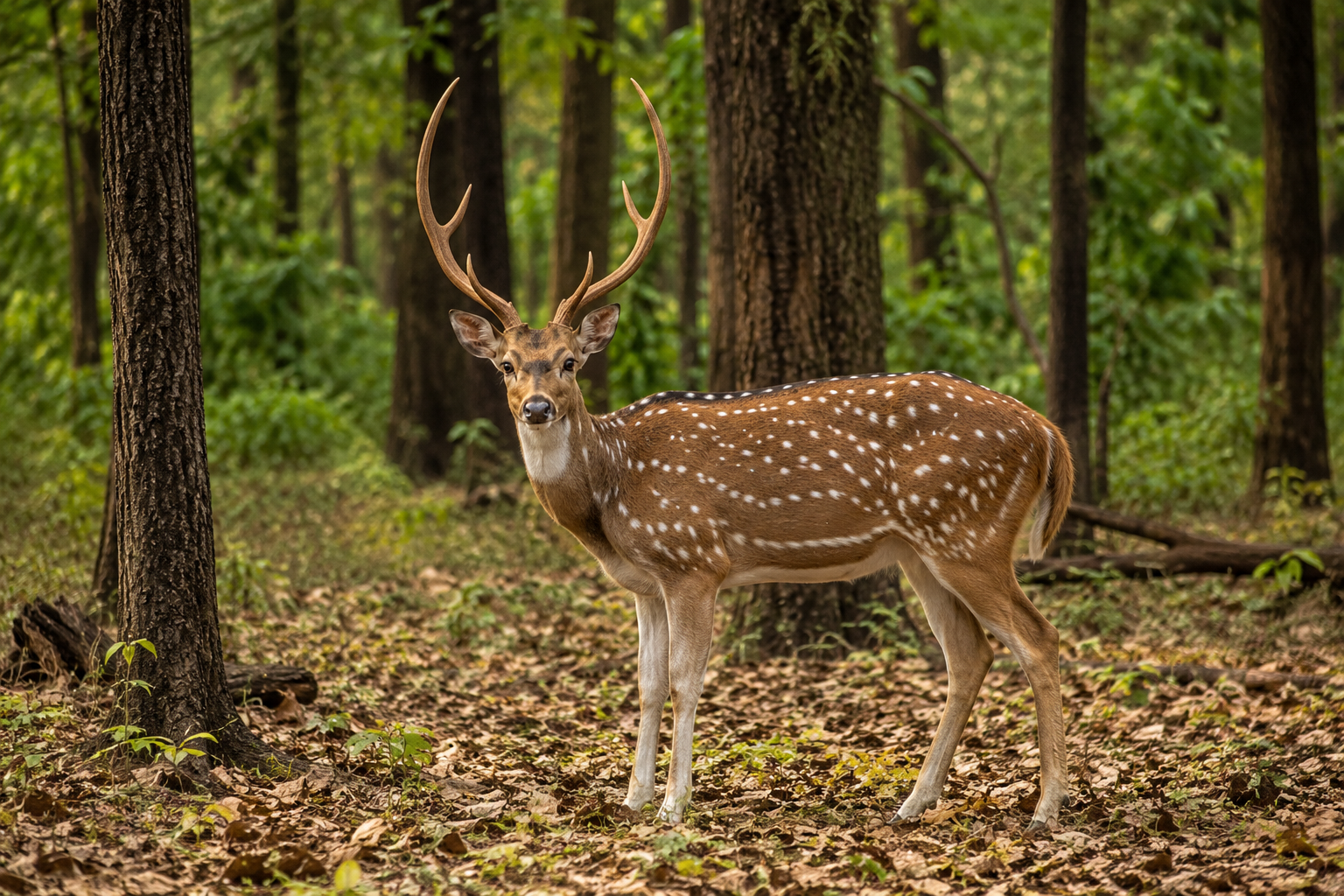
October to February is the comfort window. Days are pleasant (15–28°C), mornings genuinely cold by December, and the forest is at its most photogenic — gold light, low mist, palash trees starting to show their famous flame-orange flowers towards the end of this stretch. Tiger sightings are good but not at their peak; the animals are spread out across the forest because water and prey are everywhere. Best window if you are bringing first-timers, older parents, or anyone who finds 42°C uncomfortable.
March to mid-June is the peak window for tiger sightings, and the worst window for human comfort. By April the temperature crosses 40°C on most days. By May it routinely touches 45. But that heat is exactly why the sightings spike: water sources shrink to a handful of lakes and waterholes, and the tigers come to drink. A morning safari in late April will often produce two or three big-cat sightings — tigers, leopards, sometimes both — in a single drive. Carry electrolytes, leave at 5:30 AM, and accept that you will be hot.
15 June to mid-October is monsoon. Core zones close on 1 July and reopen on 15 October each year. Some buffer zones — Agarzari, Junona, Devada, Mamla — remain open through the rains, and Tadoba is unusual in offering this. Sightings are lower but not nil, and the forest in monsoon is a different place entirely: green, loud with frogs and cicadas, the rivers running. Worth it for a second visit, not for a first.
If you can time it, mid-October to mid-November is the city’s sweet spot. The monsoon has lifted, the heat has not returned, the oranges are starting to come in, and Diwali decorations light up the older neighbourhoods. The Dhamma Chakra Pravartan Din at Deekshabhoomi in mid-October draws hundreds of thousands of pilgrims — remarkable to witness if you don’t mind crowds.
Getting there
Tadoba sits in the eastern part of Maharashtra, in Chandrapur district. The nearest airport is Nagpur (Dr. Babasaheb Ambedkar International), well-connected to Mumbai, Delhi, Bengaluru, Hyderabad, and a growing list of metros. From Nagpur it is a 140-kilometre drive that, on the Samruddhi Mahamarg expressway and then the state highway down to Chandrapur, takes about 3 to 3.5 hours. Most travellers fly into Nagpur in the morning and reach their resort by lunch.
If you are coming up from Hyderabad, the road through Adilabad and Asifabad is reasonable but long — flying to Nagpur saves you almost a day. If you are coming from elsewhere in Maharashtra, the train to Chandrapur is a sensible option; it is a major junction on the Mumbai-Howrah route, and most lodges will pick you up from the station.
The six gates, explained
Tadoba is unusual in offering six core safari gates, each leading to a different part of the reserve. Tigers are territorial, so the gate you pick decides which individuals you have a real chance of seeing. The gates are also geographically spread — some are sixty kilometres apart — so you cannot easily switch between them during a single trip. Plan your stay around the gate, not the other way around.
Moharli Gate
The original entrance, and still the most reliable for tiger sightings. Moharli is in the core zone proper, with access to Tadoba Lake and the open grassland zones where Bajrang and several other dominant males hold territory. Nine vehicles allowed per safari round, so permits move fast. About 45 km from Chandrapur, 175 km from Nagpur.
Khutwanda Gate
Shares the Moharli core zone but enters from a different direction. Often easier to book than Moharli and brings you into the same prime tiger territory. Four vehicles per safari, so smaller and quieter inside the gate. A common pick for travellers staying at the eco-lodges 15 minutes away.
Kolara Gate
The closest core gate to Nagpur (~120 km), making it the most accessible for short trips. Kolara opens into denser forest and is famously the territory of Maya, the “Queen of Tadoba”, whose range overlaps with Kolara and Navegaon. The forest here feels different — thicker, more secretive — than Moharli’s open meadows. Nine vehicles per safari.
Navegaon Gate
One of the newer core gates and rapidly growing in popularity. Shares territory with Kolara on Maya’s range, but is less crowded. Good road density inside the zone makes for productive drives. Increasingly the choice of return visitors who want the Kolara forest without the booking competition.
Pangadi Gate
The furthest gate from Nagpur (~250 km), in the south-eastern Kolsa range of the reserve. Only two vehicles allowed per safari, so the experience inside is extremely quiet — you may not see another jeep all morning. Sightings are less guaranteed but the atmosphere is unmatched. For travellers who care more about the forest than about the photograph.
Zari Gate
A buffer-zone gate that has become productive in recent years as tiger territories have expanded outward from the core. Six vehicles per safari, less expensive permits, and excellent leopard sightings. A solid pairing with one of the core gates — do Zari on the day you cannot get a Moharli or Kolara permit.
A tiger sighting in Tadoba is not luck, exactly. It is the predictable outcome of a system — healthy prey, good water, careful management — that has been working for two decades. The luck is in which tiger you see.
— Travel India
What you’ll actually see
Tadoba is famous for tigers, but a good safari shows you a whole ecosystem. The reserve holds 62 mammal species, 291 birds, 9 amphibians, 34 reptiles, and over 170 species of butterflies. On any given drive, you are very likely to see the following, in roughly this order of frequency:
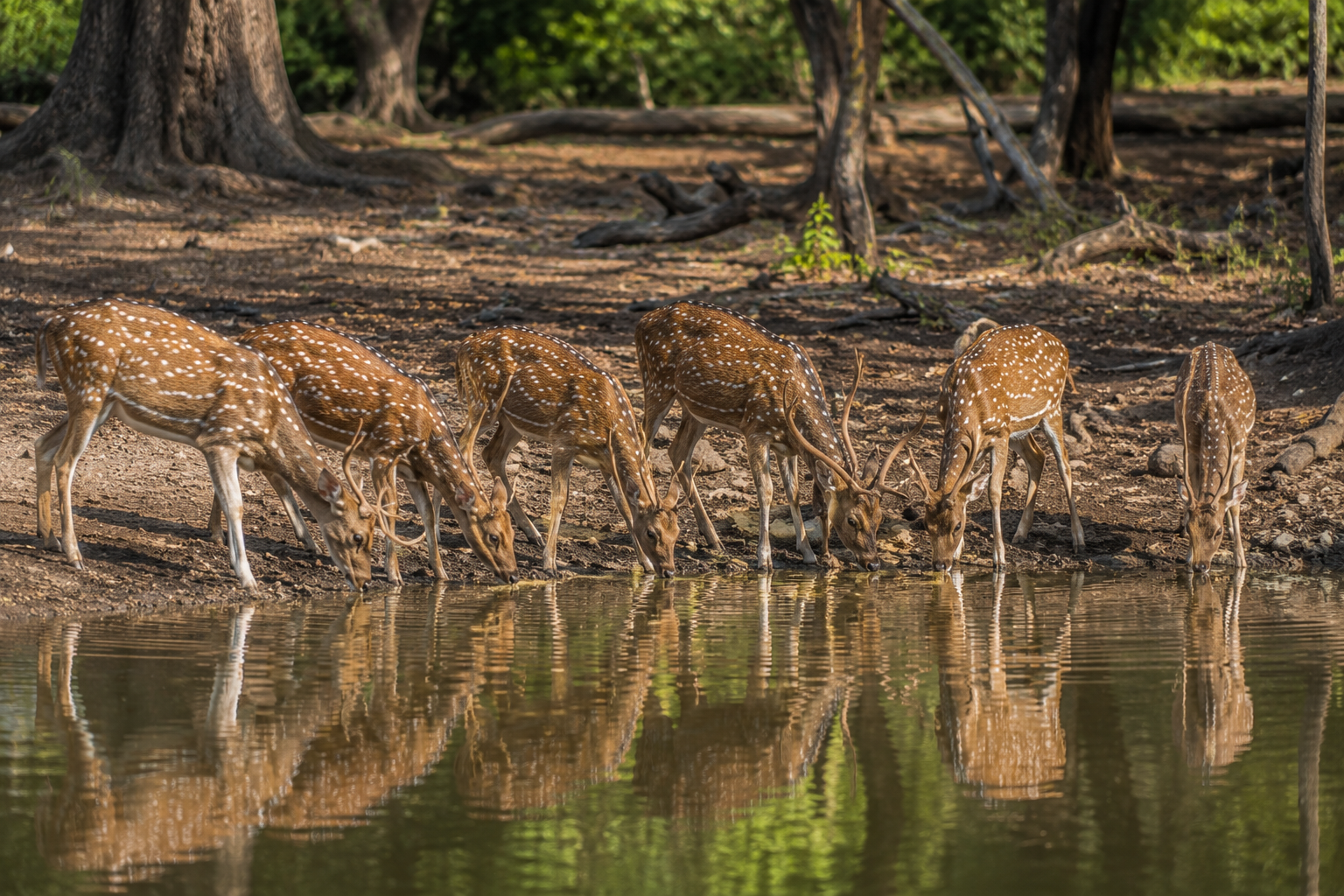
- Spotted deer (chital): Everywhere. The default deer of the Indian forest. Their alarm calls are often the first sign that a predator is moving nearby.
- Sambar: Bigger, darker, more solitary than chital. Their barks carry for kilometres and are the most reliable predator-alarm call in the forest.
- Gaur (Indian bison): Massive black-coated wild cattle — the world’s largest bovine. Common in Tadoba and unforgettable up close.
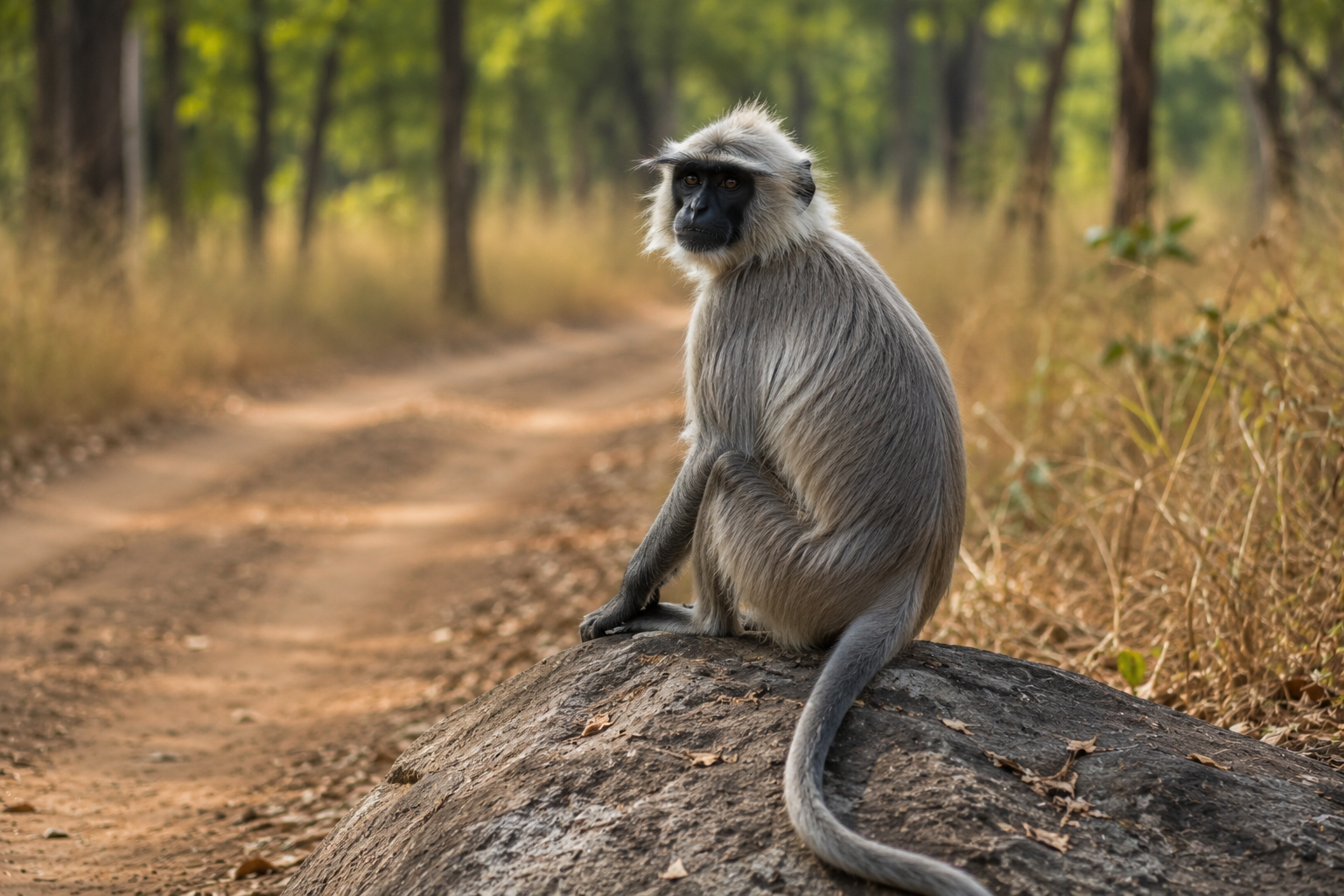
- Wild boar, langur, peafowl, hornbills, and the occasional sloth bear or wild dog (dhole) pack.
- Leopards: Around 150 across the reserve. Less commonly seen than tigers (counterintuitive, but tigers move openly and leopards hide), but Zari and Agarzari gates in particular have raised the chances.
- Tigers: The reason you came. In peak season (April-May), expect a sighting on roughly two-thirds of your safaris. Off-peak (winter), more like one in three. Some travellers see five tigers in a weekend; others see none in three days. The honest answer is: it’s genuinely worth trying.
How to book a safari
This is the part that confuses most first-time Tadoba visitors. The system is simpler than it looks. There is exactly one official booking website — mytadoba.mahaforest.gov.in — and dozens of unofficial “safari operators” that resell at a markup or, in some cases, run outright scams. Stick to the official portal, or book through a reputable lodge that uses it.
120-day advance window
Permits open exactly 120 days before the safari date. Peak winter weekends (Diwali, Christmas, New Year) sell out within hours of opening. Set a calendar reminder.
Morning & evening drives
Two slots a day: ~6:00 AM (winter) or 5:30 AM (summer), and ~3:00 PM. Morning drives have the best activity. Each drive is roughly 3 to 4 hours.
Gypsy + guide rates
A core-zone gypsy permit (full vehicle, up to 6 people) is roughly ₹6,500–9,500 per drive, including guide. Buffer zones cost less. Rates change; check the portal.
The official booking site warns repeatedly about fraudulent “tadoba booking” websites that sell fake permits at inflated prices. The only authorised portal is mytadoba.mahaforest.gov.in. If a website asks for payment and is not that URL, it is reselling or scamming. Reputable jungle lodges handle bookings directly through the official portal as part of their packages.
Where to stay
Where you stay matters more in Tadoba than at most reserves, because the six gates are spread far apart. Pick the gate first, then the lodge. A 90-minute pre-dawn drive to reach your safari gate will ruin every morning.
Luxury eco-lodges
Waghoba Eco Lodge (near Khutwanda), Svasara Jungle Lodge (Kolara), Bamboo Forest Safari (Moharli), Tigress at Sariska sister property in Kolara. ₹15,000–35,000 per night including safaris.
Mid-range resorts
Dozens of options clustered around Moharli and Kolara. Tigers Heaven, Jungle Home, MTDC’s own resort. ₹4,000–9,000 per night. Decent rooms, packaged safaris, no luxury.
MTDC & forest rest houses
Maharashtra Tourism runs a resort at Moharli. There are also forest rest houses inside the reserve at Moharli and Kolsa — basic, atmospheric, hard to book directly, but worth trying through MahaForest.
A solid 3-day itinerary
Three days gives you four to five safari drives, which is the right amount to balance tiger sighting probability against forest fatigue. Two days is workable if your dates are tight. Four days is excessive unless you are a serious photographer.
Drive in, afternoon safari
Fly into Nagpur in the morning. Resort transfer drops you at your lodge by 1 PM. Late lunch, brief rest, then your first safari at 3 PM. This is a soft introduction — afternoon drives are quieter than mornings, the light is softer, and you adjust to the rhythm of forest travel before the harder pre-dawn starts begin.
Two full safaris
Pre-dawn morning safari (depart resort 5:30 AM in summer, 6:15 AM in winter). Back by 10:30 for breakfast. Long siesta through the heat of the day. Afternoon safari at 3 PM. Both drives ideally at your booked core-zone gate. Dinner is when you compare notes with other guests about who saw what.
Final safari, drive out
One last morning safari — this is often the best one, because by now you have a feel for the forest and your guide has a feel for you. Back to the lodge by mid-morning, brunch, pack up, drive back to Nagpur. You will reach the airport by 4 PM with time for an early evening flight onward.
Practical tips that actually help
- Phones off, no exceptions. Using a phone inside the park is a ₹5,000 fine. Switch off, leave it in your bag. It also helps you actually see the forest.
- Wear forest colours. Olive, khaki, dull brown, dark green. No white, no bright red or orange, no aggressive patterns. Tigers don’t mind, but other visitors will resent you for ruining their sightings.
- Layer for mornings. December and January mornings in the open gypsy can hit 6–8°C. The sun is brutal three hours later. Pack a thin fleece you can shed.
- Carry water and a hat. Especially April-June. The gypsy has no roof and no shade. Sunburn ends safaris.
- Don’t fixate on tigers. The travellers who have the best Tadoba experiences are the ones who genuinely enjoy the forest itself — the birds, the gaur, the alarm calls, the way light moves through teak leaves. The tiger, when it appears, is the gift on top.
- Tip your guide and driver fairly. ₹500–1,000 per drive each, more if they go above and beyond. They work hard and their tracking skill is the entire experience.
- Book two safaris a day. One a day means you only have two real chances over a three-day trip. Two a day doubles your odds, and the second drive is rarely a waste even if the first was great.
Tadoba FAQs
How many days do I need at Tadoba?
Three days, two nights is right for a first visit — gives you four to five safari drives, which is the right amount to balance sighting probability against forest fatigue. Two days works if dates are tight. Four days is excessive for most travellers unless you are a serious wildlife photographer or repeat visitor.
What are my real chances of seeing a tiger?
Genuinely good. In peak season (April-May), expect a tiger sighting on roughly two-thirds of your safari drives. In winter (October-February), more like one in three. Over four drives across three days, most visitors see at least one tiger; many see two or three. No reserve guarantees sightings, but Tadoba comes closest.
Should I visit in summer despite the heat?
If sightings are your priority, yes. April and May produce the highest tiger encounter rates of the year because shrinking water sources concentrate animals at lakes. If you are travelling with older parents or young children, the heat will be genuinely tough — choose November to February instead. Either window works, they just optimise for different things.
Can I do Tadoba as a weekend trip from Mumbai or Pune?
Yes, if you fly to Nagpur. A Friday evening flight in, Saturday and Sunday safaris, Sunday night flight out is a workable schedule. You will be tired Monday morning, but it gives you three safari drives and a real shot at sightings. Driving directly from Mumbai is not practical — it is over 880 km.
Is Tadoba safe for kids and older parents?
Yes. The safari is in an open jeep with a trained driver and guide; there is no walking involved, no physical effort beyond getting in and out of the gypsy. The main constraint is the early start (5:30 AM in summer) and the heat in April-June. Winter trips are comfortable for almost anyone in reasonable health.
How is Tadoba different from Bandhavgarh or Ranthambhore?
Bandhavgarh has the highest tiger density per square kilometre but also longer waiting lists and stricter permit limits. Ranthambhore has the romance and the photogenic ruins but the crowds have caught up to the reserve. Tadoba has the highest absolute number of tigers in its size class, six gates spread across a big landscape, and the sense — still — of a place not yet overrun. If you are choosing between them, Tadoba is the most reliable for actually seeing a tiger; the others are arguably more “famous” experiences.
Can I visit in monsoon?
Partially. Core zones close from 1 July to 15 October. Some buffer zones — Agarzari, Junona, Devada, Mamla — stay open through the rains. Sightings are lower but not zero, and the forest is at its most atmospheric. Worth it for a return visit or photography; not the right window for a first trip.
Planning a tiger safari in India?
I plan slow, well-paced India wildlife trips that get the gate, season, and lodge decisions right — including Tadoba combinations with other reserves like Pench, Kanha, or Bandhavgarh. Free 48-hour reply.
Plan my India trip →
Written by Ashvinee Nagle
I travel India slowly and write it down honestly - practical guides and real itineraries from someone who lives here.
About Ashvinee →Plan your India trip with us
Get one short, honest India travel guide a week — plus a free 7-day Rajasthan itinerary to start.
Free. Unsubscribe any time.