
Mumbai: A first-timer’s guide to India’s maximum city
A practical, no-fluff guide to Mumbai — the seven-island city that never stops moving. Where to stay, what to do, what to eat, and how to find your rhythm in three or four days.
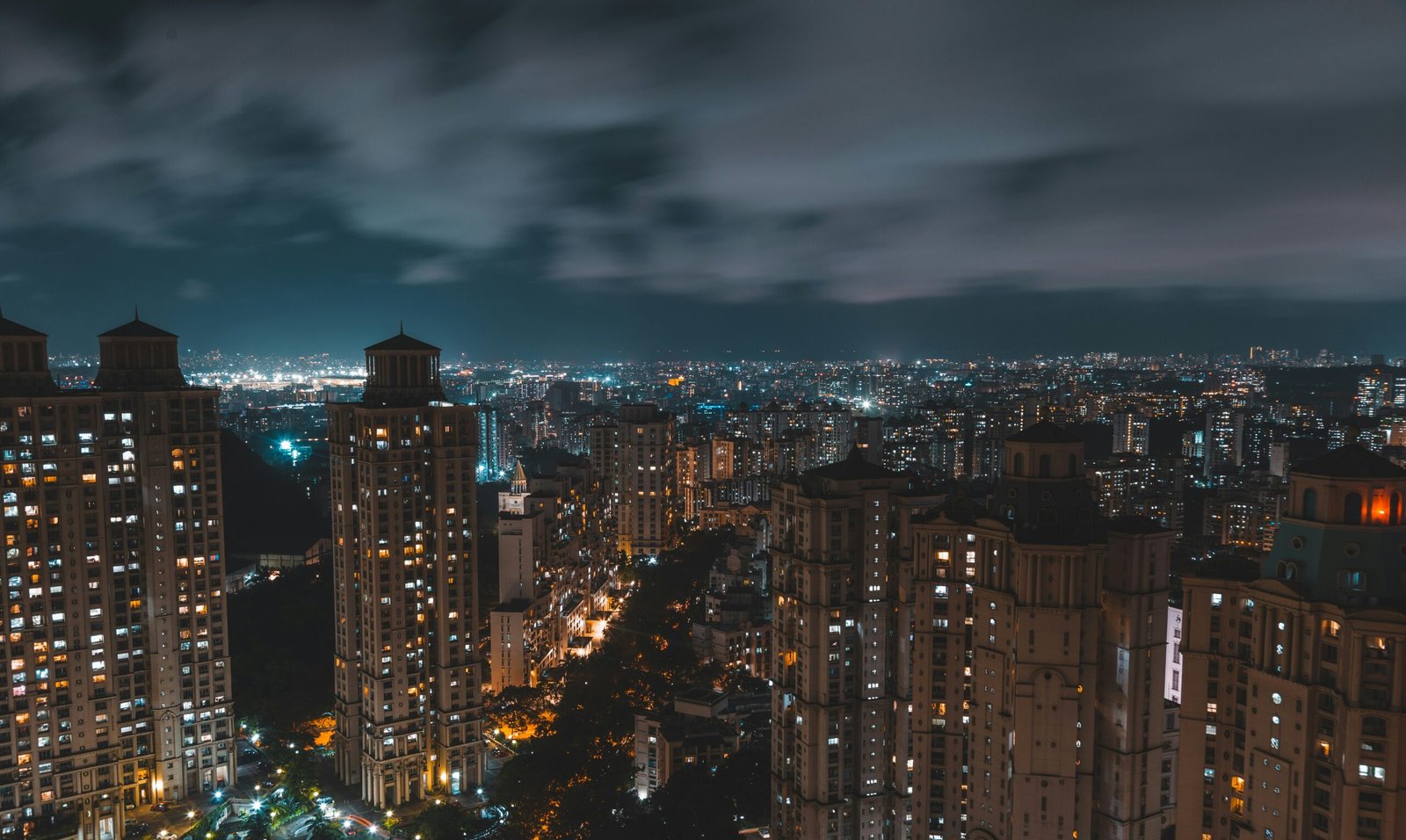
Mumbai does not ease you in. It hands you the menu, the noise, the salt air, and the lights all at once, and trusts you to find your own rhythm. It is loud, layered, and improbably warm — a city built on seven islands that became, against considerable odds, one of the most ambitious places in India. Give it three or four good days and Mumbai will hand you stories that take years to fade.
Three to four days is right for a first Mumbai trip. Base yourself in Colaba (heritage, walkable) or Bandra (cafes, sea-facing) and use local trains and Ubers to move around. Don’t miss the Gateway of India at sunrise, a slow walk down Marine Drive at dusk, vada pav at a roadside stall, and one big seafood dinner. Budget ₹2,500–8,000 per day depending on style. Best months are November to February. Skip the monsoon unless you have time to lose to weather.
In this guide
Why visit Mumbai
If Delhi is India’s political head and Bangalore is its tech heart, Mumbai is its lungs — the place that moves, breathes, and trades non-stop. It is also the easiest big Indian city for a first-time visitor: signage is bilingual, English works almost everywhere, taxis run on meters, and there is a coastline you can actually walk along. Mumbai produces about a sixth of India’s GDP, almost all of its films, and most of its writing. None of that is obvious from the street — what is obvious is the speed.
The city is also one of the most architecturally rich in the country. Colaba, Fort, and Kala Ghoda hold some of the finest Victorian Gothic and Indo-Saracenic buildings outside London, a legacy of being the British East India Company’s western headquarters from 1668 onwards. Walk five minutes north of the Taj and you are in a 19th-century commercial district that still functions as one — banks, libraries, cafes, all in the same buildings, sometimes the same families, as they have been for 150 years.
Heritage you can walk to
Colaba, Fort, and Kala Ghoda hold some of Asia’s finest colonial architecture, all within a 30-minute walk of each other.
Street food capital
Vada pav, pav bhaji, bhel puri, sev puri. Mumbai’s street food is bold, cheap, and frequently life-changing.
The sea is always near
Marine Drive, Bandstand, Worli, Versova. Sunset over the Arabian Sea is the city’s daily, public reward.
When to go
Mumbai has three distinct moods, and the difference between them matters more than at almost any other Indian city.
November to February is the obvious winner. Humidity drops to bearable, evenings turn pleasant, and you can walk for hours without losing a shirt to sweat. Temperatures sit in the 18–30°C range. This is also the peak tourist window, so hotels need booking ahead, especially around Christmas and New Year. December and January weekends in Colaba get genuinely busy.
March to May is hot and humid, but not unbearable if you plan around the heat. Early mornings and late evenings for walks, afternoons reserved for museums, cafes, and air-conditioned shopping. May can climb past 35°C with heavy humidity, which is the kind of heat that sneaks up on you. Locals call this the “not yet monsoon” phase.
June to September is the monsoon, and this is where opinions split. The city floods, trains stop, shoes die, and basic planning gets unpredictable. But it is also when Mumbai is at its most cinematic — green hills along the Western Ghats, chai-and-pakora afternoons, and a softness you do not get any other time of year. Travel during the monsoon only if you have time to lose to weather. Hotel rates drop substantially.
October is the most underrated month. The monsoon has just lifted, the city is washed clean, hotels are still off-season cheap, and the heat has not fully returned. If you can plan a flexible week, this is when locals actually go out.
Top things to do in Mumbai
You will not see Mumbai in three days. You will see a version of it. These are the experiences that, for a first-timer, give the truest cross-section of the city.
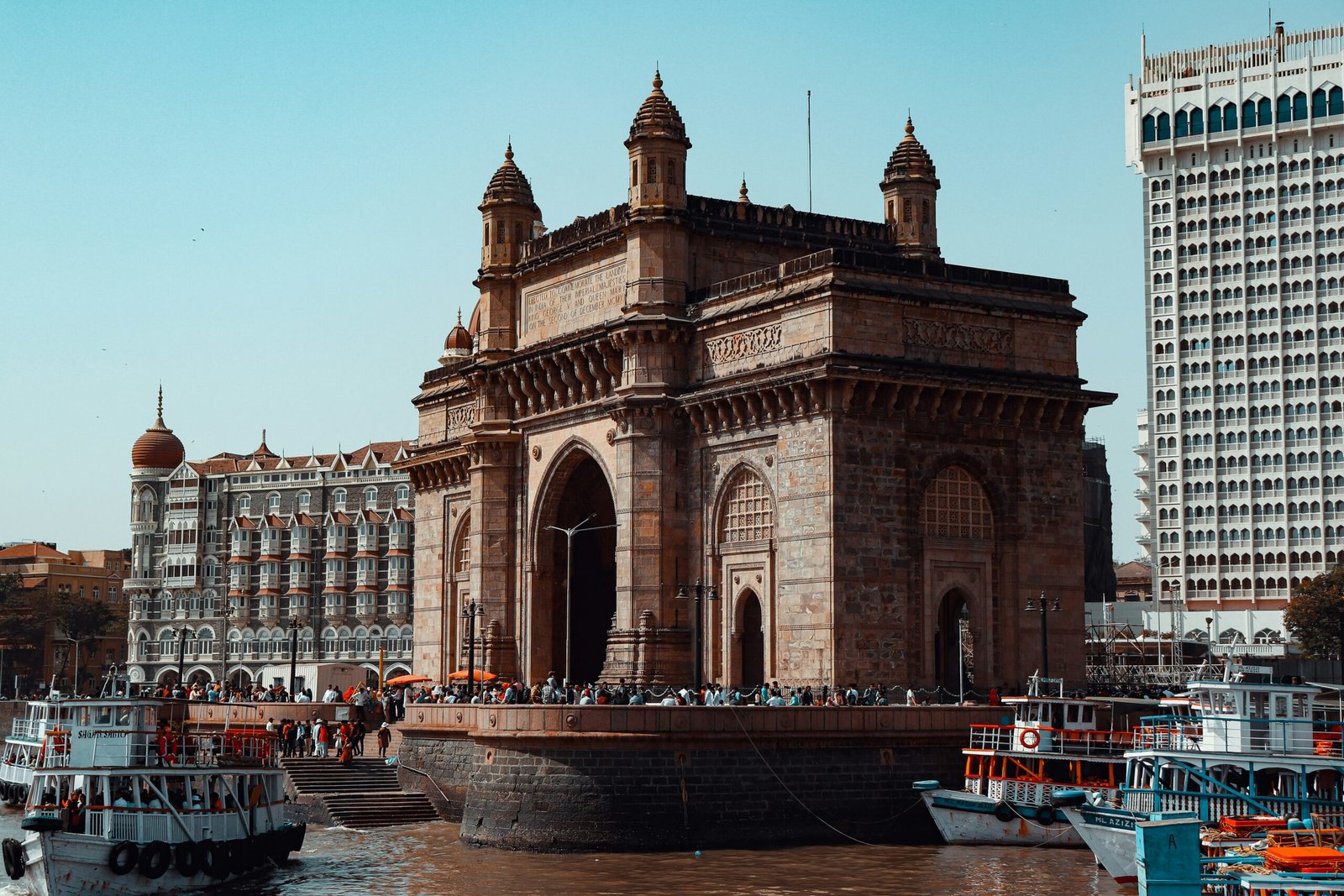
Gateway of India and the Taj at sunrise
Start at sunrise if you can — the light is softer, the crowds have not arrived, and the basalt archway facing the sea is genuinely beautiful at that hour. Walk five minutes to the Taj Mahal Palace next door and circle the building once. The back facade is more impressive than the front, and the hotel itself is freely walk-throughable for non-guests during the day.
Colaba Causeway and Kala Ghoda
The Causeway is Mumbai’s most famous shopping street — antiques, silver, leather, books, scarves. Bargain hard; opening prices are 2–3x the real price. Then drift north into Kala Ghoda, where you’ll find the Jehangir Art Gallery, the David Sassoon Library, and dozens of independent cafes inside heritage buildings. The whole area is walkable and rewards getting deliberately lost.
Marine Drive at dusk
The 3.5-kilometre curve from Nariman Point to Chowpatty is the city’s collective living room. Buy a roasted bhutta (corn) from a vendor, sit on the parapet, and watch the lights come on one by one along the bay. Locals call it the Queen’s Necklace and it has earned the name. Best between 6 and 8 PM.
Elephanta Caves day trip
A one-hour ferry from the Gateway of India drops you at Elephanta Island, home to 1,500-year-old rock-cut Hindu cave temples. The six-metre Trimurti sculpture inside the main cave is one of the great works of Indian art. Pack water, wear comfortable shoes, and skip the day if it is raining — the ferries get cancelled and the climb up is slippery. UNESCO World Heritage site.
Bandra-Worli Sea Link at night
Take a cab across the 5.6-kilometre cable-stayed bridge after dark. The skyline view to your right is the closest Mumbai gets to a Manhattan moment. Continue past the bridge to Bandstand promenade in Bandra for a slow walk along the rocks. Locals come here for first dates and quiet conversations — the suburb does atmosphere well.
Dharavi walking tour
Asia’s most famous slum is also one of its busiest small-industry hubs — leather, recycling, pottery, embroidery, papad-making. Take a guided tour with a reputable local operator (Reality Tours is the original and most ethical, with 80% of profits going back into community projects). Photography is restricted; this is not a zoo. Go to understand, not to gawk.
A city is its corners more than its monuments. Mumbai gives you both, but it is the corners — a chai stall outside a Victorian post office, a paani-puri vendor under a banyan tree — where you will keep returning in memory.
— Travel India
What to eat in Mumbai
You can eat well in Mumbai for ₹30 or ₹3,000, sometimes on the same street. These four food experiences are worth planning around. Everything else can happen by accident, and probably will.
Vada pav at Ashok Vada Pav
The city’s signature snack — a spiced potato fritter inside a soft bun with green chutney and a fried chilli. Mumbai’s answer to the burger, and a religion of its own. Near Kirti College in Dadar. ₹20–30 each.
Britannia & Co.
One of the last great Irani cafes, in Ballard Estate. Order the berry pulao — Parsi rice with chicken or mutton, topped with imported Iranian barberries. The owner, in his 90s, sometimes still greets diners. Lunch only, cash often. ₹800–1,200.
Trishna or Mahesh Lunch Home
Mangalorean coastal seafood — butter garlic crab, neer dosa, gassi curry. Trishna in Fort is the upscale name; Mahesh is the locals’ steady choice with branches across the city. Both are excellent. ₹1,500–3,000 per head.
For chaat, head to Elco Pani Puri Centre on Hill Road in Bandra — one of the few places in Mumbai where you can eat pani puri, sev puri, and ragda pattice without spending tomorrow regretting it. The water is filtered, the staff is trained, and the chaat is excellent. ₹150–350 per head.
Street food in Mumbai is genuinely fine — pick stalls with high turnover (busy = fresh). The actual risks are pre-cut fruit (sits out), ice in plain water (sometimes made from tap water), and salads in cheaper places. Stick to bottled water for the first few days while your stomach adjusts to local microbes. Most travellers who get sick in Mumbai do so from one of those three things, not from the famous street food itself.
Where to stay
Mumbai is long and thin, stretched across what used to be seven islands. Where you stay decides what you’ll see easily and what you’ll spend an hour in traffic trying to reach. Three areas cover almost every traveller’s needs.
Colaba — budget to mid-range
Best for first-timers. Walking distance to the Gateway, Causeway, Marine Drive, and the city’s museums. Hostels and mid-range hotels from ₹1,500–4,000 per night. Stay 2–3 nights here.
Bandra West — mid-range
Cafes, sea-facing promenade, hipper crowd. Good base if you want nightlife and modern Mumbai. Boutique hotels and Airbnbs from ₹3,500–8,000 per night. Stay 1–2 nights for the change of pace.
Apollo Bunder / Worli — splurge
The Taj Mahal Palace, The Oberoi Mumbai, Four Seasons Worli, ITC Grand Central. Iconic stays with full bay views. From ₹15,000 upwards. Worth one night if budget allows — ideally your last.
How to get around
Mumbai has the most efficient public transport of any Indian city — and the worst traffic. The trick is to mix your modes.
First-class is only twice the price of second-class and infinitely more comfortable. Always buy a return ticket; queues at the destination station can be brutal. There is a women-only compartment near the front of every train — useful for solo women travellers and far less crowded during peak hours.
A solid 3-day itinerary
If you only have a long weekend, this plan covers the city’s essentials without burning out. Stretch to four or five days if you can — the city deserves it, and you will only really start to relax on day three.
South Mumbai heritage
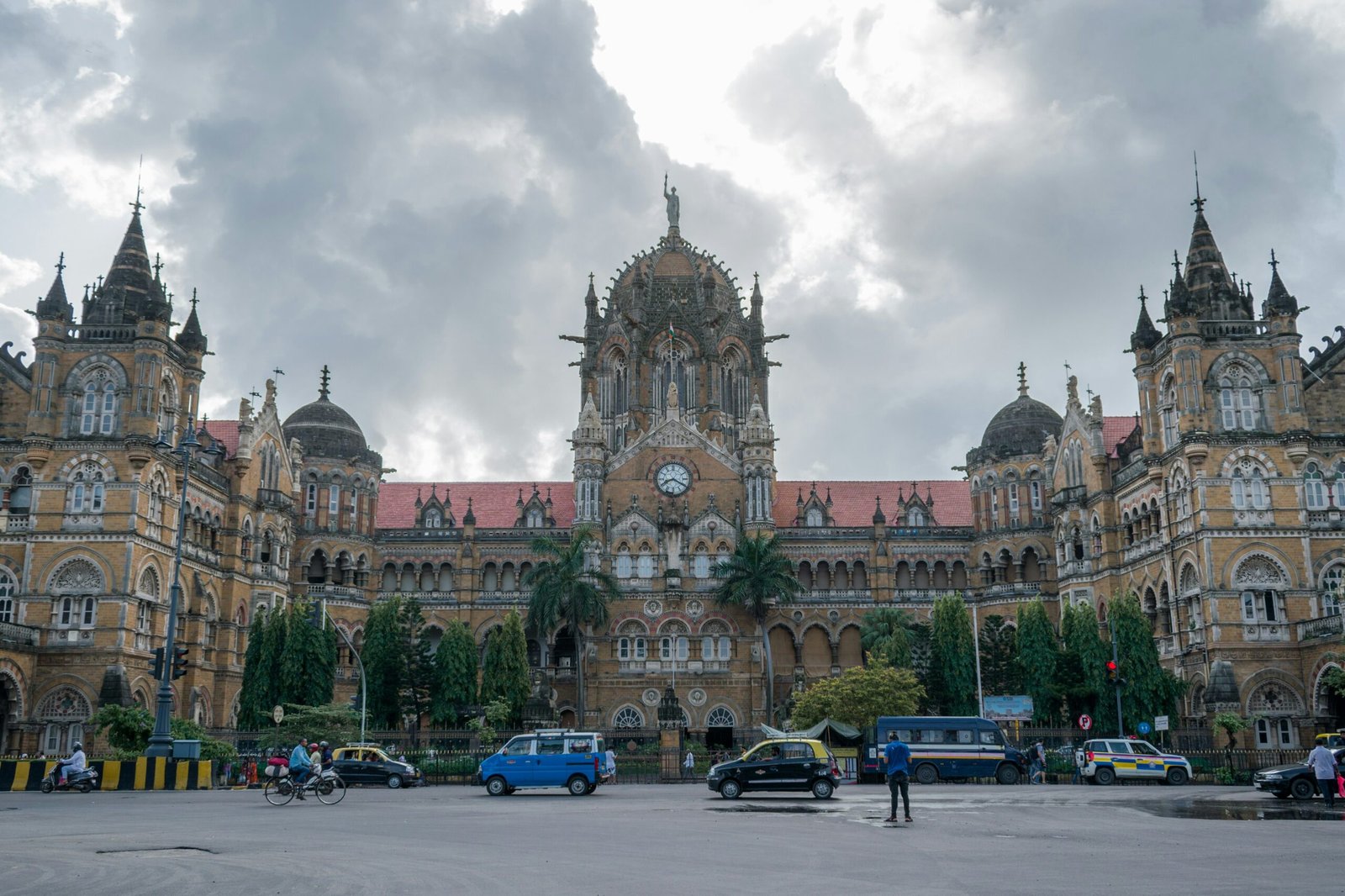
Sunrise at the Gateway of India. Breakfast at Leopold or Theobroma in Colaba. Walk the Causeway up to Kala Ghoda. Lunch at Britannia & Co. in Ballard Estate. Afternoon at CSMT station (the UNESCO-listed Victoria Terminus) and the Bombay High Court area. Sunset along Marine Drive with a roasted bhutta. Dinner at Trishna for the seafood.
Elephanta and Bandra evening
Morning ferry to Elephanta Caves (leave by 9 AM). Back by 2 PM for late lunch at Bademiya behind the Taj. Move to Bandra in the afternoon. Walk Bandstand, see Mount Mary Church, then dinner at Salt Water Cafe or O Pedro. Take the Sea Link back at night for the skyline view.
Real Mumbai and a big finish
Morning Dharavi tour with Reality Tours (book ahead). Late lunch at Soam at Babulnath for Gujarati and Maharashtrian thali. Sunset drive across the Bandra-Worli Sea Link one more time. Dinner at The Bombay Canteen if you want a memorable last meal — modern Indian, lively crowd, good cocktails.
Practical tips that actually help
- Carry small notes. Vendors and cab drivers rarely have change for ₹500 or ₹2,000 notes. Keep ₹10s, ₹20s, and ₹50s easily accessible.
- Google Maps is your friend. Even locals use it. Street addresses in Mumbai are vague — “near so-and-so landmark” is the normal format.
- Pack light fabrics. Cotton, linen, breathable shoes. The humidity is the real opponent, not the heat. Bring something you can change into mid-day.
- Get an Indian SIM at the airport. Airtel or Jio. You need a working number for Ubers, UPI payments, and most bookings. Counters at both T1 and T2 are reliable.
- Mornings are gold. The city is genuinely quiet between 6 and 8 AM. Walk Marine Drive or the Gateway at that hour for the best photos and the gentlest version of the city.
- Respect “no photo” signs. Religious sites, the slums, train interiors during peak hour — when locals say no, they mean it. The city is photogenic; you do not need every shot.
- Use UPI everywhere. Google Pay or PhonePe links to your Indian SIM and works at every chai stall, auto, and shop. Easier than haggling for change.
Mistakes first-time visitors make
- Trying to do too much in too little time. Mumbai is a marathon city. Three days, three areas. That is plenty.
- Booking a hotel in the suburbs to save money. You will lose your savings to cab fares and traffic. Pay more for Colaba or Bandra.
- Driving yourself. Do not. Mumbai traffic is its own discipline and even seasoned Indian drivers find it taxing.
- Eating only at hotel restaurants. You came to Mumbai for the streets, not for room service. Try one street stall per day at minimum.
- Ignoring the local trains. They are the actual circulatory system of the city. One off-peak local train ride teaches you more about Mumbai than any monument.
Mumbai FAQs
How many days do I need in Mumbai?
Three full days covers South Mumbai’s heritage, Bandra/Western suburbs, and either a Dharavi tour or an Elephanta day trip. Four or five days lets you slow down and add Kanheri Caves, Sanjay Gandhi National Park, or a Bollywood studio visit. Two days is workable but you will feel rushed.
Is Mumbai safe for solo travellers, including women?
Yes, including for solo women travellers, especially in South Mumbai and Bandra. The usual urban-India common sense applies: avoid empty stretches very late at night, use Uber instead of unmarked cabs after dark, and stay in well-reviewed accommodations. Mumbai is considered the safest large Indian city for solo women travellers.
What is the best area to stay for a first visit?
Colaba. It is walkable to the biggest sights, well-served by cabs, and has options across every budget. Bandra is the better choice if you want cafes and nightlife over history. Avoid the suburbs unless you have a specific reason to be there.
Should I visit during the monsoon?
Only if you have time flexibility and you romanticise rain. The monsoon (June through September) is beautiful but disruptive — flooding, train delays, and ruined plans are common. October to February is the safer window. October itself is the best of both worlds: post-monsoon green, pre-winter prices.
How do I get from Mumbai airport to the city?
Pre-paid taxi counters at both terminals are reliable. Uber and Ola also work fine from the airport pickup points. Budget ₹500–900 to South Mumbai, ₹300–500 to Bandra. The new metro line connects the airport to parts of the suburbs too, but is not yet useful for South Mumbai.
Is the Dharavi tour ethical?
Reality Tours, the original operator, is run partly as a social enterprise — 80% of profits fund community projects in Dharavi itself. Photography is strictly restricted, group sizes are small, and many guides are from Dharavi. If done with the right operator, the tour is widely considered ethical and educational rather than exploitative. Avoid operators who allow free photography or large groups.
How does Mumbai compare to Delhi?
Mumbai is denser, faster, and more vertical — built for commerce and squeezed onto seven small islands. Delhi is more spread out, more political, with more layers of history (Mughal, British, modern). Mumbai is easier for first-time visitors: less aggressive touts, more English, better public transport, and a coastline you can walk along. If choosing between them for a single visit, Mumbai is the gentler introduction to India.
Planning a longer India trip?
I help travellers turn confusing wish lists into custom India itineraries that actually work — combining cities like Mumbai with Rajasthan, Kerala, the Himalayas, or wildlife reserves. Free 48-hour reply.
Plan my India trip →Related guides
Pair Mumbai with another of India’s great first-timer cities — same honest, on-the-ground approach.
Travel to Delhi →
Old Delhi, Mughal monuments, Lodhi Garden, and Sufi nights at Nizamuddin. The ultimate first-timer guide to India’s capital.
Travel to Jaipur →
Amber Fort at sunrise, Old City bazaars, Hawa Mahal, and rooftop dinners over the painted city. The first-timer guide to Rajasthan’s capital.

Written by Ashvinee Nagle
I travel India slowly and write it down honestly - practical guides and real itineraries from someone who lives here.
About Ashvinee →Plan your India trip with us
Get one short, honest India travel guide a week — plus a free 7-day Rajasthan itinerary to start.
Free. Unsubscribe any time.