
Travel to Agra: A First-Timer’s Guide to the Taj Mahal & Mughal Wonders
An honest, no-fluff guide to Agra for first-time visitors — how to actually see the Taj at sunrise, the truth about tickets and the Friday closure, Agra Fort and Fatehpur Sikri, the best free view in the city, when to go, and a relaxed 2-day plan.
The Taj Mahal is one of the very few buildings on earth that doesn’t disappoint in person — and Agra is the reason most people come to Uttar Pradesh at all. But there’s more here than a single dome. Within a few kilometres sit three UNESCO World Heritage Sites — the Taj, Agra Fort and Fatehpur Sikri — that together tell the story of the Mughal empire at its height. The city itself is busy, dusty and touristy in the way famous places are, with more than its share of touts. The trick is simple: stay a night, hit the big sights at the right hours, and don’t try to cram it all into a rushed day trip from Delhi.
Agra is home to the Taj Mahal, and it lives up to every expectation — go at sunrise for the best light and the fewest crowds. Pair it with Agra Fort on the same day, add Fatehpur Sikri and the “Baby Taj” on a second, and catch the free sunset view from Mehtab Bagh across the river. The Taj is closed every Friday, tickets are cheapest booked online, and one night in Agra is what makes the sunrise possible. Fold it into the rest of Uttar Pradesh or a Golden Triangle loop.
Why visit Agra
Three reasons Agra anchors almost every first India trip — and rewards a slower look than most people give it.
The Taj lives up to it
Very few world-famous sights survive the hype. The Taj does — the marble shifts from grey to pink to white as the sun climbs, and up close the inlaid stone flowers are astonishing. It genuinely is worth the journey.
Three wonders, one city
Beyond the Taj sit Agra Fort, the seat of the Mughals, and Fatehpur Sikri, Akbar’s perfectly preserved ghost capital. Three UNESCO sites within an hour make Agra the richest Mughal stop in India.
Easy to reach
Fast trains link Agra to Delhi in around two hours, and the Yamuna Expressway makes the drive quick. It slots neatly onto the Golden Triangle or a wider Uttar Pradesh route.
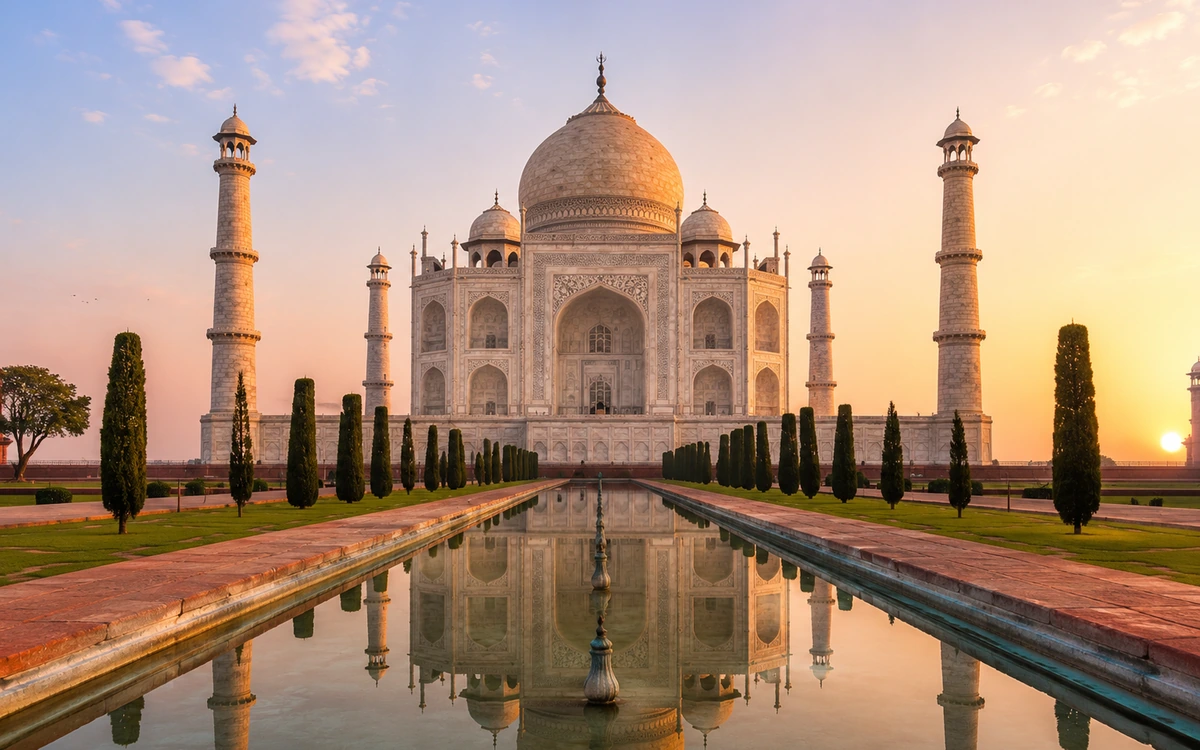
The Taj at first light — the one hour when the marble changes colour and the crowds are thin.
When to go
October to March (the sweet spot): cool, clear mornings made for sunrise at the Taj and unhurried days at the fort. This is peak season for good reason, and by far the most comfortable time to be in Agra.
February (festival month): the Taj Mahotsav brings crafts, food and performances near the monument, and the weather is still kind. A lively time to visit if your dates line up.
April to June (hot): the plains bake well past 40°C and midday at the Taj is punishing. If you must come, do the monument at opening and hide from the afternoon sun.
July to September (monsoon): greener, a little cooler and less crowded, though humid, with occasional heavy downpours. The gardens look their best after rain.
The Taj Mahal is closed every Friday for prayers at the mosque inside the complex. Build your Agra days around that — if you land on a Friday, do Agra Fort and Fatehpur Sikri, and save the Taj for sunrise the next morning.
Top things to do in Agra
From the Taj at dawn to a Mughal ghost city down the road, here is what fills a day or two.
The Taj Mahal at sunrise
Shah Jahan’s marble mausoleum for his wife Mumtaz Mahal is the reason you’re here. Enter through the quieter East Gate at opening, walk it slowly, and let the early light do the work. Book online to skip the counter queue.
Agra Fort
Half fortress, half palace, this red-sandstone complex was the main Mughal seat, and it’s where Shah Jahan spent his final years gazing at the Taj across the river. Less crowded than the Taj and worth two unhurried hours.
Fatehpur Sikri
Akbar’s purpose-built capital, 40 km west, abandoned after just 14 years and eerily well preserved. Red-sandstone palaces, courtyards and the towering Buland Darwaza stand almost exactly as they were left in the 1580s.
Mehtab Bagh at sunset
The “moonlight garden” sits directly across the Yamuna from the Taj. Come at sunset for the classic wide reflection with a fraction of the crowds — the best free view in the city.
Itmad-ud-Daulah (the Baby Taj)
A smaller, jewel-box tomb often skipped by rushed visitors — and all the better for it. Its delicate marble inlay is said to have influenced the Taj itself. Calm, beautiful and rarely crowded.
Kinari Bazaar & petha shops
Dive into the old-city lanes behind Jama Masjid for bangles, spices and the chaos of a working Mughal market, then pick up a box of Agra’s famous petha — a translucent winter-melon sweet — to take home.
What to eat in Agra
Agra sits at the crossroads of Mughlai richness and central-Indian street food. Come for the monuments, but leave room for a few local specialities.
Agra petha
The city’s signature sweet — a soft, translucent winter-melon candy sold in dozens of flavours. Try plain, kesar and paan, and buy it fresh from a long-running shop rather than a tout.
Mughlai & Awadhi
Deeply spiced curries, kebabs and biryani are Agra’s comfort food. Seek out an old-school kitchen over a tourist menu for the real thing.
Bedai & jalebi
The classic Agra start — a puffy fried bedai with spiced potato, chased with hot jalebi. Cheap, filling and exactly what you want before an early Taj visit.
Dalmoth & chaat
Agra’s famous dalmoth — a spiced, nutty savoury mix — travels well, and the city’s chaat stalls are reliably good for an afternoon bite.
Food, tripods and large bags aren’t allowed inside the Taj complex, so eat before you go in and travel light. Carry a water bottle and expect a security check at the gate.
Where to stay
Where you sleep in Agra mostly comes down to budget and how close you want to be to the Taj for that sunrise start.
Taj East Gate & Fatehabad Road
The luxury hotels here offer real Taj views and a short walk to the sunrise gate. Worth it for a special trip — you wake up, walk over, and beat the crowds.
Taj Ganj
The old quarter right beside the Taj, packed with guesthouses and rooftop cafes that look straight at the dome. The traveller’s pick — and unbeatable for an early start.
Sadar Bazaar & Civil Lines
Reliable mid-range hotels a little back from the Taj, close to restaurants and the cantonment station. A comfortable base if you don’t need a monument view.
How to get to Agra & around
Agra is one of the easiest cities in India to reach, especially from Delhi, and getting between the sights is simple once you know the Taj’s no-vehicle rule.
Petrol and diesel vehicles aren’t allowed close to the Taj to protect the marble, so you’ll finish the approach on foot, by electric cart or by rickshaw. Factor a few extra minutes, and book Taj tickets online to skip the counter.
A simple 2-day plan
One day for the Taj and the Fort, a second for Fatehpur Sikri and the quieter tombs.
The Taj & Agra Fort
Be at the Taj for sunrise via the East Gate, then rest through late morning. In the afternoon, tour Agra Fort, and end at Mehtab Bagh across the river for the sunset reflection.
Fatehpur Sikri & the Baby Taj
Drive out early to Fatehpur Sikri before the heat, then return via Itmad-ud-Daulah and the old-city bazaars — or press on to the rest of Uttar Pradesh.
Practical tips that actually help
Go at opening
Reach the Taj the moment it opens for the softest light and the smallest crowds — the difference is night and day.
Book tickets online
Buy Taj tickets online to skip the counter queue, and carry your passport or photo ID for the gate.
Pair the Taj & Fort
They’re close together, so do both on the same day and save the second day for Fatehpur Sikri.
Mind the Friday closure
The Taj is shut every Friday — plan the Fort or Fatehpur Sikri for that day instead.
Ignore the touts
Skip anyone offering ticket “shortcuts” or cheap “marble.” Book guides through your hotel and agree prices first.
Stay the night
An overnight in Agra is what makes sunrise possible — don’t try to do it all as a rushed day trip from Delhi.
Mistakes first-time visitors make
- Coming on a Friday. The Taj is closed — an easy trap that ruins a tight itinerary.
- Doing Agra as a day trip. You miss sunrise, the best hour of the day, and arrive in the midday crowds instead.
- Falling for gate “helpers.” Nobody needs to help you with tickets or shortcuts — book online and walk in.
- Buying “marble” from touts. Stick to reputable, hotel-recommended workshops for genuine inlay work.
Planning Uttar Pradesh beyond Agra?
Agra pairs naturally with Varanasi’s ghats, the Nawabi food of Lucknow, and the temple towns of Mathura and Vrindavan. Tell me your dates and pace, and I’ll map an Uttar Pradesh route that links the Mughal wonders to the sacred Ganga.
Plan my Uttar Pradesh trip →Agra FAQs
How many days do you need in Agra?
One full day and a night covers the Taj at sunrise and Agra Fort comfortably. A second day lets you add Fatehpur Sikri and the “Baby Taj” without rushing.
Is the Taj Mahal open every day?
No — it is closed every Friday for prayers at the mosque inside the complex. Every other day it opens about 30 minutes before sunrise and closes about 30 minutes before sunset.
When is the best time to see the Taj Mahal?
At sunrise, right when it opens. The light is soft, the marble changes colour, and the crowds are at their thinnest. Entering by the East Gate is usually quieter than the West.
How do I get from Delhi to Agra?
The fastest way is a morning train such as the Gatimaan or Shatabdi, roughly two hours. You can also drive the Yamuna Expressway in about three to four hours.
Is Agra worth visiting?
Yes. The Taj genuinely lives up to its reputation, and with Agra Fort and Fatehpur Sikri nearby, the city offers the richest concentration of Mughal architecture in India — ideally over a night rather than a rushed day trip.
Related guides
Keep planning your Uttar Pradesh trip with these:
Uttar Pradesh Travel Guide
The Taj, the Ganga, Nawabi food and temple towns — how to string an Uttar Pradesh trip together.
Plan my Uttar Pradesh trip
Share your dates, pace and starting city, and I’ll suggest an Agra–Varanasi–Lucknow route that fits.

Written by Ashvinee Nagle
I travel India slowly and write it down honestly - practical guides and real itineraries from someone who lives here.
About Ashvinee →Plan your India trip with us
Get one short, honest India travel guide a week — plus a free 7-day Rajasthan itinerary to start.
Free. Unsubscribe any time.