
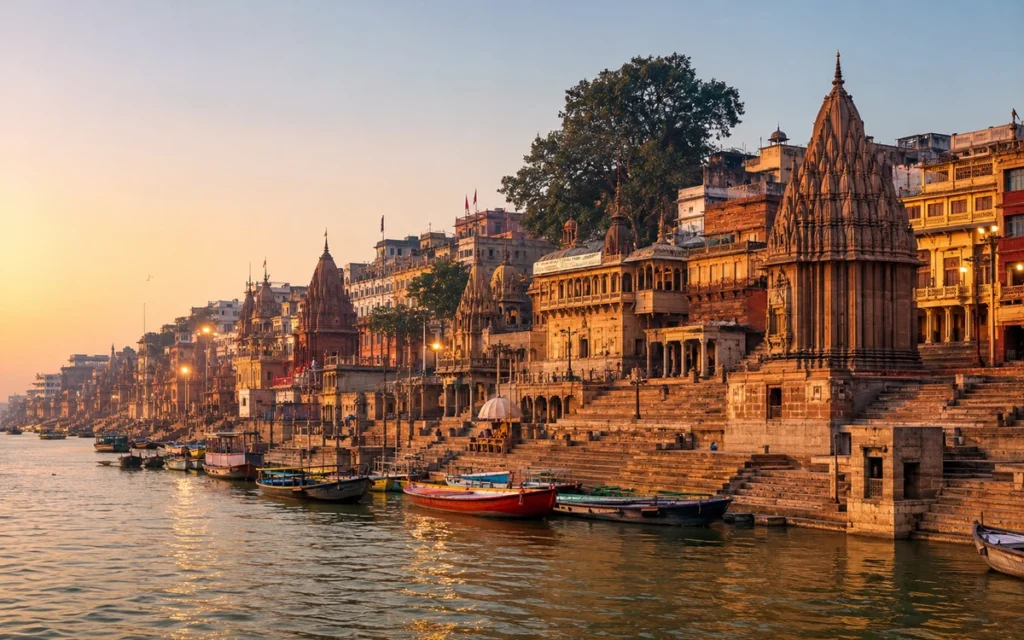
Travel to Varanasi: A First-Timer’s Guide to the City on the Ganga
An honest, no-fluff guide to Varanasi for first-time visitors — the dawn boat ride that makes the trip, the evening Ganga aarti, how to witness the cremation ghats respectfully, Kashi Vishwanath and Sarnath, when to go, and a relaxed 2–3 day plan.
Varanasi — Banaras, Kashi, whatever you call it — is intense, and there’s no easing into it. This is the spiritual heart of Hinduism, a city where people come to pray, to bathe in the Ganga, and to die, all along the same stretch of riverbank. The old town is a maze of lanes packed with temples, cows, motorbikes, silk shops and pilgrims, and it can overwhelm on day one. Give it two nights, let the river set the rhythm, and it becomes one of the most extraordinary places you’ll ever spend time. Just don’t try to “do” Varanasi as a half-day stop — it doesn’t work that way.
Varanasi is one of the oldest living cities on earth, strung along the ghats of the Ganga. The dawn boat ride is the single best thing you’ll do; the evening Ganga aarti at Dashashwamedh is the great spectacle. Give it two nights minimum, add Sarnath for calm and space, dress modestly, and treat the cremation ghats with respect. Come October to March and pair it with the rest of Uttar Pradesh, often alongside Prayagraj.
Why visit Varanasi
Three reasons Varanasi is unlike anywhere else in India — and stays with almost everyone who comes.
One of the oldest cities on earth
People have prayed and lived on these ghats for thousands of years without a break. Few places let you stand inside a living tradition this old — it’s history you can still hear, smell and touch.
The river is the whole show
The eighty-odd ghats are the reason to be here. Bathing, praying, laundry, cremation, sunrise yoga — the entire cycle of life plays out on the steps down to the Ganga, and a boat puts you right in the middle of it.
It gets under your skin
Varanasi is chaotic and confronting, and then somehow it isn’t. Give it a couple of days and the intensity settles into something profound — the trip people talk about for years.
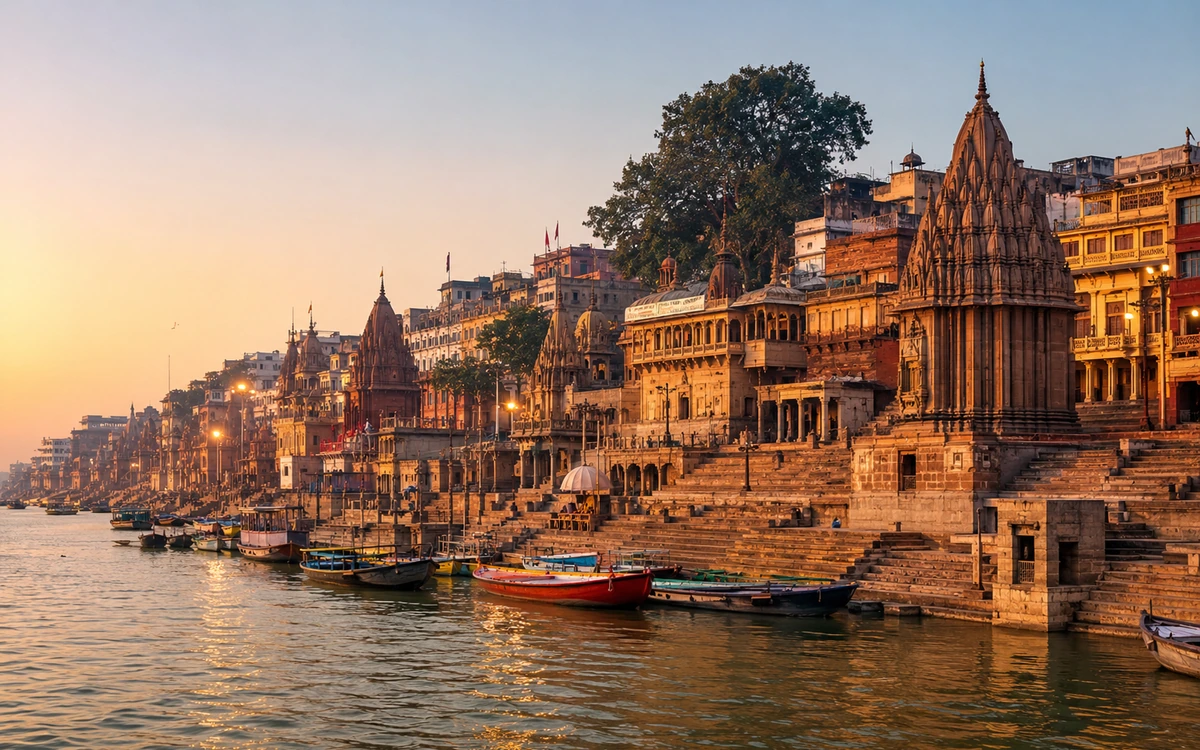
Dawn on the ghats from a rowboat — the calmest, most beautiful hour on the river.
When to go
October to March (the sweet spot): cool, clear mornings that are perfect for the dawn boat ride and long evenings for the aarti. This is the most comfortable time by far, and the festival calendar — Dev Deepawali especially — is at its richest.
Dev Deepawali (Nov): the ghats are lit with lakhs of oil lamps for one spectacular night. Magical, but book beds well ahead.
April to June (hot): the plains bake past 40°C and the lanes are stifling. Do the river at dawn and hide from the afternoon if you must come.
July to September (monsoon): the Ganga runs high and fast, boating can be restricted, and the lower ghats sometimes flood — but the city is green, dramatic and far less crowded.
Varanasi rewards slow. A dawn boat, an evening aarti and time simply wandering the lanes need at least two nights — a rushed half-day stop shows you the crowds and none of the magic.
Top things to do in Varanasi
From a sunrise boat to the ruins where Buddhism began, here is what fills two or three days.
A dawn boat on the Ganga
Take a rowboat at first light, when the river is calm and the city wakes on the water — pilgrims bathing, priests doing sun salutations, smoke rising from the fires. Book the boat the evening before and agree the price first. Nothing else in Varanasi beats it.
The evening Ganga aarti
Each evening, priests perform a choreographed fire ceremony — lamps, incense, bells and chanting — facing the river at Dashashwamedh Ghat. Watch from a boat on the water for the best view, or arrive early for a spot on the steps.
The cremation ghats
At Manikarnika and Harishchandra, bodies are cremated in the open, around the clock. It’s a profound thing to witness — a working part of the city, not a show. Watch quietly from a distance, take no photos, and ignore anyone asking for a “donation.”
Kashi Vishwanath Temple
One of the most sacred Shiva temples in India, now linked to the river by a broad new corridor. Expect long queues and tight security; leave phones and bags behind. The corridor complex is open to all, though inner-sanctum access can be restricted.
Sarnath
Ten kilometres out, this is where the Buddha gave his first sermon. The ruins, the Dhamek Stupa and an excellent museum make a calm, spacious half-day — a welcome contrast to the density of the old city.
The old-city lanes
Losing yourself in the galis behind the ghats is half the experience — hole-in-the-wall kachori shops, silk weavers, tiny shrines and cheerful chaos. You will get lost. That’s fine; the river is always downhill.
What to eat in Varanasi
Banaras takes its food seriously, and it’s almost entirely vegetarian street fare. Come hungry to the stalls around Godowlia and the old lanes.
Kachori-sabzi & jalebi
The classic Banarasi morning — a crisp kachori with spiced potato curry, chased with hot jalebi. Cheap, filling and best eaten standing at a busy stall.
Banarasi chaat
Tamatar chaat and palak chaat are the local specialities — tangy, spicy and unlike chaat anywhere else. The city is famous for them.
Banarasi paan & thandai
Finish a meal the Banaras way with a sweet paan, and try a cup of thick, spiced thandai. Both are woven into the city’s daily life.
Malaiyo
A frothy, saffron-scented milk dessert made only in the cold months and found nowhere quite like here. If you’re here in winter, seek it out at dawn.
Stick to busy, freshly cooked stalls and clay-cup lassi, and go easy on tap water and cut fruit. The chaat and kachori are the point — but pick places with a queue.
Where to stay
It comes down to how close to the river you want to be — and how much walking with your bags you’ll accept in the car-free old town.
Assi Ghat
More space, a gentler pace and its own morning aarti. Heritage guesthouses and riverside hotels make this the easiest ghat-side base for first-timers.
Dashashwamedh area
Right in the thick of it, steps from the main aarti and the lanes. Atmospheric and convenient, but louder and more crowded — and reached only on foot.
The Cantonment (Cantt)
Quieter, greener and full of standard hotels with easy car access. A short ride from the river — the pick if you want comfort over character.
How to get to Varanasi & around
Varanasi is very well connected by air and rail, but the old city itself is walking-only — and its traffic is legendarily chaotic.
Traffic near the ghats is genuinely chaotic, so build in extra time and don’t plan tight connections. Have your hotel guide you in the first time — the lanes are impossible to navigate with luggage on day one.
A simple 2-day plan
One day for the river and the lanes, a second for Sarnath and a slower pace.
Dawn boat, lanes & the aarti
Start with a sunrise boat along the ghats, then lose the morning in the old lanes over kachori and chai. Rest through midday, and return in the evening for the Ganga aarti at Dashashwamedh from the water.
Sarnath & the quieter ghats
Head out to Sarnath in the morning for the stupa and museum, then spend the afternoon walking the southern ghats and the Vishwanath corridor — or move on to the rest of Uttar Pradesh.
Practical tips that actually help
Book the boat the night before
Arrange your dawn boat in the evening and settle the price up front — scrambling at 5am gets you a worse deal.
Dress modestly
Cover shoulders and knees at the ghats and temples, and carry small change for offerings and boats.
Respect the cremations
Watch from a distance, never photograph, and walk away from anyone steering you toward a “donation.”
Give it two nights
Varanasi unfolds slowly — a single night barely scratches it. Two lets the city turn from overwhelming to unforgettable.
Watch the aarti from a boat
The steps get packed; a boat on the water gives you the best, calmest view of the evening ceremony.
Beware unsolicited “guides”
Politely decline strangers who attach themselves at the ghats or the temple queue — book help through your hotel.
Mistakes first-time visitors make
- Rushing it. A flying half-day shows you the crowds and none of the magic — Varanasi needs two nights.
- Photographing the cremation ghats. It’s disrespectful and unwelcome — watch quietly instead.
- Coming in peak summer. May–June heat on the plains is brutal, with little relief in the lanes.
- Accepting “free” help. The unsolicited guide, garland or blessing almost always ends in a demand for money.
Planning Uttar Pradesh beyond Varanasi?
Varanasi pairs naturally with the river confluence at Prayagraj, the temple town of Ayodhya, and further afield the Taj at Agra and the Nawabi kitchens of Lucknow. Tell me your dates and pace, and I’ll map an Uttar Pradesh route around the Ganga.
Plan my Uttar Pradesh trip →Varanasi FAQs
How many days do you need in Varanasi?
Two nights at minimum — enough for a dawn boat ride, an evening aarti and time in the lanes. A third day lets you add Sarnath and slow down, which the city rewards more than almost anywhere in India.
What’s the best time of day on the ghats?
Dawn, from a boat. The light is beautiful, the river is calm, and you see the whole city come to life on the water. The evening aarti is the other unmissable moment.
Can non-Hindus visit the temples?
Most ghats and the Kashi Vishwanath corridor are open to everyone, though access to some inner sanctums can be restricted. Dress modestly, leave phones and bags behind, and follow the queues.
Is it okay to watch the cremation ghats?
Yes, respectfully and from a distance. It is a sacred, working part of the city — do not take photographs, and ignore anyone asking for a “donation” to view.
How do I get to Varanasi?
Fly into Varanasi airport from major cities, or take a train — it is very well connected, including overnight services from Agra and Delhi, and is about 2.5–3 hours from Prayagraj by road.
Related guides
Keep planning your Uttar Pradesh trip with these:
Uttar Pradesh Travel Guide
The Taj, the Ganga, Nawabi food and temple towns — how to string an Uttar Pradesh trip together.
Plan my Uttar Pradesh trip
Share your dates, pace and starting city, and I’ll suggest a Varanasi–Prayagraj–Ayodhya route that fits.

Written by Ashvinee Nagle
I travel India slowly and write it down honestly - practical guides and real itineraries from someone who lives here.
About Ashvinee →Plan your India trip with us
Get one short, honest India travel guide a week — plus a free 7-day Rajasthan itinerary to start.
Free. Unsubscribe any time.