
Travel to Srinagar: A First-Timer’s Guide to Dal Lake & Houseboats
A practical, no-fluff guide to Srinagar — sleeping on a Dal Lake houseboat, the dawn shikara ride, the Mughal gardens, the wooden mosques of the old city, where to stay and eat, how to get there, and a relaxed 2-day plan.
Srinagar is where almost every Kashmir trip begins and ends — the summer capital strung along the Jhelum river and the great sheet of Dal Lake. It is the one Indian city that feels genuinely Central Asian: Mughal gardens climbing the hillsides, papier-mâché and walnut-wood crafts, Persian-style food, and a skyline of wooden mosques and chinar trees. Spend the first day on the water and the second in the old city, and you have the soul of the place.
Srinagar is the lakeside capital of Kashmir — Dal and Nigeen lake houseboats, dawn shikara rides, the Mughal gardens (Nishat, Shalimar, Pari Mahal), Hazratbal shrine and the wooden Jamia Masjid in the old city. Two days is enough. Go April to October, sleep on a houseboat at least one night, and pair it with Gulmarg or Pahalgam on the same Kashmir trip.
Why visit Srinagar
Three reasons Srinagar is the natural first stop in Kashmir — and the easiest place to fall for the valley.
Life on the water
Dal and Nigeen lakes are a floating world — carved houseboats, shikara taxis, lake-grown vegetables and the famous floating market at dawn. A night on a houseboat is the quintessential Kashmir experience.
Mughal gardens
Terraced gardens laid out by emperors — Nishat, Shalimar and the hillside Pari Mahal — step down towards the lake with fountains, chinar avenues and big mountain views behind them.
The living old city
Downtown Srinagar is all timber mosques, shrine domes, spice bazaars and the Jhelum’s old bridges — the cultural heart of the valley, best explored slowly on foot.
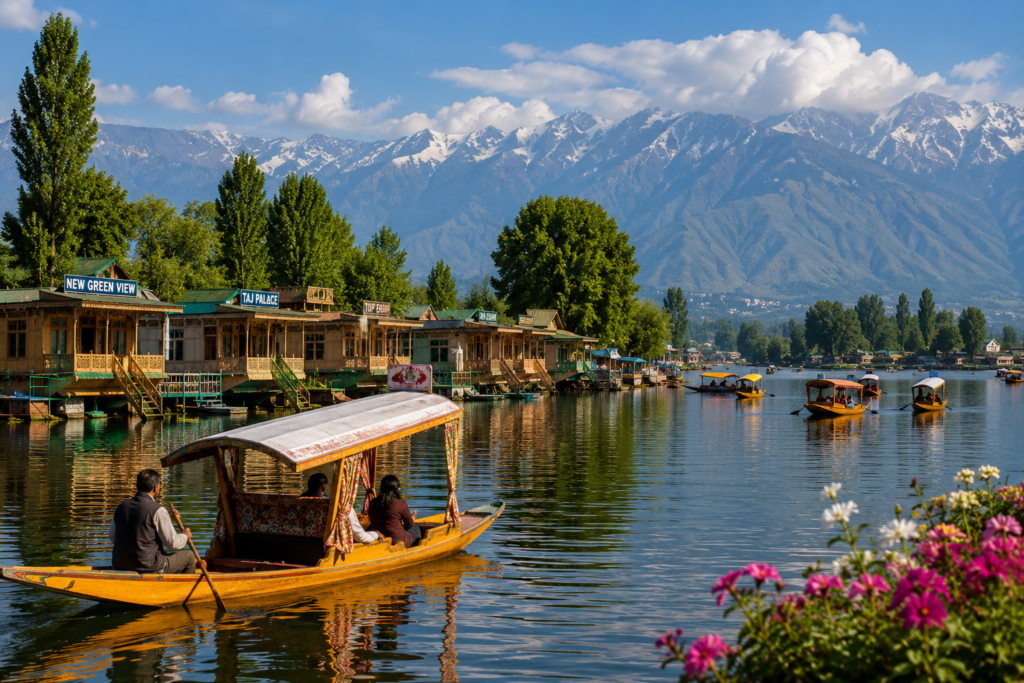
Shikaras on Dal Lake at first light — the image most people carry home from Kashmir.
When to go
April to June (spring & early summer): the classic season — tulips and almond blossom in April, gardens in full colour, warm days and cool evenings. The busiest and prettiest window.
July to September: warm and green, good for the lakes and gardens, and the launch point for the Sonmarg–Ladakh road. Occasional rain but generally reliable.
October: the chinar trees turn gold and red — a quieter, photogenic autumn stretch before the cold sets in.
December to February: cold and atmospheric, the lake sometimes freezing at the edges, the city running on bukhari wood stoves. Snow days are magical but flights and roads can disrupt.
Houseboats and hotels fill up fast for April–July and the Christmas–New Year week. Book your houseboat ahead, and confirm it is a moored, registered houseboat on Dal or Nigeen — standards vary widely.
Top things to do in Srinagar
From a dawn shikara to the hillside gardens and the old city’s shrines, here is what fills two easy days in and around Srinagar.
Sleep on a houseboat & ride a shikara
Spend a night on a carved cedar houseboat on Dal or quieter Nigeen Lake, then take a shikara out at dawn — past lotus gardens, the floating vegetable market and the lake’s little island gardens. The single most memorable thing you can do in Srinagar.
The Mughal gardens
Nishat Bagh and Shalimar Bagh step down towards Dal Lake in terraces of fountains and chinars, while hillside Pari Mahal and the Botanical Garden add the views. An easy half-day, loveliest in the late afternoon light.
Jamia Masjid & the downtown shrines
The wooden Jamia Masjid with its 300-plus deodar pillars, the riverside Khanqah-e-Moula and the spice lanes of the old city are the cultural core of Srinagar — best on foot, slowly, camera in hand.
Hazratbal & Hari Parbat
The white-marble Hazratbal shrine sits right on the lake’s north shore, with the Mughal fort of Hari Parbat on the hill behind — a calmer, local-feeling corner away from the tourist shikaras.
Shankaracharya Temple
A short drive (and a flight of steps) up the hill to an ancient Shiva temple with the best all-round panorama of the city, the lake and the Pir Panjal beyond. Go early before the haze.
Crafts: pashmina, walnut wood & papier-mâché
Srinagar is the home of pashmina shawls, walnut-wood carving, papier-mâché and hand-knotted carpets. Browse the emporiums and old-city workshops — and buy saffron and dry fruit from government outlets to avoid fakes.
What to eat in Srinagar
Kashmiri food is rich, slow-cooked and built around the wazwan feast — but the bakeries, lake fish and pink salt tea are just as memorable.
Wazwan & Rogan Josh
The multi-course Kashmiri wazwan — rogan josh, rista, gushtaba, tabak maaz — is the region’s signature. Even a simple rogan-josh thali shows off the slow, aromatic Kashmiri kitchen.
Kahwa & noon chai
Saffron-and-almond kahwa is the warming green tea you’ll be offered all day; pink, salty noon chai with a sheermal bread is the local breakfast. Both are essential Srinagar rituals.
Kashmiri breads & bakeries
Old-city bakeries turn out sheermal, bakirkhani, girda and crisp kulcha from tandoors — buy them warm in the morning. A cheap, delicious window into everyday Kashmiri life.
Lake fish & street snacks
Grilled and fried lake fish, monji-gaad, harissa in winter, and the masala-tea-and-snacks stalls around Lal Chowk round out the eating. Vegetarians do well on nadru (lotus stem) and dum aloo.
Try to arrange a proper wazwan at least once — many houseboats and old-city hosts will cook one to order if you ask a day ahead. It is the real taste of Kashmir, and best shared.
Where to stay
Choose the floating-romance of a houseboat, the convenience of a lakeside hotel, or the character of a restored old-city home.
Dal & Nigeen houseboats
Carved cedar houseboats with wood-panelled rooms and a shikara on call — Nigeen is quieter and cleaner than central Dal. The defining Srinagar stay, at least for a night.
Boulevard & Rajbagh hotels
Hotels along the Dal Boulevard and in leafy Rajbagh and Sonwar offer comfort, parking and easy access to gardens and the airport — the practical base for families.
Old-city heritage homes
A small but growing list of restored timber homes and boutique stays in the old city put you among the shrines, bakeries and bazaars — the most atmospheric, local option.
How to get to Srinagar & around
Srinagar is the valley’s gateway — fly in, then use a hired car or shikaras to get around and out to the other valleys.
Hire one taxi/driver for your whole Kashmir trip rather than booking city cabs piecemeal — it is cheaper over several days and far smoother for the runs out to Gulmarg, Pahalgam and Sonmarg. Agree the full itinerary and price up front.
A simple 2-day plan
Two unhurried days — one on the water, one in the city — before you head out to the valleys.
Lake day: houseboat, shikara & gardens
Check into a houseboat, take an afternoon shikara across Dal, then visit Nishat and Shalimar gardens in the golden evening light. Back to the houseboat for a home-cooked Kashmiri dinner.
Practical tips that actually help
Confirm shikara rates first
Agree the price and the route before you step into a shikara — the standard government rate is posted; don’t pay per stop on the fly.
Pick Nigeen for calm
If you want a cleaner, quieter houseboat experience, choose Nigeen Lake over the busier central Dal.
Carry a warm layer
Even in summer, lake mornings and evenings turn cool — a light fleece or shawl is worth packing year-round.
Buy saffron carefully
Buy saffron, dry fruit and pashmina from government emporiums or trusted shops to avoid the common fakes.
Use Jio or Airtel
Many prepaid SIMs don’t work in J&K — a postpaid Jio or Airtel connection is the most reliable.
Start your trip here
Srinagar is the hub — base here first, then loop out to the valleys and back, rather than chasing everything in one day.
Mistakes first-time visitors make
- Skipping the houseboat. Even one night on a Dal or Nigeen houseboat is the experience that defines a Srinagar trip — don’t treat it as optional.
- Cramming every valley into rushed day trips. Gulmarg and Sonmarg can work as single long days, but Pahalgam deserves at least two — and any valley feels better with an overnight if your schedule allows.
- Buying saffron from shikara vendors. The floating salesmen are part of the charm, but for saffron and pashmina stick to reputable shops.
- Underestimating the cold. Srinagar sits at 1,585 m — nights are chilly even in summer, and winter is properly cold.
Planning Kashmir beyond Srinagar?
Srinagar pairs naturally with Gulmarg’s gondola, Pahalgam’s Lidder valley and the Sonmarg–Ladakh road. Tell me your dates and pace, and I’ll map a Kashmir route that links them up.
Srinagar FAQs
How many days do you need in Srinagar?
Two to three days is ideal — one for the lake and a houseboat night, one for the Mughal gardens and the old city, and a third if you want to slow down or shop for crafts. Most people then move out to the valleys.
Is a Dal Lake houseboat worth it?
Yes — a night on a carved houseboat with a dawn shikara is the signature Srinagar experience. Choose a registered, well-reviewed boat, and consider quieter Nigeen Lake if you want fewer crowds.
What is the best time to visit Srinagar?
April to June is the classic spring season with tulips and blossom, July to September is warm and green, and October brings golden chinars. December to February is cold and snowy — beautiful but disruptive for flights.
How do you get to Srinagar?
Fly into Srinagar airport (SXR), with direct flights from Delhi, Mumbai and Bengaluru. By road it is the Jammu–Srinagar highway (about 270 km), and the expanding rail line now connects the valley to the wider network.
Is Srinagar safe for tourists?
Tourism has been steady for several years and Srinagar sees large numbers of visitors around the lake, gardens and old city. Advisory guidance differs by nationality, so check your own government’s latest India and Jammu and Kashmir travel advisory before booking, and stick to the main tourist routes.
Related guides
Keep planning your Kashmir trip with these:
Kashmir Travel Guide
Dal Lake, Gulmarg, Pahalgam and the meadows — how to string a Kashmir trip together.
Travel to Gulmarg
Asia’s highest gondola and the valley’s best meadows — the easiest day or overnight from Srinagar.
Ashvinee Nagle
I’m Ashvinee — I help first-time travellers plan India trips that actually work. I’ve spent years exploring the country’s regions, from Rajasthan’s forts to Kashmir’s valleys, and I write the guides I wish I’d had on my own first trips.

Written by Ashvinee Nagle
I travel India slowly and write it down honestly - practical guides and real itineraries from someone who lives here.
About Ashvinee →Plan your India trip with us
Get one short, honest India travel guide a week — plus a free 7-day Rajasthan itinerary to start.
Free. Unsubscribe any time.