
Travel to Manali: A First-Timer’s Guide to Himachal’s Adventure Hub
A practical, no-fluff guide to Manali for first-time visitors — when to go, Old Manali and the temples, Solang Valley and the Atal Tunnel, where to stay, what to eat, how to get there, and an easy 3-day plan.
Manali is Himachal at full volume — snow peaks, a rushing river, cafe-lined lanes and an adventure menu that runs from paragliding to high-altitude road trips. Set at the head of the Kullu Valley where the Beas comes down from the mountains, it’s both a holiday town in its own right and the launch pad for the biggest journeys in the state: Lahaul, Spiti and the legendary road to Leh all begin here.
Manali is Himachal’s adventure capital, at the top of the Kullu Valley. Come for three days of snow and adventure at Solang and the Atal Tunnel, cedar-forest temples like Hadimba, the cafes and lanes of Old Manali, and a soak at Vashisht. Go March to June or for winter snow, base in Old Manali, and use it as the gateway to Spiti and the wider Himachal mountains.
Why visit Manali
Three reasons Manali anchors almost every Himachal trip — and why it works for couples, families and backpackers alike.
An adventure playground
Solang Valley packs in paragliding, zorbing and winter skiing; the Beas serves up white-water rafting; and the trails around Jogini and Bhrigu Lake reward walkers. Few Indian towns put this much within a short drive.
Old Manali charm
Across the river from the busy Mall, Old Manali is all slate-roofed houses, apple orchards, the cedar-shrouded Manu Temple and a long lane of cafes — the soul of the place, and where most travellers end up lingering.
The gateway to the high Himalaya
The Atal Tunnel has opened up Lahaul and Sissu as easy day trips, while the Manali–Leh and Manali–Kaza highways start right here. Manali is where a hill-station holiday turns into a proper mountain expedition.
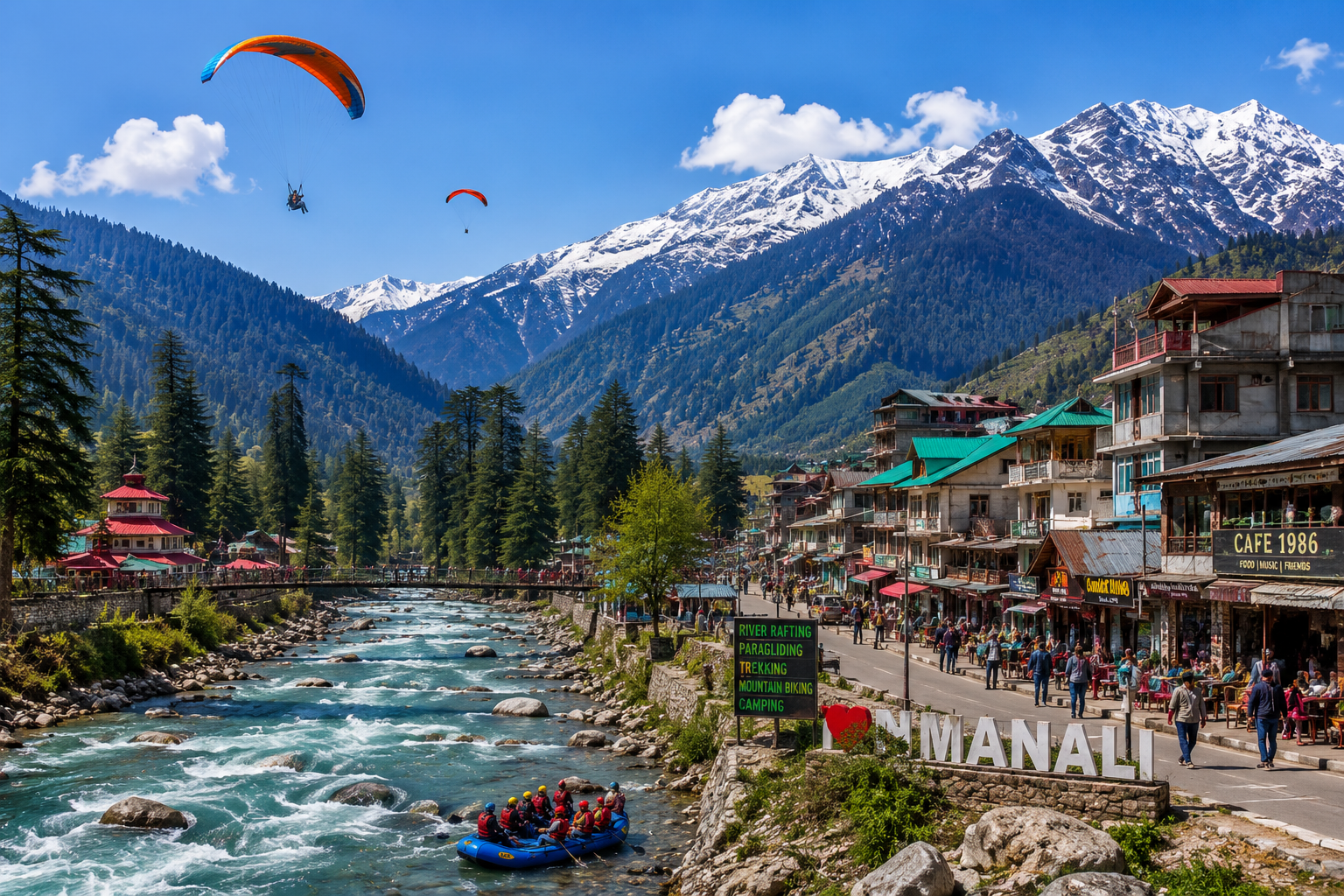
Snow peaks above Manali at the head of the Kullu Valley.
When to go
March to June (best): the all-rounder season — warm valley days, snow still visible up high, and Solang in full adventure swing. It’s also the busiest, so book early and expect crowds at the headline sights.
December to February (snow): Manali at its most magical, with fresh snow around Solang and Atal Tunnel and a cosy cafe-and-fireplace mood. Some high roads close; pack for real cold.
July to September (monsoon): green and quiet but landslide-prone on the approach roads. Fine if you’re flexible with timings, less ideal for tight schedules or onward Spiti plans.
The Atal Tunnel can close briefly after heavy snow, and the Rohtang Pass beyond it needs a permit and advance booking. If you’re continuing to Spiti or Leh, spend a night acclimatising in Manali first — you climb a lot of altitude fast.
Top things to do in Manali
From the cedar temples to the adventure valleys that fill three full days.
Solang Valley
Manali’s adventure hub — paragliding and zorbing in summer, skiing and snow play in winter, all against a wall of peaks. Go early to beat the day-tripper rush and compare operators on the spot.
Atal Tunnel & Sissu
The 9-km tunnel slips under the mountains into green Lahaul. Drive through to Sissu for its waterfall, lake and big snow views — a brilliant, easy day trip that felt impossible a few years ago.
Hadimba Devi Temple
A 16th-century wooden temple in a hushed deodar grove, all carved beams and steep pagoda roof. The most atmospheric corner of Manali, especially in soft morning light.
Old Manali & Manu Temple
Wander the orchard lanes, climb to the Manu Temple, and settle into a riverside cafe. This is where Manali stops being a sightseeing checklist and starts being a place to hang around.
Vashisht hot springs
A short ride across the valley to a village built around natural sulphur springs and an old stone temple. Soak, eat, and take in the views over the Beas.
Jogini Falls & rafting
Walk up through orchards to the Jogini waterfall above Vashisht, or drop down to the Beas near Pirdi for a bracing white-water rafting run. Two easy ways to feel the mountains.
What to eat in Manali
Manali eats well for a mountain town — fresh trout, Himachali staples, big Tibetan bowls and a cafe scene in Old Manali that runs from Israeli platters to wood-fired pizza.
Himalayan trout
Fresh river trout, pan-fried or grilled with local herbs — the dish to order in the Kullu Valley, and best at places that farm or source it daily.
Siddu & dham
Steamed stuffed siddu with ghee, and the festive dham thali of rice, rajmah and madra — hearty Pahari cooking built for the cold.
Momos & thukpa
Steaming momos and noodle-soup thukpa turn up everywhere — cheap, warming and exactly right after a day in the cold.
Old Manali cafe food
Riverside cafes do shakshuka, hummus platters, pizzas, pancakes and good coffee — the social heart of the backpacker scene.
In peak summer the popular Old Manali cafes can get slammed at mealtimes — go a little early or late, and you’ll trade the queue for a riverside table.
Where to stay
Pick your scene: the lanes and cafes of Old Manali, the quieter heritage of Naggar, or a riverside resort with mountain views.
Old Manali guesthouse
Cafes, hostels and small guesthouses among the orchards — the liveliest, most walkable base, and the best value for solo and young travellers.
Naggar castle & stays
The old Kullu capital, with a wood-and-stone castle hotel, the Roerich gallery and far fewer crowds — a calmer, characterful alternative.
Riverside / Aleo resort
Comfortable resorts along the river and toward Aleo, with mountain views and easy access to both Manalis. Good for families and couples.
How to get to Manali & around
Manali takes a long haul to reach by road — but the overnight bus from Delhi is a rite of passage in itself.
Book Solang activities on the spot and compare operators rather than through a hotel desk — paragliding and ride prices drop a lot once you’re actually there.
A simple 3-day plan
Three days that balance the temples, the adventure valleys and a slower Old Manali rhythm.
Old Manali & temples
Ease in with Hadimba Temple in its cedar grove, climb to the Manu Temple, then spend the afternoon in Old Manali’s cafes and across at Vashisht hot springs for sunset.
Snow & tunnel
Start early for Solang Valley and its adventure menu, then drive through the Atal Tunnel to Sissu in green Lahaul for waterfalls and big snow views. A full, scenic day.
Trails & onward
Walk to Jogini Falls or raft the Beas, browse Naggar, then either wind down — or push on to Kasol and the Parvati Valley, or begin the Spiti circuit.
Practical tips that actually help
Pack for cold
Even summer nights are chilly, and Solang and Atal Tunnel are colder still. Bring a warm layer year-round.
Acclimatise first
If Spiti or Leh is next, sleep a night in Manali before climbing — the altitude gain beyond is steep.
Start early
Solang and the tunnel clog with day-trippers by late morning. First light means fewer crowds and clearer views.
Carry cash
Old Manali cafes and small operators are often cash-first; ATMs cluster around the Mall.
Mind the monsoon
Check road and landslide status July to September before travelling or planning onward drives.
Sort Rohtang ahead
Rohtang Pass needs a permit and daily cap — arrange it in advance if it’s on your list.
Mistakes first-time visitors make
- Staying only near the Mall. The charm is across the river in Old Manali — base yourself there or at least spend your evenings there.
- Underestimating the drive from Delhi. It’s 12–14 hours; take the overnight bus and arrive ready to rest, not sightsee.
- Rushing straight to Spiti or Leh. Skipping a night of acclimatisation in Manali is how altitude sickness starts.
- Heading to Rohtang without a permit. Access is capped and regulated — book before you go or you’ll be turned back.
Planning Himachal beyond Manali?
Manali pairs beautifully with the Parvati Valley, the Spiti circuit, or a slow run down through Naggar and Kullu. Tell me your dates and pace, and I’ll map a Himachal route that links them up.
Plan my Himachal trip →Manali FAQs
How many days do you need in Manali?
Three days is the sweet spot — one for Old Manali and the temples, one for Solang and the Atal Tunnel, and one for trails or an onward move. Add days if you’re using Manali as a base for Spiti, Leh or Parvati Valley.
What is the best time to visit Manali?
March to June for warm valley days with snow still up high, and December to February for fresh snow and a cosy winter mood. The July to September monsoon is green but landslide-prone on the approach roads.
How do you reach Manali from Delhi?
Most travellers take an overnight Volvo bus from Delhi, which takes about 12 to 14 hours. The nearest airport is Bhuntar (Kullu), around 50 km away with limited flights, while Chandigarh is the larger hub roughly 8 hours out by road.
When can you see snow in Manali?
For reliable snow around Solang and the Atal Tunnel, visit December to February. Spring still shows snow on the higher slopes, and you can usually reach it via the tunnel or Rohtang even when the town itself is green.
Is Manali the gateway to Spiti and Leh?
Yes. The Manali–Kaza road into Spiti and the Manali–Leh highway both start here, and the Atal Tunnel has made Lahaul an easy day trip. Both high routes are summer-only and need a night or two of acclimatisation first.
Related guides
Keep planning your Himachal trip with these:
Himachal Pradesh Travel Guide
Hill stations, Tibetan towns, Spiti and quiet valleys — how to string Himachal together.
Travel to Kasol
Riverside cafes, pine forest and the Kheerganga trek — the backpacker heart of Himachal.
Ashvinee Nagle
I’m Ashvinee — I help first-time travellers plan India trips that actually work. I’ve spent years exploring the country’s regions, from Rajasthan’s forts to the Himalayan valleys of Himachal, and I write the guides I wish I’d had on my own first trips.
Written by Ashvinee Nagle
I travel India slowly and write it down honestly - practical guides and real itineraries from someone who lives here.
About Ashvinee →Plan your India trip with us
Get one short, honest India travel guide a week — plus a free 7-day Rajasthan itinerary to start.
Free. Unsubscribe any time.