
Travel to Kasol: A First-Timer’s Guide to Himachal’s Parvati Valley
A practical, no-fluff guide to Kasol and the Parvati Valley for first-time visitors — when to go, the Kheerganga trek, Tosh and Chalal, Manikaran’s hot springs, where to stay, what to eat, how to get there, and an easy 2–3 day plan.
Kasol is a small riverside village with an outsized reputation — the laid-back heart of the Parvati Valley and one of the most popular backpacker hangouts in the Indian Himalayas. Pine forest climbs from both banks of the rushing Parvati, cafes serve up Israeli food and good coffee, and gentle trails lead off to hot springs, hidden villages and a famously beautiful overnight trek. It’s the place in Himachal to slow right down and stay a while.
Kasol is the riverside hub of the Parvati Valley, a relaxed backpacker base in pine forest beside the Parvati river. Come for two or three slow days of cafes, the easy Chalal walk, the gurudwara and hot springs at Manikaran, and the beautiful overnight trek to Kheerganga — plus the quiet village of Tosh. Go March to June or September to November, and fit it into the wider Himachal mountains.
Why visit Kasol
Three reasons the Parvati Valley keeps backpackers coming back — and why a planned two days so often turns into a week.
River, pine and cafe calm
Kasol sits right on the Parvati, with cafes and guesthouses tucked into the forest on both banks. The pace is gloriously slow — long breakfasts, riverside afternoons, and the sound of water never far away.
Treks for every level
From the easy half-hour stroll to Chalal to the famous overnight climb to Kheerganga’s hot spring, the valley is laced with trails. Tosh, Rasol and Malana add more, so you can walk as much or as little as you like.
A village mountain culture
Beyond the cafes, the Parvati Valley holds old wooden villages, the sacred hot springs and gurudwara at Manikaran, and Malana’s famously distinct customs — a reminder there’s real Himachali culture under the backpacker gloss.
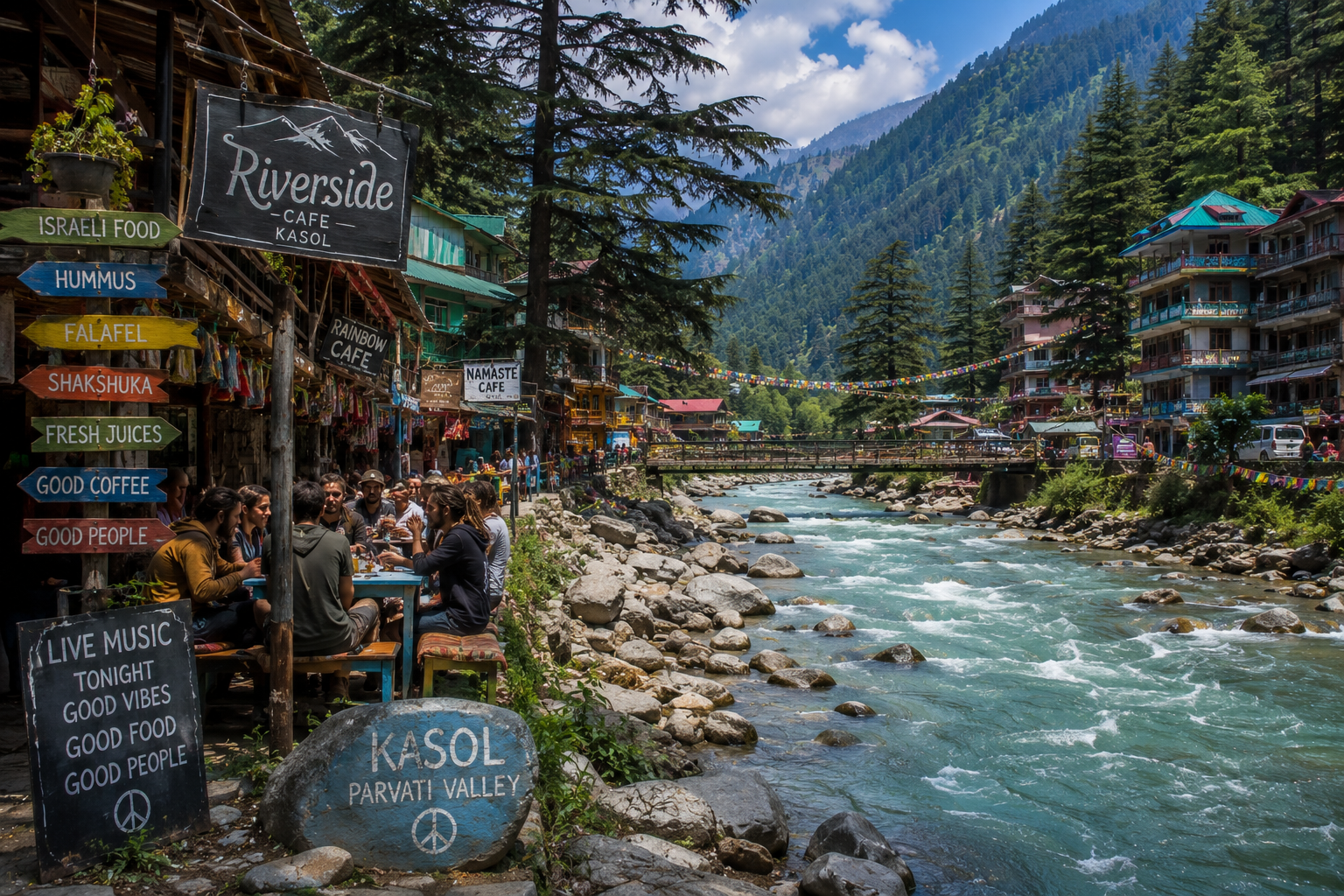
The Parvati river and pine forest at Kasol — the valley’s laid-back heart.
When to go
March to June (best): warm valley days, rushing snowmelt in the river and ideal trekking weather for Kheerganga and Tosh. The liveliest season, with the cafes and guesthouses in full swing.
September to November: the quieter sweet spot — clear post-monsoon skies, golden forest and far fewer people. Lovely for walking, with crisp nights creeping in by late autumn.
December to February (cold): snow dusts the higher villages and the valley turns hushed and atmospheric. Tosh and Kasol stay reachable, but upper treks like Kheerganga can be snowbound — check before you go.
The Parvati Valley sees heavy monsoon landslides (July–August) that can block the road and make trails dangerous. The valley also has a long-standing association with illegal substances — trafficking and possession carry serious legal penalties, so steer well clear.
Top things to do in Kasol
From the easy riverside walks to the headline overnight trek, here’s what fills two or three unhurried days.
Kheerganga
The valley’s signature walk — a roughly 12 km climb through forest and waterfalls to a natural hot spring at around 3,000 m, with an overnight in tents or huts. Tough but hugely rewarding, and best done over two days.
Tosh
A pretty hillside village at the head of the valley, with guesthouses and cafes looking straight onto snow peaks. A short drive and walk from Kasol, and a calmer base than the village itself.
Chalal
A gentle half-hour riverside trail from Kasol to the quiet hamlet of Chalal, with cafes and camping along the water. The perfect lazy first afternoon.
Manikaran
A short drive downriver to the revered Sikh and Hindu pilgrimage town, with a riverside gurudwara, hot springs that cook the langar food, and steam rising off the Parvati. Quietly fascinating.
Malana
An ancient village with its own laws, language and customs, reached by a steep climb. Visit respectfully — outsiders are asked not to touch locals, homes or the temple, and the rules are taken seriously.
Cafe-hop in Kasol
Sometimes the point is just to sit — shakshuka by the river, a book, a coffee, and the water going by. Kasol’s cafes are an attraction in their own right.
What to eat in Kasol
Kasol is famous for its Israeli food, but the valley also does great trout, Tibetan staples and the simple, generous langar at Manikaran.
Israeli platters
Hummus, shakshuka, falafel and pita — the Parvati Valley’s signature cafe food, a legacy of decades of Israeli travellers. Generous and satisfying after a trek.
Trout
Fresh Himalayan trout, grilled or fried with herbs — the local catch, and a welcome change from the cafe menu.
Momos & thukpa
Hot momos and noodle-soup thukpa turn up everywhere — cheap, warming and ideal after a cold day on the trail.
Manikaran langar
The free community kitchen at Manikaran serves a simple, hearty meal to all — cooked using the natural hot springs, and a moving experience.
Service in Kasol runs on relaxed mountain time — meals can take a while, especially in busy season. Order, sit back by the river, and don’t expect a rush.
Where to stay
Stay in Kasol for cafes and convenience, in Tosh for the views and quiet, or in Chalal for a riverside walk-in escape.
Kasol guesthouse
Cafes, hostels and guesthouses right on the Parvati — the liveliest, most convenient base, with everything a short walk away.
Tosh stay
Simple guesthouses and cafes perched for snow-peak views, quieter and more scenic than Kasol — worth the extra drive.
Chalal / riverside camp
Walk-in cafes and campsites along the water at Chalal trade the bustle for the sound of the river and the pines.
How to get to Kasol & around
Kasol is an easy add-on from Manali or a straight overnight haul from Delhi, all through the Kullu Valley.
Take a shared cab from Bhuntar rather than a private taxi — they run regularly up the valley to Kasol and Barshaini and cost a fraction of the price, with the same mountain views.
A simple 2–3 day plan
Two to three days that mix easy riverside time with the valley’s best villages and its famous trek.
Kasol & Manikaran
Settle into a riverside cafe, walk the easy trail to Chalal, then drive down to Manikaran for the gurudwara, hot springs and langar. An easy, scenic first day.
Up to Kheerganga
Drive to Barshaini and climb the Kheerganga trek through forest and waterfalls to the hot spring, camping overnight at the top. Not trekking? Spend the day in Tosh instead.
Tosh, Malana or onward
Descend from Kheerganga, then either explore Tosh or take a respectful day trip up to Malana — or head onward to Manali and the Kullu Valley.
Practical tips that actually help
Respect Malana
Don’t touch locals, homes or the temple, follow the posted rules, and ask before photographing people.
Prep for Kheerganga
Start early, carry water, layers and a torch — it’s a long climb and cold at the top, even in summer.
Steer clear of drugs
The valley’s reputation is real and so are the legal risks. Possession and trafficking carry heavy penalties.
Carry cash
Cafes and guesthouses are largely cash-first, and ATMs thin out fast above Kasol.
Avoid the monsoon
July–August brings landslides that block the road and make trails risky. Check conditions before travelling.
Pack for cold nights
Even in summer the valley nights get chilly, and Kheerganga is properly cold. Bring a warm layer.
Mistakes first-time visitors make
- Treating Malana like any other village. Its customs and rules are taken seriously — visit respectfully or not at all.
- Attempting Kheerganga unprepared. It’s a real climb — carry water, layers and a torch, and start early.
- Staying only in Kasol town. The best of the valley is up at Tosh, Kheerganga and along the river — don’t skip them.
- Underestimating the legal risks. The valley’s drug reputation comes with serious consequences — keep well clear.
Planning Himachal beyond Kasol?
The Parvati Valley pairs naturally with Manali and the Kullu Valley, or a slower swing through Tirthan. Tell me your dates and pace, and I’ll map a Himachal route that links them up.
Plan my Himachal trip →Kasol FAQs
How many days do you need in Kasol?
Two to three days. One day covers Kasol, the Chalal walk and Manikaran; a second is for the overnight Kheerganga trek or a trip to Tosh. Add a third for Malana or simply to slow down by the river — many travellers end up staying longer.
What is the best time to visit Kasol?
March to June for warm trekking weather and a lively cafe scene, and September to November for clear skies and quieter trails. Winter is cold and atmospheric but can leave higher treks like Kheerganga snowbound, while the July to August monsoon brings landslides.
How hard is the Kheerganga trek?
It is a moderate trek of about 12 km each way, climbing through forest and waterfalls from Barshaini to a hot spring at around 3,000 m. Reasonably fit walkers manage it in 4 to 6 hours up. Most people camp overnight at the top and return the next day; start early and carry water and warm layers.
Is Kasol safe for travellers and families?
Kasol is generally safe and popular with solo travellers and backpackers. The main thing to be aware of is the valley’s association with illegal drugs, which carries serious legal risk — simply steer clear. Families do visit, though the vibe skews young and backpacker; Tosh and riverside stays suit quieter trips.
How do you reach Kasol from Delhi?
Take an overnight bus from Delhi to Bhuntar (about 12 hours), then a short shared cab ride up the Parvati Valley to Kasol. The nearest airport is Bhuntar (Kullu), roughly 30 km away with limited flights, and Chandigarh is the larger hub further out.
Related guides
Keep planning your Himachal trip with these:
Himachal Pradesh Travel Guide
Hill stations, Tibetan towns, Spiti and quiet valleys — how to string Himachal together.
Travel to Manali
Snow, cafes, the Atal Tunnel and the gateway to the high mountains — an easy hop from Kasol.

Ashvinee Nagle
I’m Ashvinee — I help first-time travellers plan India trips that actually work. I’ve spent years exploring the country’s regions, from Rajasthan’s forts to the Himalayan valleys of Himachal, and I write the guides I wish I’d had on my own first trips.
Written by Ashvinee Nagle
I travel India slowly and write it down honestly - practical guides and real itineraries from someone who lives here.
About Ashvinee →Plan your India trip with us
Get one short, honest India travel guide a week — plus a free 7-day Rajasthan itinerary to start.
Free. Unsubscribe any time.