
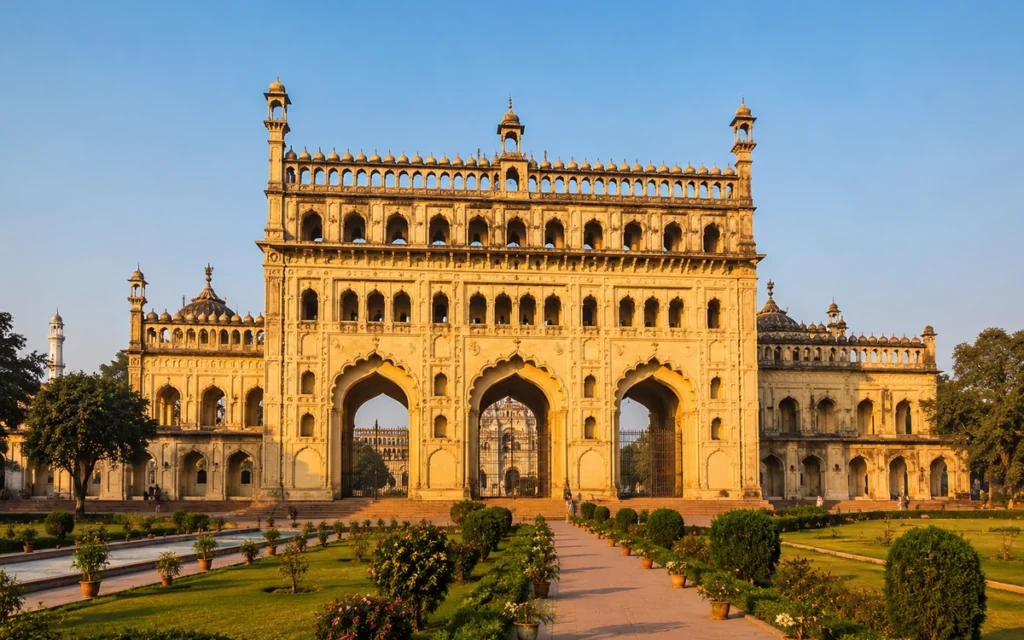
Travel to Lucknow: A First-Timer’s Guide to the City of Nawabs
An honest, no-fluff guide to Lucknow for first-time visitors — the Bara Imambara and its famous labyrinth, Rumi Darwaza, the legendary Awadhi food, chikankari shopping, when to go, and a relaxed 2-day plan through the old Nawabi capital.
Lucknow is the graceful one — the old Nawabi capital where the pace slows, the manners soften and the food becomes the main event. This is a city of monumental gateways and crumbling palaces, of chikankari embroidery and slow-cooked kebabs, of a courtly culture the locals still call tehzeeb. It doesn’t overwhelm the way Varanasi or Delhi can; it charms. Two days is enough to see the great Imambaras, wander the old city, shop for hand-embroidered cotton, and eat exceptionally well — which, in Lucknow, is more than half the reason to come.
Lucknow is the elegant capital of Awadh, best known for its Nawabi monuments and its extraordinary food. See the Bara Imambara and its famous Bhulbhulaiya maze, walk through the Rumi Darwaza, visit the Chota Imambara and the British Residency, and shop for chikankari in the old-city bazaars. Above all, eat — galouti kebabs, biryani, kulcha-nihari. Come October to March and pair it with the rest of Uttar Pradesh.
Why visit Lucknow
Three reasons the City of Nawabs deserves a slot on your Uttar Pradesh route — and rewards a slower, greedier kind of travel.
Nawabi grandeur
The Bara and Chota Imambaras, the Rumi Darwaza and the faded Residency give Lucknow a skyline of gateways and domes unlike anywhere else — the architecture of a courtly world that once rivalled Delhi.
Some of India’s best food
Awadhi cuisine was built for royalty and slow-cooked to melting softness. Galouti kebabs, dum biryani and kulcha-nihari make Lucknow a genuine pilgrimage for anyone who travels to eat.
Craft & courtly calm
Home of chikankari, the delicate white-on-white embroidery, and of an unhurried courtesy the city is proud of. Lucknow charms rather than overwhelms — a gentle stop on a busy trip.
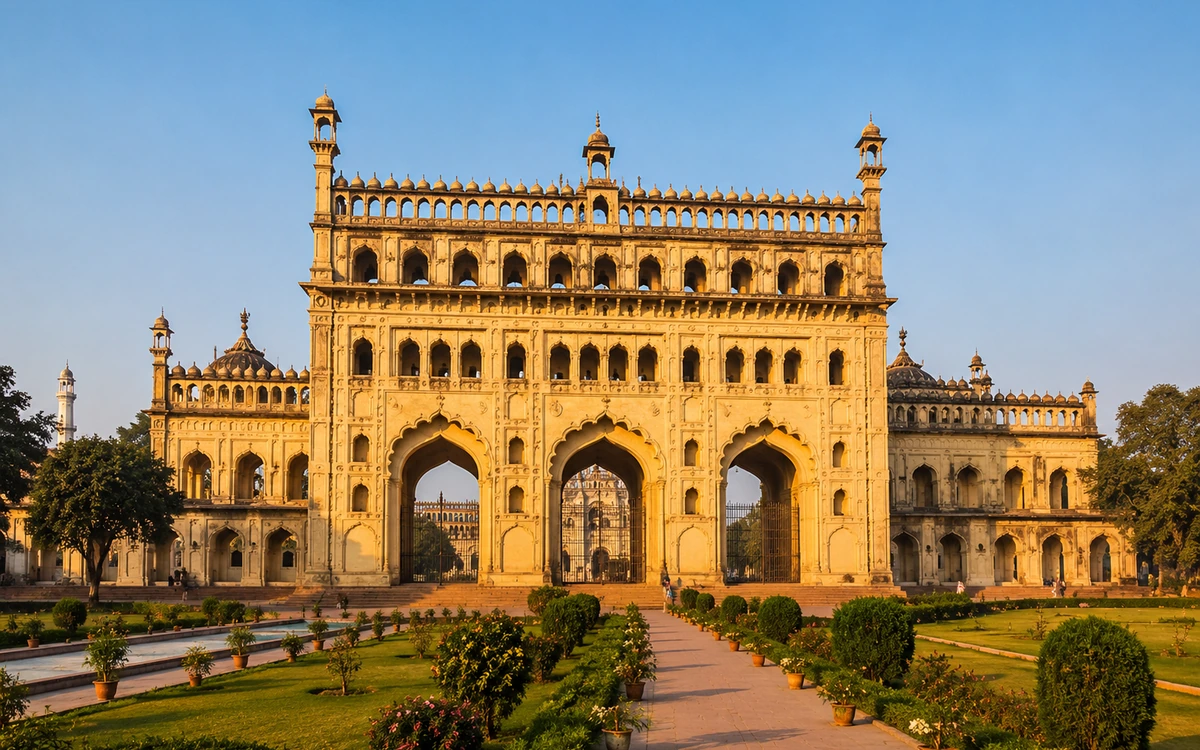
The Bara Imambara — its upper floor hides the Bhulbhulaiya, a maze of some 1,000 passageways.
When to go
October to March (the sweet spot): cool, pleasant days ideal for the Imambaras and long lunches. This is comfortably the best time to visit, and the season for the city’s cultural festivals.
Nov–Feb (peak comfort): crisp mornings and warm afternoons, perfect for wandering the old city and sitting down to nihari breakfasts. Winter is when Lucknow is at its most elegant.
April to June (hot): the plains climb past 40°C and sightseeing becomes a morning-and-evening affair. Do the monuments early and retreat indoors at midday.
July to September (monsoon): humid with intermittent rain, but greener and quieter. The food, of course, is good year-round.
The Bara Imambara’s Bhulbhulaiya labyrinth is best done with the official guide included on your ticket — the passageways genuinely confuse, and it’s easy to get turned around. The same ticket usually covers the Chota Imambara nearby.
Top things to do in Lucknow
From a maze inside a monument to a plate of melt-in-the-mouth kebabs, here is what fills a day or two.
Bara Imambara & the Bhulbhulaiya
The city’s great 18th-century monument, built by Nawab Asaf-ud-Daula, whose central hall spans an astonishing width with no supporting pillars. Upstairs lies the Bhulbhulaiya, a labyrinth of narrow passages — take the guide and don’t wander off alone.
Rumi Darwaza
The towering ceremonial gateway beside the Bara Imambara is Lucknow’s signature landmark — a soaring arch modelled on a gate in Istanbul. Best photographed in the soft light of early morning or dusk.
Chota Imambara
Smaller but arguably lovelier than its big sister, decorated with chandeliers, gilded domes and calligraphy. Often called the “Palace of Lights” for how it glows when lit. Usually covered by the same combined ticket.
The British Residency
The ruined, bullet-scarred Residency was the site of the 1857 siege during the First War of Independence. Now a peaceful garden of red-brick ruins and a small museum — an evocative, uncrowded couple of hours.
Chikankari in the old bazaars
Lucknow is the home of chikankari, delicate hand embroidery on fine cotton. Browse the lanes of Chowk and Aminabad for kurtas and saris — and buy from established shops to be sure of genuine handwork.
Hazratganj
The city’s elegant colonial-era shopping street, all whitewashed facades and old-world cafes. Perfect for an evening walk, a coffee and a sense of the unhurried Lucknawi lifestyle.
What to eat in Lucknow
This is the reason many people come. Awadhi cuisine is rich, slow-cooked and deeply refined — come hungry and pace yourself.
Galouti & Tunday kebab
Impossibly soft minced-meat kebabs, spiced with a secret blend and melting on the tongue. The most famous of Lucknow’s dishes — and the one to try first.
Lucknawi (dum) biryani
Subtler and more fragrant than its southern cousins — rice and meat slow-steamed together under a sealed lid. A gentle, aromatic plate rather than a fiery one.
Kulcha-nihari
A rich, slow-cooked meat stew mopped up with soft kulcha bread — the classic hearty Lucknawi breakfast, best eaten early at an old-city institution.
Kulfi & makkhan-malai
Dense, creamy kulfi any time — and in winter, the ethereal makkhan-malai, a whipped, saffron-dusted froth found only in the cold months.
The most famous kebab and biryani spots get very busy and can sell out, especially in the evenings. Go a little early, be ready to queue, and don’t be put off by simple surroundings — the food is the point.
Where to stay
Most visitors base themselves in the central districts, an easy ride from both the old-city monuments and the good restaurants.
Hazratganj
The elegant heart of the city, full of hotels, cafes and shops, and central to everything. The most convenient and characterful base for first-timers.
Gomti Nagar
The newer, greener part of town with malls and business hotels. Quieter and more spacious, a short drive from the historic core.
Near the old city
Stay close to the Imambaras and the best food for maximum atmosphere. Busier and more chaotic, but you’ll wake up in the thick of old Lucknow.
How to get to Lucknow & around
As the state capital, Lucknow is exceptionally well connected, and getting around is easier than in most UP cities.
Lucknow’s metro is quick and handy for a few main stops, but the old-city monuments and best food are easiest reached by auto or app cab. Old-city lanes get congested, so allow extra time around Chowk.
A simple 2-day plan
One day for the Nawabi monuments, a second for history, shopping and unhurried eating.
The Imambaras & old city
Start at the Bara Imambara and its maze, walk the Rumi Darwaza and on to the Chota Imambara. Break for a kebab lunch in the old city, then browse chikankari in Chowk before an evening stroll in Hazratganj.
Residency, food & leisure
Spend the morning at the atmospheric British Residency, then eat your way through a long Awadhi lunch. Shop, rest, and enjoy the city’s slow pace — or move on to the rest of Uttar Pradesh.
Practical tips that actually help
Take the Imambara guide
The official guide included on your ticket makes the Bhulbhulaiya maze safe and far more interesting — don’t attempt it alone.
Come hungry, pace yourself
The food is the highlight — plan lighter sightseeing around big meals rather than rushing between monuments.
Buy chikankari from real shops
Genuine hand embroidery costs more than machine copies — buy from established stores in Chowk or Aminabad.
Dress modestly at the Imambaras
These are religious sites — cover shoulders and knees, and be ready to remove shoes before entering.
Use the metro & cabs
The metro is quick for a few stops; app cabs and autos handle the old-city runs the metro doesn’t reach.
Go early to famous eateries
Landmark kebab and nihari spots get packed and sell out — arrive ahead of the rush.
Mistakes first-time visitors make
- Treating it as a quick stopover. Lucknow’s charm is in slowing down — a rushed half-day misses the point entirely.
- Doing the maze without a guide. The Bhulbhulaiya really does confuse — take the included guide.
- Skipping the food scene. The monuments are lovely, but the kebabs and biryani are why many people come.
- Buying “chikan” from street touts. Much of it is machine-made — stick to reputable shops for genuine handwork.
Planning Uttar Pradesh beyond Lucknow?
Lucknow pairs naturally with the Taj at Agra, the ghats of Varanasi, and the temple towns of Ayodhya and Mathura. Tell me your dates and pace, and I’ll map an Uttar Pradesh route that balances Mughal wonders, Nawabi food and the sacred Ganga.
Plan my Uttar Pradesh trip →Lucknow FAQs
How many days do you need in Lucknow?
One full day covers the main Imambaras, the Rumi Darwaza and the old city. A second lets you add the British Residency, shop for chikankari and slow down for the food, which is really the heart of a Lucknow visit.
What is Lucknow most famous for?
Two things above all: its Nawabi architecture — the Bara and Chota Imambaras and the Rumi Darwaza — and its Awadhi cuisine, especially galouti kebabs and dum biryani. It is also the home of chikankari embroidery.
Is the Bhulbhulaiya maze worth it?
Yes — it is one of the most memorable things to do in the city. Go with the official guide included on your ticket, both so you don’t get lost and because they point out the clever acoustics and hidden passages.
When is the best time to visit Lucknow?
October to March, when the weather is cool and pleasant. Winter is especially good for wandering the old city and for seasonal treats like makkhan-malai. Summers are very hot on the plains.
How do I get to Lucknow?
Easily — as the state capital it has a well-connected airport, a major railway junction with fast trains from Delhi, Agra and Varanasi, and the Agra–Lucknow Expressway for road travel.
Related guides
Keep planning your Uttar Pradesh trip with these:
Uttar Pradesh Travel Guide
The Taj, the Ganga, Nawabi food and temple towns — how to string an Uttar Pradesh trip together.
Plan my Uttar Pradesh trip
Share your dates, pace and starting city, and I’ll suggest an Agra–Lucknow–Varanasi route that fits.

Written by Ashvinee Nagle
I travel India slowly and write it down honestly - practical guides and real itineraries from someone who lives here.
About Ashvinee →Plan your India trip with us
Get one short, honest India travel guide a week — plus a free 7-day Rajasthan itinerary to start.
Free. Unsubscribe any time.