
Travel to Prayagraj: A First-Timer’s Guide to the Triveni Sangam
An honest, no-fluff guide to Prayagraj for first-time visitors — the sacred Triveni Sangam confluence, the Kumbh and Magh Mela explained clearly, Allahabad Fort and the Akshayavat, Anand Bhavan and Khusro Bagh, when to go, and a relaxed 1–2 day plan.
Prayagraj — long known as Allahabad — is where the Ganga and the Yamuna meet, along with the mythical Saraswati, at one of the holiest spots in the Hindu world. This confluence, the Triveni Sangam, is the reason pilgrims come by the million, and every twelve years or so it hosts the Kumbh Mela, the largest gathering of humanity on earth. But there’s a quieter, elegant city here too: leafy colonial avenues, a mighty Mughal fort, and the family home of the Nehrus, from which India’s freedom movement was partly run. Come outside the great festivals and you’ll find a calm, historic city that most first-timers to Uttar Pradesh overlook.
Prayagraj (Allahabad) is built around the Triveni Sangam, where the Ganga and Yamuna meet — take a boat out to the confluence, which is the essential experience. Add Allahabad Fort and the Akshayavat, the Nehru family home at Anand Bhavan, and the Mughal tombs of Khusro Bagh. The annual Magh Mela (Jan–Feb) and the once-in-years Kumbh are extraordinary but overwhelming; a normal visit is calm and easy in a day or two. Come October to March and pair it with the rest of Uttar Pradesh, usually Varanasi and Ayodhya.
Why visit Prayagraj
Three reasons this river city earns a place on your Uttar Pradesh route — beyond the once-in-years spectacle of the Kumbh.
The sacred confluence
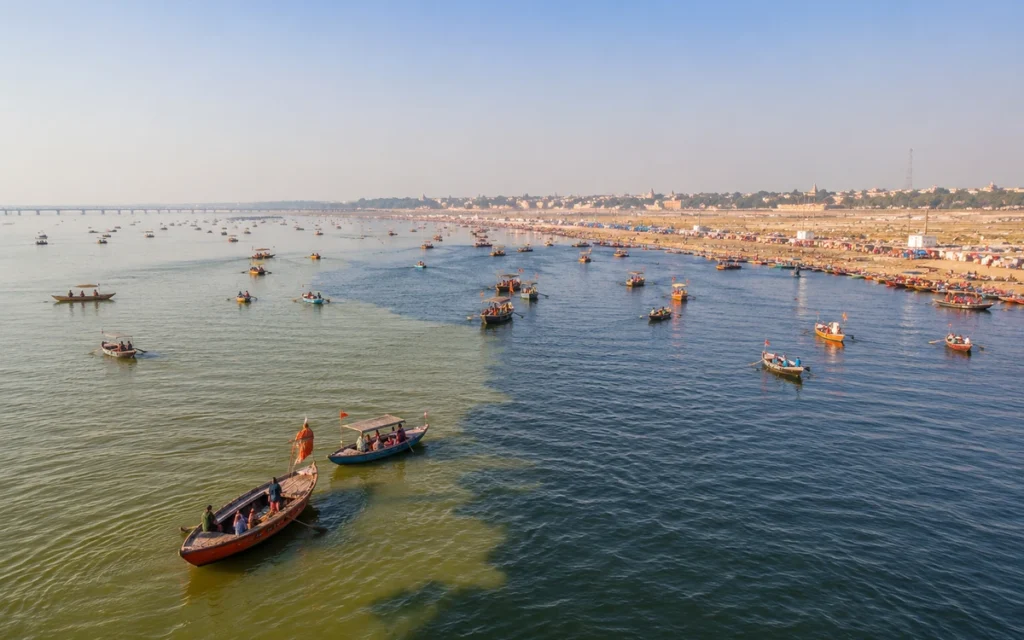
The Triveni Sangam, where the green Yamuna meets the pale Ganga, is one of Hinduism’s most sacred sites. A boat out to the meeting of the waters is a genuinely moving experience, festival or not.
Kumbh & Magh Mela heritage
This is the home of the Kumbh Mela, the largest human gathering on earth, and the annual Magh Mela. Even between festivals, the mela grounds and the story behind them are fascinating to understand.
History & independence
A grand Mughal fort, the Nehru family’s Anand Bhavan and elegant colonial avenues make Prayagraj one of the most historically layered cities in the state — and one of the least crowded.
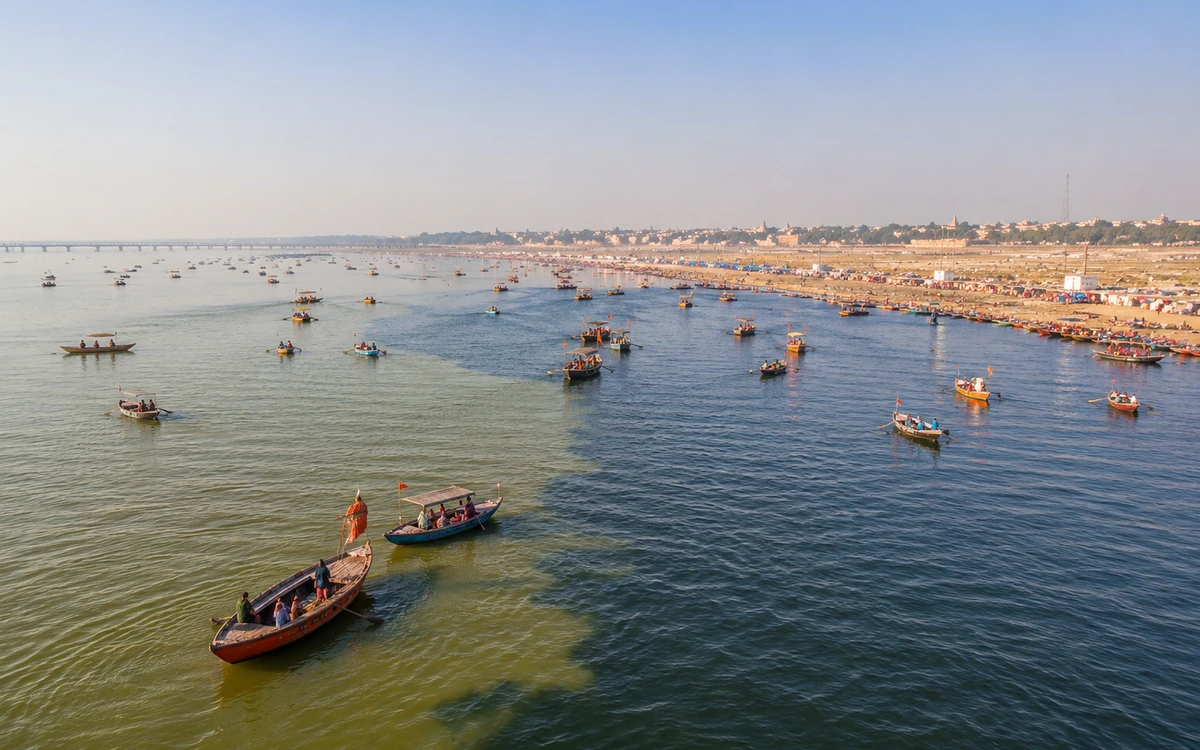
The Triveni Sangam — the confluence of the Ganga and Yamuna, best reached by boat.
When to go
October to March (the sweet spot): cool, pleasant weather for boat rides at the Sangam and unhurried sightseeing. This is by far the best time to visit, festival or not.
Magh Mela (Jan–Feb): a huge annual religious fair on the Sangam floodplain, with millions bathing on auspicious days. Extraordinary to witness, but book far ahead and expect big crowds and diversions.
Kumbh Mela (every ~6–12 years): the Ardh (half) and Purna (full) Kumbh are among the largest gatherings on earth. The 2025 Maha Kumbh here was a rare, once-in-generations event; the next Purna Kumbh at Prayagraj falls around 2037. Plan a Kumbh visit meticulously and well in advance.
April to June (hot): the plains bake past 40°C and the open Sangam offers little shade. Do the boat ride early and rest in the afternoon.
The Magh Mela happens every year in Jan–Feb. The Ardh Kumbh comes roughly every 6 years and the Purna (full) Kumbh roughly every 12; the Maha Kumbh is the rarest of all. If you simply want the Sangam without the enormous crowds, visit on a normal day outside all of these.
Top things to do in Prayagraj
From a boat at the meeting of the rivers to the house where India’s freedom struggle was plotted, here is what fills a day or two.
Boat to the Triveni Sangam
Take a boat from the ghats out to the confluence of the Ganga and Yamuna — you can often see the two differently coloured waters meet. Pilgrims bathe and offer prayers here. Agree the boat fare before setting off, and go early for calm water and soft light.
Allahabad Fort & the Akshayavat
Akbar’s great riverside fort dominates the Sangam. Much is held by the army, but visitors can see the revered Akshayavat (the “immortal banyan”) and the underground Patalpuri Temple. Check current access and timings locally before you go.
Anand Bhavan
The elegant former Nehru family mansion, now a museum, was a nerve-centre of the freedom movement and the childhood home of Indira Gandhi. Beautifully kept, with gardens and a planetarium — a fascinating, uncrowded couple of hours.
Khusro Bagh
A peaceful walled Mughal garden holding the sandstone tombs of Prince Khusro and his family, with fine inlay and calligraphy. Quiet, atmospheric and free — a lovely contrast to the busy riverfront.
All Saints Cathedral
A striking 19th-century Gothic-revival cathedral, one of the finest colonial-era churches in India, sitting on a green island of calm in the Civil Lines. Worth a short stop for the architecture.
Hanuman Mandir & the ghats
The much-loved reclining Hanuman temple near the Sangam is famous for flooding each monsoon when the rivers rise. Combine it with a slow walk along the ghats to feel the rhythm of the pilgrim city.
What to eat in Prayagraj
Prayagraj’s food is classic North-Indian street fare, with a couple of local institutions worth seeking out. Come hungry to the Civil Lines and the old-city lanes.
Chaat & samosa
Aloo tikki, dahi-chaat and hot samosas are the city’s everyday street favourites — tangy, spicy and reliably good around Katra and the bazaars.
Netram ki kachori
A famous local name for crisp kachori with spiced sabzi and jalebi — the quintessential Prayagraj breakfast, best eaten early and standing up.
Local sweets & lassi
Milk sweets, thick lassi and seasonal treats round off a meal. A cup of creamy lassi is especially welcome after a warm morning at the Sangam.
Ram-dana & til sweets
Around the Magh Mela, look for amaranth (ram-dana) and sesame (til) sweets sold to pilgrims — simple, traditional and tied to the fasting season.
Stick to busy, freshly cooked stalls and clay-cup lassi, and go easy on tap water near the ghats. Carry small notes for boatmen and offerings, where cards aren’t accepted.
Where to stay
Civil Lines is the natural base for first-timers, with the old city and the Sangam a short ride away. Around the mela, temporary tent cities also spring up on the floodplain.
Civil Lines
The elegant, leafy heart of the city, with the best hotels, restaurants and cafes, and easy access to Anand Bhavan and the cathedral. The most convenient and comfortable base.
Around the Sangam
Simple guesthouses and dharamshalas closer to the ghats, handy for an early boat ride. Busier and more basic, but atmospheric and devotional.
Mela tent cities
During the Magh Mela and Kumbh, vast tented camps — from basic to luxury — are set up on the sands. Unforgettable, but book months ahead.
How to get to Prayagraj & around
Prayagraj is a well-connected junction on the plains, midway between the other great river cities of Uttar Pradesh.
During the Magh Mela and Kumbh, the city runs on special traffic plans with road closures, one-ways and shuttle points near the Sangam — follow the signage, expect long walks, and allow far more time than usual.
A simple 2-day plan
One day for the Sangam and the fort, a second for history and gardens.
The Sangam & the fort
Start early with a boat to the Triveni Sangam, then visit Allahabad Fort and the Akshayavat nearby. In the afternoon, stop at the riverside Hanuman Mandir and walk the ghats.
History, gardens & the city
Tour Anand Bhavan, wander Khusro Bagh, and see All Saints Cathedral in the Civil Lines — then relax over chaat and lassi, or move on to the rest of Uttar Pradesh.
Practical tips that actually help
Agree boat fares first
Settle the price for the Sangam boat before you set off, and go early for calm water and the best light.
Check fort access
Allahabad Fort is partly military — confirm current visitor access to the Akshayavat and Patalpuri locally before going.
Visit outside the mela
For a calm Sangam experience, avoid the Magh Mela and Kumbh dates — a normal day is peaceful and easy.
Dress modestly
Cover shoulders and knees at the ghats and temples, and carry small change for boats and offerings.
Pair it with Varanasi
Prayagraj sits about 2.5–3 hours from Varanasi — the two river cities pair naturally on a sacred circuit.
Plan Kumbh far ahead
For a Kumbh or Magh Mela visit, book accommodation and transport months in advance and expect huge crowds.
Mistakes first-time visitors make
- Skipping the boat. The Sangam confluence is the whole point — don’t just view it from the bank, go out on the water.
- Confusing the melas. The Magh Mela is annual; the Kumbh is every several years — know which is on before you plan around crowds.
- Not checking fort access. Parts of Allahabad Fort are off-limits; confirm what’s open before building it into your day.
- Coming in peak summer. The open riverfront is brutally hot in May–June — aim for the cool season.
Planning Uttar Pradesh beyond Prayagraj?
Prayagraj sits on a sacred river circuit with the ghats of Varanasi and the temple town of Ayodhya, and links easily to the Nawabi capital of Lucknow. Tell me your dates and pace, and I’ll map an Uttar Pradesh route around the confluence and the Ganga.
Plan my Uttar Pradesh trip →Prayagraj FAQs
Is Prayagraj the same as Allahabad?
Yes. The city was officially renamed Prayagraj in 2018, though the older name Allahabad is still widely used and appears on many older signs, stations and institutions.
What is the Triveni Sangam?
It is the sacred confluence where the Ganga and the Yamuna meet, along with the mythical Saraswati. Bathing here is deeply auspicious in Hinduism, and it is the focal point of the Kumbh and Magh Melas.
What’s the difference between the Kumbh and the Magh Mela?
The Magh Mela is an annual religious fair held in Jan–Feb. The Kumbh is a far larger event held roughly every 6 years (Ardh) or 12 years (Purna) at Prayagraj, drawing tens of millions of pilgrims.
When is the best time to visit Prayagraj?
October to March, when the weather is cool. For a calm visit, avoid the Magh Mela and Kumbh dates; for the spectacle, come during them but plan and book far ahead.
How do I get to Prayagraj?
It’s a major railway junction with fast trains from Delhi, Varanasi and Lucknow, plus a growing airport (IXD). By road it’s about 2.5–3 hours from Varanasi.
Related guides
Keep planning your Uttar Pradesh trip with these:
Uttar Pradesh Travel Guide
The Taj, the Ganga, Nawabi food and temple towns — how to string an Uttar Pradesh trip together.
Plan my Uttar Pradesh trip
Share your dates, pace and starting city, and I’ll suggest a Prayagraj–Varanasi–Ayodhya route that fits.

Written by Ashvinee Nagle
I travel India slowly and write it down honestly - practical guides and real itineraries from someone who lives here.
About Ashvinee →Plan your India trip with us
Get one short, honest India travel guide a week — plus a free 7-day Rajasthan itinerary to start.
Free. Unsubscribe any time.