
Weekend guide · Maharashtra
A slow weekend in Malshej Ghat: waterfalls, foggy roads, and village food
A slow guide to the Sahyadri’s most underrated monsoon escape — the one within driving distance of Mumbai and Pune that most people rush through and never come back to properly.
- Western Ghats
- Monsoon drive
- 2 nights
- From Mumbai130 km3–3.5 hr via Murbad
- From Pune130 km3–3.5 hr via Junnar
- Best seasonJun–SepNov–Feb for flamingos
- Stay2 nightsBook ahead in monsoon
The short version
Malshej Ghat is a Sahyadri mountain pass roughly 130 km from both Pune and Mumbai, best visited late June through September for waterfalls and mist, or November to February for cooler air and flamingo sightings. Two days is right — Friday evening to Sunday afternoon. Stay at a valley-view homestay or the MTDC resort, eat what the roadside stalls are frying, and start mornings early to beat the weekend traffic.
Why Malshej
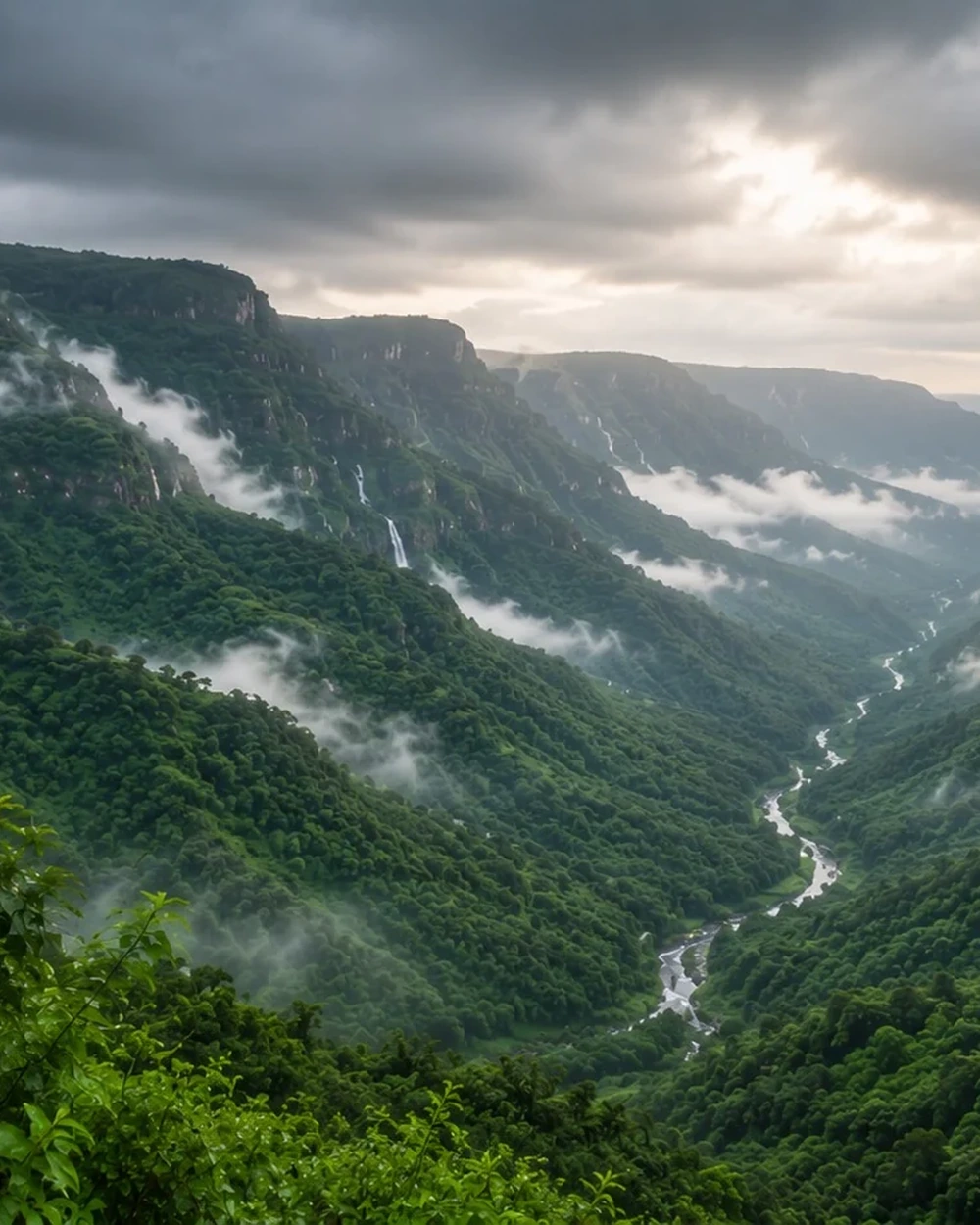
Malshej sits on the western edge of the Sahyadri range, at the meeting point of Pune, Thane, and Ahmednagar districts. The road climbs from the plains in a series of tight curves until you’re inside the cloud line itself, often by mid-morning during monsoon.
What makes the place work is what it doesn’t have. There are no shopping streets, no nightlife, no famous restaurants. There’s a road, a few viewpoints, a couple of dozen homestays, and an enormous amount of weather. That’s the trip.
Close
Closest real mountains to Mumbai
~130 km from both Mumbai and Pune. You can leave Friday after work and be in the clouds by 10 pm.
Wet
A monsoon specialist
The pass gets serious rainfall — the kind that turns dry ravines into waterfalls overnight and keeps the place green into October.
Quiet
Quietly winter-good too
Post-monsoon and winter bring crisp air, fewer tourists, and migratory flamingos near the Pimpalgaon Joga backwaters.
When to go
Malshej is two different places depending on the month. Pick the one you actually want before you book a room — the monsoon version is dramatic and crowded, the winter version clear and quiet.
What runs
Waterfalls at full volume, the entire range a deep saturated green, and mist that moves through the valleys all day.
What it costs
Weekends get busy, especially Saturdays when day-trippers pour in from both cities. Fog and slick tarmac on the ghat.
How to do it
Aim for a weekday, or arrive Friday evening and claim the quiet early-morning hours before the crowds wake up.
What runs
The big falls thin out but the smaller ones linger through October, the greenery holds, and the air turns crisp.
What you gain
Far emptier roads, cool mornings and warm afternoons, and the best chance of flamingos on the dam backwaters.
What to avoid
Peak summer, April to early June. The landscape goes brown, the heat strips the atmosphere, and the drive stops being worth it.
Worth knowing
The ghat road is occasionally closed for short stretches during very heavy rain. Check the local Pune–Kalyan route status on the morning of departure if you’re driving into a major weather event — local WhatsApp and X updates move faster than official channels.
The drive up
Half the experience of Malshej is the journey, so it’s worth getting the drive right. Both routes are roughly 130 km and 3 to 3.5 hours in good weather — add an hour for monsoon traffic.
- From MumbaiKalyan → Murbad → Malshej~130 km, 3–3.5 hr. The more direct approach.
- From PuneNarayangaon → Junnar → Malshej~130 km, 3–3.5 hr. Passes Shivneri and the caves.
- RailheadKalyan Jn. (~85 km) or Pune Jn.Fix the return cab fare before you set off.
- AirportMumbai or Pune internationalBoth feed the same two road routes.
- LocalPrivate car or hired taxi onlyLimited buses, no auto-rickshaws on the ghat.
- Fuel & cashFill up before the climbCarry cash for dhabas and small stalls.
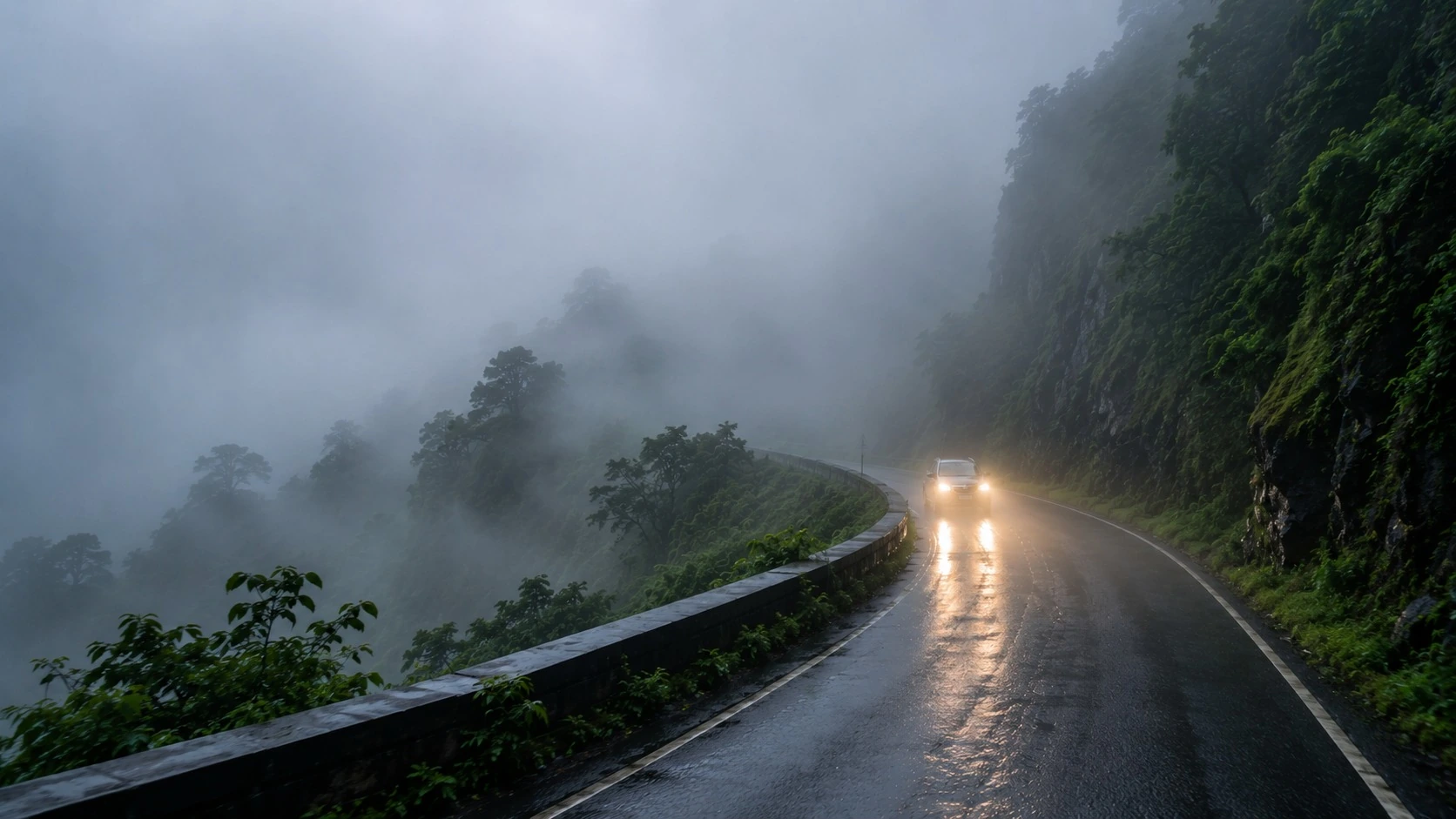
The Pune side has a bonus: you pass close to Shivneri Fort, birthplace of Chhatrapati Shivaji Maharaj, and the rock-cut Junnar caves — both worth an extra hour if you have it. In peak monsoon the ghat roads get genuinely foggy and slippery; drive slowly, keep headlights on, and don’t overtake on blind curves.
The best monsoon viewpoints
The classic Malshej experience is simply pulling over at a roadside viewpoint and watching clouds rise out of the valley below. There are several unofficial stops along the pass where the road widens enough to park, and on a good monsoon morning you’ll be standing inside the clouds rather than above them.
- 01
The main ghat viewpoints
The unofficial roadside stops scattered along the climb — you’ll know them by the small clusters of parked cars. The light is best before 10 am, when the mist still sits low in the valley and the sun hasn’t flattened everything out.
- Along the ghat road
- 30–60 min
- Best at sunrise
- 02
Malshej Falls
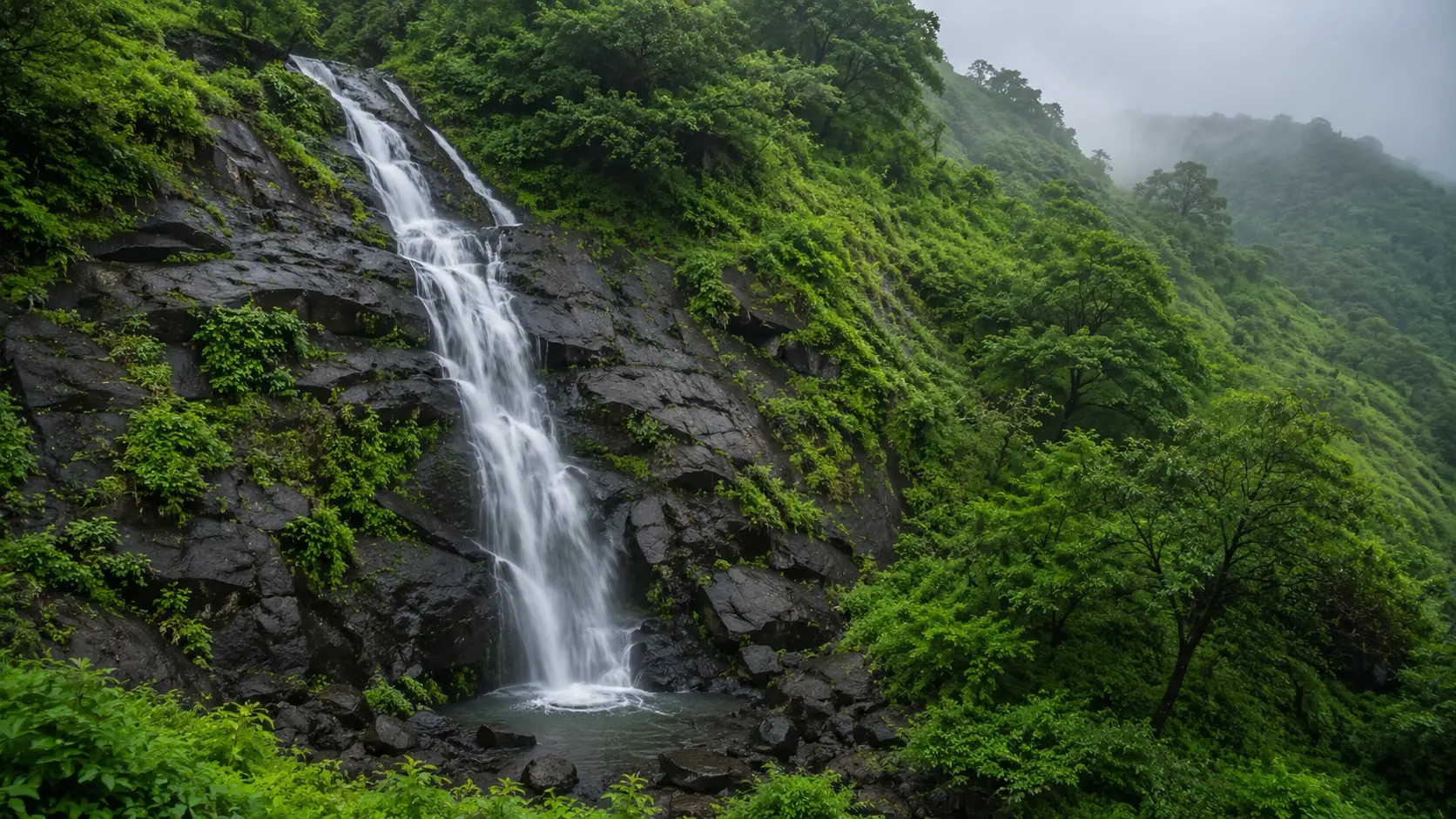
The most famous waterfall in the area, tumbling right beside the road. In peak monsoon the spray drenches anyone within twenty feet. Because it’s so accessible it draws weekend crowds, so visit early or on a weekday. Stand back — the rocks are slick and the edges are not for posing.
- On the main road
- 30 min
- Jul–Sep
- 03
The flamingo point at Pimpalgaon Joga
The part most weekenders don’t know: the dam backwaters attract migratory flamingos, usually in the cooler months rather than peak monsoon. If you’re visiting post-October, ask your homestay where the birds are currently gathering. Binoculars pay off.
- ~15 km off main road
- 1–2 hr
- Nov–Feb
The rule
Malshej is the rare weekend escape that rewards doing less. The fog, the smell of wet earth, a plate of bhajiyas in the rain — that’s the whole trip.
— Travel India
Where to eat: local and village food
Malshej food is roadside food, and that’s exactly the appeal. Don’t come looking for restaurants with menus — come hungry for what the hills do well. The best stalls are usually the least photogenic ones, and the surest sign of a good one is a cluster of local cars parked outside.
- Kanda bhaji and pakoras. The unofficial official food of a Sahyadri monsoon. Hot, crisp, served in newspaper, best eaten standing in the drizzle with a cutting chai.
- Zunka bhakar. A rustic Maharashtrian staple of spiced gram-flour zunka with jowar or bajra bhakri. Simple, filling, and exactly right after a cold, wet morning.
- Pithla bhakri. Similar comfort-food territory — a soft gram-flour curry with flatbread, often served at small village eateries.
- Vada pav and misal. Reliable, everywhere, and excellent fuel for a long drive.
- MTDC restaurant. The state tourism resort has a sit-down option with valley views, useful if you want something more structured.
Where to stay for a peaceful weekend
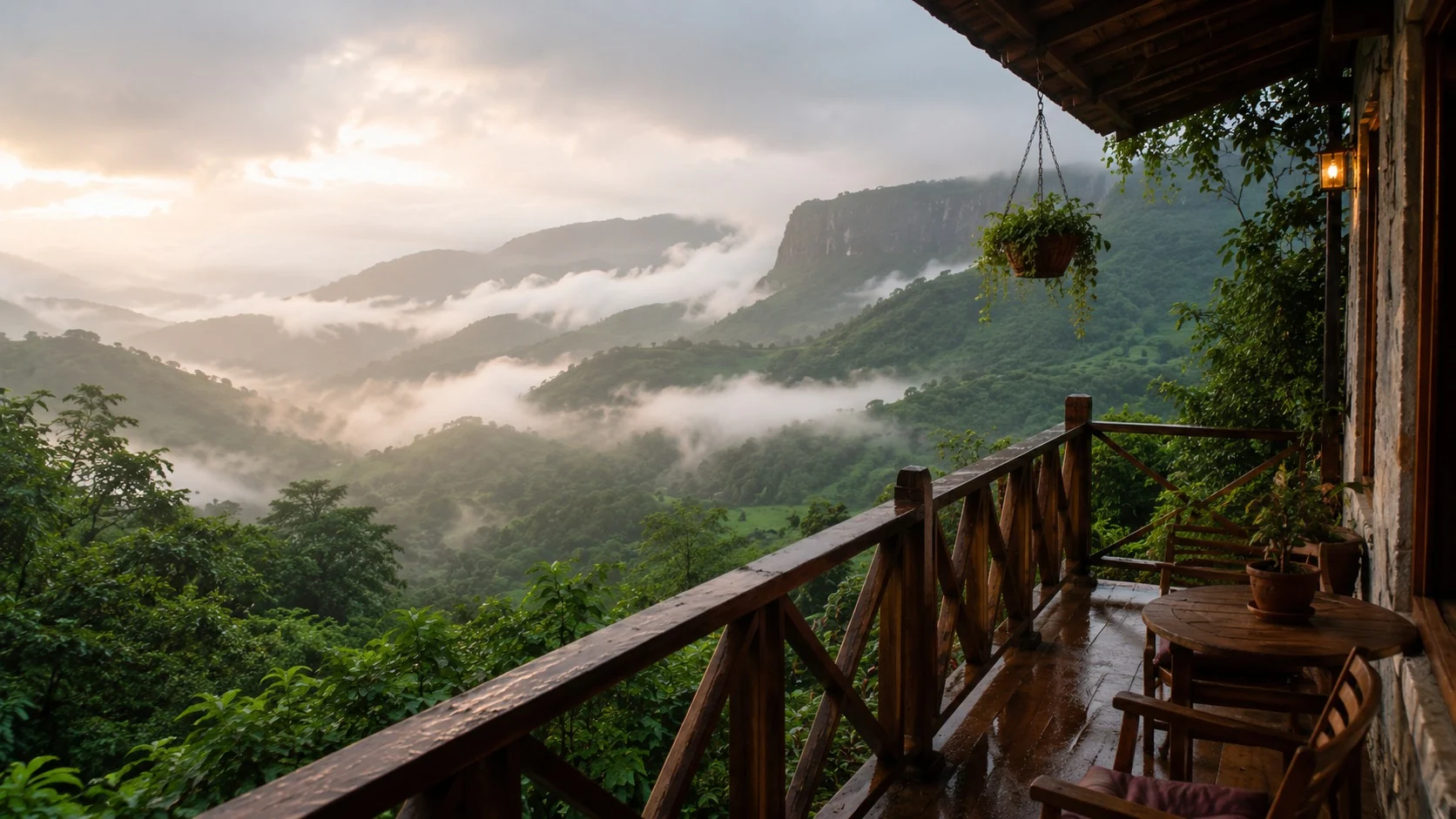
Malshej isn’t a hotel town, and that’s part of why it stays peaceful. Your options cluster into a few types, and the choice depends on how rustic you’re willing to go.
Established
MTDC Flamingo Hill Resort
The most established stay, well-positioned for valley views. Book well ahead for monsoon weekends — it fills fast.
Mid-range
Private resorts
A handful have come up along and below the ghat, with valley-facing rooms. Quality varies; read recent reviews carefully.
Slow
Village homestays
For the truly slow weekend — home-cooked food, quiet nights, and a real feel for local life. Best for repeat visitors.
Wherever you stay, book in advance for monsoon weekends and confirm backup power and water. Both can be intermittent in the hills during heavy rain. A few operators also run monsoon camping experiences — if that’s your thing, choose a reputable name and check the safety setup carefully.
A suggested slow itinerary
Two nights is the right length. Anything shorter and you spend more time driving than enjoying; anything longer and you’ll start running out of things to do, which honestly may be the point.
- Fri 18:00Drive up after workWrap up early and leave by 6 pm. The night air gets cooler with every kilometre of climb.
- Fri 22:00Reach your stay, eat, sleepSomething hot and local at the homestay, then an early night.
- Sat 05:30Viewpoints and the main fallsThe foggy, crowd-free hours. Best light of the trip.
- Sat 09:30Long breakfast at your stayRetreat once the day-trippers arrive.
- Sat 15:00One quieter stopThe dam, a lesser-known waterfall, or a short forest trail.
- Sat 18:00Nothing in particularWhich is the whole point of this trip.
- Sun 08:00A slow morningOne last roadside viewpoint before you pack.
- Sun 12:00Drive back via JunnarShivneri or the caves, misal pav at a highway dhaba, home before the evening traffic builds.
Practical tips that actually help
- Start before sunrise on weekends. By 9 am the road is full of day-trippers and the viewpoints stop being viewpoints. The early hours are the whole reason to go.
- Carry cash. Smaller dhabas and roadside stalls don’t always take UPI, especially when the network drops in the hills. ₹1,500–2,000 in small notes is enough.
- Fuel up before you climb. Petrol pumps thin out once you’re on the ghat. A full tank means no late-night stress.
- Don’t cross flooded water sections. Small streams cross the road in places during heavy rain. Water can be deeper and faster than it looks; wait and watch one vehicle cross before you do.
- Pack one warm layer. Even in monsoon, evenings can drop into the high teens at altitude. A light fleece changes the whole evening.
- Phone signal is patchy. Download offline maps before you start. Jio and Airtel work in the main stays but go dead on parts of the ghat.
FAQs about Malshej Ghat
How many days do I need in Malshej?
Two nights is the sweet spot — Friday evening to Sunday afternoon. One night feels rushed once you account for the drive each way. Three nights is comfortable if you want to pair it with the Junnar side or do a short trek.
Is the drive safe in heavy monsoon?
Yes, with caution. The ghat road is well-maintained and used daily through monsoon, but it can get foggy and slippery. Drive slowly, keep headlights on, don’t overtake on blind curves, and avoid crossing flooded sections without watching another vehicle go first. Avoid driving up after dark in heavy rain.
Can I do Malshej as a day trip from Mumbai or Pune?
Technically yes, and many people do. Realistically, no — you’ll spend 7 hours on the road for 3 hours at the destination, and you’ll arrive during the busiest part of the day. An overnight changes the trip completely.
When are the flamingos at Pimpalgaon Joga?
Most reliably from November through February, sometimes into March. Numbers vary year to year. Ask your homestay or check with local birding groups before going specifically for them.
Is Malshej safe for solo travellers, including women?
Broadly, yes. It’s a quiet, low-crime area with a steady stream of weekend visitors. Standard precautions apply: book your stay in advance, share your itinerary, avoid driving the ghat alone after dark, and pick homestays with recent positive reviews from solo guests.
Can I combine Malshej with other Maharashtra trips?
Easily. It pairs naturally with Junnar (caves and Shivneri Fort) on the Pune side, with the Bhandardara/Igatpuri lake country to the north, or with the forts around Lonavala further south. A longer monsoon road trip can string several of these together over 4–5 days.
Plan with us
Planning a Maharashtra monsoon trip?
I help travellers plan slow, well-paced India trips that get the seasons, distances, and logistics right — including monsoon escapes like Malshej, Tarkarli, and the forts around Lonavala. Free 48-hour reply.
Plan my India trip →
Written by Ashvinee Nagle
I travel India slowly and write it down honestly - practical guides and real itineraries from someone who lives here.
About Ashvinee →Plan your India trip with us
Get one short, honest India travel guide a week — plus a free 7-day Rajasthan itinerary to start.
Free. Unsubscribe any time.