
Travel to Alleppey: The Ultimate First-Timer Guide to Kerala’s Backwaters
A practical, no-fluff guide to Alleppey for first-time visitors — when to go, the houseboat experience, where to stay, what to eat, how to get around, and a relaxed 2-day plan for the backwaters.
Alleppey — officially Alappuzha — is where most people fall in love with Kerala. It’s the launch point for the backwaters: a maze of canals, lagoons, and palm-lined lakes you drift through on a converted rice barge while the rest of the world slows to the speed of the water. If you only have time for one slice of Kerala, this is the one that delivers the postcard and then quietly outdoes it.
Alleppey is the gateway to the Kerala backwaters and the home of the overnight houseboat. Come for one or two slow days on the water, pair it with Marari Beach or a Kuttanad homestay, and you’ve got the most relaxing stretch of any India trip. Go November to February, book a trusted boat, and don’t skip the narrow-canal canoe tour.
Why visit Alleppey
Three reasons Alleppey earns its spot on almost every Kerala itinerary — and why it deserves more than a rushed day trip.
The backwaters, up close
Alleppey sits at the heart of the backwaters on Vembanad, the longest lake in India. A houseboat cruise here is the signature Kerala experience — gliding past villages where life happens at the water’s edge while a cook makes you fresh fish on board.
Slow travel that actually feels slow
This is one of the few places in India built for doing very little. A night on a houseboat, a morning canoe through narrow canals, an afternoon on Marari Beach — the pace is the point. After Delhi or Rajasthan, it’s the exhale.
A real working landscape
Just inland lies Kuttanad, the “rice bowl of Kerala,” where farming happens below sea level. The backwaters aren’t a theme park — they’re a living, working delta, which is what makes a day here feel different from a boat ride anywhere else.
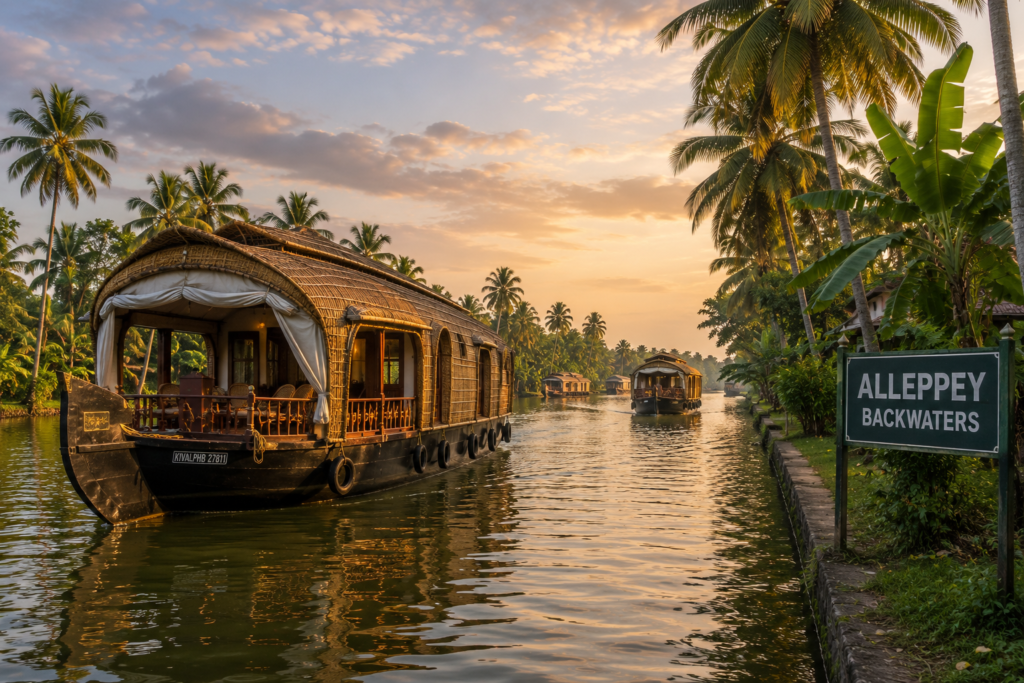
A kettuvallam houseboat drifting the Alleppey backwaters at golden hour.
When to go
November to February (best): cool, dry, and comfortable — the peak season for good reason. Book houseboats well ahead, especially around Christmas and New Year when prices spike.
October and March (shoulder): still pleasant, fewer crowds, and slightly better rates. March starts to warm up but remains a good window.
April and May: hot and humid, but home to the cheapest houseboat deals of the year if you can handle the heat.
June to September (monsoon): heavy rain and intense green, with very few tourists. Houseboats still run, and the famous Nehru Trophy snake boat race usually falls in this window.
Houseboats stop cruising by early evening and don’t move at night, so the “overnight” is really a long afternoon cruise plus a peaceful moored night. Set your expectations accordingly.
Top things to do in Alleppey
From the headline houseboat to the quieter experiences most day-trippers miss.
Take an overnight houseboat cruise
Board around midday, cruise the lakes and canals through the afternoon, moor beside a village, and wake up on the water with meals cooked on board. The defining Alleppey experience.
Do a canoe or shikara village tour
Houseboats can’t enter the narrow canals where real village life happens. A small canoe or shikara takes you past toddy shops, paddy fields, and coir-making villages — often more memorable than the houseboat itself.
Unwind at Marari Beach
About 30 minutes north, Mararikulam is a long, quiet fishing beach with none of Goa’s party energy — hammocks, coconut palms, and fresh catch grilled at simple shacks. The antidote to boat days.
Explore Alleppey town & lighthouse
Alleppey Beach has an old pier and a 19th-century lighthouse you can climb for a coastal view. The town’s canals, colonial-era warehouses, and the bustle around the boat jetty are worth an unhurried half-day.
Drift through Kuttanad
The “rice bowl of Kerala” is a surreal landscape of paddy fields below sea level, laced with canals. A half-day here — by boat or bike — shows you the working backwaters beyond the tourist route.
Catch a snake boat race
If you’re here in the monsoon, the vallam kali races are unforgettable — a hundred-plus rowers powering 100-foot canoes to drums and chanting. The Nehru Trophy on Punnamada Lake is the most famous.
What to eat in Alleppey
Kerala’s food is coconut, rice, spice, and seafood — lighter and more sour-hot than North Indian cooking. Start here:
Karimeen Pollichathu
Pearl-spot fish marinated in spices and grilled in a banana leaf. The dish of the region.
Kerala Sadya
A banana-leaf spread of rice, a dozen curries, pickles, and payasam to finish.
Appam & Stew
Lacy, fermented rice pancakes with a mild coconut-milk stew. The classic Kerala morning.
Toddy at a Kallu Shaap
Mildly alcoholic fermented palm sap served alongside fiery curries — a real local experience.
Most houseboats include all meals, and the on-board cook will often grill fish you buy from a passing boat — confirm what’s covered before you board.
Where to stay
A popular rhythm: one night on a houseboat, then a night or two on land to recover and explore.
Houseboat
The headline experience — one night afloat with a cook and crew. Pick a smaller boat for a better route and more intimacy.
Backwater homestay
Often more authentic than a houseboat, with the same water views and home-cooked Kerala food — for a fraction of the price.
Marari resort
From simple shacks to high-end eco-resorts, with Ayurveda on tap — the perfect calm end to a Kerala trip.
How to get around
Alleppey is easy to reach and easy to slow down in once you arrive.
On a tight budget? A 4–6 hour day cruise gives you most of the magic for a fraction of the overnight price.
A simple 2-day plan
Two unhurried days that cover the water, the canals, and the coast.
Land and water
Arrive from Kochi by late morning. Board your houseboat around noon and cruise Vembanad Lake and the wider canals through the afternoon. Moor at sunset beside a village for dinner cooked fresh on board, then a quiet night on the water.
Canals and coast
Disembark mid-morning and take a canoe tour through the narrow canals the houseboat can’t reach. Spend the afternoon at Marari Beach or climb the Alleppey lighthouse before moving on — or continue to Munnar’s tea hills for a mountains-and-backwaters loop.
Practical tips that actually help
Book a trusted operator
Use your hotel or recent reviews, not a jetty tout. Confirm AC hours, meals, and the route before you pay.
AC runs at night
Generators power the AC only while moored. Days are open-air, so bring a hat and sunscreen.
Carry cash
Card acceptance is patchy once you’re on the water. Keep small notes for canoes and toddy shops.
Smaller is better
A one-bedroom boat or a canoe beats a big multi-room barge for actually seeing village life.
Pack repellent
The water’s edge gets buggy at dusk — mosquito repellent is worth its weight here.
Mind the season
Monsoon is lush, cheap, and grey; November to February is the comfortable sweet spot.
Mistakes first-time visitors make
- Expecting the houseboat to cruise all night. It won’t — boats moor by evening. The afternoon is the cruise.
- Booking the cheapest boat sight unseen. Quality varies hugely; a slightly higher budget buys a better cook, cleaner cabins, and a nicer route.
- Doing only the houseboat. The narrow-canal canoe trip is where the real backwaters reveal themselves.
- Day-tripping from Kochi and rushing. Alleppey rewards an overnight; a day trip barely scratches it.
Want help planning your Kerala trip beyond Alleppey?
Alleppey is the centerpiece, but Kerala strings together beautifully — Fort Kochi’s history, Munnar’s tea hills, Thekkady’s spice country, Varkala’s cliffs. I’ll help you turn it into a route that fits your dates and pace.
Plan my Kerala trip →Alleppey FAQs
How much does a Kerala houseboat cost?
Prices swing with season and boat size, but a private one-bedroom overnight houseboat typically starts in the low-to-mid thousands of rupees per night, rising sharply over Christmas and New Year and dropping in the off-season. Day cruises and shared boats cost much less.
Is one night on a houseboat enough?
For most people, yes — one night captures the experience without it feeling repetitive. Add a homestay or beach night nearby if you want more backwater time on land.
What is the best time to visit Alleppey?
November to February for the most comfortable weather. October and March are quieter shoulder months; the monsoon (June–September) is lush, cheap, and the season of the snake boat races.
Alleppey or Kumarakom for the backwaters?
Alleppey is the busier, more accessible hub with the widest choice of boats and easy canoe trips. Kumarakom, across Vembanad Lake, is quieter and more upscale, with a famous bird sanctuary. Most first-timers pick Alleppey.
How do I get from Kochi to Alleppey?
About 1.5–2 hours by taxi or train. Trains from Ernakulam to Alappuzha are frequent and cheap; a taxi is easiest if you’re heading straight to a houseboat jetty.
Related guides
Keep planning your Kerala trip with these:
Travel to Munnar
Tea plantations, Eravikulam wildlife and big mountain views — Kerala’s cool-air escape.
Travel to Fort Kochi
Chinese fishing nets, colonial churches and Jew Town in one walkable peninsula.

Ashvinee Nagle
I’m Ashvinee — I help first-time travellers plan India trips that actually work. I’ve spent years exploring the country’s regions, from Rajasthan’s forts to Kerala’s backwaters, and I write the guides I wish I’d had on my own first trips.

Written by Ashvinee Nagle
I travel India slowly and write it down honestly - practical guides and real itineraries from someone who lives here.
About Ashvinee →Plan your India trip with us
Get one short, honest India travel guide a week — plus a free 7-day Rajasthan itinerary to start.
Free. Unsubscribe any time.