
Travel to Munnar: A First-Timer’s Guide to Kerala’s Tea Hills
A practical, no-fluff guide to Munnar for first-time visitors — when to go, the tea plantations, the best viewpoints and parks, where to stay, what to eat, how to get there, and a relaxed 2-day plan for the hills.
Munnar is where Kerala climbs into the clouds. Set around 1,600 metres up in the Western Ghats, it’s a hill station wrapped in tea — mile after mile of clipped green bushes rolling over the slopes, broken by waterfalls, misty valleys, and some of the highest peaks in South India. After the heat of the plains or the slow water of the backwaters, Munnar is the cool, green exhale almost every Kerala trip needs.
Munnar is Kerala’s tea-country hill station, high in the Western Ghats. Come for two cool days among the plantations — a tea museum and estate walks, the wildlife of Eravikulam National Park, boating at Mattupetty, and big views from Top Station. Go September to March, base in or near Munnar town, and allow half a day each way for the winding drive up from Kochi.
Why visit Munnar
Three reasons Munnar earns its place on almost every South India itinerary — and why it’s worth the climb.
Tea country like nowhere else
The hills around Munnar are carpeted in manicured tea estates, many run for over a century by the Kannan Devan plantations. Walk the estate roads, watch the pickers, tour the tea museum, and taste it fresh — the scenery alone justifies the trip.
Cool air and big mountains
At 1,600 metres the days are mild and the nights are genuinely chilly — a rare thing in the tropics. Anamudi, the highest peak in India south of the Himalayas, rises just outside town, and misty mornings make the whole place feel like a different country.
Wildlife and viewpoints
Eravikulam National Park protects the rare Nilgiri tahr against an Anamudi backdrop, while Top Station and a string of lookouts open onto valleys that fall away for miles into Tamil Nadu. It’s a landscape built for slow, scenic days.
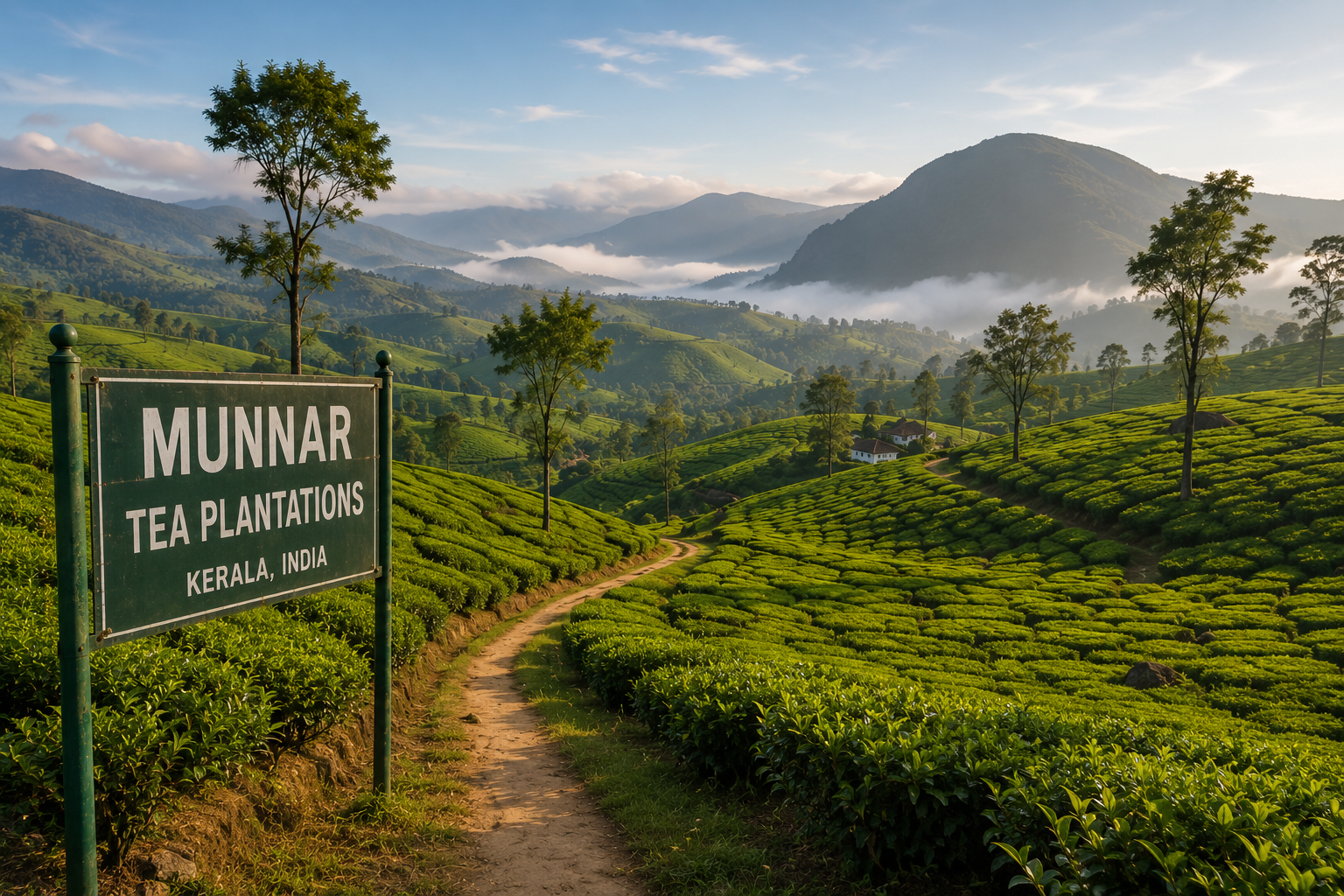
Tea plantations rolling across the Munnar hills in the Western Ghats.
When to go
September to March (best): the sweet spot — post-monsoon hills at their greenest easing into cool, clear winter days. Pleasant afternoons, cold nights, and the best light for photos.
April and May: warm-season escape. While the plains bake, Munnar stays comfortable; expect the odd pre-monsoon shower and slightly hazier views.
June to August (monsoon): heavy rain and dramatic mist turn the hills emerald, but the ghat roads are landslide-prone and some viewpoints disappear into cloud. Atmospheric, cheap, and quiet if you don’t mind getting wet.
Eravikulam National Park usually closes for several weeks around February–March for the Nilgiri tahr calving season, and the ghat road up from Kochi is steep and winding — allow extra time and avoid driving it after dark.
Top things to do in Munnar
From the headline tea estates to the parks and viewpoints that make the hills worth two full days.
Tour a tea plantation & the Tea Museum
Start at the Kannan Devan (KDHP) Tea Museum to see how the leaf becomes your morning cup, then walk out into the estates themselves. Tasting fresh, estate-grown tea with the plantations falling away around you is the defining Munnar moment.
Eravikulam National Park
Home to the largest surviving population of Nilgiri tahr — sure-footed mountain goats that come remarkably close — set beneath Anamudi. A shuttle runs from Rajamala; go early before the cloud and crowds roll in.
Top Station
The highest point around, perched on the Kerala–Tamil Nadu border. On a clear morning the Western Ghats roll out below you in waves; by midday the valleys often fill with cloud. Worth the drive for the vista alone.
Mattupetty Dam, Kundala & Echo Point
A scenic cluster on the same road — a dam with boating, the quiet Kundala Lake, and Echo Point where shouts bounce back off the hills. Easy, gentle, family-friendly sightseeing.
Estate walks & viewpoints
Pothamedu, Lockhart and the roadside “photo points” give you the postcard sweeps without a ticket. Early morning, with mist lifting off the tea, is the time to wander and shoot.
Chase the waterfalls
Attukal, Lakkam and Nyayamakad thunder just after the monsoon and slow to a trickle by spring. Pair them with the drive between viewpoints when the water is high.
What to eat in Munnar
This is hill and spice country, not the coast — so think hearty Kerala meals, Idukki cardamom, and a lot of very good tea.
Kerala Sadya
A banana-leaf spread of rice, a dozen curries, pickles and payasam — the classic Kerala lunch, served best at no-frills local places.
Appam & Stew
Lacy fermented rice pancakes with a mild coconut-milk stew — the perfect warming start to a cool hill morning.
Beef Fry & Parotta
Flaky layered parotta with peppery, slow-fried beef — Kerala comfort food that hits hardest in the hills.
Cardamom tea & spice
You’re in Idukki spice country — sip fresh cardamom-spiced tea and pick up cardamom, pepper and cinnamon straight from the source.
Don’t come to Munnar expecting the seafood of the Kerala coast — inland, the hills do hearty veg meals, beef and parotta, and spice-driven cooking best.
Where to stay
Pick your altitude: in town for convenience, or out among the estates for the views.
Tea-estate stay
Bungalows and resorts set right in the tea, with valley views and misty mornings. The splurge option, and worth it for the setting.
Munnar town homestay
Central, friendly and easy on the wallet, with home-cooked Kerala food and hosts who’ll sort your taxi and route.
Chinnakanal / Anachal resort
Hillside resorts a short drive out, trading the town buzz for silence, sunsets and big open views.
How to get to Munnar & around
Munnar takes a little effort to reach — that’s part of what keeps it special.
Hire one taxi for a full sightseeing day — the viewpoints, dam and park are spread across winding roads, and a day rate beats stitching together autos.
A simple 2-day plan
Two unhurried days that cover the tea, the wildlife and the views.
Tea & lakes
Arrive via the ghats by late morning. Spend the afternoon at the Tea Museum and on an estate walk, then drive the Mattupetty road for the dam, Echo Point and Kundala Lake, finishing at a viewpoint for sunset.
Parks & peaks
Start early for Eravikulam National Park and its tahr, then climb to Top Station for the big Western Ghats vista. Shop for spices on the way back — or push on to Thekkady’s spice country or down to Alleppey’s backwaters.
Practical tips that actually help
Layer up
Mornings and nights are cold at altitude. Bring a fleece or jacket even in summer.
Start early
Parks and viewpoints are clearest — and least crowded — in the first hours after dawn.
Carry cash
Estate shops, parks and small eateries are cash-first; ATMs thin out past town.
Mind the monsoon
Check road and landslide status before travelling June to August.
Plan around Eravikulam
Entry is capped daily and the park closes for calving — check dates before you build your route.
Don’t over-pack the map
Roads are slow and winding. Pick a few sights per day and enjoy the pace.
Mistakes first-time visitors make
- Treating Munnar as a day trip. The ghat drive alone eats half a day each way — stay two nights to make it worth the climb.
- Going in peak monsoon without checking roads. Landslides can and do close the ghats.
- Skipping the early Eravikulam slot. Late arrivals hit cloud, crowds, or sold-out entry.
- Expecting coastal seafood. This is hill and spice country — eat to its strengths.
Planning Kerala beyond the tea hills?
Munnar pairs beautifully with Thekkady’s spice country, Alleppey’s backwaters and Fort Kochi’s history. Tell me your dates and pace, and I’ll map a Kerala route that links them up.
Plan my Kerala trip →Munnar FAQs
How many days do you need in Munnar?
Two nights is ideal. The winding drive up takes half a day each way, so a single night leaves you rushed; two full days comfortably cover the tea estates, Eravikulam and the main viewpoints.
What is the best time to visit Munnar?
September to March for cool, clear weather and the greenest hills. April–May is a pleasant warm-season escape, while the June–September monsoon is lush but wet and landslide-prone.
How do you get to Munnar from Kochi?
It’s about 110 km and 4–4.5 hours by road via a scenic ghat climb. The nearest airport is Cochin International (COK) and the nearest railheads are Aluva and Ernakulam.
Is Munnar good for families?
Yes — gentle sights like the dam, lakes and tea museum, easy walks, wildlife at Eravikulam and cool weather make it one of Kerala’s most family-friendly stops.
Can you see the Neelakurinji flowers in Munnar?
The famous mass bloom that turns the hills purple happens only once every 12 years (next expected around 2030). Outside those years, the tea, not the flowers, is the draw.
Related guides
Keep planning your Kerala trip with these:
Kerala Travel Guide
Backwaters, tea hills, beaches and spice country — how to string Kerala together.
Travel to Alleppey
Houseboats, canals and Marari Beach — the slow, green heart of Kerala.

Ashvinee Nagle
I’m Ashvinee — I help first-time travellers plan India trips that actually work. I’ve spent years exploring the country’s regions, from Rajasthan’s forts to Kerala’s backwaters, and I write the guides I wish I’d had on my own first trips.

Written by Ashvinee Nagle
I travel India slowly and write it down honestly - practical guides and real itineraries from someone who lives here.
About Ashvinee →Plan your India trip with us
Get one short, honest India travel guide a week — plus a free 7-day Rajasthan itinerary to start.
Free. Unsubscribe any time.