
Travel to Fort Kochi: A First-Timer’s Guide to Kerala’s Historic Port
A practical, no-fluff guide to Fort Kochi and Mattancherry — the Chinese fishing nets, colonial churches and palaces, Jew Town, where to stay, what to eat, how to get there, and a relaxed 2-day plan.
Fort Kochi is the part of Kerala where history is written into the streets. For six centuries this was one of the great trading ports of the Indian Ocean, and the Arabs, Chinese, Portuguese, Dutch, British and a long-settled Jewish community all left their mark — churches beside a synagogue, a Dutch palace, godowns full of spice, and a row of Chinese fishing nets on the harbour. It’s compact, walkable, and unlike anywhere else in the state.
Fort Kochi is the historic, walkable heart of Kochi — five centuries of trade layered into a single peninsula. Come for two days of Chinese fishing nets, colonial churches, the Mattancherry Palace, Jew Town, street art and seafood cafes. Go October to March, base in a Fort Kochi homestay, and arrive by the Ernakulam ferry if you can.
Why visit Fort Kochi
Three reasons Fort Kochi punches far above its size — and why it deserves more than a rushed half-day.
Living layers of history
St Francis Church — the oldest European church in India — sits a short walk from a Dutch palace, a 16th-century synagogue and an ornate basilica. Few places let you read Portuguese, Dutch, British and Jewish history in a single afternoon.
The Chinese fishing nets
The cantilevered shore nets at the harbour mouth are Kochi’s signature image — huge wooden frames dipped and hauled by hand, best at sunset, with the day’s catch grilled at stalls right behind them.
Art, cafes and culture
Between the monuments, Fort Kochi is all street art, galleries, cafe-lined lanes and evening Kathakali. When the Kochi-Muziris Biennale is on, the whole quarter turns into one sprawling art show.
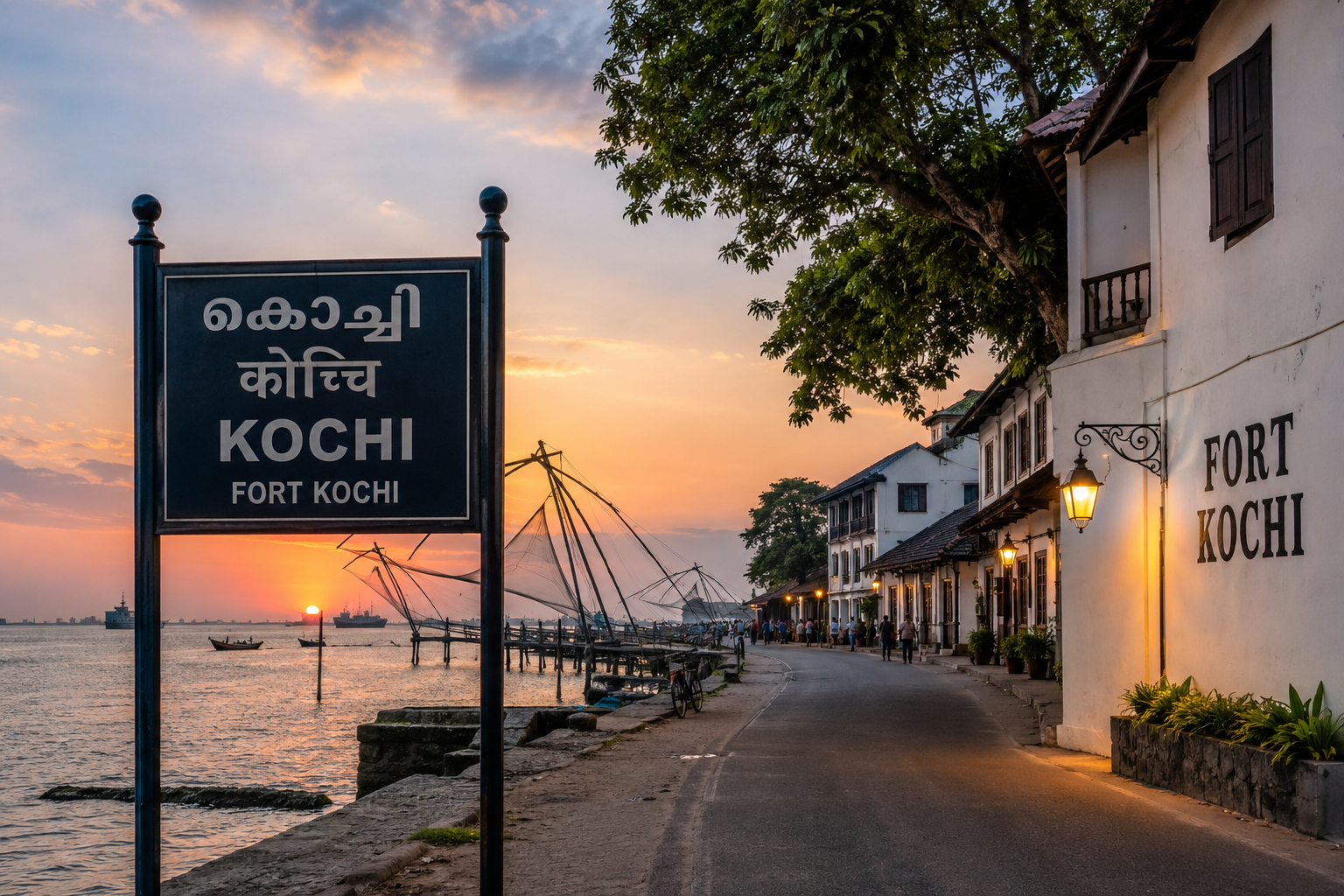
The cantilever Chinese fishing nets on the Fort Kochi waterfront at dusk.
When to go
October to March (best): dry, warm and pleasant — peak season, and when the art and festival calendar (including the Biennale, in its years) comes alive.
April and May: hot and humid on the coast, but quieter and cheaper if you don’t mind the heat and stick to mornings and evenings.
June to September (monsoon): heavy coastal rain turns the town green and atmospheric, with far fewer tourists and lower prices — pack for downpours.
Plan your route around closing days: the Paradesi Synagogue closes Fridays, Saturdays and on Jewish holidays, and Mattancherry Palace closes on Fridays. Check before you set out so you don’t arrive to a locked door.
Top things to do in Fort Kochi
From the headline waterfront to the quieter corners of Mattancherry most day-trippers skip.
Watch the Chinese fishing nets
Stroll the waterfront as the nets are lowered and hauled, especially near sunset. Buy fresh fish from the stalls behind them and have it grilled on the spot — touristy, yes, but a genuine Kochi ritual.
St Francis Church & Santa Cruz Basilica
St Francis is the oldest European church in India and was Vasco da Gama’s first burial place; the candy-striped Santa Cruz Basilica nearby dazzles with painted ceilings. A short, atmospheric walk apart.
Mattancherry (Dutch) Palace
A modest exterior hides some of India’s finest Hindu murals, alongside royal portraits and coronation robes of the Kochi rajas. A quick but rewarding stop in the heart of Mattancherry.
Jew Town & the Paradesi Synagogue
Wander lanes packed with antique and spice shops to the 1568 Paradesi Synagogue, famous for its hand-painted Chinese floor tiles and Belgian chandeliers — one of the oldest active synagogues in the Commonwealth.
Street art & cafe-hopping
Princess Street and the lanes around it are lined with murals, galleries and characterful cafes. Time it with the Kochi-Muziris Biennale and the whole quarter becomes a contemporary-art trail.
A Kathakali or Kalaripayattu show
Watch performers transform with hours of make-up into the wide-eyed characters of Kathakali, or catch the leaps and strikes of Kalaripayattu, Kerala’s ancient martial art. Arrive early for the make-up.
What to eat in Fort Kochi
This is a port town, so seafood leads — but centuries of trade left a kitchen full of surprises.
Catch off the nets
Pick fresh fish or prawns from the stalls behind the Chinese nets and have them grilled to order — the freshest meal in town.
Fish Molee & Appam
A gentle coconut-milk fish stew mopped up with lacy appam — Kerala’s coastal cooking at its most comforting.
Kayees-style Biryani
Mattancherry’s Muslim quarter is famous for its short-grain biryani — fragrant, meaty and worth the queue at lunch.
Fort Kochi cafes
Ginger tea, fresh juices and East-meets-West plates in heritage courtyards — the town’s slow afternoons happen here.
The “you-buy-we-cook” stalls are fun, but agree the fish weight and the price before they cook — settle the bill up front and there are no surprises later.
Where to stay
Fort Kochi itself is the place to base — walkable, atmospheric and full of heritage stays.
Fort Kochi homestay
Characterful rooms in old colonial houses, walkable to the nets and churches, with hosts who know the town inside out.
Heritage boutique hotel
Restored colonial bungalows with courtyards, pools and serious charm — the romantic, special-occasion option.
Mattancherry guesthouse
Calmer and a little cheaper, right by the palace, synagogue and spice markets — handy for an early start in Mattancherry.
How to get to Fort Kochi & around
Easy to reach, and best explored on foot once you arrive.
Skip the taxi and take the Ernakulam–Fort Kochi ferry — it’s a few rupees, beats the traffic, and gives you the harbour from the water.
A simple 2-day plan
Two unhurried days: Fort Kochi’s waterfront and churches first, then Mattancherry’s palace and Jew Town.
Fort Kochi
Start at the Chinese fishing nets, then walk to St Francis Church and Santa Cruz Basilica. Spend the afternoon on the beach and the street-art lanes and cafes, and end with an evening Kathakali show.
Mattancherry
Head to the Mattancherry Palace murals, browse Jew Town‘s antiques and spice shops, and visit the Paradesi Synagogue. After a biryani lunch, move on — up to Munnar’s tea hills or down to Alleppey’s backwaters.
Practical tips that actually help
Check closing days
Synagogue closes Fri/Sat; Mattancherry Palace closes Fridays. Plan Mattancherry around them.
Arrive by ferry
The Ernakulam ferry is cheap, scenic and skips the bridge traffic.
Walk it
Fort Kochi is compact and flat — comfy shoes beat any vehicle here.
Sunset at the nets
Go a little early to grab a good spot along the waterfront.
Carry cash
Stalls, the ferry and antique shops are cash-first; cards are patchy.
Dress respectfully
Cover shoulders and knees for the churches and the synagogue.
Mistakes first-time visitors make
- Rushing it as a half-day from the airport or a cruise. Fort Kochi rewards a slow two days, not a flying visit.
- Not checking site closing days. Turn up on the wrong day and the synagogue or palace will be locked.
- Driving in. The lanes are narrow and parking is painful — take the ferry or walk.
- Treating it as only churches. The food, art and waterfront are half the experience.
Planning the rest of your Kerala trip?
Fort Kochi is the perfect start or finish — pair it with Munnar’s tea hills and Alleppey’s backwaters. Tell me your dates and pace, and I’ll map a Kerala route that ties them together.
Plan my Kerala trip →Fort Kochi FAQs
How many days do you need in Fort Kochi?
One to two days. A single day covers the Fort Kochi waterfront and churches, but two lets you add Mattancherry’s palace, Jew Town and synagogue at a relaxed pace.
What is the best time to visit Fort Kochi?
October to March, when the weather is dry and pleasant and the art and festival calendar is busiest. The June–September monsoon is green and quiet but very wet.
How do you get to Fort Kochi from the airport or Ernakulam?
Cochin International Airport is about 40 km (1.5 hours) away. From Ernakulam, the cheapest and most scenic option is the public ferry straight across to Fort Kochi.
What are the Chinese fishing nets?
They are large cantilevered, shore-operated nets at the harbour mouth, lowered and raised by hand — a centuries-old icon of Kochi and best seen around sunset.
Is Fort Kochi walkable?
Yes. Fort Kochi is compact and flat, so walking is the ideal way around; use an auto or cycle to reach Mattancherry’s palace and Jew Town.
Related guides
Keep planning your Kerala trip with these:
Kerala Travel Guide
Backwaters, tea hills, beaches and spice country — how to string Kerala together.
Travel to Munnar
Tea plantations, Eravikulam wildlife and big mountain views, a few hours inland.
Ashvinee Nagle
I’m Ashvinee — I help first-time travellers plan India trips that actually work. I’ve spent years exploring the country’s regions, from Rajasthan’s forts to Kerala’s backwaters, and I write the guides I wish I’d had on my own first trips.

Written by Ashvinee Nagle
I travel India slowly and write it down honestly - practical guides and real itineraries from someone who lives here.
About Ashvinee →Plan your India trip with us
Get one short, honest India travel guide a week — plus a free 7-day Rajasthan itinerary to start.
Free. Unsubscribe any time.