
Travel to Wayanad: A First-Timer’s Guide to Kerala’s Green Highlands
A practical, no-fluff guide to Wayanad for first-time visitors — when to go, the wildlife and waterfalls, caves and peaks, where to stay, what to eat, how to get there, and a relaxed 2-day plan.
Wayanad is the wild, green north of Kerala. A highland district folded into the Western Ghats, it’s a patchwork of rainforest, coffee and spice plantations, waterfalls, misty peaks and ancient caves — far less touristy than the backwaters or the southern beaches, and all the better for it. This is the chapter of a Kerala trip for anyone who wants to walk, climb and breathe deep.
Wayanad is Kerala’s green highland district — jungle, plantations, waterfalls and peaks. Come for two or three days of wildlife safaris, the prehistoric Edakkal Caves, waterfalls and an easy trek or two, basing yourself around Kalpetta or Sulthan Bathery. Go October to February, and explore it from a plantation homestay.
Why visit Wayanad
Three reasons Wayanad rewards the extra effort to reach it — and why it suits slow, active travellers.
Wild green highlands
Rainforest, plantations and grassland plateaus stretch in every direction, part of the Nilgiri Biosphere. The landscape alone — misty, layered and deeply green — is reason enough to come.
Wildlife & the outdoors
The Wayanad Wildlife Sanctuary shelters elephants, deer and more, while peaks, caves and waterfalls make this Kerala’s best district for jeep safaris, treks and time outside.
Deep history & plantation life
The Edakkal Caves carry Neolithic carvings thousands of years old, and coffee, pepper and cardamom estates open their gates for stays and tours — a living, working countryside.
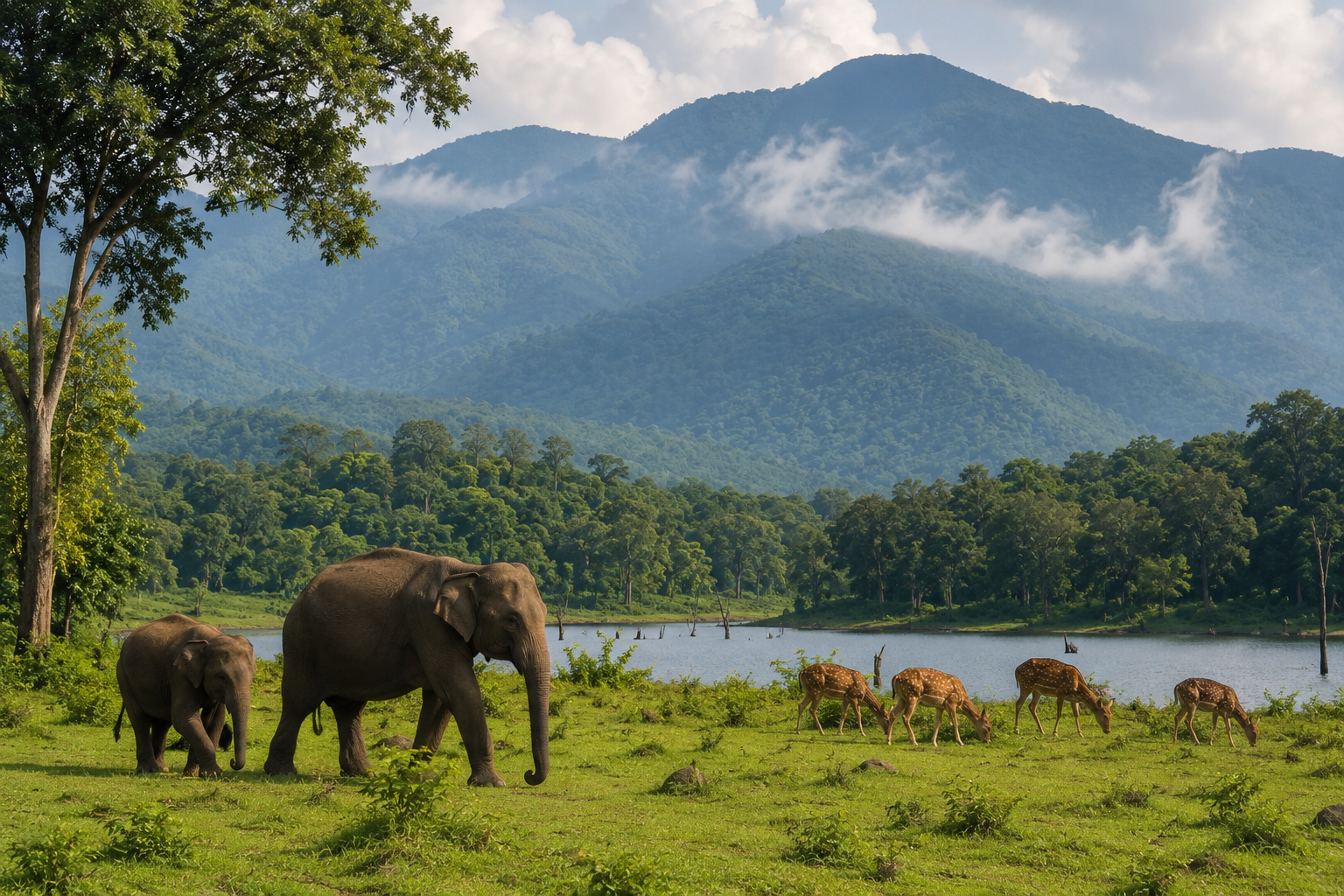
The forested hills and plantations of Wayanad in the Western Ghats.
When to go
October to February (best): the hills are lush from the rains and the weather is cool and clear — ideal for safaris, treks and waterfalls at their fullest.
March to May: warmer and hazier, but still a comfortable highland escape from the heat of the plains, with quieter trails.
June to September (monsoon): intensely green and beautiful, but very wet, and the high ranges are landslide-prone in heavy rain. If you visit in the monsoon, check local conditions and road status carefully before travelling.
Popular treks like Chembra Peak and the wildlife safaris have limited daily slots and need forest permits — arrive early or book ahead. In heavy monsoon, some trails and roads close for safety, so always check conditions first.
Top things to do in Wayanad
From a dawn safari to caves, waterfalls and a heart-shaped lake on a peak.
Jeep safari in the sanctuary
The Wayanad Wildlife Sanctuary, with its Muthanga and Tholpetty ranges, runs morning and evening jeep safaris in search of elephants, deer, gaur and the occasional big cat. Book the early slot.
Edakkal Caves
A short, steep climb leads to rock shelters carved with Neolithic petroglyphs thousands of years old — one of the few places in India to see prehistoric art this clearly, with valley views as a bonus.
Chembra Peak & the heart lake
Wayanad’s highest peak is famous for a heart-shaped lake on the way up. The trek needs a forest permit and has capped daily numbers, so start early and book at the entry point.
Soochipara & Meenmutty Falls
Wayanad’s waterfalls thunder after the rains — Soochipara (Sentinel Rock) is the easiest to reach, while Meenmutty rewards a longer walk. Best from October to January.
Banasura Sagar Dam
The largest earthen dam in India backs up a lake studded with islands, framed by hills. Come for the views, boating and an easy half-day out from Kalpetta.
Pookode Lake & plantation tours
A pretty forest-ringed lake with boating, plus coffee and spice plantation walks that explain how your morning cup and spice rack are grown. Gentle, family-friendly stops.
What to eat in Wayanad
Malabar and plantation flavours, with tribal and forest influences you won’t find on the coast.
Malabar biryani
North Kerala’s fragrant, short-grain biryani — richer and milder than its southern cousins, and a regional point of pride.
Kerala meals
The dependable banana-leaf spread of rice, curries and pickles — the everyday lunch across the district.
Bamboo rice & forest fare
Tribal-influenced dishes like bamboo-rice puttu turn up at homestays — ask your hosts what’s cooking.
Estate coffee & spices
Wayanad is serious coffee country — buy fresh estate beans, pepper and cardamom straight from the source.
This is highland coffee-and-spice country, not the coast — lean into the Malabar biryani, plantation coffee and homestay cooking rather than expecting beach seafood.
Where to stay
Plantation stays are the signature Wayanad experience; the towns are handy bases for everything else.
Plantation homestay
Sleep among the coffee and pepper, with home-cooked food and estate walks — the most authentic Wayanad stay.
Kalpetta / Bathery hotel
Central and well-connected to the caves, safaris and waterfalls, with the widest choice of rooms and food.
Jungle / tree resort
Higher-end resorts tucked into the trees, some with treehouses, pools and spas deep in the green.
How to get to Wayanad & around
It’s a scenic climb to reach, and spread out once you arrive — a car makes all the difference.
Wayanad links Kerala with Karnataka — many travellers combine it with Mysuru and the Bandipur–Nagarhole parks just across the border.
A simple 2-day plan
Two days that cover the caves, the falls and the wildlife — add a third for a trek.
Caves & falls
Climb to the Edakkal Caves in the morning, then visit Soochipara Falls and the calm of Pookode Lake. Finish with a plantation walk near your stay.
Wildlife & water
Take an early jeep safari in the sanctuary, then head to Banasura Sagar Dam for the views and boating — or swap in the Chembra Peak trek if you have the legs and a permit. Onward to Fort Kochi or Munnar.
Practical tips that actually help
Permits & slots
Safaris and Chembra trek have capped daily numbers — book or arrive early.
Hire a vehicle
Sights are far apart; a car or jeep for the day saves hours over local buses.
Respect the monsoon
The ranges are landslide-prone in heavy rain — check road and trail status first.
Carry cash
Estate shops, ticket counters and small eateries are mostly cash-only.
Start at dawn
Wildlife, light and cool air are all best in the first hours of the day.
Pack for leeches
On wet-season trails, closed shoes and leech socks are worth the room in your bag.
Mistakes first-time visitors make
- Squeezing it into one night. Wayanad’s sights are spread out — give it two or three days to do them justice.
- Turning up to treks without permits. Chembra and the safaris cap numbers; latecomers miss out.
- Relying on buses. Distances are long and connections slow — hire a car for the day.
- Ignoring monsoon warnings. The high ranges are landslide-prone in heavy rain; always check conditions first.
Planning Kerala’s wild north?
Wayanad pairs well with the Malabar coast, Fort Kochi’s history and a hop across to Mysuru. Tell me your dates and pace, and I’ll map a Kerala route that works the hills, the coast and the jungle.
Plan my Kerala trip →Wayanad FAQs
How many days do you need in Wayanad?
Two to three days. Two cover the caves, waterfalls and a safari; a third lets you add a trek like Chembra Peak or more plantation time at a relaxed pace.
What is the best time to visit Wayanad?
October to February, when the hills are lush and the weather cool and clear. March to May is a warmer escape, while the June–September monsoon is very wet and the ranges can be landslide-prone.
How do you get to Wayanad?
The nearest airport and railhead are at Kozhikode (Calicut), about 3 hours away by road up the Thamarassery ghat. Many visitors also arrive from Mysuru in Karnataka.
Do you need permits for Wayanad treks and safaris?
Yes. The wildlife safaris and popular treks such as Chembra Peak require forest permits and have limited daily slots, so book ahead or arrive early at the entry point.
Is Wayanad good for families?
Yes. Alongside the treks there are gentle options — Pookode Lake, Banasura Sagar Dam, plantation tours and easy safaris — that work well for all ages.
Related guides
Keep planning your Kerala trip with these:
Kerala Travel Guide
Backwaters, tea hills, beaches and spice country — how to string Kerala together.
Travel to Fort Kochi
Chinese fishing nets, colonial churches and Jew Town — the coastal counterpoint to Wayanad’s hills.

Ashvinee Nagle
I’m Ashvinee — I help first-time travellers plan India trips that actually work. I’ve spent years exploring the country’s regions, from Rajasthan’s forts to Kerala’s backwaters, and I write the guides I wish I’d had on my own first trips.
Written by Ashvinee Nagle
I travel India slowly and write it down honestly - practical guides and real itineraries from someone who lives here.
About Ashvinee →Plan your India trip with us
Get one short, honest India travel guide a week — plus a free 7-day Rajasthan itinerary to start.
Free. Unsubscribe any time.