
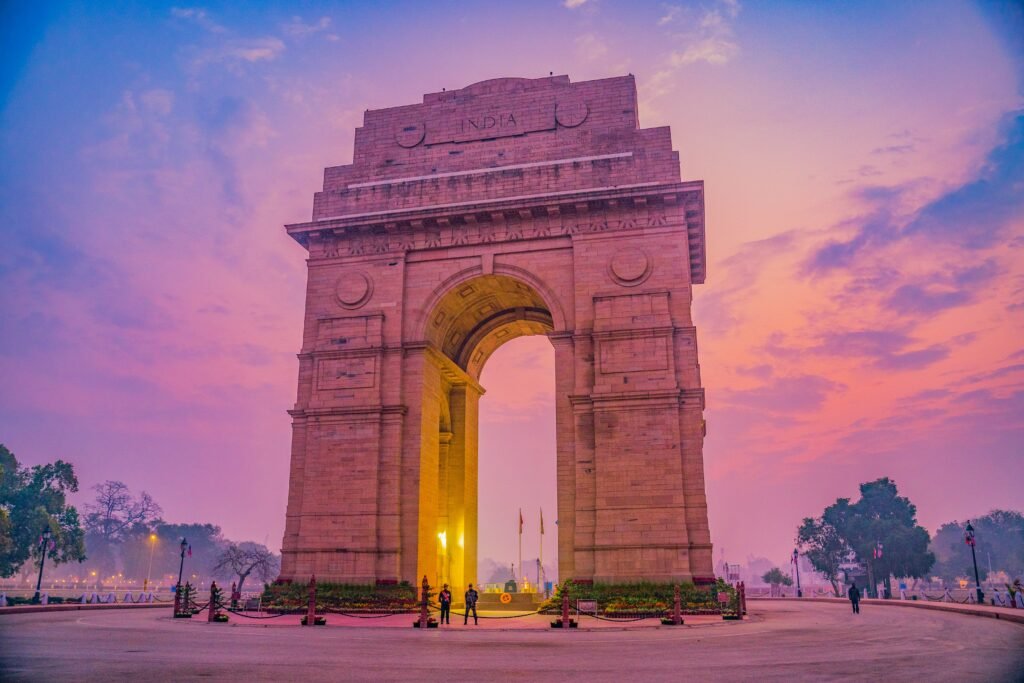
Travel to Delhi: The Ultimate First-Timer Guide to India’s Capital
A practical, no-fluff guide to Delhi for first-time visitors — where to stay, what to see, what to eat, how to get around, and what to expect from a city that holds a thousand years of history in its streets.
Delhi is not one city. It is seven, stacked on top of each other across a thousand years, and you can walk between them in a single afternoon. A Mughal tomb here, a Sufi shrine there, a British colonial roundabout in between, and a glass-and-steel metro line cutting through all of it. Most first-time visitors arrive expecting chaos and leave talking about the layers. Three or four days is enough to begin reading them.
Three to four days is the right window for a first Delhi trip. Split your time between Old Delhi (Red Fort, Jama Masjid, Chandni Chowk) and New Delhi (India Gate, Lodhi Gardens, Humayun’s Tomb). Base yourself in Connaught Place or Hauz Khas and use the metro plus Ubers to move around. Best months are October to March. Budget ₹2,000–7,000 per day. Don’t miss a sunrise at Humayun’s Tomb or a slow walk through Lodhi Garden at dusk.
Why visit Delhi
Delhi is the capital not because of its skyline or its industry, but because of its memory. The city has been razed, rebuilt, renamed, and rerouted by every major power on the subcontinent — Tomars, Khiljis, Tughlaqs, Lodis, Mughals, British, and finally an independent India. Each one left buildings, streets, food, and a faint linguistic accent that you can still hear if you pay attention. Add to that some of the country’s best museums, gardens, street food, and a metro system that genuinely works, and you have a city that rewards slow walking.
Living history
Three UNESCO sites, dozens of Mughal monuments, and entire neighbourhoods that haven’t changed in 400 years.
Street food capital
Paranthe wali gali, chaat at Bengali Market, kebabs in Nizamuddin — Delhi feeds you whether you planned to eat or not.
Gateway to North India
Two-hour drive to Agra, six-hour train to Jaipur, overnight bus to Rishikesh. Almost every great trip starts here.
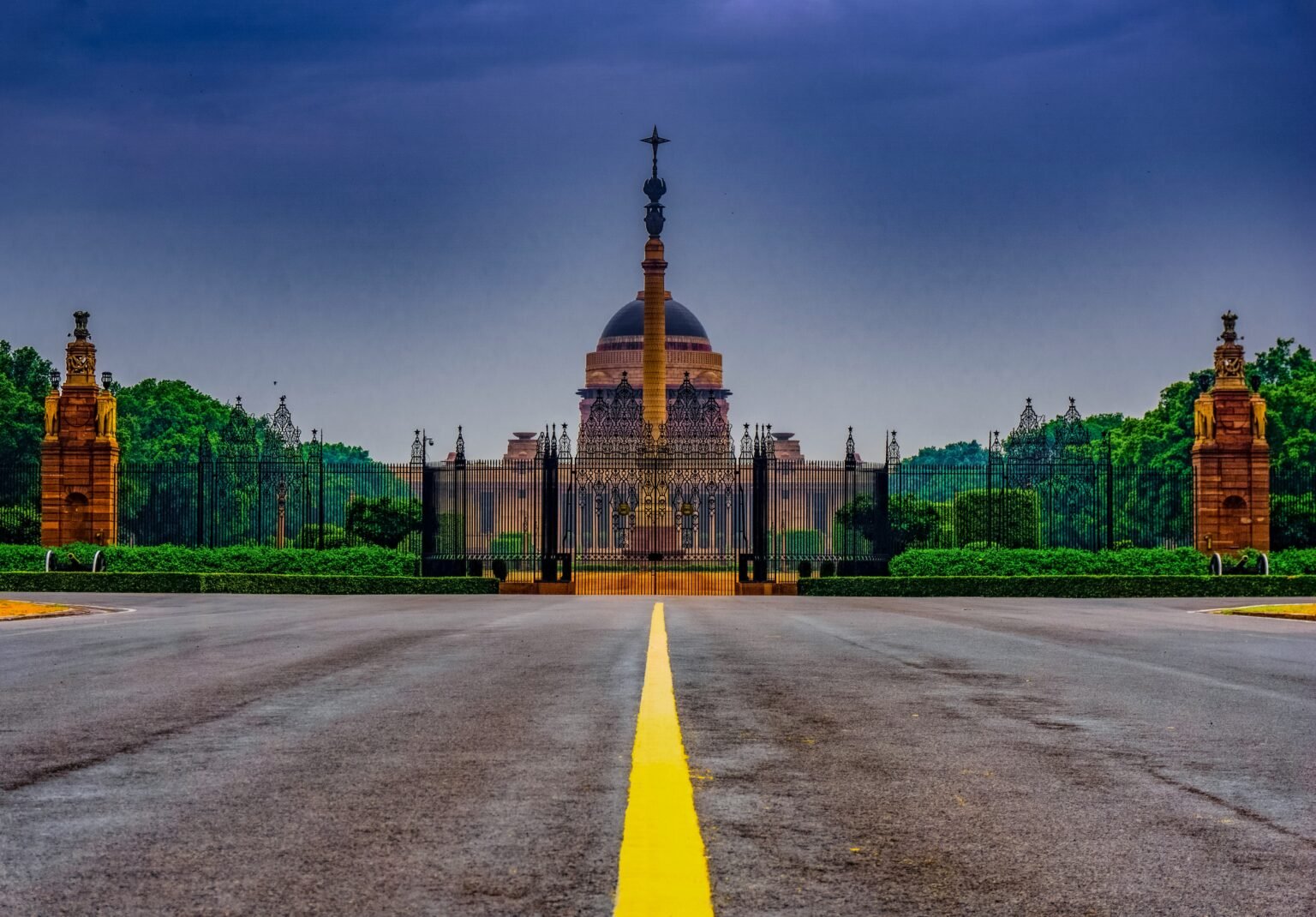
The city’s great Mughal-era monuments sit inside quiet, well-kept gardens.
When to go
Delhi has four distinct seasons, and the difference between the best and worst months is dramatic. Plan around the weather and you will have a very different trip from someone who didn’t.
October to March is the right window for almost everyone. Days are warm but pleasant, evenings are cool, and the air is mostly clear in late autumn and again in February. December and January are the coolest months — pack a light jacket for mornings.
April to June is hot. Temperatures regularly cross 40 °C, and walking around Old Delhi in May is not advisable. If you must travel then, plan early-morning starts and long afternoon breaks indoors.
July to September is the monsoon. The heat breaks and the gardens come back to life, but humidity is high and rain disrupts plans. The plus side: hotel prices drop and the monuments look extraordinary against thunderclouds.
Delhi’s air quality drops sharply in November (Diwali fireworks + crop burning + cooling air = smog). If you have respiratory issues, avoid the first three weeks of November and aim for December onwards instead, or visit in February or March.
Top things to do in Delhi
You cannot see Delhi in three days. You can see a slice of it well. These are the experiences that give a first-timer the most honest cross-section of the city.
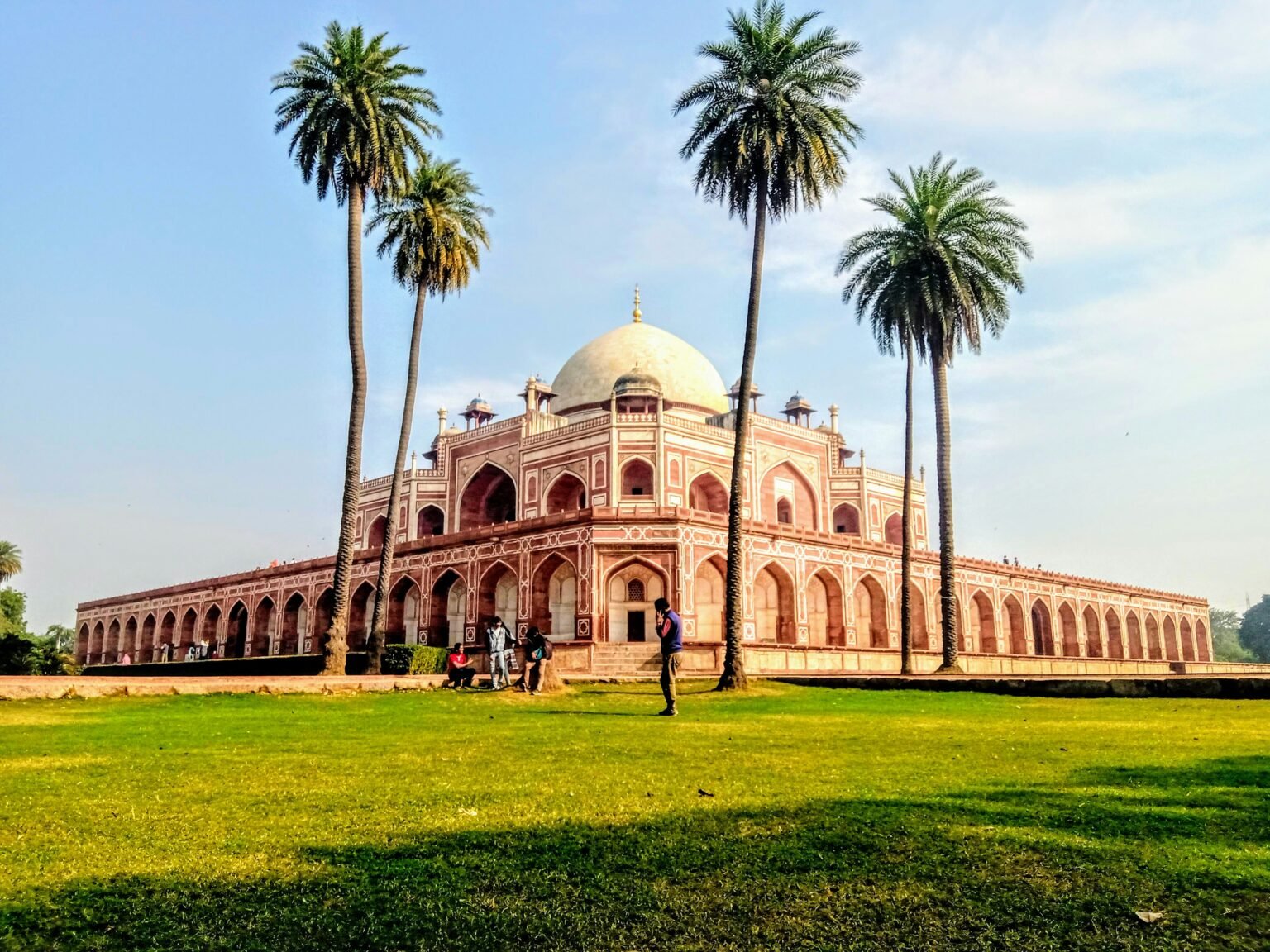
Humayun’s Tomb at sunrise
This 16th-century Mughal tomb is the architectural prototype for the Taj Mahal, and seeing it at 7am — empty, soft light on the red sandstone, mist over the chahar-bagh gardens — is one of the great free experiences in Delhi. Photographers, take a wide lens.
Old Delhi: Red Fort, Jama Masjid, Chandni Chowk
Walk from the Red Fort gates, across to India’s largest mosque (Jama Masjid), down the spice-and-silver lanes of Chandni Chowk. Eat at Karim’s or Paranthe Wali Gali along the way. This is the Old Delhi nearly everyone means when they say “Old Delhi”. Hire a local guide or book a food walk — it makes a 10x difference.
Lodhi Garden at dusk
A 90-acre park scattered with 15th-century tombs of the Lodi dynasty. Locals come here to walk, jog, picnic, and date — the most Delhi place in Delhi. Go at sunset and stay until the lamps come on.
Qutub Minar complex
The 72-metre minaret built in 1193 is the tallest brick minaret in the world, and the complex around it includes the Iron Pillar (1,600 years old, no rust) and ruins of the original Quwwat-ul-Islam mosque. Go in the late afternoon when the sun lights the red sandstone.
Nizamuddin Dargah on a Thursday evening
The shrine of the 13th-century Sufi saint Nizamuddin Auliya hosts qawwali (devotional music) every Thursday after sunset. It’s free, intense, packed, and unlike anything else in Delhi. Cover your head, leave your shoes outside, sit on the floor, listen.
National Museum & Crafts Museum
The National Museum on Janpath has artefacts from 5,000 years of subcontinental history — Indus Valley pottery, Buddhist sculptures, Mughal miniatures. The Crafts Museum nearby is smaller but more delightful, with live craftsmen demonstrating textiles and metalwork.
Walk a single Old Delhi lane and you pass through three centuries.
What to eat in Delhi
Delhi’s food map runs from 19th-century kebab counters in Old Delhi to molecular-gastronomy tasting menus in Mehrauli. These four experiences are the ones to plan around — the rest will happen by accident, and you should let it.
Karim’s (Jama Masjid)
Open since 1913, run by descendants of cooks from the last Mughal kitchen. Order mutton burra, seekh kebab, and the legendary mutton korma. Communal seating, no frills, all flavour.
Paranthe Wali Gali
A 100-year-old alley dedicated entirely to deep-fried stuffed flatbreads. Try the rabri, paneer, or mixed vegetable paranthas at Pt. Gaya Prasad Shiv Charan. Order half-portions — they’re heavy.
Saravana Bhavan or Sagar Ratna
When Delhi food gets too rich, a clean South Indian thali is the antidote. Dosas, idlis, sambar, filter coffee. Reliable, vegetarian, perfectly priced.
Indian Accent or Bukhara
When you want to splurge, these are the two restaurants that define modern Delhi dining. Indian Accent reinterprets Indian flavours with global technique; Bukhara is the original Mughlai-temple, dal Bukhara and all.
Street food in Old Delhi is genuinely fine — pick stalls with high turnover (busy = fresh). Skip raw chutneys, ice in plain water, and pre-cut fruit in cheap places. Carry bottled water for the first week while your stomach adjusts.
Where to stay
Delhi is enormous and the difference between a good and bad base is the difference between 20-minute and 90-minute commutes. Three areas cover almost every traveller’s needs.
Paharganj / Connaught Place
Backpacker hub right next to New Delhi Railway Station and a 5-minute metro to the city centre. Hostels and mid-range hotels from ₹1,200–4,000. Loud and chaotic but unbeatably central.
Hauz Khas / Saket
Hipper, leafier, café-and-bar culture. Walking distance to Hauz Khas Village ruins. Boutique hotels and Airbnbs from ₹3,500–8,000. The right base if you want modern Delhi.
Lutyens’ Delhi
The Imperial, The Lodhi, Taj Mahal Hotel, The Claridges. Wide tree-lined streets, walking distance to Khan Market and Lodhi Garden. From ₹15,000 upwards.
How to get around
The Delhi Metro is one of the best public-transport systems in India — clean, air-conditioned, well-signed in English, and connects almost everywhere you’ll want to go. Use it as your spine and Ubers for the gaps.
Buy a rechargeable Delhi Metro Smart Card on day one (₹150 deposit + load) at any major station. It saves you 10% on every fare and skips the token queues. The first coach of every train is women-only.
A solid 3-day itinerary
If you only have a long weekend, this covers the must-sees without burning out. Stretch to four or five if you can — Delhi rewards a slower pace.
Old Delhi deep dive
Start at Red Fort at 9am (lighter crowds). Walk across to Jama Masjid, climb a minaret. Lunch at Karim’s. Spice walk through Chandni Chowk and Khari Baoli (Asia’s largest spice market). Evening at Gurudwara Bangla Sahib. Dinner at Saravana Bhavan in CP.
Mughal & New Delhi
Sunrise at Humayun’s Tomb. Breakfast at Khan Market (Sodabottleopenerwala or Café Turtle). Late morning at the National Museum. Drive past India Gate and Rashtrapati Bhavan. Sunset at Lodhi Garden, dinner at Indian Accent or Bukhara.
South Delhi & Sufi night
Morning at Qutub Minar. Lunch at Hauz Khas Village with a wander through the 14th-century ruins. Afternoon shopping at Dilli Haat (state crafts under one roof). Thursday evening: qawwali at Nizamuddin Dargah. Late dinner at Karim’s Nizamuddin branch.
Practical tips that actually help
Carry small notes
Auto drivers and street vendors rarely have change for ₹500 or ₹2,000 notes. Keep ₹10s, ₹20s, and ₹100s handy.
Use UPI if you can
Most vendors, autos, and shops accept UPI (Google Pay, PhonePe). It avoids the small-change problem entirely.
Dress modestly
Especially at mosques, gurudwaras, and dargahs. Cover shoulders and knees. Carry a scarf you can drape over your head when needed.
SIM on arrival
Get an Indian SIM (Airtel or Jio) at the airport. You need a working number for Uber, UPI, and most bookings.
Mornings are golden
Delhi is genuinely quiet between 6 and 8am — the best window for photos at Humayun’s Tomb, Lodhi Garden, and India Gate.
Skip the “tourist information” shops
The ones near Paharganj and CP are nearly all touts. Use the official India Tourism office or book online.
Mistakes first-time visitors make
- Trying to do Delhi in one day before flying to Agra. You will see Red Fort, eat one parantha, and miss the city entirely. Give it two full days at the very least.
- Taking unmetered autos. Always ask the driver to use the meter, or book on Uber/Ola for a fair fare. The “no meter, fixed price” quote is always 3x too high.
- Skipping Old Delhi because it sounds intimidating. It’s the most rewarding part of the city. Just go with a guide the first time, or join a food walk.
- Visiting in May or November. Heatwaves in May, smog in November. October and February to March are the sweet spots.
- Booking a hotel near IGI Airport to save on transfers. You’ll lose hours commuting to everything. Stay central, even if it’s pricier.
Want help planning your India trip beyond Delhi?
I help travellers turn confusing wish lists into custom India itineraries that actually work — based on your season, pace, and travel style.
Plan my India trip →Delhi FAQs
How many days do I need in Delhi?
Three full days covers Old Delhi, Mughal monuments, and the gardens-and-museums of New Delhi. Four or five days lets you slow down, do a Thursday-night Sufi qawwali, and add a day trip to Agra or Mathura.
Is Delhi safe for solo travellers, including women?
South Delhi (Hauz Khas, Saket, Khan Market) and Central Delhi (CP, Lutyens) are generally fine, including after dark. Old Delhi is fine during the day but quieter at night — use Uber after sunset. The usual urban-India common sense applies: stay in well-reviewed accommodations, avoid empty stretches very late, and use ride-share rather than unmarked transport.
What’s the best area to stay for a first visit?
Connaught Place if you want central and well-connected, Hauz Khas if you want cafés and a calmer vibe, Lutyens’ Delhi if you want to splurge. Avoid distant suburbs like Gurgaon or Noida unless you have business there.
Is the Delhi air pollution as bad as people say?
From early November to mid-January, yes — air quality drops to hazardous levels. February through April and October are noticeably cleaner. If you have asthma or respiratory issues, time your visit accordingly and carry N95 masks.
How do I get from Delhi airport to the city?
The Airport Express Metro from Terminal 3 to New Delhi station takes 20 minutes and costs ₹60. Uber and Ola are reliable from the dedicated pre-paid counters; budget ₹400–700 to central Delhi. Skip random “pre-paid” counters outside the official ones.
Related guides
Pair Delhi with another of India’s great first-timer cities — same honest, on-the-ground approach.
Travel to Jaipur
Amber Fort at sunrise, Old City bazaars, Hawa Mahal, and rooftop dinners over the painted city. The ultimate first-timer guide to Rajasthan’s capital.
West CoastTravel to Mumbai
Heritage Colaba, Marine Drive sunsets, vada pav at street stalls, and Elephanta Caves. The first-timer guide to India’s commercial capital.

Written by Ashvinee Nagle
I travel India slowly and write it down honestly - practical guides and real itineraries from someone who lives here.
About Ashvinee →Plan your India trip with us
Get one short, honest India travel guide a week — plus a free 7-day Rajasthan itinerary to start.
Free. Unsubscribe any time.