
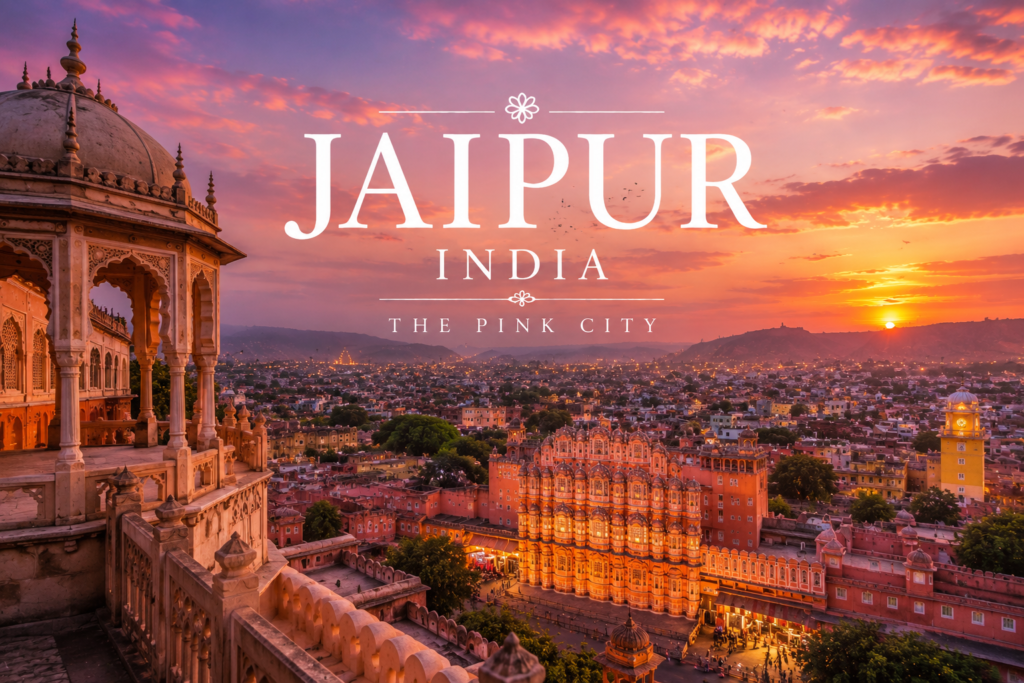
Travel to Jaipur: The Ultimate First-Timer Guide to India’s Pink City
A practical, no-fluff guide to Jaipur for first-time visitors — when to go, what to see, what to eat, how to get around, and a 3-day itinerary that gives you the city without burning out.
Jaipur is India at its most photogenic. A planned 18th-century city laid out in a perfect grid, painted terracotta-pink in 1876 to welcome the Prince of Wales, and never repainted since. Behind the colour is a working capital — Rajasthan’s largest city, with a thriving textile industry, a serious food culture, and some of the most ambitious palace architecture in the subcontinent. Most first-time visitors arrive expecting fort-and-elephant kitsch and leave realising Jaipur is far more layered than the postcards suggest.
Two to three days is right for a first Jaipur trip. The Old City (Hawa Mahal, City Palace, Jantar Mantar) takes a full day; Amber Fort and Nahargarh half a day each; the bazaars need a full evening. Stay near the Old City for atmosphere or in C-Scheme for comfort. Best months are October to March. Budget ₹2,000–8,000 per day depending on hotel choice. Don’t miss a rooftop dinner with the Hawa Mahal lit up, and a thali at LMB or Spice Court.
Why visit Jaipur
Jaipur was founded in 1727 by Sawai Jai Singh II, a maharaja who happened to be a serious astronomer, a planner, and a patron of trade. He built his new capital on a strict nine-square Vastu Shastra grid, ringed it with battlements, and filled it with palaces, observatories, and bazaars that are still working today. Walking the Old City is walking inside an 18th-century city that never stopped being a city — markets selling the same textiles and silver and lac bangles they sold three centuries ago, processions that still wind through the same gates, palaces still partly lived in by the descendants of the founders.
Living palaces
Three UNESCO sites — Amber Fort, Jantar Mantar, and the City Palace complex — and a current royal family that still occupies part of the City Palace.
Best base for Rajasthan
Five hours to Pushkar, four to Ranthambore, six to Udaipur, six to Jodhpur. Almost every Rajasthan itinerary starts or ends here.
Crafts capital
Block printing in Bagru, blue pottery in Sanganer, hand-cut gemstones in Johari Bazaar. India’s most concentrated traditional-crafts scene.
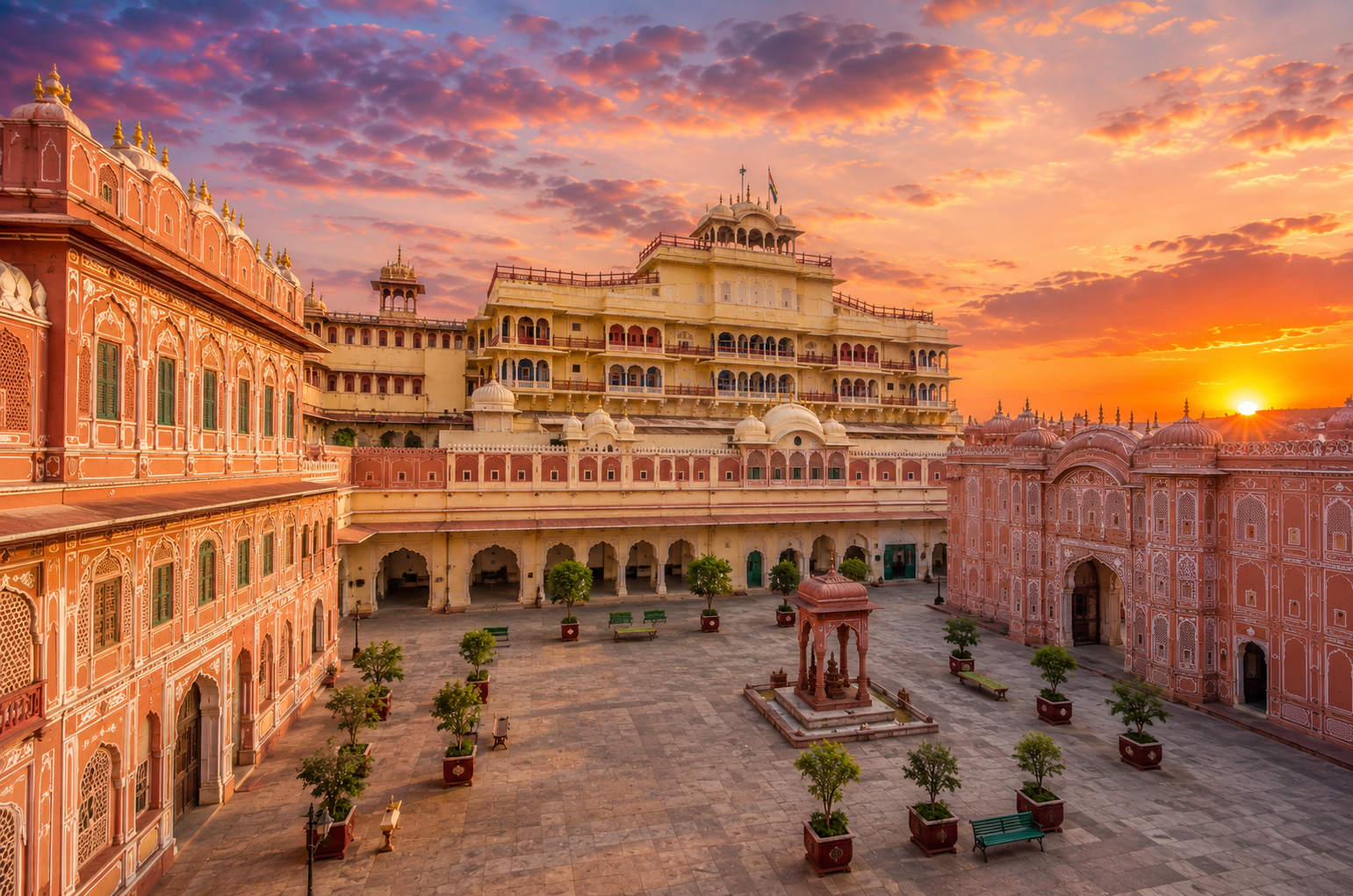
The City Palace complex is still partly lived in by Jaipur’s royal family.
When to go
Jaipur has three distinct seasons. The difference between a comfortable trip and a punishing one comes down to which one you visit in.
October to March is the right window. Days are warm but pleasant (18–28°C), evenings are crisp enough for a light jacket, and the desert light is at its most flattering for photography. December and January are coolest and busiest — book hotels well ahead, especially around Christmas, New Year, and the Jaipur Literature Festival (late January).
April to June is brutal. Temperatures regularly cross 42°C and the city’s stone surfaces radiate heat well into the night. Walking Amber Fort in May is genuinely unpleasant. If you must travel then, plan dawn starts, long midday breaks indoors, and book a hotel with a working pool.
July to September brings the monsoon. The heat breaks, the surrounding hills go green, and the forts look magical against thunderclouds. Crowds thin out and hotel rates drop substantially. The downside is short heavy showers that can disrupt outdoor plans and occasional flight delays.
Two festivals are worth timing a trip around: Teej (July/August) brings a procession through the Old City with elephants and folk musicians, and Diwali (October/November) lights up the entire pink-painted city in oil lamps and fairy lights — one of the most spectacular Diwali experiences in India.
Top things to do in Jaipur
You cannot see Jaipur in one day. You can see a slice of it well in three. These are the experiences a first-timer should build their itinerary around.
Amber Fort at sunrise
The hilltop fort 11km north of Jaipur is the city’s most famous monument, and seeing it at 8am — gates just opening, soft light on the sandstone, the Maotha Lake mist still clearing — is a completely different experience from the midday crowds. Don’t take the elephant ride (animal-welfare concerns); take a jeep or walk the cobbled path up.
Old City: Hawa Mahal, City Palace, Jantar Mantar
The pink-painted walled city is meant to be walked. Start at the Hawa Mahal facade (best photo light is 7–9am, before the tour buses), wander into the City Palace complex, then spend a slow hour at Jantar Mantar — Sawai Jai Singh’s 18th-century observatory with the world’s largest stone sundial. Lunch at LMB or Rawat Mishtan Bhandar on the way.
Nahargarh Fort at golden hour
Of Jaipur’s three hilltop forts, Nahargarh has the best view back over the pink city. Drive up an hour before sunset, walk along the ramparts, and watch the lights come on across the grid below. The cafe at the top serves a decent (overpriced) chai.
Bazaars of the Old City after dark
The bazaars come alive after 6pm when the heat fades. Johari Bazaar for gemstones and silver, Bapu Bazaar for textiles and juttis, Tripolia Bazaar for brassware and lac bangles. Bargain hard — opening prices are often 3–4x the real price. Skip the gem touts who approach you on the street.
Panna Meena ka Kund
A 16th-century stepwell near Amber Fort with perfect zig-zag stone staircases descending into a square well. Less crowded than Chand Baori but visually just as striking. Free entry. Best photographed in the late afternoon when light reaches the bottom.
A block-printing workshop in Bagru or Sanganer
Forty-five minutes from the city, these two craft villages have been making block-printed textiles for 300+ years. A half-day workshop with a working family lets you carve a block, mix natural dyes, and print your own fabric. Hands-on, deeply local, and the kind of thing you cannot do anywhere else.
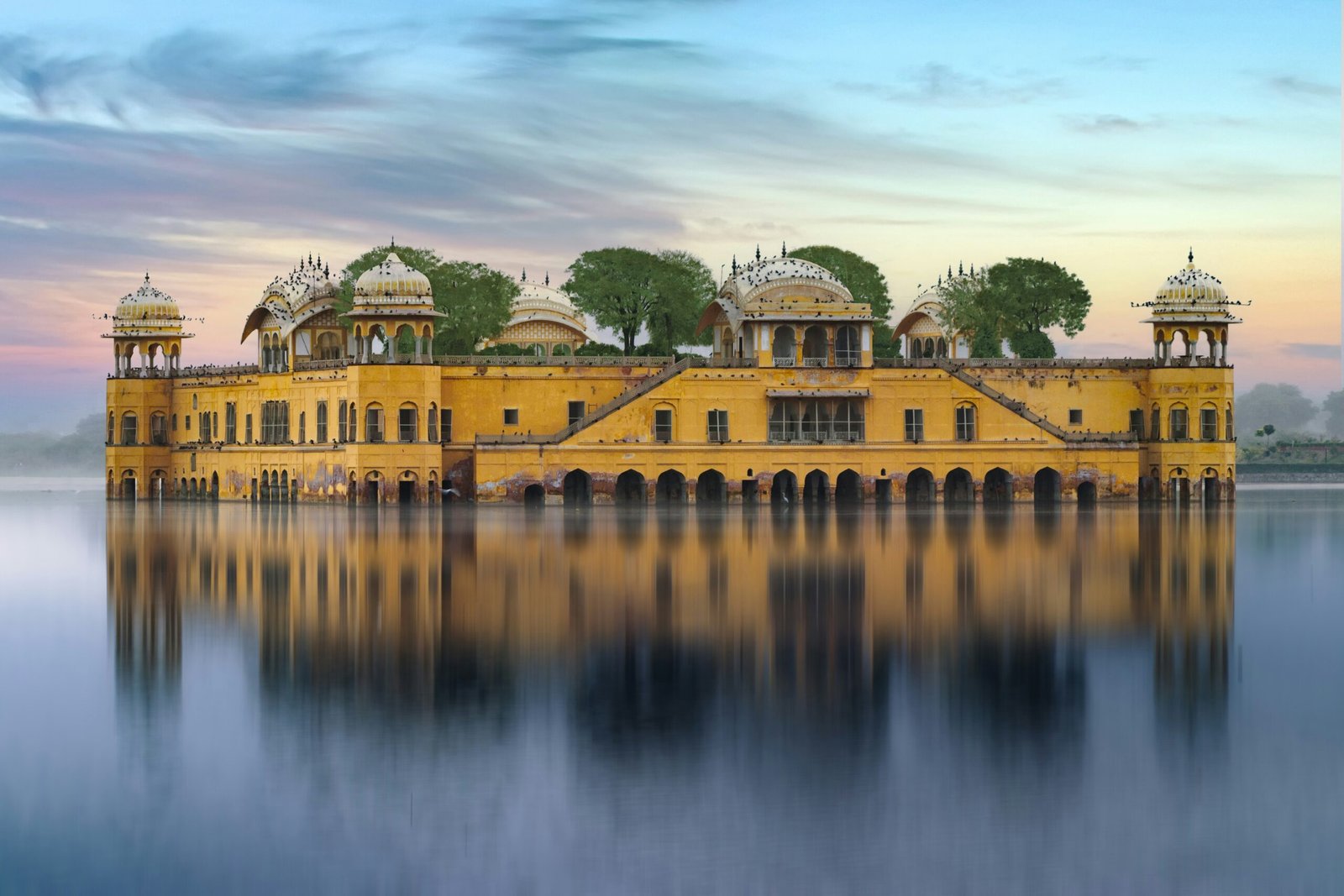
The Pink City was painted in 1876 and has been repainted every decade since.
What to eat in Jaipur
Rajasthani food is built around a paradox — the desert produced one of India’s richest, butteriest, most flavour-dense cuisines, designed by people who had to cook without much fresh produce. Jaipur is the best place to encounter it. These four experiences cover the spectrum.
LMB (Laxmi Misthan Bhandar)
Founded in 1727 alongside the city itself. Order the Rajasthani thali — dal baati churma, gatte ki sabzi, ker sangri, mirchi vada — and finish with their legendary ghewar. Pure vegetarian, no alcohol, communal seating, run by the eighth generation of the same family.
Rawat Mishtan Bhandar
Famous for pyaaz kachori — a flaky pastry stuffed with spiced onion, deep-fried, eaten hot with mint chutney. Locals queue from 8am. Also try the mirchi bada and a kulhar of masala chai. Cheap, fast, deeply local.
Spice Court
Reliable mid-range option with both Rajasthani and Mughlai menus. The laal maas (a fiery red mutton curry made with mathania chillies) is what to order, with hot tandoori roti. Garden seating, AC indoors, good for families.
Suvarna Mahal at Rambagh Palace
Dinner in a former Mughal-style banquet hall at the Taj’s flagship palace hotel. The royal Rajasthani thali is built from the recipes of the Jaipur royal kitchens. Worth one splurge night even if you’re not staying there. Book ahead and dress smart.
Rajasthani food is rich and chilli-forward — laal maas and mirchi vada are seriously hot. Start mild on your first day to gauge tolerance. Lassi and chaas (buttermilk) are the local antidotes, not water. Skip raw chutneys at the cheapest street stalls if you have a sensitive stomach.
Where to stay
Jaipur’s hotel scene is exceptional for the city’s size — from ₹800 hostels to ₹50,000 palace suites, with a strong mid-range and boutique haveli scene in between. Three areas cover almost every traveller’s needs.
Old City / Near Hawa Mahal
Restored havelis converted into guesthouses, walking distance to every Old City sight. Atmospheric, often loud, sometimes basic on amenities. From ₹1,500–4,500. The right base if you want to wake up inside the Pink City.
C-Scheme / Civil Lines
Tree-lined neighbourhood west of the Old City with the city’s best cafés, boutique hotels, and restaurants. 10-minute drive to the Hawa Mahal. From ₹4,000–9,000. The right base for a calmer, more comfortable stay.
Heritage palace hotels
Rambagh Palace, Samode Haveli, ITC Rajputana, Taj Jai Mahal Palace. The reason Jaipur is on so many bucket lists. From ₹15,000 upwards, much more for suites. Worth one or two nights if budget allows.
How to get around
Jaipur is bigger and more spread out than it looks. The Old City is walkable, but you’ll need transport between the Old City, Amber Fort, Nahargarh, and the modern neighbourhoods. There’s no metro to speak of yet, so Uber/Ola and auto-rickshaws are your spine.
The single most useful Jaipur tip: hire a private car with driver for one full day (₹2,500–3,500) and cover Amber Fort, Jaigarh, Nahargarh, and Panna Meena in one efficient loop. Trying to do this with Ubers is twice as expensive and three times slower because of return trips through the same hill roads.
A solid 3-day itinerary
This route covers the essentials at a sustainable pace. Stretch to four days if you want a craft workshop or a Pushkar day-trip; cut to two if you’re tight, but accept you’ll miss the hilltop forts.
Old City deep dive
Start at Hawa Mahal at 7:30am for the morning light. Walk into the City Palace complex by 9:30am. Cross to Jantar Mantar next door. Lunch at LMB in Johari Bazaar. Afternoon wandering Bapu Bazaar and Tripolia Bazaar. Evening rooftop dinner at Tapri Central or Peacock Rooftop with Hawa Mahal views.
Forts and stepwells
Driver pickup at 7am. Amber Fort at opening (8am). Stop at Panna Meena ka Kund stepwell on the way down. Lunch at 1135 AD inside Amber Fort or back in the city. Afternoon at Jaigarh Fort (the cannon, the views). Sunset at Nahargarh Fort. Dinner at Spice Court.
Crafts & comfort day
Morning at a block-printing workshop in Bagru or Sanganer (book ahead). Lunch back in C-Scheme at Anokhi Café. Afternoon at Albert Hall Museum and a slow walk through Central Park. Splurge dinner at Suvarna Mahal at Rambagh Palace.
Practical tips that actually help
Bargain hard in bazaars
Opening prices in Bapu and Johari Bazaar are routinely 3–4x the real price. Counter-offer at one-third, walk away if needed. Hotel-arranged shops mark up more, not less.
Avoid the gem-tout scam
Friendly locals offering “tax-free gems to send abroad” run an old scam — the gems are glass, the money disappears. Buy gems only from established Johari Bazaar shops, never from strangers.
Dress for the temples
Cover shoulders and knees at Govind Devji and other temples in the City Palace. Remove shoes. Carry a scarf you can drape over your head if needed.
Combined ticket saves time
The ₹1,000 combo ticket covers Amber, Jaigarh, Hawa Mahal, Albert Hall, Nahargarh, Jantar Mantar, and the Sisodia Garden. Valid for two days. Worth it if you’re seeing 4+ sites.
SIM and UPI
Get a local SIM (Jio or Airtel) on arrival. Most shops, autos, and even bazaar stalls accept UPI (Google Pay, PhonePe) — much easier than bargaining for change.
No elephant rides at Amber
The elephants used for tourist rides up to Amber Fort live in poor conditions and many have foot/eye problems. Animal-welfare groups (HSI, PETA) document this regularly. Take a jeep, taxi, or walk instead.
Mistakes first-time visitors make
- Doing Jaipur in one day from Delhi or Agra. The Golden Triangle “Jaipur day trip” leaves you 5 hours in the city. You’ll see the Hawa Mahal facade and one rushed fort. Give Jaipur at least two full nights.
- Taking the elephant ride to Amber Fort. Cheap photo, real animal-welfare cost. Take a jeep, taxi, or walk the cobbled path up.
- Buying gems from anyone who approaches you. The street-tout gem scam is one of the oldest in Jaipur and still active. Only buy gems from established shops with paper trails.
- Visiting Amber Fort at midday. Open hours are 8am–5pm. The crowds are at their worst between 11am and 3pm and the sandstone radiates heat. Go at opening or in the last 90 minutes.
- Booking a hotel near the airport or the train station. You’ll lose hours commuting. Stay near the Old City or in C-Scheme.
Want help planning your India trip beyond Jaipur?
I help travellers turn confusing wish lists into custom India itineraries that actually work — based on your season, pace, and travel style.
Plan my India trip →Jaipur FAQs
How many days do I need in Jaipur?
Two to three days covers the Old City, Amber Fort, and the main hilltop forts. Four days lets you add a block-printing workshop in Bagru or a day-trip to Pushkar. Less than two days and you’ll be doing the city as a checklist rather than experiencing it.
Is Jaipur safe for solo travellers, including women?
Jaipur is generally safe, including for solo women travellers, with the standard urban-India common sense: stay in well-reviewed accommodations, avoid empty streets very late at night, and use Uber/Ola rather than unmarked transport after dark. The Old City bazaars are fine during the day; some lanes thin out after 9pm. Most palace hotels and C-Scheme cafés are perfectly safe for late dinners.
What’s the best area to stay for a first visit?
The Old City near Hawa Mahal if you want atmosphere and walkability to the main sights — choose a restored haveli guesthouse. C-Scheme or Civil Lines if you want cafés, modern restaurants, and more comfort, with a 10-minute drive to the Old City. Avoid hotels near the airport or distant suburbs unless you have a specific reason.
How does Jaipur compare to Udaipur or Jodhpur?
Jaipur is the biggest, most varied, and best-connected — a planned city with palaces, forts, bazaars, and a strong food scene. Udaipur is smaller, calmer, and built around a lake — more romantic, less commercial. Jodhpur sits below the largest fort in India and has a distinctive blue old city. For a first Rajasthan trip, Jaipur is the natural starting point; for a second visit, Udaipur and Jodhpur reward more.
How do I get from Delhi or Agra to Jaipur?
From Delhi: the Vande Bharat Express takes 3h40m (₹900–1,300, fastest), the Shatabdi takes 4h30m (₹700–1,200), or driving via the new Delhi–Mumbai Expressway takes about 4 hours. From Agra: the Gatimaan Express takes 3h45m (₹700–1,100), or a taxi/car takes about 4 hours. Flights exist but the security/transfer time makes train usually faster.
Related guides
Pair Jaipur with another of India’s great first-timer cities — same honest, on-the-ground approach.
Travel to Delhi
Old Delhi, Mughal monuments, Lodhi Garden, and Sufi nights at Nizamuddin. The ultimate first-timer guide to India’s most layered city.
West CoastTravel to Mumbai
Heritage Colaba, Marine Drive sunsets, vada pav at street stalls, and Elephanta Caves. The first-timer guide to India’s commercial capital.
Ashvinee Nagle
I’m a travel writer based in Nagpur. Through Travel India, I share honest, on-the-ground guides shaped by years of travelling across India.

Written by Ashvinee Nagle
I travel India slowly and write it down honestly - practical guides and real itineraries from someone who lives here.
About Ashvinee →Plan your India trip with us
Get one short, honest India travel guide a week — plus a free 7-day Rajasthan itinerary to start.
Free. Unsubscribe any time.