
Travel to Pushkar: The Ultimate First-Timer Guide to Rajasthan’s Pilgrim Town
A practical, no-fluff guide to Pushkar for first-time visitors — when to go, what to see, what to eat, where to stay, how to get around, and a relaxed 1–2 day itinerary around the sacred lake and the bazaar.
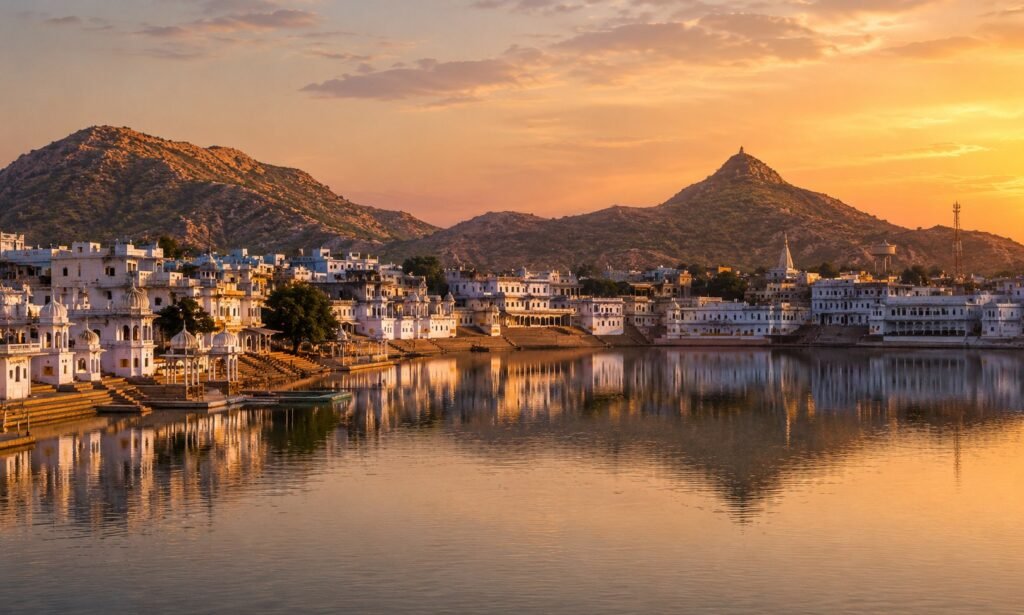
Pushkar is the calm, slightly bohemian pause in a Rajasthan trip. Set around a small sacred lake ringed by 52 ghats and more than 400 temples, it is one of the oldest and holiest towns in India — and, thanks to decades of backpackers, also one of the most relaxed. Whitewashed lanes of cafes and bazaar stalls climb away from the water, pilgrims bathe at the ghats at dawn, and the desert hills glow at sunset. Most travellers come for a night between Jaipur and the desert cities and find the slow pace hard to leave.
One to two days suits Pushkar. The sacred lake and its ghats are the heart of it, especially at sunrise and sunset; the rare Brahma Temple and a climb to the Savitri hilltop temple fill the rest. Wander the bazaar, eat well in the all-vegetarian cafes, and slow right down. Time a visit for the November Camel Fair if you can. Stay near the lake. Budget ₹1,200–5,000 per day. Note: Pushkar is a strictly vegetarian and alcohol-free holy town — and watch for the ghat “puja” donation scam.
Why visit Pushkar
For Hindus, Pushkar is one of the five sacred dhams, its lake said to have formed where a lotus fell from the hand of Brahma the creator. That gives the town both a rare Brahma temple — one of very few anywhere — and a steady, centuries-old rhythm of pilgrimage. But Pushkar wears its holiness lightly: alongside the temples and ghats sits a long-running travellers’ scene of rooftop cafes, music, and cheap guesthouses. The result is a town that is at once a serious pilgrimage site and the most laid-back stop in Rajasthan.
The sacred lake
The lake and its 52 ghats are the soul of the town — most atmospheric at dawn and at the sunset aarti, when lamps float on the water.
The rare Brahma Temple
One of the only temples in the world dedicated to Brahma the creator, and the reason Pushkar is a major Hindu pilgrimage site.
A laid-back pause
Whitewashed lanes, rooftop cafes, a colourful bazaar, and a slow desert-town pace — the easiest place to recharge on a Rajasthan loop.
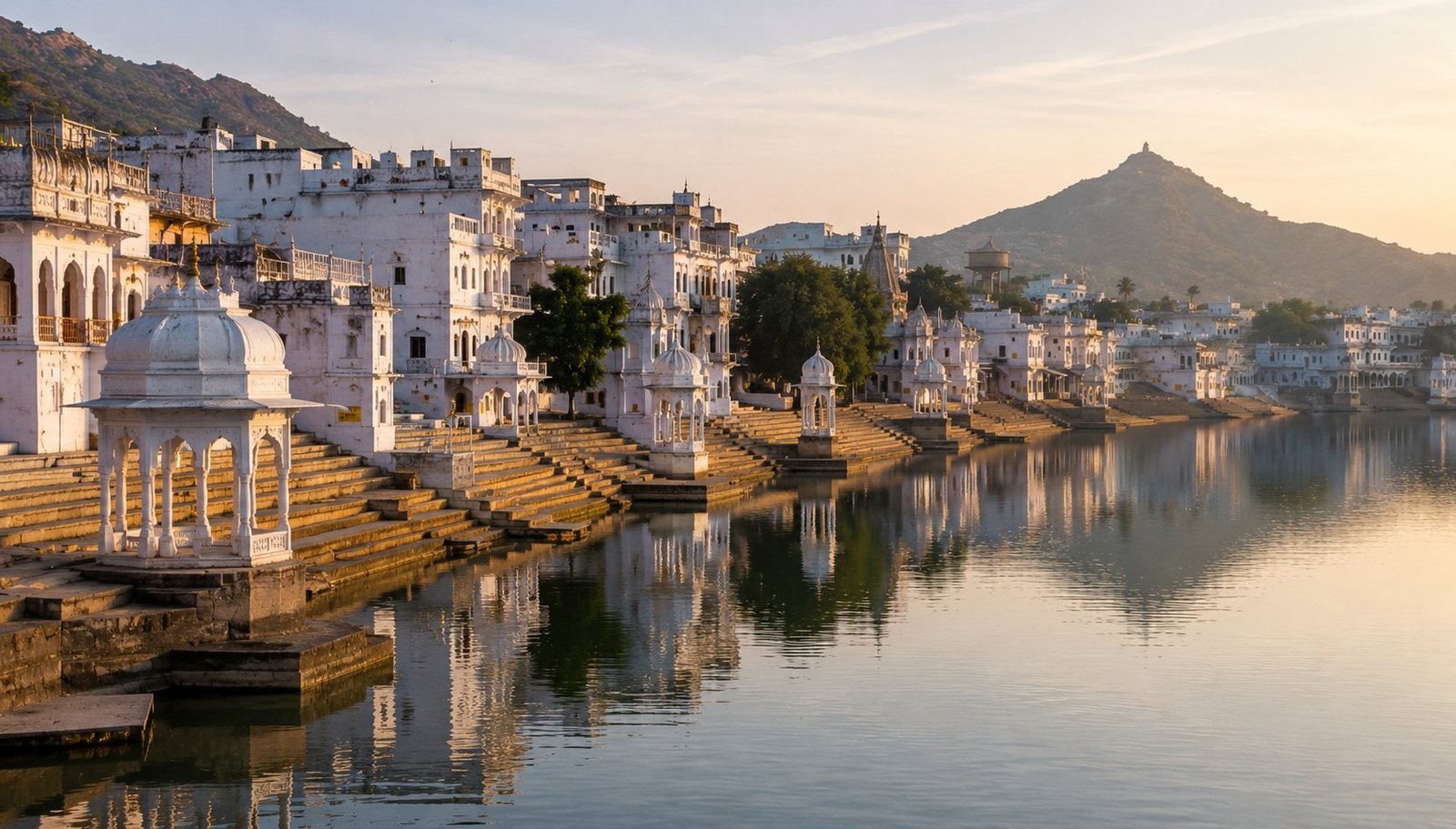
The 52 ghats ring the sacred Pushkar Lake — the heart of the town.
When to go
Pushkar sits on the desert’s edge, so the season matters — and one week in November transforms the town completely.
October to March is the comfortable window. Days are warm and pleasant, evenings cool, and the light on the lake is lovely. This is the time for an easy, relaxed visit — carry a light layer for the evenings, especially December and January.
The Pushkar Camel Fair (around Kartik Purnima, usually in November) is the headline event — days of camel and livestock trading, folk performances, competitions, and huge crowds. It is extraordinary, but the town is packed and prices soar; book accommodation months ahead if you want to be here for it.
April to September is hot and then humid with the light monsoon. Summer is uncomfortably warm for a town best enjoyed on foot; the monsoon greens the hills but can make the ghats slippery. Most travellers skip these months.
The Camel Fair dates shift each year with the lunar calendar and the trading days run before the full-moon religious days, so check the exact dates for your year. If you want the spectacle without the biggest crush, the early trading days are calmer than the final climax around Kartik Purnima.
Top things to do in Pushkar
Pushkar is small and walkable, and most of it can be seen slowly in a day or two. These are the experiences to build a relaxed visit around.
Pushkar Lake & the ghats
The centre of everything. Walk the ring of 52 ghats, watch pilgrims bathe at dawn, and come back for the evening aarti when oil lamps drift across the water. Remove shoes near the ghats and dress modestly — this is an active place of worship, not just a viewpoint.
Brahma Temple
The 14th-century Jagatpita Brahma Mandir is the town’s most important shrine and one of the very few Brahma temples in the world. Modest, red-spired, and busy with pilgrims — join the flow, leave shoes and leather outside, and visit in the cooler morning.
Savitri Mata Temple
A hilltop temple to Brahma’s first consort, with the best panorama in Pushkar — the lake, the town, and the desert spreading out below. Climb the stepped path for sunrise, or take the short ropeway up if you would rather save your legs. Magic in the early light.
Sadar Bazaar
The main lane is a cheerful tangle of stalls selling silver, embroidered textiles, leather, beads, music, and street food. Good for browsing and people-watching rather than serious shopping — prices are tourist-pitched, so bargain, and enjoy the laid-back hippie-bazaar feel.
Pushkar Camel Fair
If you visit in November, the fairground on the town’s edge fills with thousands of camels and horses, traders, folk musicians, and competitions — from camel races to moustache contests. One of India’s great spectacles, equal parts livestock market and carnival. Go early in the day for the trading.
Ajmer & the Dargah Sharif
Just 30 minutes away, Ajmer is home to the Dargah of Khwaja Moinuddin Chishti — one of the most important Sufi shrines in South Asia, drawing pilgrims of all faiths. The contrast with Pushkar’s Hindu calm is striking, and the two pair naturally into a single trip.
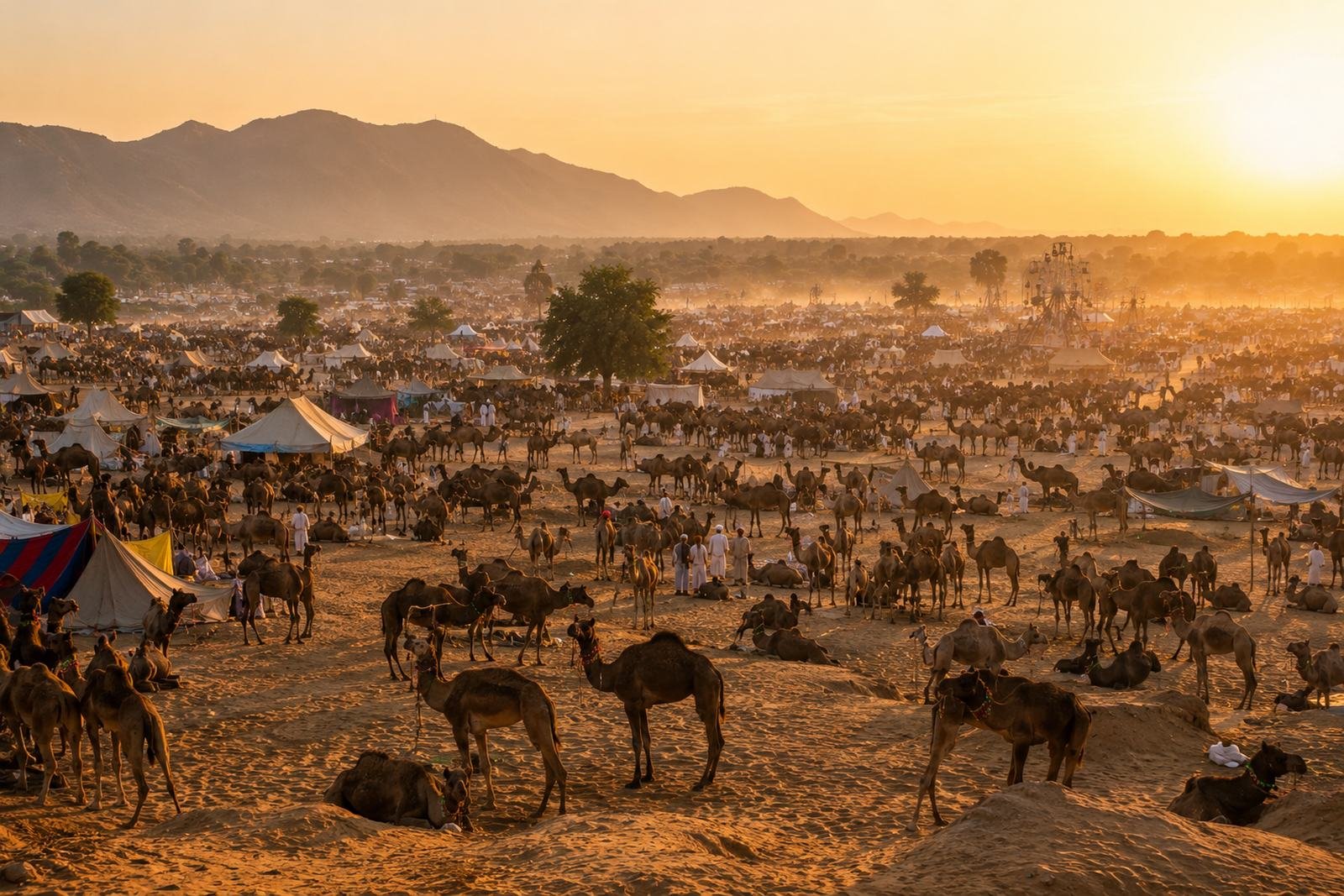
Each November the town fills for the famous Pushkar Camel Fair.
What to eat in Pushkar
Pushkar is a strictly vegetarian town — no meat, eggs, or alcohol are sold anywhere — and over the years its travellers’ cafes have turned that into a strength, with excellent veg, vegan, and global food. These four cover the range.
Honey & Spice
A tiny, much-loved cafe for fresh juices, herbal teas, porridge, and wholesome veg plates. The kind of spotless, slow breakfast spot that keeps travellers coming back. Limited seating — go a little off-peak.
Out of the Blue
A reliable, long-running favourite on the main lane — wide-ranging menu from Indian thalis to pizza, pasta, and good coffee. Comfortable, consistent, and open all day; a safe pick when you cannot decide.
Sixth Sense, Inn Seventh Heaven
The rooftop restaurant of a beautiful old haveli-hotel, with leafy courtyards below and views over the town. Calm, atmospheric, and good for an unhurried lunch or dinner of Indian and continental veg dishes.
Malpua & lassi
Pushkar is famous for malpua — a syrup-soaked sweet pancake — sold hot from stalls in the bazaar. Pair it with a thick lassi, or try the local kachoris and chaat. Cheap, delicious, and very Pushkar.
Because the whole town is vegetarian and dry, do not expect meat, eggs, or alcohol anywhere — and respect that it is a religious rule, not an oversight. If you want a beer with dinner, you will need to wait until your next stop. Bhang (a cannabis preparation) is sometimes offered informally around the bazaar; it is intoxicating and best avoided.
Where to stay
Pushkar is small, so almost anywhere is walkable — the choice is mostly about budget and how much character you want. Three options cover most visitors.
Lakeside guesthouses
Simple, cheap guesthouses and backpacker stays near the lake, many with rooftop cafes and lake or temple views, often ₹600–2,000. Basic but central and sociable — the classic Pushkar budget base.
Heritage havelis
Restored haveli hotels such as Inn Seventh Heaven offer character, courtyards, and charm a notch up from the backpacker places, often ₹2,500–6,000. The sweet spot for comfort with atmosphere.
Tented resorts
Luxury tented camps and resorts on the edge of town, especially busy during the Camel Fair when they run premium fair packages. From ₹6,000 upwards — book far ahead for November. Good for comfort and a pool.
How to get around
Pushkar is tiny and the lakeside core is effectively car-free, so you will explore almost entirely on foot. You only need wheels for the hilltop temple and day trips.
Pushkar and Ajmer make an easy pair: spend the calm morning at Pushkar’s lake and Brahma Temple, then take the 30-minute drive over the hill to Ajmer in the afternoon for the Dargah Sharif and the bustle of a bigger city. Ajmer also has the nearest major railway station, so it doubles as your arrival or onward point.
A relaxed 1–2 day itinerary
One full day covers Pushkar’s essentials; a second lets you slow down or add Ajmer. There is no need to rush here — the point of the town is the unhurried pace.
Lake, temple & bazaar
Start early at the ghats as the town wakes, then visit the Brahma Temple. Spend the warm midday in a rooftop cafe, browse Sadar Bazaar in the afternoon, and return to the lake for the sunset aarti. Dinner at a lakeside rooftop.
Sunrise & Ajmer
Climb (or take the ropeway) to Savitri Mata Temple for sunrise over the lake and desert. After breakfast, head 30 minutes to Ajmer for the Dargah Sharif, then return for a final slow evening — or move on to your next Rajasthan stop.
Practical tips that actually help
The ghat “puja” scam
Friendly “priests” at the ghats may press a flower into your hand, perform a quick blessing, tie a red “Pushkar passport” thread, then demand a large donation. A real puja is fine, but agree any amount first or politely decline — you are never obliged.
Dress modestly
This is a serious pilgrimage town. Cover shoulders and knees near the ghats and temples, remove shoes and leather around the lake, and do not photograph people bathing or praying without asking.
Do sunrise at Savitri
The hilltop temple at first light is the best thing in Pushkar. Start the climb in the dark or take the early ropeway, and you will have the lake, town, and desert glowing below with few others around.
SIM & UPI
Get a Jio or Airtel SIM; signal is fine in town. UPI (Google Pay, PhonePe) works in most cafes and shops, but carry small cash for bazaar stalls, autos, and the ropeway.
Plan around the fair
If you want the Camel Fair, lock in a room months ahead and expect higher prices and crowds. If you want quiet, deliberately avoid the fair week — the town is a completely different place then.
It is cheap — enjoy it
Outside fair season, Pushkar is one of the best-value stops in Rajasthan: cheap rooms, cheap good food, and little you must pay to enter. A great place to slow your spending as well as your pace.
Mistakes first-time visitors make
- Falling for the ghat puja pressure. Do not let an unrequested “blessing” turn into a demand for thousands of rupees. Decline politely or fix a small amount in advance.
- Coming expecting nightlife. Pushkar is dry and vegetarian by religious rule. If you arrive hoping for bars and a party, you will be disappointed — lean into the calm instead.
- Only stopping for a couple of hours. Pushkar rewards an overnight: the dawn ghats and the sunset aarti are the best of it, and both need you to stay the night.
- Skipping the Savitri sunrise. Many visitors never climb the hill. It is the single best view in town and worth the early start.
- Dressing or behaving too casually at the ghats. This is a living holy site. Modest dress, bare feet near the water, and asking before photographing people go a long way.
Want help planning your India trip beyond Pushkar?
I help travellers turn confusing wish lists into custom India itineraries that actually work — based on your season, pace, and travel style.
Plan my India trip →Pushkar FAQs
How many days do I need in Pushkar?
One full day and a night is enough to see the lake, the Brahma Temple, the bazaar, and a sunrise at Savitri. A second day lets you slow down further or add the Ajmer Dargah. Many travellers fit Pushkar in as a one- or two-night pause between Jaipur and the desert cities.
What is the Pushkar Camel Fair and when is it?
It is a huge annual livestock fair and cultural festival held around Kartik Purnima, usually in November (dates shift yearly with the lunar calendar). Expect thousands of camels and horses, trading, folk performances, and competitions — spectacular, but very crowded, with rooms booked out and priced up months ahead.
Is Pushkar really vegetarian and alcohol-free?
Yes. As a sacred town, Pushkar prohibits the sale of meat, eggs, and alcohol throughout. The cafes make a virtue of it with excellent vegetarian and vegan food, but if you want a drink or a non-veg meal you will have to wait for your next destination.
What is the “Pushkar passport” and should I worry about it?
It refers to the red thread tied on your wrist after a ghat-side blessing. A genuine puja is a normal part of visiting, but some priests use it to pressure visitors into a large “donation” afterwards. Simply agree an amount beforehand or decline politely — you are not obliged to pay anything you did not ask for.
How do I get to Pushkar?
The nearest major railway station and the closest city is Ajmer, about 30 minutes away, which is well connected by train to Delhi, Jaipur, and beyond. By road Pushkar is roughly 3 hours from Jaipur. Most travellers arrive via Ajmer or drive over from Jaipur as part of a Rajasthan loop.
Related guides
Pair Pushkar with another of Rajasthan’s great first-timer destinations — same honest, on-the-ground approach.
7-Day Rajasthan Itinerary
Pushkar is an easy add-on to the core Rajasthan route — see the full 7-day first-timer itinerary it slots into, and where it fits best.
The Pink CityTravel to Jaipur
Amber Fort, the Old City bazaars, Hawa Mahal, and a serious food scene. Just 3 hours away and the usual gateway to Pushkar.
The Lake CityTravel to Udaipur
City Palace, sunset boat rides on Lake Pichola, and the Aravalli forts. The romantic counterpoint further south.
Ashvinee Nagle
I’m a travel writer based in Nagpur. Through Travel India, I share honest, on-the-ground guides shaped by years of travelling across India.
Written by Ashvinee Nagle
I travel India slowly and write it down honestly - practical guides and real itineraries from someone who lives here.
About Ashvinee →Plan your India trip with us
Get one short, honest India travel guide a week — plus a free 7-day Rajasthan itinerary to start.
Free. Unsubscribe any time.
Pingback: Pushkar Camel Fair 2026: Dates, Best Days & Guide