
Travel to Udaipur: The Ultimate First-Timer Guide to India’s City of Lakes
A practical, no-fluff guide to Udaipur for first-time visitors — when to go, what to see, what to eat, where to stay, how to get around, and a 2–3 day itinerary built around the lakes.
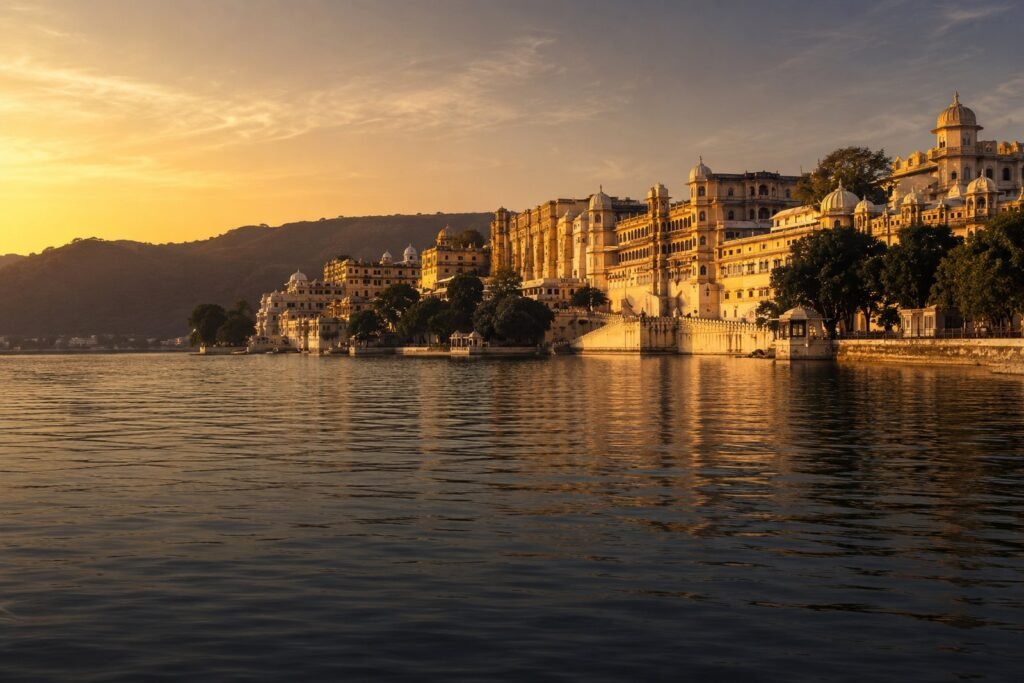
Udaipur is the softer side of Rajasthan. Where Jaipur is grand and bustling, Udaipur is slow, white-walled, and built around water — a cluster of man-made lakes ringed by the low green Aravalli hills, with a palace reflected in every one. Founded in 1559 by Maharana Udai Singh II as the new capital of Mewar, it was designed as a refuge, and it still feels like one. Most first-timers come for one romantic night and end up wishing they had given it three.
Two to three days suits a first Udaipur trip. The City Palace and Jagdish Temple take a morning; a sunset boat ride on Lake Pichola is non-negotiable; the lake-view rooftops fill an evening. Add a day for Monsoon Palace, Saheliyon ki Bari, and the viewpoints, and a third for a day trip to Kumbhalgarh and Ranakpur. Stay near Lal Ghat or Hanuman Ghat for lake views. Best months are October to March. Budget ₹2,000–9,000 per day depending on how close to the water you sleep.
Why visit Udaipur
Udaipur was the capital of Mewar, the kingdom of the Sisodia Rajputs — a dynasty that prided itself on never fully bowing to the Mughals, and whose hero Maharana Pratap is still a household name in Rajasthan. That history is written into the city: a vast white City Palace rising straight from the edge of Lake Pichola, island palaces built for monsoon retreats, and ghats where daily life still happens at the water. Unlike the desert cities to the west, Udaipur is green and gentle, and the pace matches.
The lakes
Pichola and Fateh Sagar define the city. A sunset boat ride past the Lake Palace and Jag Mandir is the single most memorable thing you will do here.
Living Mewar heritage
The City Palace is the largest in Rajasthan and still partly home to the royal family — one of the world’s oldest continuously ruling dynasties.
Aravalli day trips
Kumbhalgarh’s great wall, the marble Jain temple at Ranakpur, and the fort-city of Chittorgarh are all easy day trips into the hills.
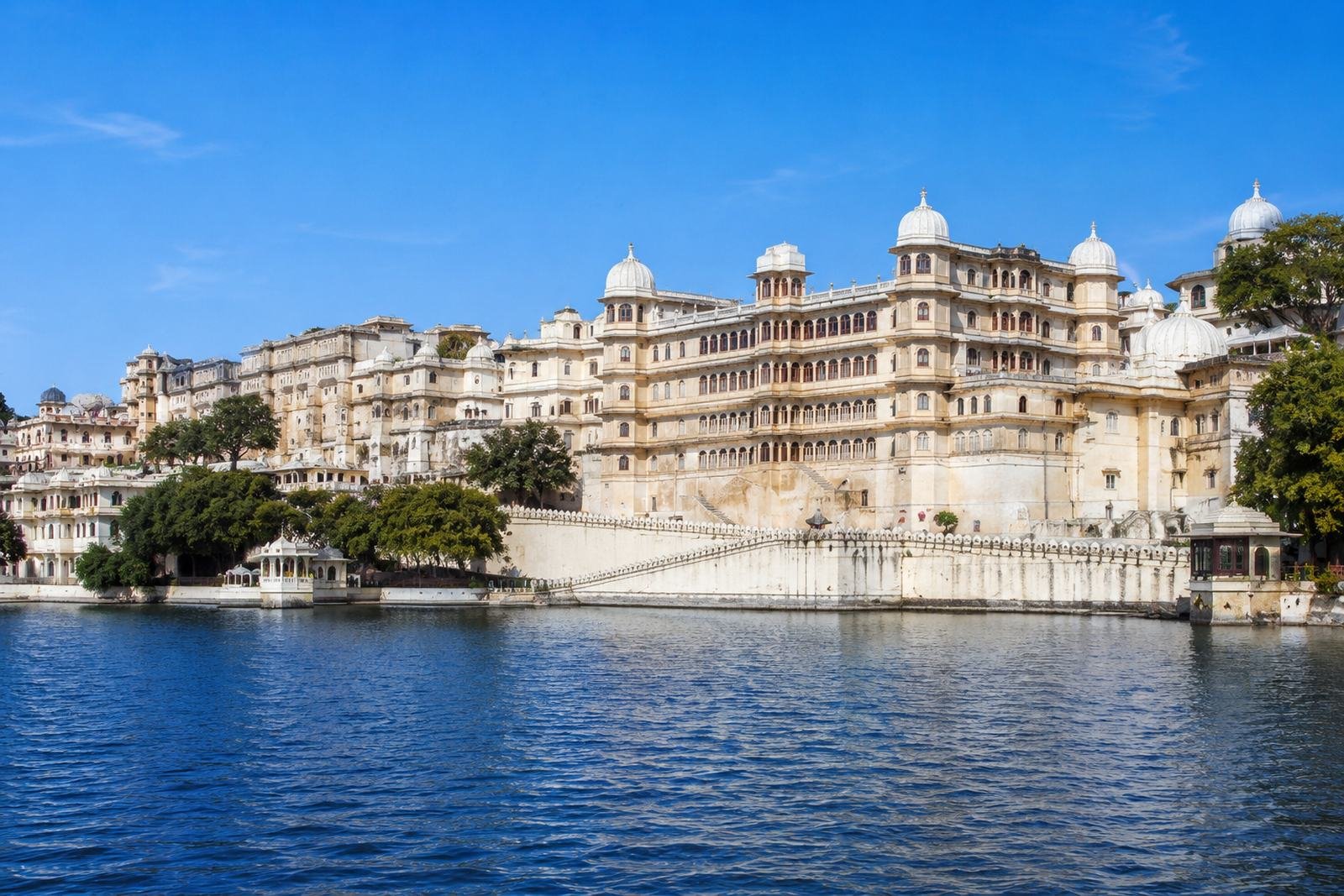
The City Palace rises straight from the eastern shore of Lake Pichola.
When to go
Udaipur is more forgiving than the desert cities because the lakes and hills moderate the heat — but the season still shapes the trip.
October to March is the prime window. Days are mild (15–28°C), the light on the water is superb, and the lakes are usually full after the monsoon. December and January are coolest and busiest, with the highest hotel rates and weddings filling the palace hotels — book early.
April to June is hot (often 38–42°C) but noticeably less punishing than Jaisalmer or Jodhpur, and lake-view hotels with pools make it bearable. Rates drop and crowds thin.
July to September is the monsoon and, counterintuitively, one of the prettiest times: the hills turn emerald, the lakes brim, and the Lake Palace truly looks like it is floating. Expect short heavy showers rather than all-day rain.
The lakes are man-made and depend on the monsoon. After a weak monsoon, Lake Pichola can run low and boat rides may be limited by late spring. If the floating palaces are your main reason to come, the months right after the rains (September to December) are the safest bet.
Top things to do in Udaipur
Udaipur rewards a slow approach. These are the experiences a first-timer should build a couple of unhurried days around.
City Palace complex
The largest palace complex in Rajasthan, built up over nearly 400 years by successive Maharanas. Wander the museum, the mirrored Sheesh Mahal, the peacock courtyard, and balconies with the best high views over Pichola. Go at opening to beat both the heat and the tour groups.
Boat ride on Lake Pichola
The defining Udaipur experience. The standard boat departs from Rameshwar Ghat (inside the City Palace) and loops past the Lake Palace before stopping at Jag Mandir island. Take the late-afternoon slot so you are on the water as the sun drops behind the hills.
Jagdish Temple
A soaring 1651 Indo-Aryan temple to Vishnu, a two-minute walk from the City Palace gate. Climb the elephant-flanked steps, catch an aarti if you can, and use it as the anchor for exploring the old-city lanes of shops and havelis around it.
Dharohar dance show, Bagore ki Haveli
Every evening this restored 18th-century haveli on Gangaur Ghat hosts an hour of Rajasthani folk dance and puppetry — including the famous bhavai dance with a stack of pots balanced on the head. Touristy, yes, but genuinely good and great value.
Sajjangarh (Monsoon Palace) at sunset
A hilltop palace built to watch the monsoon clouds roll in, now the city’s best sunset viewpoint, looking down over all the lakes at once. It sits inside a sanctuary, so you take a forest department jeep for the last stretch. Arrive an hour before sundown.
Saheliyon ki Bari & Fateh Sagar
The “garden of the maidens” is a small, pretty 18th-century pleasure garden of fountains, lotus pools, and marble elephants. Pair it with a loop around Fateh Sagar Lake — a relaxed local spot for a chaat-and-coffee evening away from the tourist core.
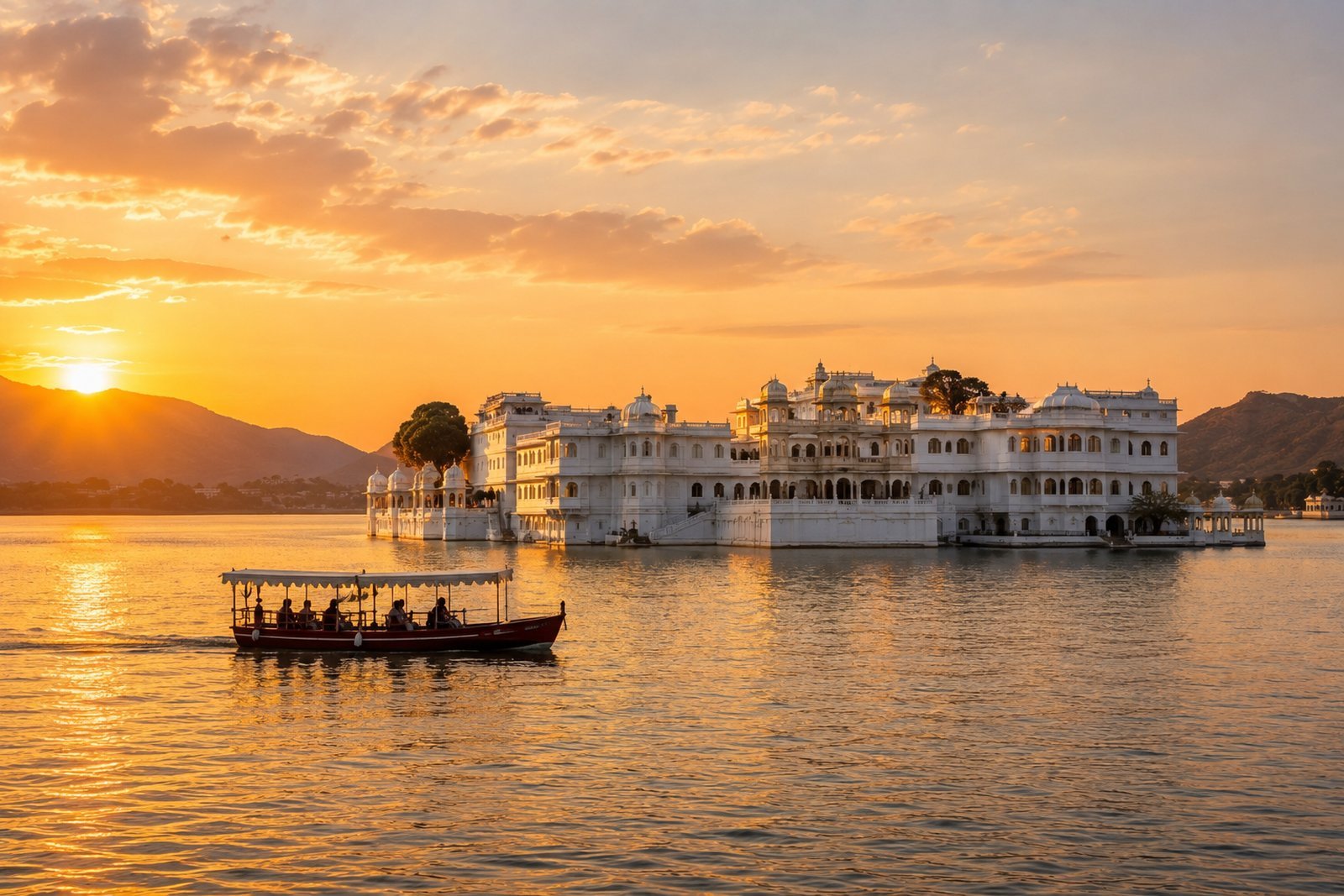
A sunset boat ride past the island palaces is the one thing not to skip.
What to eat in Udaipur
Udaipur leans more vegetarian than the desert cities, and its old-city rooftops have turned lake-view dining into an art form. These four cover the spectrum from a cheap unlimited thali to a once-in-a-trip splurge.
Ambrai
The classic Udaipur dinner: a ground-level terrace right at the water with the lit-up City Palace directly across the lake. Order the laal maas or a Rajasthani thali. Book a waterside table well ahead, especially in season.
Natraj Dining Hall
An institution for the unlimited Gujarati-Rajasthani thali — endless rotis, dal, sabzis, kadhi, and sweets, refilled until you surrender. Away from the tourist lanes, full of local families, astonishing value.
Millets of Mewar
A health-leaning cafe built around local millets — millet pizzas, pancakes, and thalis, plus good coffee and lassis. Relaxed, traveller-friendly, with vegan and gluten-free options that are genuinely done well.
Sheesh Mahal / Jharokha
For a special night, dine at one of the heritage palace hotels — the Leela, Taj Lake Palace (boat access only), or the Oberoi Udaivilas. Refined Mewari and global menus in extraordinary settings. Book ahead and dress smart.
Lake-view rooftops charge a premium for the view, and food quality varies — pick by the terrace and the sunset, not the menu, and keep expectations reasonable on the cooking at the cheaper ones. For the best actual food, the unpretentious places set back from the water often win.
Where to stay
In Udaipur, where you sleep is mostly a question of how close to the water you want to be. Three areas cover almost everyone.
Lal Ghat / Hanuman Ghat
The heart of it — narrow lanes, ghats, rooftop cafes, and guesthouses with lake and palace views from ₹1,500–5,000. Hanuman Ghat (west bank) is slightly calmer; Lal Ghat (east) is closer to the City Palace. The right base for atmosphere.
Fateh Sagar / Gulab Bagh side
Boutique hotels and homestays away from the tourist crush, a short auto ride from the old city. From ₹3,000–7,000. Good for a calmer, more local stay with easier parking and access to Fateh Sagar.
Heritage & lake palaces
Taj Lake Palace (on its own island), Oberoi Udaivilas, the Leela, and Shiv Niwas inside the City Palace. Among the most romantic hotels on earth. From ₹25,000 upwards — worth one night if the budget stretches.
How to get around
Udaipur’s old city is compact and best on foot, but the lanes are narrow and one-way, and the viewpoints and gardens are spread out. You will mix walking with autos and the odd cab.
Kumbhalgarh fort and the Ranakpur Jain temple sit on the same road into the hills and make a perfect combined day trip from Udaipur (about 2–2.5 hours each way). Hire a car with driver for the day, leave by 7am, do Ranakpur first while it is cool, then Kumbhalgarh, and you are back for a lake-side dinner.
A solid 3-day itinerary
Two days cover the city comfortably; a third adds the spectacular Aravalli forts. Trim to two if you are tight, but try to keep the boat ride and one day trip.
Palace & lake
Open the City Palace at 9am, then walk to Jagdish Temple and through the old-city lanes. Lunch at Natraj or a rooftop. Late afternoon, take the Lake Pichola boat to Jag Mandir for sunset. Evening Dharohar dance show at Bagore ki Haveli, then dinner at Ambrai.
Gardens & viewpoints
Morning at Saheliyon ki Bari and a loop of Fateh Sagar Lake. Visit the Vintage Car Museum or Shilpgram crafts village. Late afternoon, head up to Sajjangarh (Monsoon Palace) for sunset over all the lakes. Rooftop dinner back in the old city.
Aravalli day trip
Full-day drive to Ranakpur (one of India’s finest marble Jain temples, 1,444 carved pillars) and Kumbhalgarh Fort, whose 36km wall is second only to the Great Wall of China. Pack a picnic or eat near Kumbhalgarh, and return by evening.
Practical tips that actually help
Book the sunset boat slot
The late-afternoon Pichola boat sells out in season and the sunset slot is the one worth having. Buy your ticket at Rameshwar Ghat earlier in the day, or have your hotel arrange it.
Shop at Hathi Pol
For Mewari miniature paintings, bandhani textiles, and silver, the lanes around Hathi Pol and Bada Bazaar are better value than the City Palace shops. Bargain, and ask to watch a miniature artist at work.
Dress for temples
Cover shoulders and knees and remove shoes at Jagdish Temple and Ranakpur. At Ranakpur, leather items (belts, bags) are not allowed inside the Jain temple.
Lake Palace without staying
You can only reach the Taj Lake Palace as a hotel guest or with a confirmed restaurant booking. If you want to set foot on the island, reserve a meal well in advance; otherwise enjoy it from the boat.
SIM & UPI
Get a Jio or Airtel SIM on arrival. UPI (Google Pay, PhonePe) is accepted almost everywhere, including small shops and autos — far easier than carrying change.
Mind the monsoon lake level
If visiting in the dry pre-monsoon months, check current lake levels before banking on a boat ride. A low Pichola changes the whole experience.
Mistakes first-time visitors make
- Giving Udaipur only one night. A single night means the City Palace and a rushed dinner. Two nights lets the city’s slow pace actually work on you; three adds the forts.
- Skipping the boat ride. It is the quintessential Udaipur experience and worth planning the day around. Do not leave it to chance on your last evening.
- Coming in peak May heat without a pool. Udaipur is milder than the desert but still hot in late spring. A lake-view room with a pool transforms the trip.
- Expecting Jaipur-style buzz. Udaipur is quiet and romantic, not a nightlife or big-shopping city. Lean into the calm rather than fighting it.
- Not booking Ranakpur/Kumbhalgarh time. The day trip is long; leaving it as a vague “maybe” usually means it does not happen. Lock in the car the day before.
Want help planning your India trip beyond Udaipur?
I help travellers turn confusing wish lists into custom India itineraries that actually work — based on your season, pace, and travel style.
Plan my India trip →Udaipur FAQs
How many days do I need in Udaipur?
Two days cover the City Palace, Jagdish Temple, the lake boat ride, and the main viewpoints comfortably. A third day lets you add the spectacular day trip to Kumbhalgarh Fort and the Ranakpur Jain temple. One night is enough only for a quick stop between bigger destinations.
Is Udaipur safe for solo travellers, including women?
Udaipur is one of the more relaxed Rajasthan cities and is generally safe, including for solo women, with normal urban caution: well-reviewed stays, avoid empty lanes very late, and prefer app cabs or hotel-arranged transport at night. The ghats and old-city cafes are comfortable during the day and early evening.
What’s the best area to stay for a first visit?
Lal Ghat or Hanuman Ghat, right on Lake Pichola, for the views and walkable old-city atmosphere. The Fateh Sagar side is quieter and more local. The heritage and lake palaces are a splurge worth one night if the budget allows.
How does Udaipur compare to Jaipur or Jodhpur?
Jaipur is the biggest and busiest — palaces, forts, and bazaars at full volume. Jodhpur is dramatic and blue, built under a giant fort. Udaipur is the calm, romantic one, built around lakes and best for slowing down. Many travellers pair Udaipur with Jodhpur, or use it to wind down after Jaipur.
How do I get to Udaipur?
Maharana Pratap Airport (Dabok) has direct flights from Delhi, Mumbai, and other metros, about 20–30 minutes from the centre. By train and road it is roughly 6 hours from Jaipur or Jodhpur and 4–5 from Mount Abu. Many travellers fly in or out of Udaipur to bookend a Rajasthan loop.
Related guides
Pair Udaipur with another of Rajasthan’s great first-timer cities — same honest, on-the-ground approach.
7-Day Rajasthan Itinerary
See exactly how Udaipur fits into a relaxed first week in Rajasthan — full route, day-by-day pacing, and where to stay.
The Pink CityTravel to Jaipur
Amber Fort, the Old City bazaars, Hawa Mahal, and a serious food scene. The natural starting point for a first Rajasthan trip.
The Blue CityTravel to Jodhpur
Mighty Mehrangarh Fort, blue-washed old-city lanes, and bold Marwari food. Works beautifully between Udaipur and Jaisalmer.
Ashvinee Nagle
I’m a travel writer based in Nagpur. Through Travel India, I share honest, on-the-ground guides shaped by years of travelling across India.

Written by Ashvinee Nagle
I travel India slowly and write it down honestly - practical guides and real itineraries from someone who lives here.
About Ashvinee →Plan your India trip with us
Get one short, honest India travel guide a week — plus a free 7-day Rajasthan itinerary to start.
Free. Unsubscribe any time.