
Travel to Jaisalmer: The Ultimate First-Timer Guide to India’s Golden City
A practical, no-fluff guide to Jaisalmer for first-time visitors — when to go, what to see, what to eat, where to stay, how to get around, and a 2–3 day itinerary built around the living fort and a night in the desert.
Jaisalmer is the last great city before the desert takes over. Rising out of the Thar near the Pakistan border, the whole town is carved from honey-coloured sandstone that turns molten gold at sunset — hence the name. At its heart is Sonar Qila, one of the very few forts on earth still fully lived in, its lanes crowded with homes, temples, shops, and guesthouses. Beyond the walls lie the dunes, the camel tracks, and the folk musicians. Jaisalmer is far west of everywhere else, and worth the journey.
Two to three days suits a first Jaisalmer trip, including one night in the desert. The living fort, Patwon ki Haveli, and Gadisar Lake fill a day in town; the dunes around Sam or Khuri, a camel ride at sunset, and a desert-camp night with Manganiyar folk music are the highlight. Add Bada Bagh and the abandoned village of Kuldhara. Stay below the fort to protect it, and budget ₹1,800–9,000 per day. Best months are November to February — the desert is brutal in summer.
Why visit Jaisalmer
Founded in 1156 by Rawal Jaisal, Jaisalmer grew rich as a halt on the camel-caravan routes between India and Central Asia. That trading wealth paid for the extraordinary carved sandstone havelis that still line its lanes, and for a fort so large that a quarter of the town’s population still lives inside it. When the caravan trade died and the Pakistan border closed the western routes, Jaisalmer faded — which is exactly why it feels so preserved today. It is the most atmospheric desert town in India, and the gateway to the Thar.
A living fort
Sonar Qila is one of the only inhabited forts in the world — a working medieval town of homes, temples, and shops still humming inside its golden walls.
Carved sandstone
The havelis of Jaisalmer, especially Patwon ki Haveli, carry some of the finest stone latticework in India — the dividend of centuries of caravan wealth.
The Thar Desert
Camel safaris, rolling dunes, and a night under desert stars with Manganiyar folk music — the experience most travellers come all this way for.
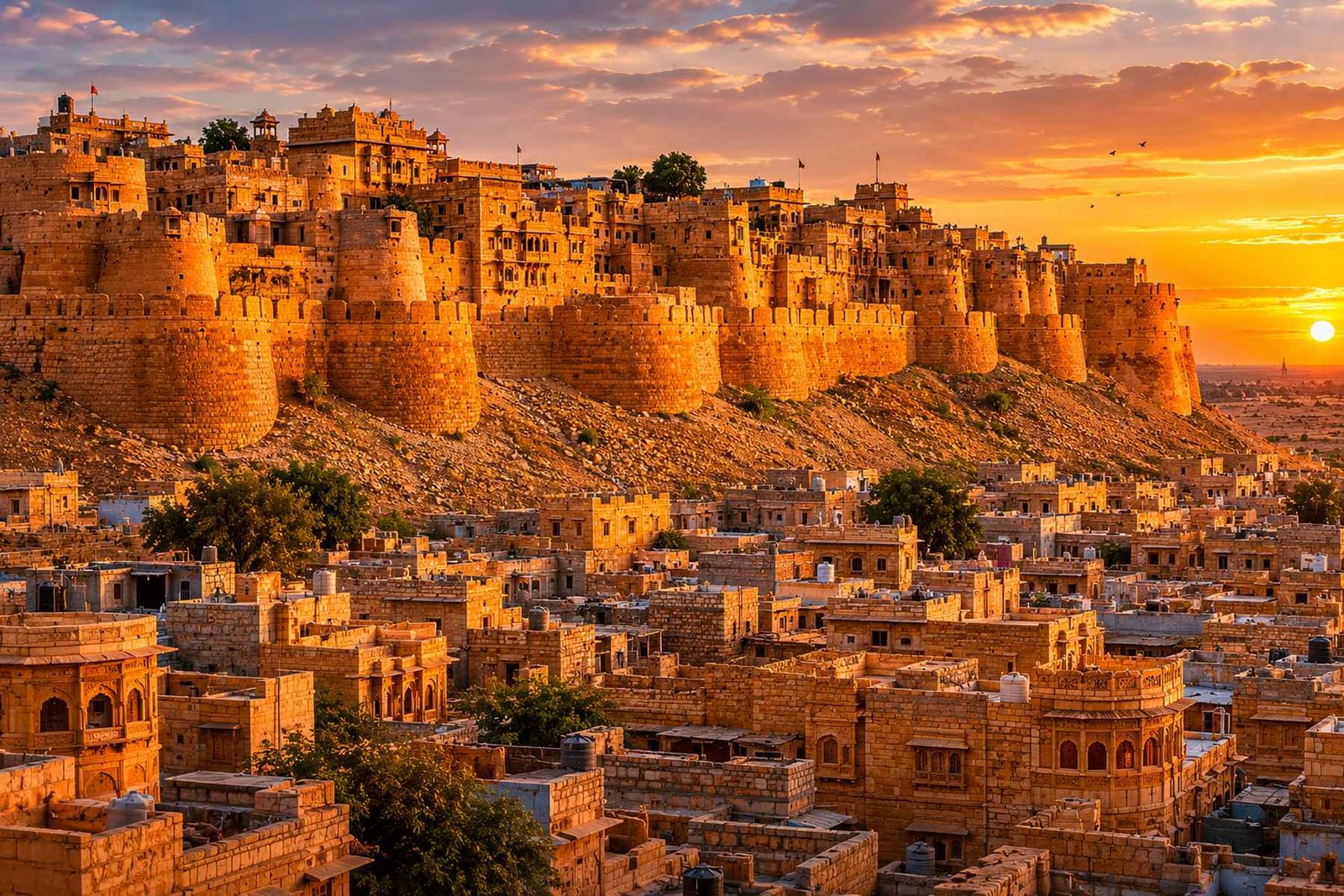
Sonar Qila turns molten gold at sunset — and is still fully lived in.
When to go
Jaisalmer is deep desert, and the season matters more here than anywhere else in Rajasthan. The window of genuine comfort is narrow.
November to February is the right time. Days are pleasant (15–25°C) and ideal for the fort, the havelis, and the dunes, though desert nights drop sharply — carry warm layers for the camp. December and January are peak and book out around the Desert Festival; reserve camps and trains well ahead.
October and March are shoulder months — hotter by day but still workable, with thinner crowds and better rates. Late March starts to climb fast.
April to September is harsh desert heat, regularly 42–46°C, with the monsoon barely registering this far west. Camel safaris and midday sightseeing are genuinely punishing; only come then if you have no choice, and plan around dawn and dusk.
The Jaisalmer Desert Festival falls in late January or February (around Maghi Purnima), with camel races, folk music, turban-tying contests, and performances out at the Sam dunes. It is spectacular but very busy — if you want to attend, book accommodation and desert camps months in advance.
Top things to do in Jaisalmer
Jaisalmer splits neatly into a town day and a desert day. These are the experiences a first-timer should build two to three days around.
Jaisalmer Fort (Sonar Qila)
The reason to come — a vast golden-sandstone fort that is also a living town. Wander the lanes, visit the Raj Mahal palace museum and the cluster of intricately carved Jain temples inside, and find a rampart for sunset. Entry to the fort is free; the palace and temples charge separately.
Patwon ki Haveli
A cluster of five connected mansions built by a wealthy brocade-trading family, carrying the most elaborate stone carving in the city. Climb to the upper floors for rooftop views over the fort. Pair it with the nearby Nathmal ki Haveli and Salim Singh ki Haveli for a haveli-hopping morning.
Gadisar Lake
A 14th-century rainwater reservoir ringed by ghats, shrines, and the ornate Tilon ki Pol gateway. Come at sunrise or sunset, when the light is soft and the migratory birds are about, and take a short pedal-boat out on the water. A calm counterpoint to the fort.
Sam / Khuri dunes & camel safari
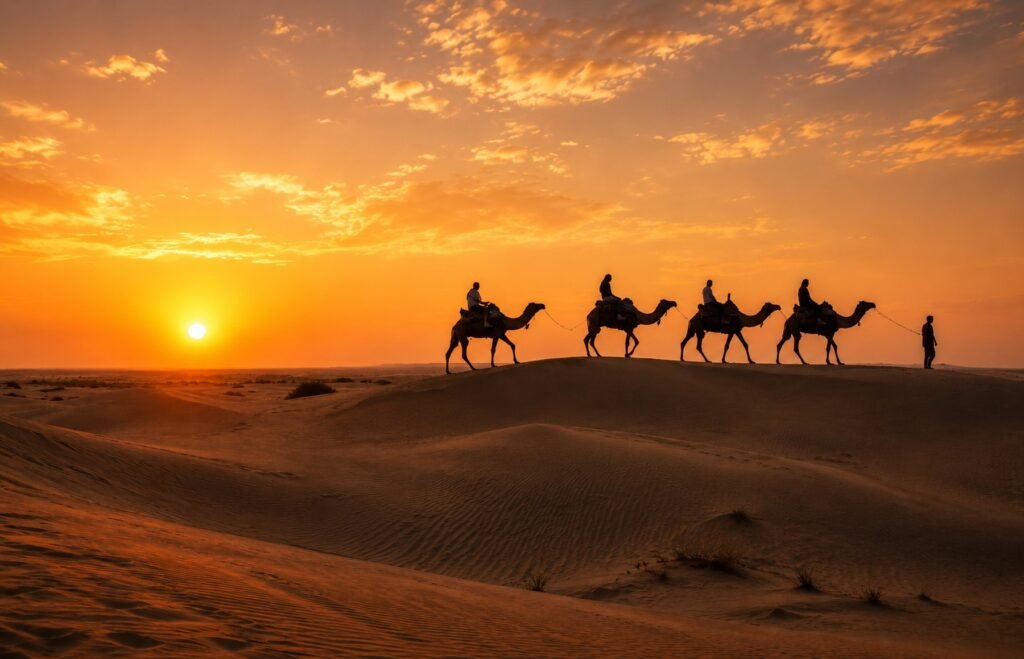
The classic Thar experience. Drive 40–45km to the dunes — Sam (bigger, busier) or Khuri (smaller, quieter) — for a late-afternoon camel ride out across the sand to watch the sun set over the desert. The build-up to a night in the dunes.
Desert camp & Manganiyar music
Spend a night at a desert camp in the dunes — dinner under the open sky, a fire, and live Manganiyar and Langa folk musicians, the hereditary desert performers of this region. Choose a smaller, quieter camp over the big party setups for the real thing. Sleeping in the Thar is the trip’s highlight.
Bada Bagh & Kuldhara
Bada Bagh is a hillside of royal cenotaphs (chhatris) best at sunset, set among wind turbines on the desert edge. Pair it with Kuldhara, an eerie abandoned village said to have been deserted overnight in the 19th century — atmospheric, and an easy add-on en route to the dunes.
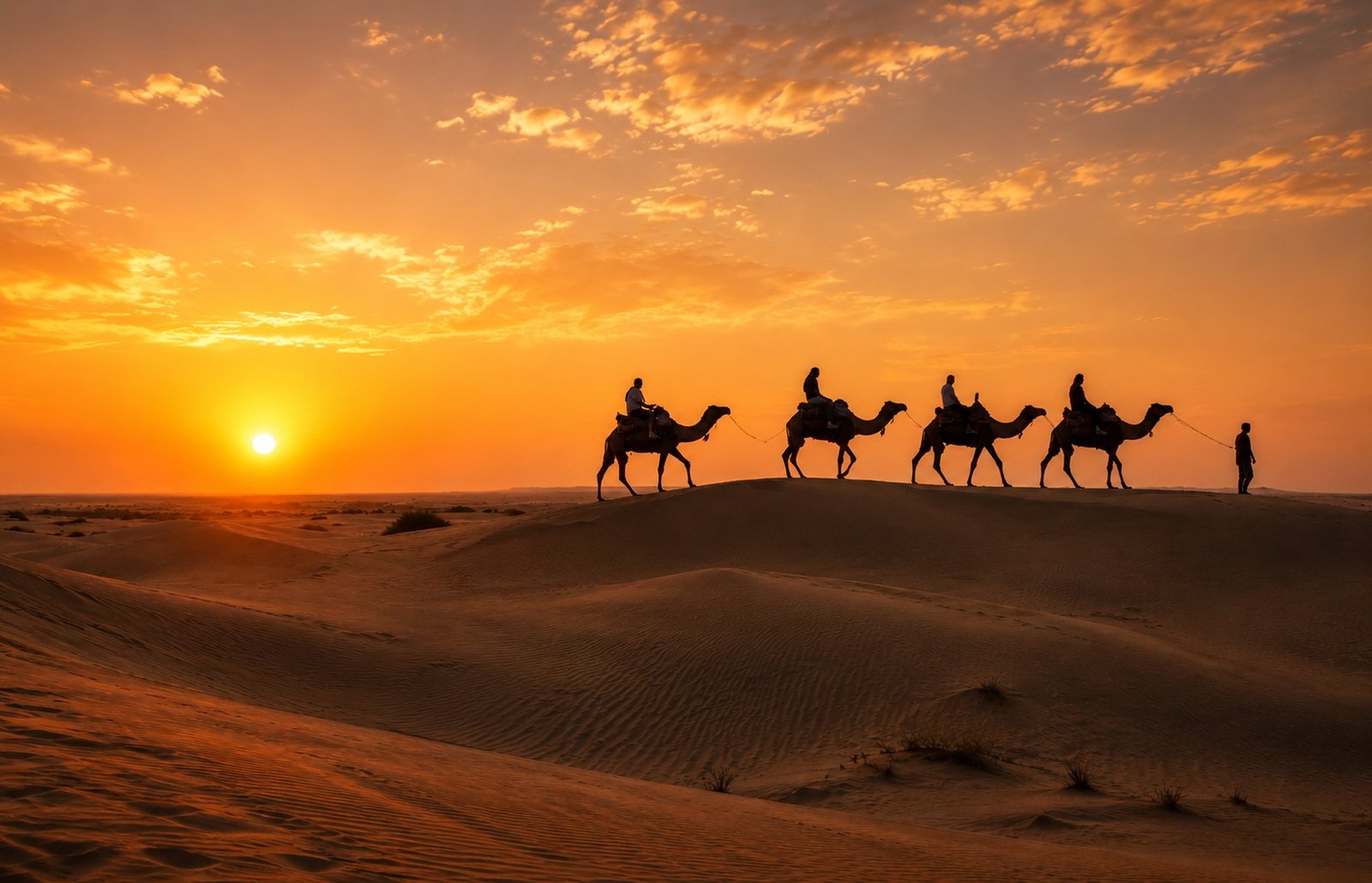
A camel ride into the dunes at sunset is what most travellers come all this way for.
What to eat in Jaisalmer
Jaisalmer’s food is desert Rajasthani — ker sangri, gatte, and the famous dried-ingredient curries — served on rooftops with fort views, plus a strong traveller-cafe scene. These four cover the range.
The Trio
A long-running rooftop restaurant with direct fort views and live folk music most evenings. Order the Rajasthani specialities — ker sangri, laal maas, and the thali. Reliable cooking and the best view-and-music combination in town. Book a parapet table at sunset.
Desert Boy’s Dhani
A garden restaurant with traditional seating and nightly folk dance and music. The unlimited Rajasthani thali is the thing to order — generous, vegetarian, and atmospheric. Touristy but genuinely enjoyable, and great for a relaxed first evening.
1st Gate / Kuku coffee & cafes
The traveller-cafe scene is good here — the rooftop at 1st Gate Home Fusion for fort-facing Italian and coffee, plus a string of small cafes for breakfast, espresso, and slow afternoons out of the sun. Easy comfort food between sightseeing.
Dhanraj Ranmal Bhatia
A celebrated old sweet shop known for ghotua and panchdhari laddus and other Jaisalmeri mithai. Pick up a box for the road or to take home — the kind of local institution worth seeking out beyond the rooftop restaurants.
Out at the desert camps, food is usually a fixed buffet included in the package, and quality varies a lot between operators. The big budget camps often serve a generic, mass-catered spread; smaller boutique camps do much better. If food matters to you, ask what is served before booking, and eat well in town beforehand.
Where to stay
The big decision in Jaisalmer is whether to sleep inside the living fort, below it in the old town, or out in the desert. Most first-timers combine a town base with one desert night.
Below the fort / old town
Restored sandstone havelis turned guesthouses, many with rooftop fort views, from ₹1,200–5,000. Walkable to the fort, havelis, and bazaar, and — importantly — the responsible choice that keeps pressure off the fort itself. The recommended town base.
Desert camp (Sam / Khuri)
From simple Swiss tents to luxe glamping, a camp night is the point of coming. Khuri camps are quieter and more authentic; Sam is busier with more facilities. From ₹1,500 basic to ₹10,000+ luxury. Book one night here.
Heritage & resort hotels
Suryagarh and a handful of grand desert resorts on the edge of town offer fort-style architecture, pools, and curated dune experiences. From ₹15,000 upwards. Worth a night for a more polished, restful end to a desert trip.
Jaisalmer Fort is one of the few living forts in the world, and the extra water and drainage from fort guesthouses has been linked to damage to its old foundations. Conservation groups encourage visitors to enjoy the fort fully by day but to sleep below it rather than inside. It is a small choice that helps keep the fort standing.
How to get around
The old town and fort are compact and walkable; the dunes and cenotaphs need a vehicle. You will mix walking, autos, and a hired jeep or car for the desert.
Choose your dunes deliberately. Sam (about 40km) is the famous, bigger dune field — dramatic but crowded, with large commercial camps. Khuri (about 45km) is quieter, smaller, and more authentic. For a peaceful folk-music-under-the-stars night rather than a loud party, pick a small Khuri camp; for sheer scale and facilities, choose Sam.
A solid 3-day itinerary
Three days, with one desert night, is the sweet spot. Trim to two (town day plus a desert overnight) if you are tight, but do not skip the night in the dunes.
Fort & havelis
Spend the morning inside Sonar Qila — the palace museum, the Jain temples, the lanes. Haveli-hop to Patwon ki Haveli and Nathmal in the afternoon. Catch sunset and a short boat at Gadisar Lake, then a rooftop dinner with fort views and folk music.
Into the desert
Late morning, drive out via Kuldhara and Bada Bagh to the dunes. Afternoon camel safari to a sunset spot, then check into your desert camp for dinner, a fire, and live Manganiyar music under the stars. Sleep in the Thar.
Sunrise & slow morning
Catch sunrise over the dunes, then drive back to Jaisalmer for a leisurely breakfast. Use the rest of the morning for last bazaar shopping — mirror-work textiles, leather, carved stone — and a final fort-view coffee before you move on.
Practical tips that actually help
Sleep below the fort
Enjoy the living fort fully by day, but stay in a haveli guesthouse below it. The extra water load from fort hotels has been linked to structural damage — a small, responsible choice.
Pick Sam vs Khuri
Sam is bigger and busier; Khuri is quieter and more authentic. Decide based on whether you want scale and facilities or a calm, small-camp night under the stars.
Pack for cold nights
Desert days are warm but nights, especially November to February, get genuinely cold. Carry a fleece or jacket for the camp — most travellers underestimate this.
Shop for real crafts
Jaisalmer is good for mirror-work and applique textiles, camel-leather goods, and carved sandstone. Bargain in the bazaar, and buy from established shops rather than touts inside the fort.
SIM & signal
Get a Jio or Airtel SIM and expect patchy signal out in the deep desert. UPI works in town; carry some cash for the dunes, camps, and small villages where coverage drops.
Sun & water
The desert sun is intense even in winter. Carry water, sunscreen, sunglasses, and a scarf or hat for the dunes and the exposed cenotaphs at Bada Bagh.
Mistakes first-time visitors make
- Treating Jaisalmer as a day trip. It is far west and the desert night is the whole point. Give it two to three days with at least one night in the dunes.
- Booking the cheapest party camp. The big budget camps can be loud, generic affairs with mass-catered food. A smaller boutique camp delivers the quiet, folk-music desert night people actually want.
- Staying inside the fort without a thought. The living fort is fragile; sleeping below it is the responsible call. See it by day, sleep beneath it.
- Coming in peak summer. Desert heat of 44–46°C makes camel rides and sightseeing genuinely miserable. Stick to November to February if you can.
- Underestimating the distances. Jaisalmer is 5–6 hours from Jodhpur and far from everything else. Build the travel time into your Rajasthan loop rather than tacking it on.
Want help planning your India trip beyond Jaisalmer?
I help travellers turn confusing wish lists into custom India itineraries that actually work — based on your season, pace, and travel style.
Plan my India trip →Jaisalmer FAQs
How many days do I need in Jaisalmer?
Two to three days is right, including one night in the desert. One day covers the living fort, the havelis, and Gadisar Lake; a second covers the dunes, a camel safari, and a desert-camp night; a third lets you slow down with sunrise in the dunes and some shopping. Skipping the desert night means missing the point of coming.
Which dunes are better — Sam or Khuri?
Sam (about 40km) has the bigger, more dramatic dune field but is busier and more commercial. Khuri (about 45km) is smaller, quieter, and more authentic. For a peaceful folk-music night under the stars, choose a small Khuri camp; for scale and facilities, choose Sam.
Is Jaisalmer safe for solo travellers, including women?
Jaisalmer is generally safe, including for solo women, with standard caution. Inside the fort and bazaar, be polite but firm with persistent touts and commission-seeking guides. For desert camps and camel safaris, book through a reputable operator or your guesthouse rather than a street tout, and confirm what is included.
How does Jaisalmer compare to Jodhpur or Jaipur?
Jaipur is the big, busy capital; Jodhpur is the dramatic blue fort-city. Jaisalmer is the remote golden desert town — smaller, slower, and built around its living fort and the Thar. It is the natural far-western end of a Rajasthan loop, usually reached via Jodhpur, and the one place you sleep in the desert.
How do I get to Jaisalmer?
Jaisalmer has a small airport with limited seasonal flights from Delhi and a few cities. Most travellers come by train or road from Jodhpur (5–6 hours), often on the overnight train, or on the long-distance train from Delhi. It is the western terminus of most Rajasthan itineraries rather than a quick add-on.
Related guides
Pair Jaisalmer with another of Rajasthan’s great first-timer cities — same honest, on-the-ground approach.
7-Day Rajasthan Itinerary
Jaisalmer is the desert finale of this route — see the full 7-day first-timer itinerary, from Udaipur through Jodhpur to the Golden City.
The Blue CityTravel to Jodhpur
Mighty Mehrangarh Fort, blue-washed old-city lanes, and bold Marwari food. The usual gateway on the road into Jaisalmer.
The Pink CityTravel to Jaipur
Amber Fort, the Old City bazaars, Hawa Mahal, and a serious food scene. The natural starting point for a first Rajasthan trip.
Ashvinee Nagle
I’m a travel writer based in Nagpur. Through Travel India, I share honest, on-the-ground guides shaped by years of travelling across India.
Written by Ashvinee Nagle
I travel India slowly and write it down honestly - practical guides and real itineraries from someone who lives here.
About Ashvinee →Plan your India trip with us
Get one short, honest India travel guide a week — plus a free 7-day Rajasthan itinerary to start.
Free. Unsubscribe any time.