
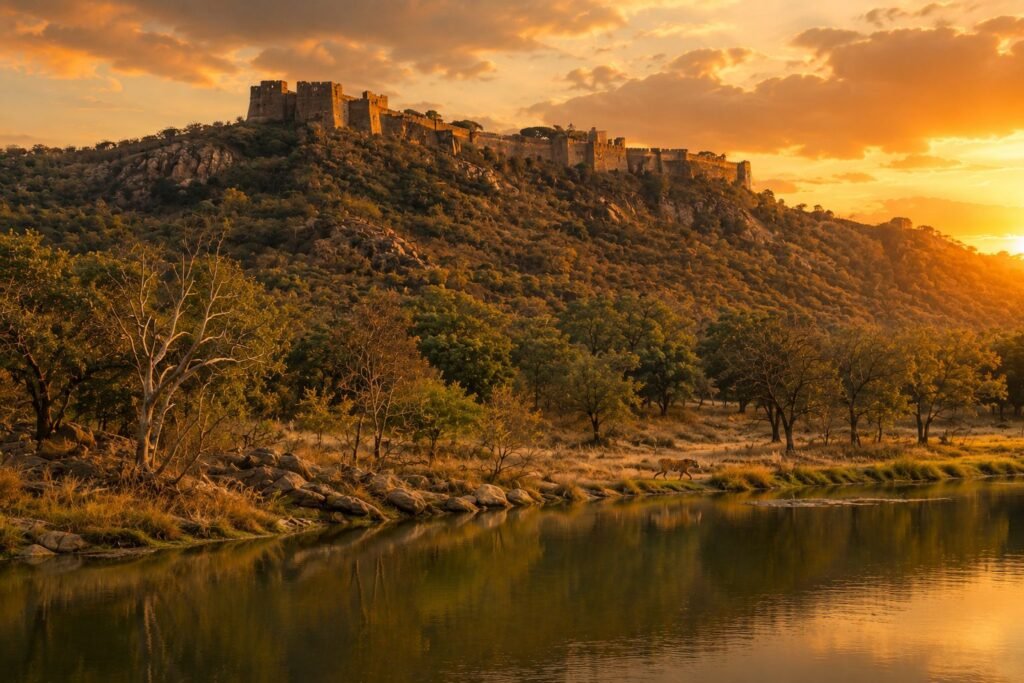
Travel to Ranthambore: The Ultimate First-Timer Guide to Rajasthan’s Tiger Country
A practical, no-fluff guide to Ranthambore for first-time visitors — when to go, how the tiger safaris work, what to see, where to stay and eat, and a 2-day itinerary built around the safaris and the jungle fort.
Ranthambore is where a Rajasthan trip swaps forts and bazaars for the jungle. A few hours from Jaipur, this old royal hunting reserve is now one of the best places in India to see a wild tiger — dry deciduous forest and grassland threaded with lakes, ruins, and a thousand-year-old fort, all patrolled by some of the most photographed big cats on earth. Most travellers add it on for a night or two to break up the cities with something wilder, and a tiger sighting from an open jeep is the kind of thing you do not forget.
Two days and two or three safaris is the right amount for Ranthambore. The tiger safari is the whole point — book ahead through the forest department, choose a 6-seat Gypsy over a 20-seat Canter, and do more than one to improve your odds. Beyond the safaris, the jungle-wrapped Ranthambore Fort is worth a half day. Base yourself in Sawai Madhopur, budget ₹3,000–15,000 a day depending on your lodge, and come October to June (core zones close in the monsoon). No sighting is ever guaranteed.
Why visit Ranthambore
Ranthambore was the hunting ground of the Maharajas of Jaipur before it became a tiger reserve under Project Tiger in the 1970s, and that history shows: crumbling chhatris, stepwells, and palace ruins sit among the forest, with the great Ranthambore Fort looming over it all. What makes it special for visitors is the combination of relatively open, dry terrain and a healthy tiger population, which means genuinely good odds of seeing a tiger in the wild — plus leopards, sloth bears, marsh crocodiles, deer, and superb birdlife. It is the easiest serious wildlife experience to fold into a Rajasthan trip.
Wild tigers
One of India’s best chances to see a tiger in the wild, in open jeep safaris through former royal hunting grounds.
A fort in the jungle
The thousand-year-old Ranthambore Fort, a UNESCO site, rises straight out of the forest inside the reserve — ruins, temples, and views.
More than tigers
Leopards, sloth bears, crocodiles, deer, and rich birdlife around the jungle lakes make every safari rewarding, tiger or not.
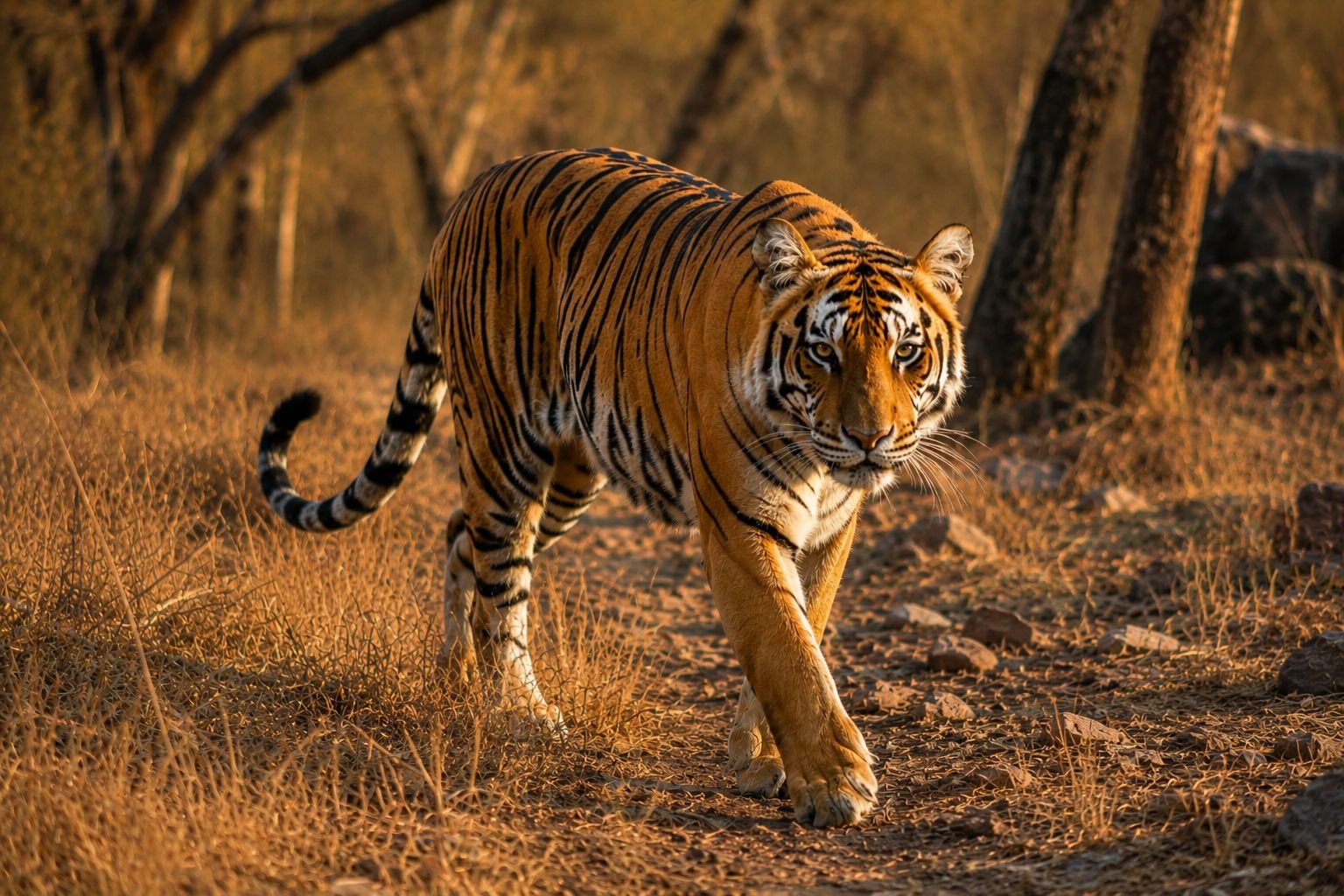
A wild Bengal tiger is the reason most travellers come to Ranthambore.
When to go
Ranthambore’s season is shaped by two things: the weather and the park’s opening calendar. Get both right and your safaris are far more rewarding.
October to March is the pleasant window — cool, comfortable days and green-to-golden forest after the monsoon. Early mornings can be genuinely cold in December and January (the open jeeps are chilly at dawn), so bring warm layers. Sightings are good, and the scenery is at its best.
April to June is hot, often well over 40°C, but it is widely considered the best time for tiger sightings: the forest thins, water sources shrink, and animals gather at the remaining lakes and waterholes. If a sighting is your priority and you can handle the heat, this is the season.
July to September is the monsoon, when the core safari zones (1–5) close for breeding season; only some buffer zones may stay open. Most serious visitors avoid these months, as the prime areas are shut.
The park runs on fixed safari slots and zone allocations set by the forest department, and the core zones close in the monsoon. Dates and rules shift year to year, so confirm the current opening calendar and book your safaris before you arrive — turning up and hoping for a same-day seat rarely works in season.
Top things to do in Ranthambore
The safaris are the heart of a visit, but the fort and the jungle lakes are worth building in too. These are the experiences to plan around.
Go on a tiger safari
The reason you are here. Safaris run twice daily — a chilly dawn slot and an afternoon slot — in open vehicles through an assigned zone. Morning and late-afternoon light are best for both animals and photos. Book ahead, and treat the tiger as a bonus on top of a beautiful jungle drive.
Ranthambore Fort & Trinetra Ganesh
A vast 10th-century hilltop fort inside the reserve, now a UNESCO site, with gateways, ruins, and long views over the jungle. It also holds the busy Trinetra Ganesh Temple, a working shrine drawing pilgrims. Reachable separately from the safaris, and a great half-day on a non-safari slot.
The jungle lakes
Padam Talao, Rajbagh, and Malik Talao are the reserve’s lakes, fringed with ruins like the lovely Jogi Mahal and Rajbagh palace remains. They are magnets for wildlife — deer, crocodiles, and often tigers come to drink — and some of the most atmospheric scenery on any safari route.
Surwal Lake
A shallow seasonal lake outside the park, north of Sawai Madhopur, that fills with migratory and resident birds in winter — painted storks, flamingos, cranes, and more. A peaceful early-morning birding trip for non-safari time, especially good November to February.
Dhonk craft & the nature museum
Dhonk is a social enterprise where families of former poachers make crafts — a good, ethical souvenir stop. Pair it with the Rajiv Gandhi Regional Museum of Natural History on the edge of town for context on the reserve’s ecology between safaris.
A second safari in a different zone
If your first drive does not deliver, a second safari — ideally in a different zone and at a different time of day — dramatically improves your chances and shows you more of the park. Many visitors do three or four across two days. Each zone has its own character and resident tigers.
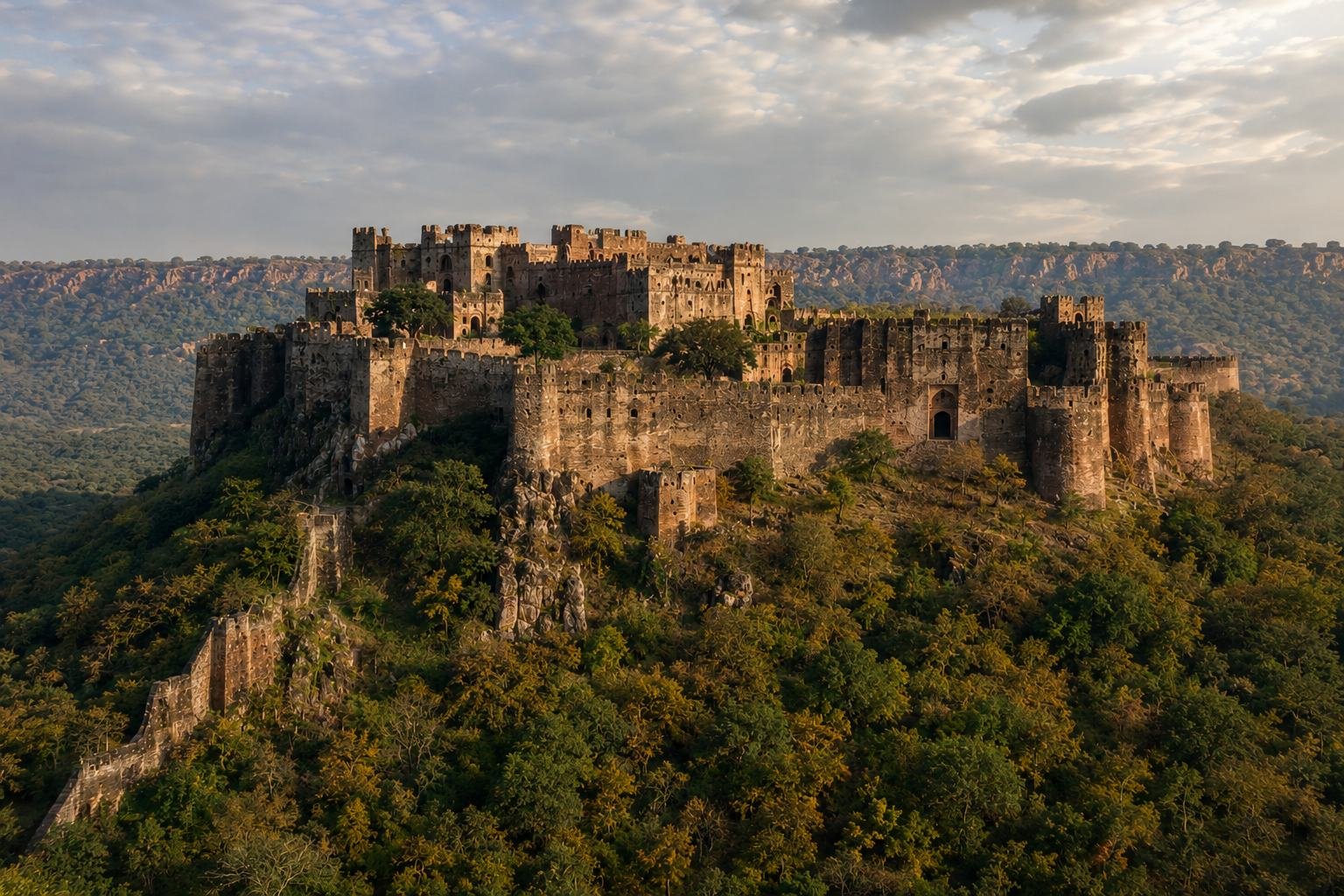
Ranthambore Fort rises straight out of the forest inside the reserve.
What to eat in Ranthambore
Ranthambore is not a dining destination — most meals happen at your lodge, usually as buffets timed around the safari slots. Sawai Madhopur town has simple local eateries, and the luxury lodges run serious kitchens. Here is the lay of the land.
Your lodge buffet
Most stays include or offer multi-cuisine buffets built around the early and late safari times — Indian staples, some continental, plenty for vegetarians. Convenient and reliable; for many visitors this is where nearly every meal happens.
Sawai Madhopur dhabas
For something cheaper and more local, the town’s dhabas and small restaurants do honest Rajasthani and North Indian thalis, dal, and rotis. A good break from buffet food and a glimpse of the working town behind the reserve.
Cafes & the Dhonk cafe
A handful of small cafes along Ranthambore Road do coffee, snacks, and light meals — handy between safaris or while browsing the Dhonk craft shop. Casual, easygoing, and a place to recharge in the midday gap.
Luxury lodge dining
The grand lodges — Oberoi Vanyavilas, Aman-i-Khas, Six Senses Fort Barwara — run refined kitchens with set menus, bush dinners, and fine service. Even a single meal or stay here is an experience in itself if the budget allows.
Meal times revolve around the safaris, which leave very early and return late afternoon, so lodges serve early breakfasts and flexible lunches. Carry water and a few snacks on the drive — safaris run three to four hours with no stops for food, and the dawn cold and dust make a thermos and a snack very welcome.
Where to stay
Almost everyone stays along Ranthambore Road, the strip between Sawai Madhopur town and the park gates, where lodges of every budget cluster. The choice is mostly about comfort and price.
Hotels & guesthouses
Simple hotels and guesthouses in and near town, from ₹1,500–4,000, many able to arrange safari bookings and transfers. Practical and affordable — fine if you are here mainly for the safaris and not the lodge.
Jungle lodges & resorts
Comfortable resorts with pools, gardens, and safari desks, often ₹5,000–12,000. The sweet spot for most visitors — relaxed between drives, with help organising your Gypsy and zones. Book a room and safaris together.
Luxury lodges
Oberoi Vanyavilas (tented luxury), Aman-i-Khas, and Six Senses Fort Barwara are among India’s finest wildlife stays — superb service, pools, and guided naturalists. From ₹25,000 upwards. A destination in their own right.
How to get around
Inside the park you can only travel in the forest department’s official safari vehicles — you do not self-drive. Outside it, the town and lodges are a short hop apart by auto or hotel transfer.
Book your safaris online through the official forest department portal (or via a reputable lodge) as far ahead as you can — Gypsy seats sell out fastest in season. Zones are allotted, not chosen, so the surest way to improve your tiger odds is simply to do more safaris across different zones and times rather than betting everything on one drive.
A solid 2-day itinerary
Two days lets you fit in two or three safaris plus the fort — the right balance for a first visit. Add a day for more safaris if a sighting matters most to you.
Arrive & afternoon safari
Drive in from Jaipur (about 3 hours) or take the train to Sawai Madhopur, check into your lodge, and head out on an afternoon safari. Back by dusk for a buffet dinner and an early night before the dawn start.
Dawn safari & the fort
A cold, early morning safari — often the best for sightings — then breakfast back at the lodge. Spend the late morning at Ranthambore Fort and Trinetra Ganesh, with an optional afternoon safari in a different zone before you leave.
Optional: more safaris
If the tiger is the goal, add a day of extra safaris in zones you have not yet tried, with a relaxed Surwal Lake birding morning or a Dhonk craft stop in the midday gap. More time in the park is the single best way to see more.
Practical tips that actually help
Book safaris early
Safari permits are limited and sell out in season, especially Gypsy seats. Book online through the forest department or a trusted lodge well before you arrive — do not rely on getting a seat on the day.
Choose a Gypsy
The 6-seat Gypsy is far better than the 20-seat Canter — more manoeuvrable, better sightlines, and quieter. It costs more and books out first, so reserve ahead if you can.
Do more than one safari
No single drive guarantees a tiger. Two to four safaris across different zones and times of day dramatically raise your odds — and you will see far more of the park in the bargain.
Dress for cold & sun
Dawn safaris in winter are bitterly cold in an open jeep; layer up with a fleece and a windproof. By midday it can be hot and dusty, so pack sunscreen, a hat, and a buff or scarf for the dust.
Cash, binoculars & SIM
Carry cash for permits, tips, and town, and bring binoculars if you have them — they transform a distant sighting. A Jio or Airtel SIM works in town; signal drops inside the park.
Mind the season
Core zones close in the monsoon (roughly July to September). October to March is comfortable; April to June is hot but often the best for sightings as animals gather at water. Plan accordingly.
Mistakes first-time visitors make
- Expecting a guaranteed tiger. This is wild nature, not a zoo. Go in hoping for a sighting but ready to enjoy the jungle, the lakes, and the other wildlife regardless — it takes the pressure off and the trip is better for it.
- Booking only one safari. A single drive is a coin toss. If seeing a tiger matters, plan two to four safaris from the start rather than gambling on one.
- Not booking ahead. Permits, and Gypsy seats especially, sell out in season. Leaving it to a same-day attempt often means no safari or a crowded Canter.
- Picking the Canter to save money, then regretting it. The big shared bus is cheaper but cramped and less flexible. If you can, pay up for the Gypsy — most people are glad they did.
- Skipping the fort. Many visitors do only safaris and miss the wonderful jungle-wrapped Ranthambore Fort. It is a highlight in its own right and easy to fit into a non-safari slot.
Want help planning your India trip beyond Ranthambore?
I help travellers turn confusing wish lists into custom India itineraries that actually work — based on your season, pace, and travel style.
Plan my India trip →Ranthambore FAQs
How many days do I need at Ranthambore?
Two days, with two or three safaris, is the sweet spot for a first visit — enough to give yourself a real chance of a tiger and to see the fort. If a sighting is your main goal, add a third day for extra safaris in different zones, since more drives mean better odds.
Am I guaranteed to see a tiger?
No. Ranthambore has one of India’s best wild-tiger densities, but sightings are never guaranteed — it is wild nature. The best way to improve your chances is to do several safaris across different zones and times of day, and to come in the hotter months (April to June) when animals concentrate around water.
What is the difference between a Gypsy and a Canter?
A Gypsy is a 6-seat open 4×4 — nimble, with better sightlines and a quieter ride; a Canter is a 20-seat open truck, cheaper but crowded and less flexible. Most visitors strongly prefer the Gypsy and find it worth the extra cost. Gypsy seats book out first, so reserve early.
When is the park open and what is the best time?
Ranthambore is open roughly October to June; the core zones close in the monsoon (about July to September). October to March is comfortable for weather and scenery, while April to June is hot but often the best for tiger sightings as the forest dries and animals gather at the lakes.
How do I get to Ranthambore?
The base town is Sawai Madhopur, which has its own railway station well connected to Delhi, Jaipur, and Mumbai — the train is the easiest way in. By road it is about 3 hours from Jaipur, which makes Ranthambore a natural wildlife add-on to a Rajasthan loop.
Related guides
Pair Ranthambore with another of Rajasthan’s great first-timer destinations — same honest, on-the-ground approach.
7-Day Rajasthan Itinerary
Ranthambore is the wildlife detour from the classic route — here’s the full 7-day Rajasthan itinerary to build your safari trip around.
The Pink CityTravel to Jaipur
Amber Fort, the Old City bazaars, Hawa Mahal, and a serious food scene. Just 3 hours away and the usual gateway to Ranthambore.
The Lake CityTravel to Udaipur
City Palace, sunset boat rides on Lake Pichola, and the Aravalli forts. The romantic city counterpoint to the jungle.

Ashvinee Nagle
I’m a travel writer based in Nagpur. Through Travel India, I share honest, on-the-ground guides shaped by years of travelling across India.
Written by Ashvinee Nagle
I travel India slowly and write it down honestly - practical guides and real itineraries from someone who lives here.
About Ashvinee →Plan your India trip with us
Get one short, honest India travel guide a week — plus a free 7-day Rajasthan itinerary to start.
Free. Unsubscribe any time.