Travel to the Dooars: A First-Timer’s Guide to Bengal’s Wild Foothills
Tea gardens and sal forest at the foot of the Himalayas, rivers spilling out of the hills, and national parks where rhinos, elephants and gaur still roam — the wild, green heart of North Bengal.
The Dooars — from the word for “doors” — are exactly that: the gateway where the plains of North Bengal rise into the forested foothills of the eastern Himalayas. This is a landscape of tea gardens and dense sal forest, of rivers like the Teesta, Murti and Jaldhaka tumbling out of the hills, and of national parks where one-horned rhinos, elephants, gaur and leopards still roam. Quieter and wilder than the hill stations above it, the Dooars is North Bengal’s great green escape.
Most trips are built around two or three wildlife parks — Gorumara, Jaldapara and Buxa — with a tea-estate bungalow or a riverside lodge as your base, and slow afternoons watching the forest from a watchtower. It’s an easy, uncrowded region, best strung together as a loop over three to five days.
Why visit the Dooars
Wildlife at the foot of the Himalayas
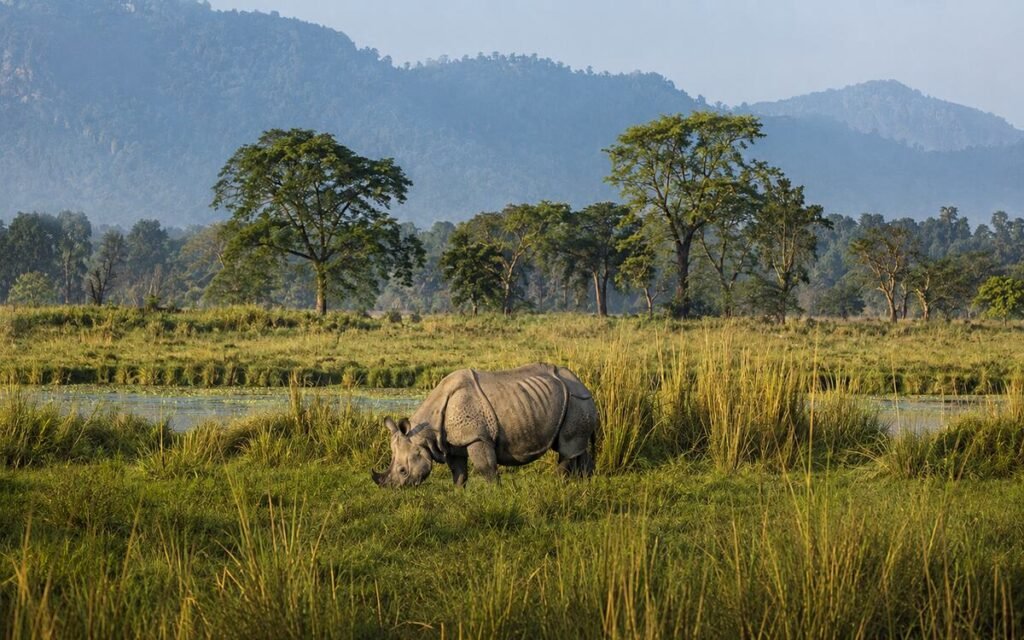
The Dooars packs several of eastern India’s best wildlife reserves into a small area. Gorumara and Jaldapara are strongholds of the great one-horned rhinoceros; you’ll also find elephants, gaur (Indian bison), deer and — if you’re very lucky — a leopard. Safaris are by jeep, with elephant-back safaris still running at Jaldapara.
Tea gardens and river country
Between the forests lie some of India’s oldest tea estates, their neat green rows framed by the blue wall of the Himalayas. Rivers spill out of the hills at Murti, Jaldhaka and Bindu, and colonial-era planters’ bungalows have been reborn as some of the region’s most atmospheric places to stay.
A quieter, greener escape
Unlike the busy hill stations above, the Dooars stays uncrowded. Days move slowly here — a dawn safari, a lazy riverside lunch, an afternoon on a watchtower waiting for elephants to come down to drink. It pairs beautifully with Darjeeling or a Bhutan crossing at Jaigaon.
When to go to the Dooars
The best time is October to April, when the weather is dry and the forests are open. The core wildlife season runs through the cooler winter months (November to February), when animals gather at waterholes and grasslands and sightings are best; March and April are hotter but still rewarding. Crucially, the national parks close for the monsoon, from 16 June to 15 September, when heavy rain floods the forest — avoid this window if wildlife is your goal. The shoulder months can be humid and leech-prone but leave the tea gardens impossibly green.
Top things to do in the Dooars
Jeep safari in Gorumara National ParkDo not miss
Compact but rich, Gorumara is the Dooars’ most reliable park for rhinos, elephants and gaur. Book a morning jeep safari from Lataguri, or spend a night at a forest watchtower like Jatraprasad or Chukchuki, overlooking a salt lick where the animals come to drink.
Elephant & jeep safari at JaldaparaDo not miss
Jaldapara National Park, on the Torsa river, has the region’s largest rhino population. Its famous dawn elephant-back safari from Hollong is limited and books out fast; a jeep safari is the easy alternative. Stay at the Hollong forest lodge inside the park if you can.
Buxa Tiger Reserve & Jayanti
In the far east near the Bhutan border, Buxa is wilder and less visited — forested hills, the riverside hamlet of Jayanti (“the Queen of the Dooars”), and a stiff walk up to the ruins of Buxa Fort. Great for birds, butterflies and quiet.
Chapramari Wildlife Sanctuary
A small, dense sanctuary next to Gorumara, Chapramari is known for elephants and a watchtower over the Murti river. It’s often combined with Gorumara on the same trip.
Stay on a tea estate
Some of the Dooars’ loveliest stays are working tea gardens around Chalsa, Binnaguri and Gairkata, where colonial bungalows open onto endless green rows. Tour the factory, walk the estate at dawn, and taste the garden’s own brew.
Murti, Samsing, Suntalekhola & Bindu
Follow the rivers towards the hills: picnic by the Murti, then climb to the tea village of Samsing, the forested hamlet of Suntalekhola, and tiny Bindu on the Jaldhaka at the Bhutan border. Cool, green and blissfully quiet.
Birdwatching from the watchtowers
The Dooars is a birder’s delight. Watchtowers at Chukchuki, Jatraprasad and Chapramari overlook grasslands and waterholes alive with hornbills, peafowl and countless winter migrants. Dawn and dusk are the magic hours.
What to eat in the Dooars
Dooars tea
The whole region is tea country. Sip the estate’s own CTC or orthodox brew fresh from the garden — best drunk plain to catch its brisk, malty character.
Momos & thukpa
Nepali and Tibetan influence runs deep here. Steamed momos and a hot bowl of thukpa noodle soup are the comfort food of every roadside stop and hill village.
Bengali rice & fish
At heart this is Bengal, so expect steaming rice with macher jhol (fish curry), dal and seasonal vegetables at the simple dhabas and homestays.
Nepali & tribal flavours
Look out for gundruk (fermented greens), bamboo-shoot curries and country-chicken dishes from the region’s Nepali and Adivasi communities — earthy, home-style cooking.
Where to stay in the Dooars
WBFDC forest lodges
The state Forest Development Corporation runs lodges in and beside the parks — Hollong inside Jaldapara, plus lodges at Gorumara and Murti. Book early through WBFDC; they put you closest to the safaris.
Tea-bungalow stays
Restored colonial planters’ bungalows on working estates around Chalsa and Binnaguri offer the region’s most characterful nights — verandahs, gardens and old-world calm.
Resorts near Murti & Chalsa
A cluster of comfortable riverside and forest-edge resorts around Murti, Lataguri and Chalsa makes an easy, well-connected base for park-hopping.
Foothill village homestays
Simple, friendly homestays at Samsing, Suntalekhola and Bindu trade luxury for cool air, birdsong and river views — perfect for slow days.
How to get to the Dooars & around
The Dooars is reached most easily via Bagdogra airport (IXB), about 2–3 hours from Gorumara. By rail, New Mal Junction is the handiest railhead for Gorumara, Lataguri and Murti; New Jalpaiguri (NJP) is the main long-distance hub; and Hasimara and Alipurduar serve Jaldapara and Buxa in the east. Roads are good and distances short — an hour or two between parks — but there’s no useful public transport for sightseeing, so hire a car with a driver for the trip. Note that the parks close on their weekly off-day and right through the monsoon.
Best day trips from the Dooars
Coronation Bridge (Sevoke)
The graceful 1930s arch over the teal Teesta at Sevoke, framed by forested hills — a classic photo stop on the way in or out.
Samsing & Suntalekhola
A cool climb into tea-and-forest country, with short walks, waterfalls and a hanging bridge at Suntalekhola.
Jhalong & Bindu
Riverside hamlets on the Jaldhaka at the Bhutan border, with a small dam, rich birdlife and big views — the far, quiet edge of the Dooars.
Jaigaon – Phuentsholing
Cross into Bhutan at the border town of Phuentsholing (permits required) for a taste of the kingdom, or browse the bustling border bazaar.
A simple 4-day Dooars plan
Arrive & settle into Gorumara
Fly into Bagdogra or train to New Mal, then drive to Lataguri or Murti. Settle in and take an afternoon jeep safari, or head to a watchtower for your first rhinos and elephants.
Half day
Gorumara & Chapramari
An early-morning safari in Gorumara, then Chapramari’s watchtower over the Murti. Spend the golden hour by the river before dinner at your lodge.
Full day
Cross to Jaldapara
Drive east to Madarihat and Jaldapara. Take a jeep (or the dawn elephant) safari through the park’s grasslands — the best rhino country in the Dooars.
Full day
Buxa, Jayanti & out
Explore Buxa and riverside Jayanti, or stop at Coronation Bridge on the way, before heading back to Bagdogra, NJP or Alipurduar for your onward journey.
Full day
Practical tips that actually help
Pre-book your safaris and forest lodges — permits are limited, and Jaldapara’s dawn elephant safari especially sells out well ahead. Remember the parks close from 16 June to 15 September and on their weekly off-day, so check before you plan. Carry cash, as ATMs are sparse near the parks. Winter mornings are genuinely cold, so pack a layer for open jeeps; the shoulder seasons bring leeches in the wet forest. And treat sightings as a bonus — the Dooars rewards patience and the pleasure of the forest itself, not a checklist of animals.
Mistakes first-time visitors make
Trying to “do” four parks in two days — the joy here is slowing down, not racing between gates. Turning up without booking the Jaldapara elephant safari, then finding it full. Visiting in peak monsoon when the parks are shut. Expecting guaranteed tiger sightings; the Dooars is about rhinos, elephants and the ecosystem. And underestimating how early the safaris start — the best sightings are at first light.
Dooars FAQs
How many days do you need in the Dooars?
Three to four days let you cover the main parks — Gorumara and Jaldapara, with Chapramari or Buxa added — at a relaxed pace. Two days is enough for a single park and a tea-estate stay if you’re short on time.
What is the best time to visit the Dooars?
October to April, with the cooler winter months (November to February) best for wildlife. The parks close for the monsoon from 16 June to 15 September.
Which is better, Gorumara or Jaldapara?
Both are excellent for rhinos. Gorumara is compact and reliable with great watchtowers; Jaldapara is larger, has more rhinos, and offers the famous dawn elephant safari. If you can, visit both.
How do I reach the Dooars?
Fly into Bagdogra (IXB), or take a train to New Mal Junction (for Gorumara), New Jalpaiguri, Hasimara or Alipurduar (for Jaldapara and Buxa). From there, hire a car with a driver to get around.
Can I see rhinos and tigers in the Dooars?
One-horned rhinos are the star and are regularly seen at Gorumara and Jaldapara, along with elephants and gaur. Tigers exist in Buxa but are very rarely sighted.
Are the parks open all year?
No — the forests close during the monsoon, from 16 June to 15 September, and each park has a weekly off-day. Plan your safaris for the dry season, October to mid-June.
Related guides
West Bengal Travel Guide
Himalayan hills, mangrove tigers, terracotta temples and the City of Joy — how to plan the whole state.
Darjeeling Travel Guide
The Queen of Hills just above the Dooars — tea gardens, the toy train and sunrise over Kanchenjunga.