
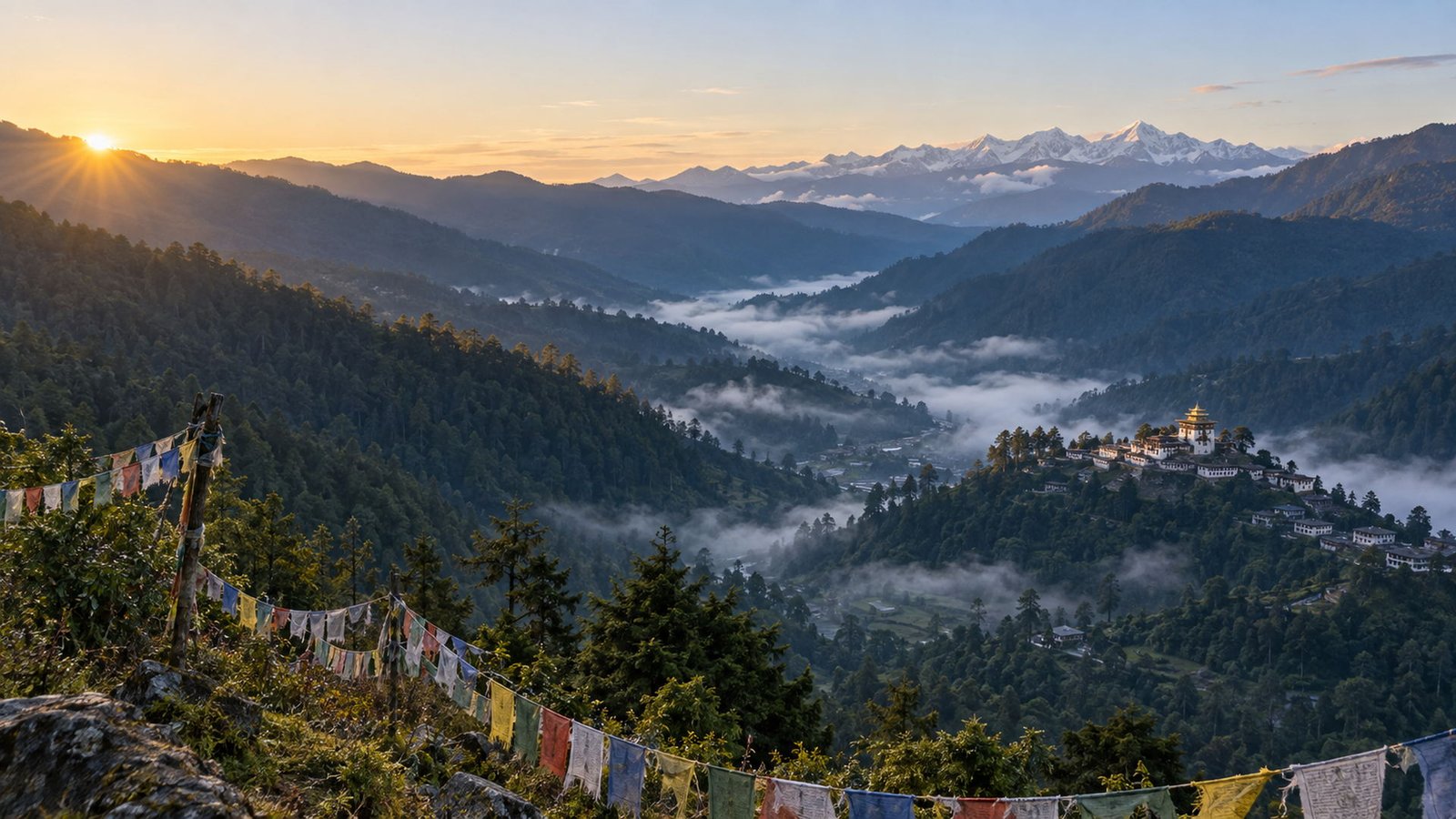
Arunachal Pradesh — Monasteries, High Passes and Remote Valleys
Monasteries, high Himalayan passes, forest valleys and remote roads in India’s far northeast. Here’s how to choose between Tawang, Ziro, Mechuka and the east — and how long it really takes.
Before you go: Arunachal requires a permit
Arunachal is one of the few Indian states where entry is regulated for visitors. It is straightforward, but it is the first thing to sort out — not something to leave until the week you travel.
Indian citizens who are not residents of the state need an Inner Line Permit (ILP) to enter any part of Arunachal Pradesh. Tourist permits are applied for online through the state’s eILP portal and are issued for a limited stay — up to 14 days at the time of writing — with provisions to apply for a longer or provisional permit. Children under 14 travel on an accompanying adult’s permit rather than their own.
Foreign nationals fall under the Protected Area Permit (PAP) regime instead, issued by the Ministry of Home Affairs or designated state authorities. State tourism guidance says foreign tourists apply through an approved local tour operator, with a royalty payable to the state government. Some nationalities need separate prior clearance, so start early.
A handful of places near the international boundary — Bum La beyond Tawang, the upper Dibang and Siang valleys, and similar areas — need additional local clearance from the district administration and the army on top of your ILP or PAP. These are granted locally, often only a day ahead, and can be withheld for weather or security reasons.
Check current permit rules on the official eILP portal →
Permit categories, stay limits and fees change from time to time. Always confirm against the official state portal or the Arunachal Pradesh Police before booking flights — not against a tour operator’s summary.
Arunachal Pradesh, at a glance
Arunachal Pradesh is India’s largest northeastern state — roughly 83,700 sq km of eastern Himalaya stacked between Bhutan, Tibet and Myanmar, and one of the least-travelled corners of the country. The west is Monpa and Buddhist, built around monasteries and high passes on the road to Tawang. The centre belongs to communities like the Apatani, Nyishi and Adi, where valleys such as Ziro are working farmland rather than manicured viewpoints. The east is river and rainforest country — the Siang coming out of the mountains at Pasighat, and Namdapha’s forest climbing from 200m to over 4,500m inside a single national park.
What ties it together is distance. The state tourism department lists fourteen separate tourist circuits, and there are almost no shortcuts between them: roads follow ridges and river valleys rather than straight lines, so a gap that looks like 200km on a map can be an eight-hour day. Plan around that and Arunachal is one of India’s great road trips. Plan against it and you will spend the trip in a car.
8 places that define an Arunachal Pradesh trip
Ordered by how most first-time trips actually get built — the western monastery circuit first, then the central valleys, then the eastern rivers and forests. Very few travellers should attempt more than two of these clusters in one trip.
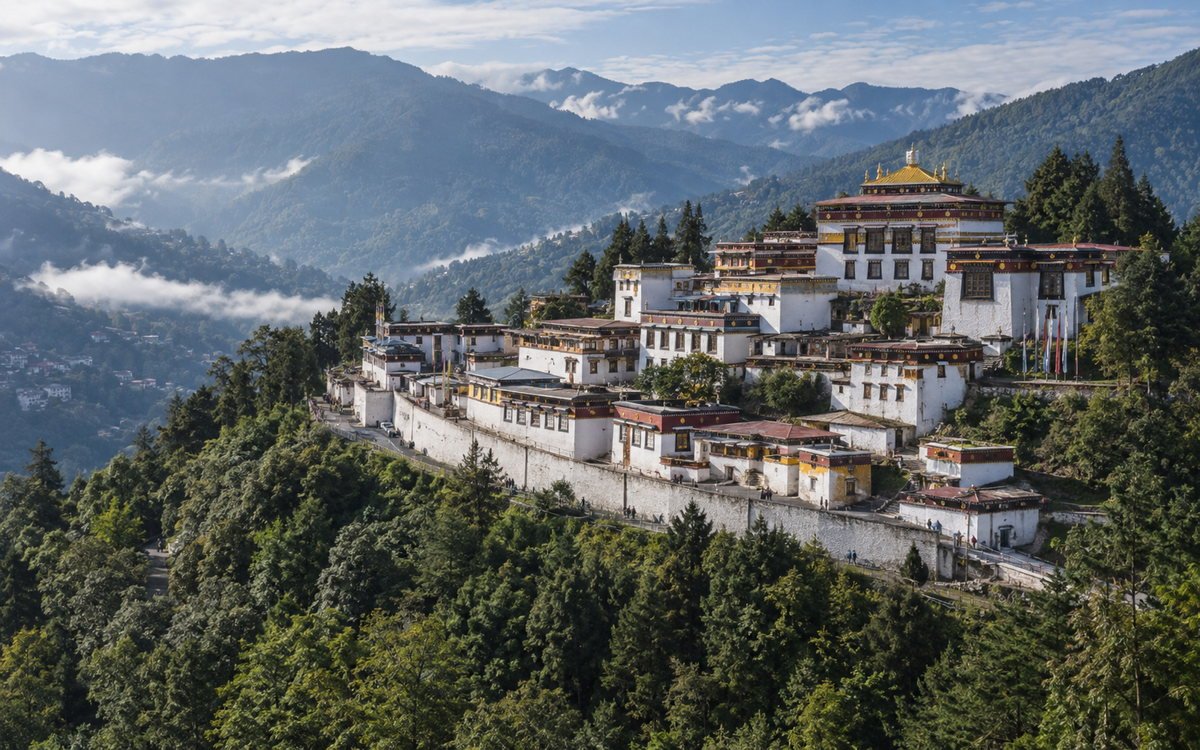
Tawang
Monasteries, alpine lakes and Arunachal’s great Himalayan road trip
India’s largest monastery, founded in 1681, stands above a valley at close to 3,000m, reached on a road that now tunnels beneath 4,170m Sela Pass. This is the state’s big-scenery trip: Monpa villages, 1962 war memorials and high lakes that open and close with the weather.
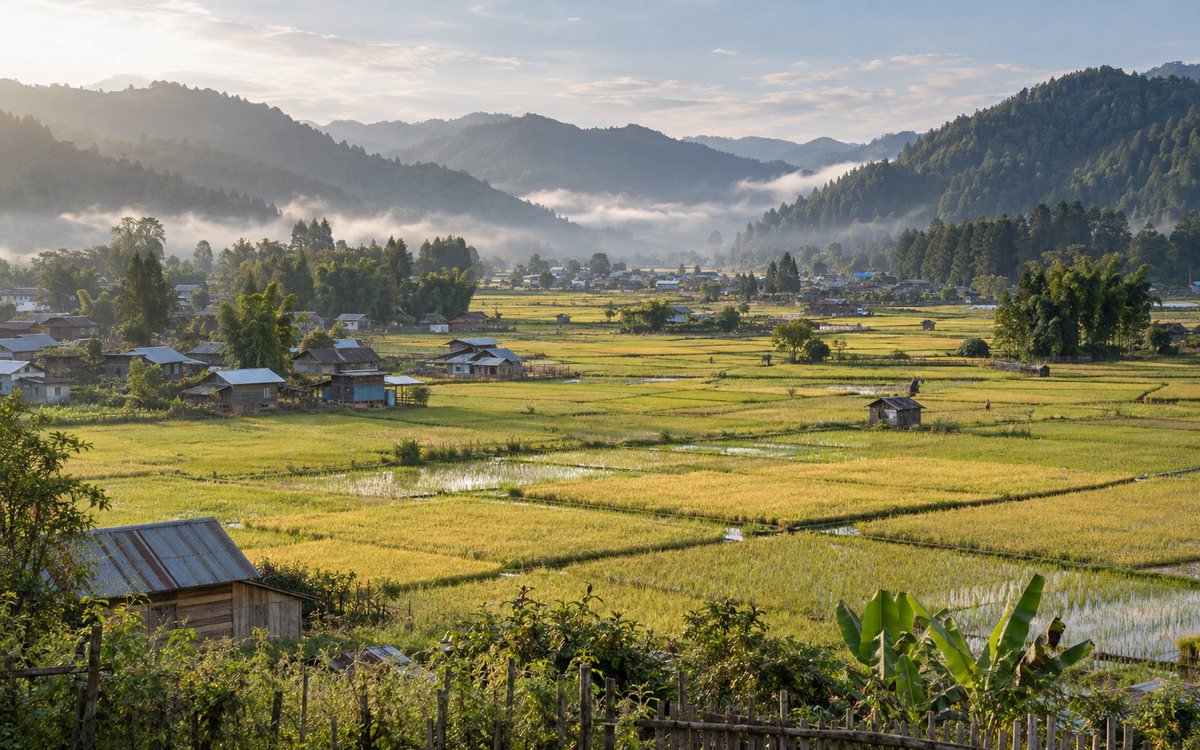
Ziro Valley
Rice fields, pine hills and Apatani culture at a slower pace
Walk between Apatani villages, wet-rice fields and pine-clad hills at 1,688m, in a cultural landscape on UNESCO’s tentative World Heritage list for its wholly irrigated, fish-and-paddy farming system. Ziro rewards staying put and walking, not ticking off sights.
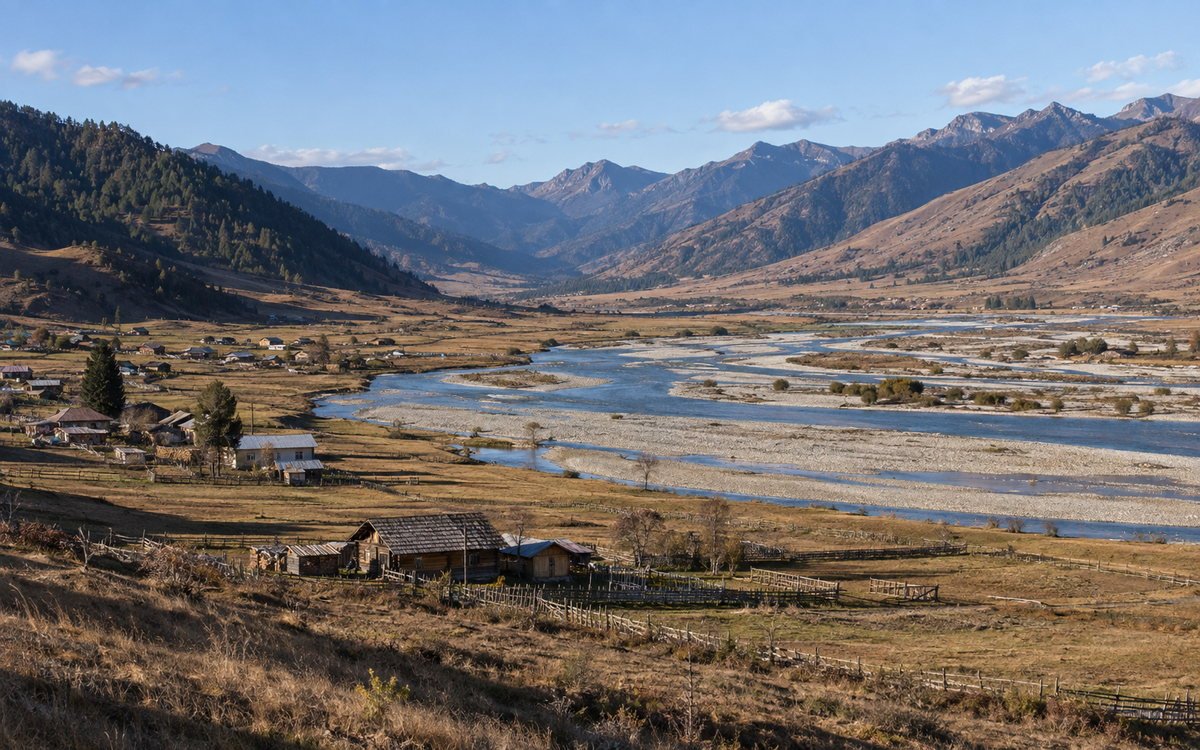
Mechuka
A remote Himalayan valley of wooden homes, monasteries and open mountain country
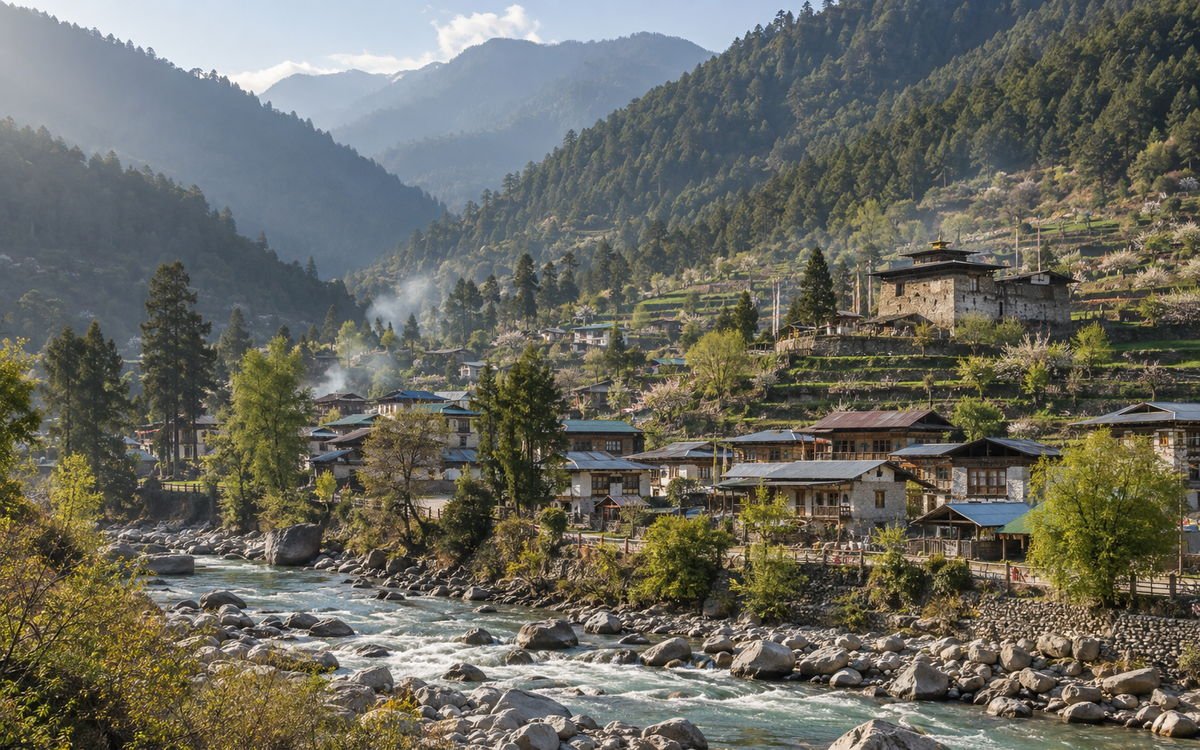
An unusually wide, bright valley on the Siyom river at around 1,800–2,000m, some 187km north of Aalo on a road that is most of the experience. Memba villages, a centuries-old monastery above the settlement, and very little between you and the border.
Dirang & Bomdila
Monasteries, orchards and mountain stops on the road to Tawang
Two genuinely different towns rather than two overnight halts. Bomdila sits at 2,415m with its monastery, apple orchards and views toward Kangto and Gorichen; Dirang, 800m lower and noticeably warmer, has hot springs, an old dzong and the quiet Sangti valley.
Itanagar
Arunachal’s capital and an easy introduction to the state’s cultures
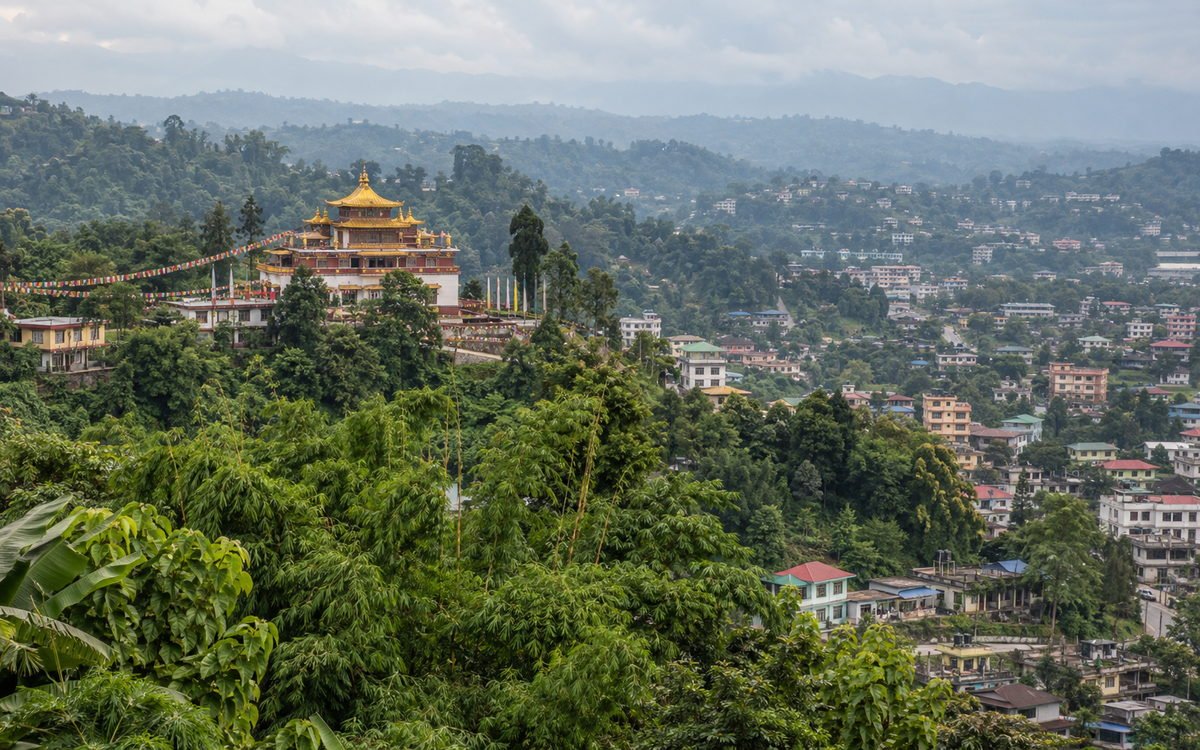
Not a Himalayan headline act, and it does not pretend to be. It is the practical start of central Arunachal: the state museum for context on communities you are about to meet, the brick-walled Ita Fort, and an airport that puts Ziro within a morning’s drive.
Pasighat
Siang River landscapes, hanging bridges and the gateway to eastern Arunachal
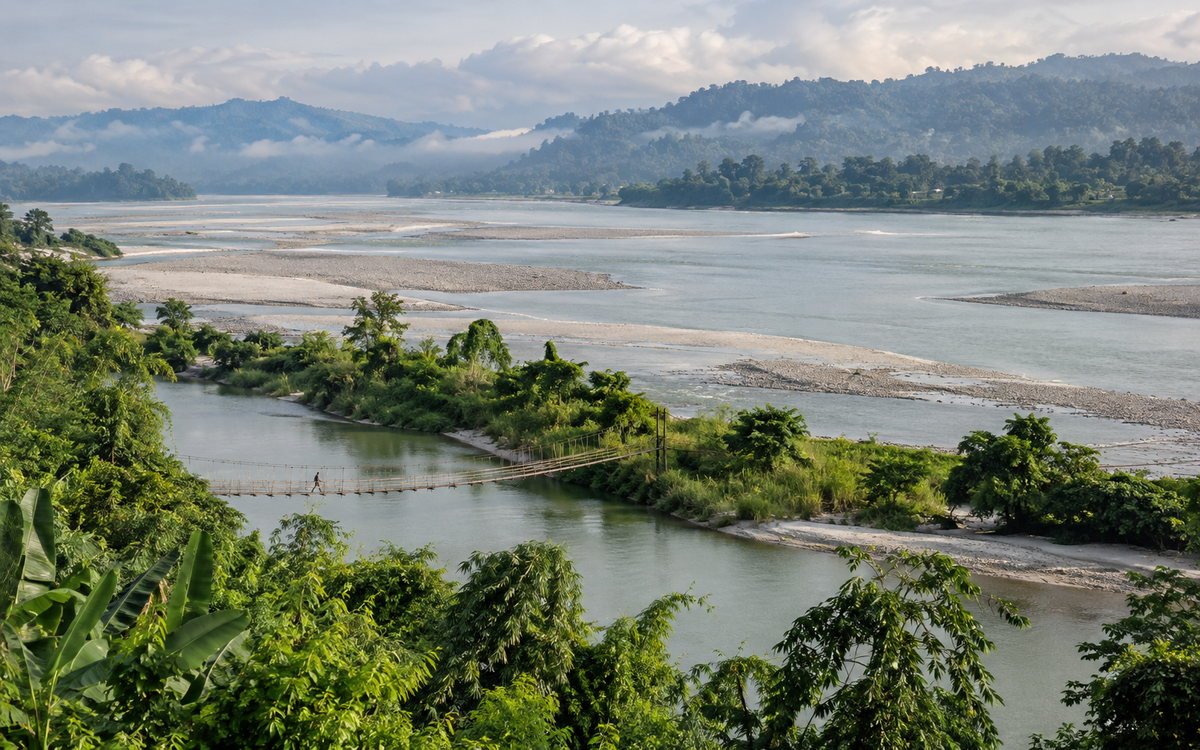
Arunachal’s oldest town, established in 1911, sitting at just 150m where the Siang finally leaves the mountains and spreads across gravel banks. Adi country, known for its cane-and-bamboo hanging bridges and the Daying Ering sanctuary on the river islands.
Namdapha National Park
Deep rainforest and one of India’s wildest protected landscapes
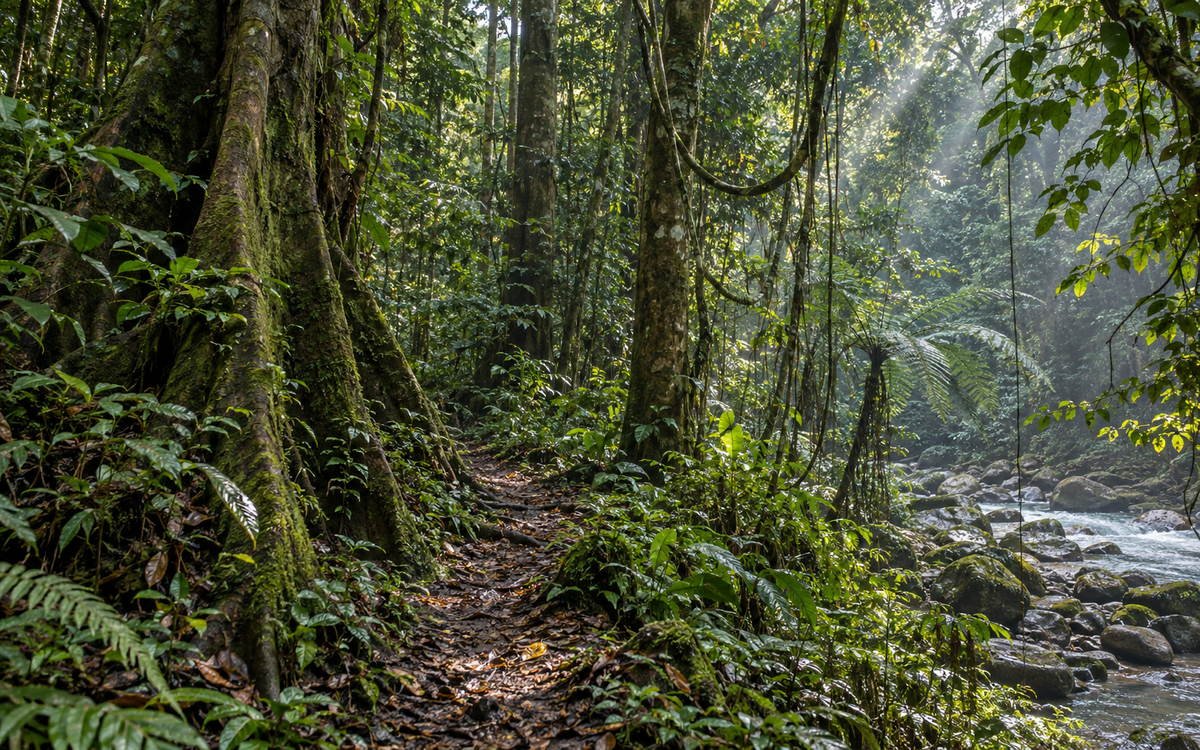
Nearly 2,000 sq km rising from 200m to above 4,500m, holding the world’s northernmost lowland evergreen rainforest and around 425 bird species. Come for forest walks, gibbons and hornbills from the rest house at Deban — not for reliable big-cat sightings.
Roing & Mayudia
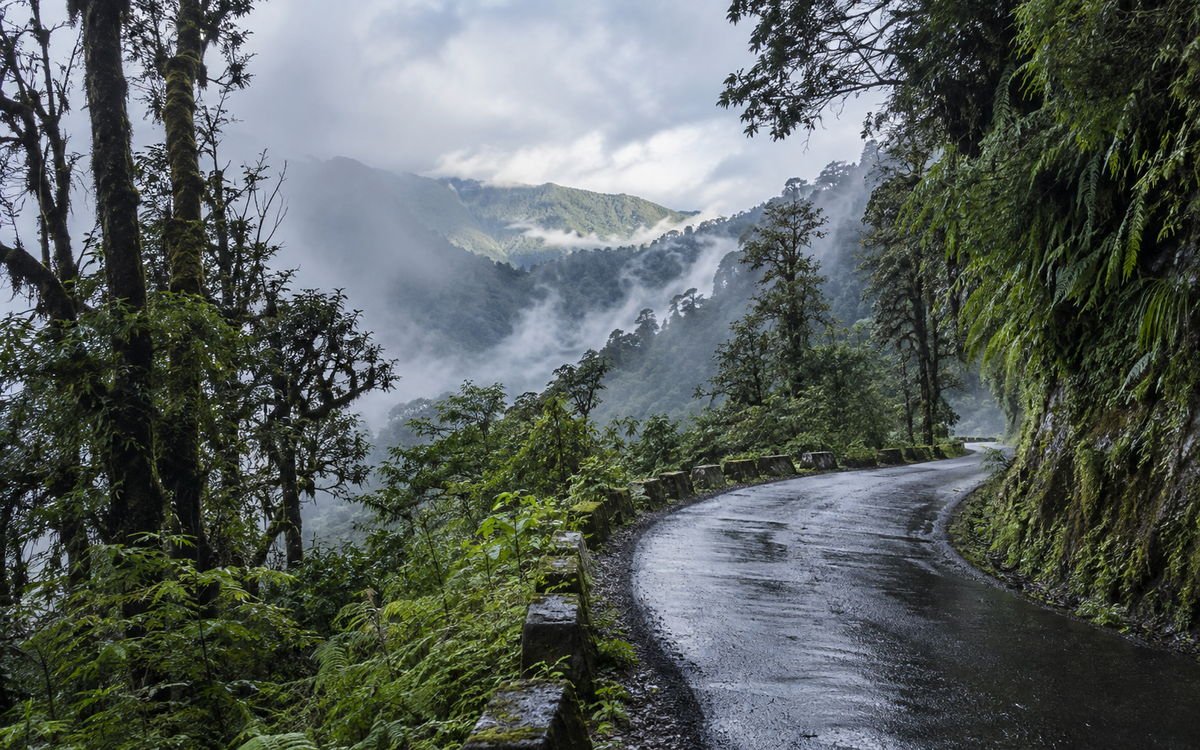
River plains, forest roads and a mountain pass into eastern Arunachal
From Roing’s river plains the road climbs 56km and about three hours to Mayudia Pass at 2,655m, through temperate forest that holds mist most mornings and snow between November and March. Idu Mishmi country, and the doorway toward the Dibang valley.
Don’t try to see all of Arunachal in one trip
The state is wider than it looks and its regions do not connect neatly — getting from Tawang in the west to Namdapha in the east means dropping back into Assam and driving most of the way across it. Pick one cluster, or at most two.
Classic western Arunachal
Guwahati → Bhalukpong → Dirang → Tawang
The state’s signature route and the right choice for most first visits. It follows NH-13 up from the Assam plains through Bomdila and Dirang to Tawang, now an all-weather drive since the Sela tunnel opened in March 2024. Roughly 555km from Guwahati, but count on three days of driving each way with stops.
Ziro & central Arunachal
Itanagar → Ziro (optionally on to Daporijo & Aalo)
The gentlest introduction to the state and the easiest to reach, with Ziro about 115km and three to four hours from Itanagar. Fly into Donyi Polo airport, spend three or four nights around the Apatani valley, and turn back — or continue along the official Itanagar–Ziro–Daporijo–Aalo–Pasighat circuit if you have the days.
The Mechuka journey
Dibrugarh / Pasighat → Aalo → Mechuka
Aalo–Mechuka is its own official circuit, and the 187km final leg is a full day on mountain road. Treat the drive as the point of the trip rather than an obstacle to it. Road upgrades are ongoing along this corridor, so confirm current conditions and timings locally before committing to tight dates.
Eastern wilderness
Dibrugarh → Miao → Namdapha · or Dibrugarh → Roing → Mayudia
Eastern Arunachal is reached from Dibrugarh and Tinsukia rather than Guwahati. Miao is about 160km from Dibrugarh, then a further 26km of forest road to Deban inside Namdapha. Roing and the Mayudia pass form a separate, quieter loop to the north of the same gateway.
If this is your first Arunachal trip
Two of these four work well for a first visit, and the choice is really about what you want the days to feel like.
- Choose Tawang if your priority is dramatic Himalayan scenery, Buddhist monasteries and a classic mountain road trip — and you accept long driving days to earn it.
- Choose Ziro if you prefer village culture, walking, and slower travel with far less time in a vehicle. It is also the easier trip to do in under a week.
- Choose Mechuka only if you have more time and actively want the remoteness. It is a poor fit for a short first trip.
- Choose Namdapha or the eastern circuit if rainforest, birding and genuinely offbeat travel matter more to you than iconic sightseeing.
The best time to visit, month by month
“October to April” is roughly right but hides a lot. Arunachal spans 150m to over 4,500m, so Tawang, Ziro and Pasighat are not on the same calendar.
Spring across the lower and middle valleys: rhododendron and orchid season, comfortable sightseeing temperatures, and roads generally in good shape before the rains. One of the two best windows for the Tawang circuit, and pleasant in Ziro.
Warm and increasingly humid at lower elevations like Pasighat and Namdapha, but still fine in the western mountains. Pre-monsoon showers begin and mountain weather turns changeable, so build slack into high-altitude plans.
Spectacularly green and very wet. This is the season of landslides, blocked roads and unpredictable delays across the state, and it is the hardest time to keep an itinerary. Not the right window for a first trip, particularly one with fixed return flights. Experienced travellers who accept the risk can still enjoy the lower valleys.
The strongest all-round window. Clear post-monsoon air, the best mountain visibility of the year, roads recovering from the rains, and comfortable daytime temperatures almost everywhere. Book ahead, as this is also when most visitors come.
Excellent for travellers equipped for cold, and the best chance of snow at Tawang and Mayudia. Expect sub-zero nights at altitude, possible disruption on high routes, and high-altitude excursions such as the lakes beyond Tawang becoming inaccessible. The Sela tunnel has made the Tawang road far more dependable in winter than it used to be, but weather can still close things at short notice.
Regional variation matters
At the same moment in January, Pasighat at 150m can be mild and shirt-sleeved while Tawang is below freezing and Mayudia is under snow. Pack for the highest and coldest point of your route, not the average, and check conditions for your specific district rather than for “Arunachal”.
Getting there and getting around
Getting there
Almost every Arunachal trip begins in Assam. Guwahati is the gateway for the western circuit to Bomdila, Dirang and Tawang. Dibrugarh (Mohanbari) serves eastern and parts of central Arunachal, including Miao for Namdapha, Roing, Pasighat and the road to Aalo.
Inside the state, Donyi Polo Airport at Hollongi opened in November 2022, 14km south of Itanagar, with flights to Delhi, Kolkata, Mumbai, Guwahati and Tezu — which makes Ziro far quicker to reach than it once was. Smaller airfields at Pasighat, Tezu and Ziro see limited regional services.
Schedules on these routes change often and some operate only a few days a week. Check live schedules before you build an itinerary around a specific flight, and read our Assam travel guide if you are adding days at either end.
Getting around
Arunachal is a road-trip destination, and there is no realistic way around that. Most visitors use a hired vehicle with a local driver for the whole trip — expensive, but it is what makes the state workable, and a driver who knows the route is worth more than the vehicle.
Shared Sumo taxis run between most towns and are the backbone of local travel: cheap, reliable in their own way, and usually departing very early in the morning. State and private buses cover selected routes. Local public transport within districts is limited, so getting to villages and viewpoints often still needs a hired vehicle.
Roads have improved considerably — NH-13 and the Sela tunnel have transformed the Tawang run — but mountain roads still change after rain, landslides and construction. Treat mapping-app travel times as optimistic and add a wide margin.
Build buffer time into every Arunachal itinerary
The single most common planning mistake is scheduling a long remote mountain drive immediately before a flight or train. A landslide, a convoy, or a stretch of roadwork can add hours with no warning and no alternative route.
Wherever you can, return to your gateway city — Guwahati, Dibrugarh or Itanagar — the day before you fly, and treat that as a non-negotiable part of the itinerary rather than a wasted day. This matters most in the monsoon and in deep winter.
What an Arunachal trip costs
Approximate planning budgets, per person per day, excluding flights to the gateway city. Transport — not accommodation — is usually the largest line.
Budget
₹2,000 – ₹3,500
per person / day
Shared Sumo taxis between towns, homestays and simple guesthouses, local food. Realistic if you travel slowly and are comfortable with early starts and fixed departure times.
Mid-range
₹4,000 – ₹7,000
per person / day
A shared hired vehicle across a group of three or four, better guesthouses and locally run hotels, some guided walks. The band most first-time visitors land in.
Private road trip
₹7,000+
per person / day
A dedicated vehicle and driver, the best available rooms in each town, and flexibility to change plans. The comfortable way to do Tawang or Mechuka.
What actually drives the cost
- Vehicle hire dominates. On a Tawang or Mechuka trip, the car and driver can easily exceed everything else combined, because you pay for the vehicle over long distances and for the driver’s time and return legs.
- Solo travellers pay disproportionately more. There is nobody to split the vehicle with. If you are travelling alone, either join a small group or plan around shared Sumos and the more accessible destinations.
- Remote towns have thin room inventory. Fewer options means less price competition, and in peak season the good places go first.
- These are planning estimates for orientation, not quotes. Actual costs vary by season, group size, route and fuel prices.
Two itineraries that actually work
8 days — Tawang & western Arunachal
The classic first trip. Driving days are deliberately unhurried; do not try to compress this into six.
Guwahati to Bhalukpong or Dirang
Leave Guwahati early. Cross into Arunachal at Bhalukpong, where permits are checked. Strong drivers push on to Dirang; otherwise break the journey at Bhalukpong or Bomdila.
Dirang and the Sangti valley
A deliberately light day to help with altitude. Sangti valley, the hot springs, the old dzong, and time in the orchards and villages around town.
Dirang to Tawang via Sela
The big drive. Through the Sela tunnel — or over the 4,170m pass when it is open and clear — past Jaswant Garh and Nuranang Falls, arriving in Tawang by afternoon.
Tawang town and monastery
Tawang Monastery at its best in the morning, the war memorial, the craft centre and the town itself. An easy day at altitude before any high excursion.
High-altitude excursion
The lakes above Tawang, and Bum La if local permissions are granted. Both are weather- and permit-dependent, so keep this day flexible and have a fallback plan in town.
Tawang to Dirang or Bomdila
Back over the range. Stop at anything the outbound weather hid — the views on this road are rarely the same twice.
Return toward Assam
Down through Bomdila and Bhalukpong to Tezpur or Guwahati. A long but mostly downhill day.
Buffer and departure
Fly out of Guwahati. If your flight is early, this buffer day is what stops a landslide from becoming a missed flight.
6 days — Ziro & central Arunachal
Less driving, more walking. The better choice if you have under a week or are travelling with people who do not enjoy long mountain roads.
Arrive Itanagar
Fly into Donyi Polo airport at Hollongi, or drive up from Guwahati. Afternoon at the state museum and Ita Fort for context before heading into the valleys.
Itanagar to Ziro
Around 115km and three to four hours through the hills. Arrive by lunch, then a first orientation walk through the valley in the afternoon light.
Apatani villages
A full day among the villages — Hong, Hari, Bamin-Michi and others — with a local guide who can explain the paddy-and-fish system and the bamboo groves.
Paddy fields, pine hills and viewpoints
Walk or cycle the valley floor between the rice fields, then up into the pine hills for the wider view. Talley Valley if you want a longer forest day.
Ziro to Itanagar
Return down the same road, stopping where you did not have time on the way up. Evening in Itanagar or Naharlagun.
Departure
Fly out of Donyi Polo, or continue by road to Guwahati if your onward flight is from there.
Which destination is right for you?
Scroll the table sideways to see every column →
| Destination | Best for | Ideal stay | Difficulty | Best season |
|---|---|---|---|---|
| Tawang | Mountains, monasteries and the classic road trip | 3–4 days | Moderate — long drives, high altitude | Mar–Jun, Oct–Nov |
| Ziro | Apatani culture and slow valley travel | 2–3 days | Easy–Moderate | Mar–May, Sep–Nov |
| Mechuka | A remote valley and the journey to it | 2–3 days + travel | Demanding — very long road access | Oct–Apr |
| Dirang & Bomdila | Monasteries, orchards and breaking the Tawang drive | 1–2 days | Easy–Moderate | Mar–Jun, Oct–Nov |
| Pasighat | The Siang river and eastern Arunachal culture | 1–2 days | Easy — low altitude, good access | Oct–Apr |
| Namdapha | Rainforest, birding and expedition-style nature | 2–3 days | Demanding — basic facilities, walking | Nov–Apr |
| Roing & Mayudia | Forest roads, a mountain pass and quiet corners | 2 days | Moderate | Oct–Apr |
Who Arunachal suits
A great fit if you are
- A road-trip traveller who enjoys the driving as much as the destination
- A photographer after mountains, forest, rivers and everyday village life
- Drawn to Himalayan and Buddhist culture, and to communities living on their own terms
- A birder or nature traveller happy with forest walks over guaranteed sightings
- A slow traveller who would rather spend four nights in one valley than four towns in four days
Consider elsewhere if you
- Want to cover many destinations quickly — the distances will simply not allow it
- Expect resort-standard hotels and polished infrastructure outside the main towns
- Are uncomfortable with long mountain drives, narrow roads and exposed sections
- Have fixed, unmovable dates at both ends with no room for weather delays
Practical notes worth reading before you go
Altitude: for Tawang and the high passes
A western Arunachal trip crosses 4,170m at Sela and spends nights near 3,000m in Tawang, with excursions higher still. Most people are fine, but altitude deserves respect.
- Drink more water than feels necessary, and go easy on alcohol for the first couple of days.
- Gain height gradually where the itinerary allows — a night at Dirang or Bomdila before Tawang helps.
- Keep the first day at altitude light. Save the high lake excursions for day two or three.
- Carry warm layers in the vehicle, not in the luggage on the roof. Conditions change fast on the passes.
- Learn the common symptoms of altitude sickness, and do not push on to higher ground if you or anyone in your group feels unwell.
- Access to the highest points depends on weather and local permissions, and can be refused on the day. Build the trip so that it still works if the high excursion does not happen.
This is general travel guidance, not medical advice. If you have a heart or lung condition, or have had altitude problems before, talk to a doctor before booking.
Connectivity and cash
- Mobile coverage is inconsistent and varies a lot by district and by operator. Expect stretches of road, and some valleys, with no signal at all.
- Do not build the trip around having mobile data. Download offline maps for your whole route before you leave the gateway city.
- Carry cash. ATMs are reliable in larger towns such as Itanagar, Tawang, Pasighat and Bomdila, but can be empty or offline in smaller places. Digital payments work in towns and often not beyond them.
- Keep your accommodation addresses, driver’s number and permit copies saved offline, and carry printed permit copies as well — checkposts are not always online either.
Travelling respectfully
Arunachal has more than twenty major communities, many of them living in places that see very few outsiders. How visitors behave has an outsized effect here.
- Ask before photographing people, homes or ceremonies, and accept no as an answer.
- Do not photograph military installations, checkposts, bridges or convoys. This is taken seriously.
- Dress and behave modestly in monasteries, remove shoes where required, walk clockwise around religious structures and ask before entering prayer halls.
- Stay out of restricted border zones unless you hold the specific permission for them.
- Carry your plastic out. Waste management in remote valleys is minimal, and what you leave stays.
- Hire local guides and drivers, and choose community homestays where they exist — it is the most direct way your money reaches the valley you are visiting.
- Keep your distance from wildlife, and do not buy souvenirs made from animal parts.
- Follow village customs on sacred groves, entry to certain areas and festival etiquette. When in doubt, ask your host.
Where to stay and what to eat
Where to stay
Accommodation in Arunachal is mostly homestays, guesthouses, locally run hotels and government or tourist lodges. Itanagar, Tawang, Bomdila, Pasighat and Ziro have the widest choice; smaller places may have only a handful of rooms in total.
Community homestays are often the best option in the valleys — better food, better information, and the money stays local. Inside Namdapha, the Deban forest rest house is the main option and is booked through the forest department rather than online.
Book ahead for October–November and for festival dates. Do not expect upscale properties outside the main towns, and do not assume online listings are current — a phone call is often more reliable.
What to eat in Arunachal Pradesh
There is no single Arunachali cuisine. Food changes sharply between communities and altitudes, and the difference between a Monpa kitchen in Tawang and an Adi one near Pasighat is substantial.
In the Buddhist west you will find Tibetan-influenced food — thukpa, momos, butter tea and barley. Through the central and eastern valleys, meals are built on rice with boiled and smoked preparations, local greens, bamboo shoot, and fermented ingredients that carry much of the flavour. Millet and rice-based local brews are part of hospitality in many communities.
- Thukpa
- Momos
- Bamboo shoot dishes
- Smoked meat
- Local greens
- Rice & millet staples
- Fermented preparations
- Butter tea
Common Arunachal Pradesh questions
Do Indians need a permit for Arunachal Pradesh?
Yes. Indian citizens who are not residents of the state need an Inner Line Permit to enter any part of Arunachal Pradesh. Tourist permits are applied for online through the state’s eILP portal and are issued for a limited stay, with provisions to extend or apply for a provisional permit. Children under 14 are covered by an accompanying adult’s permit. Carry printed copies, as permits are checked at entry points such as Bhalukpong.
Can foreigners visit Arunachal Pradesh?
Yes, but under different rules. Foreign nationals need a Protected Area Permit rather than an ILP, issued by the Ministry of Home Affairs or designated state authorities. State tourism guidance says foreign tourists should apply through an approved local tour operator, with a royalty payable to the state. Some nationalities require separate prior clearance, so allow plenty of lead time and confirm the current position with official sources.
How many days are enough for Arunachal Pradesh?
Eight to ten days is a comfortable first trip covering one region properly — typically Tawang and western Arunachal, or Ziro and the central valleys. Under a week, stick to Ziro or a short eastern loop. Twelve to fourteen days lets you combine two clusters without spending the whole trip driving. Trying to see the whole state in a single visit does not work.
Is Tawang suitable for first-time visitors?
Yes, and it is the most popular first trip for good reason. The scenery is the state’s most dramatic, the monastery is genuinely significant, and the road is far more reliable since the Sela tunnel opened in 2024. The two things to plan for are the driving — around 555km from Guwahati, three days each way with stops — and the altitude, which is worth easing into with a night at Dirang or Bomdila.
What is the best month to visit Arunachal Pradesh?
October and November are the strongest all-round window: clear air, the year’s best mountain visibility, roads recovering after the monsoon, and comfortable temperatures. March and April are almost as good and bring spring flowering in the valleys. July to September is the monsoon, with heavy rain, landslides and unpredictable road delays.
Is Arunachal Pradesh safe for solo travellers?
Arunachal is generally regarded as a welcoming and low-crime place to travel, and solo travellers do visit. The practical challenges are logistical rather than personal: patchy mobile coverage, long remote drives, limited transport options and higher costs, since there is nobody to share a vehicle with. Solo travellers do best sticking to well-connected routes such as Itanagar–Ziro, using shared Sumos, and telling someone their route before heading into remote districts.
Can I travel around Arunachal without a private car?
Partly. Shared Sumo taxis connect most towns and are the backbone of local travel, supplemented by some bus routes, and a trip built around Itanagar, Ziro, Pasighat or Bomdila is feasible this way. What you lose is flexibility: departures are early and fixed, and reaching villages, viewpoints and places like Mayudia or the lakes above Tawang usually still needs a hired vehicle for at least part of the trip.
Is Arunachal Pradesh suitable for families?
It can be, with the right choice of region. Ziro, Dirang, Bomdila and Pasighat work well for families — shorter drives, moderate altitude and gentler days. Tawang is manageable for older children who cope with long journeys, but the altitude and driving days are demanding for young ones. Namdapha and Mechuka are better left for later trips.
Does Tawang get snow?
Yes. Tawang sits near 3,000m and the route crosses higher ground still, so snow is common in winter, roughly December to February, and can occur outside those months at altitude. The Sela tunnel, which runs about 400m below the 4,170m pass, has made the road far more dependable through winter than it used to be, but snow and weather can still close high excursions such as the lakes beyond town at short notice.
Which is better: Tawang or Ziro?
They offer different trips. Choose Tawang for dramatic Himalayan scenery, Buddhist monasteries and a classic mountain road trip, accepting long driving days and high altitude. Choose Ziro for Apatani village culture, walking between rice fields and pine hills, far less time in a vehicle and an easier trip to fit into under a week. If you have ten days or more and want both, do Ziro first and Tawang second — but note they are in different parts of the state and the link between them is a long drive.
Plan your Arunachal Pradesh trip with Travel India
Whether it is the monastery road to Tawang, the slow valleys around Ziro, or the rivers and rainforest of the east, Arunachal can be planned around your dates, permits and travel style.
Written by Ashvinee Nagle
I travel India slowly and write it down honestly - practical guides and real itineraries from someone who lives here.
About Ashvinee →