
Chitrakote Falls: India’s Widest Waterfall, and When It Actually Runs
A practical guide to Chitrakote in Bastar — why the season matters more here than almost anywhere else in India, how to reach it from Raipur, what the falls look like in flood and in drought, and a simple two-day plan that pairs it with the Kanger Valley caves.
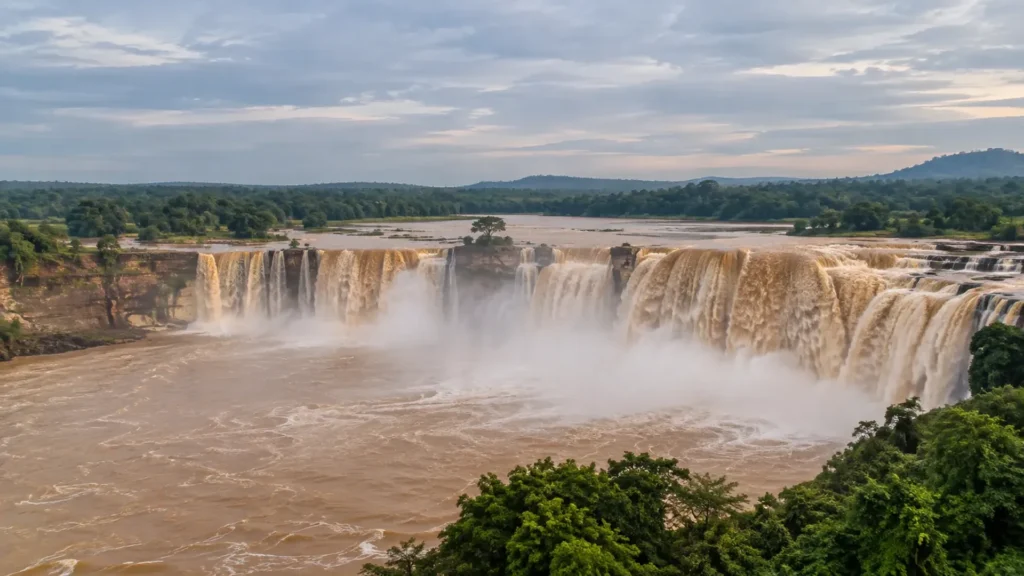
Chitrakote is the widest waterfall in India, and almost nobody outside Chhattisgarh has heard of it. The Indravati river spreads across a horseshoe rim roughly 300 metres wide and drops about thirty metres into a forested gorge — low and broad rather than tall and narrow, which is why the Niagara comparison gets made and why it is, for once, roughly fair. What almost no one tells you is that the falls you see depend entirely on when you turn up. Come in September and it is a single thundering curtain of silt-brown water. Come in April and it is three thin streams over bare black rock.
Chitrakote sits about 38 km west of Jagdalpur in the Bastar region of southern Chhattisgarh. The falls run hardest from August to early October and shrink steadily through the dry season. October is the sweet spot — high water, dried-out roads. Give it one night, two if you want the Kanger Valley caves as well, and base yourself either at the falls or in Jagdalpur. Getting here means a full day’s drive from Raipur, so build it into a wider Chhattisgarh trip rather than treating it as a side trip.
Why visit Chitrakote
Three reasons it justifies the long drive south — and one honest caveat about timing.
The widest falls in India
Roughly 300 metres across at full flow. Most Indian waterfalls are a single jet down a cliff; Chitrakote is a broad curved rim, which makes it feel less like a landmark and more like a piece of landscape.
It is genuinely uncrowded
Even at peak season this is nothing like the queues at India’s better-known sights. Most visitors are domestic weekenders from Raipur, and on a weekday morning you may share the viewpoint with a handful of people.
It opens up Bastar
The falls are the reason most people come south, but they put you within an hour of the Kanger Valley caves, Tirathgarh Falls and the weekly village markets that are the real texture of this region.
When to go
Season matters more at Chitrakote than at almost any other sight in India. This is a rain-fed river, and the difference between months is not subtle.
August to September (peak flow): the falls at their most dramatic — one continuous brown curtain, heavy spray, real noise. The trade-off is monsoon travel: slow roads, leeches in the forest, and boats often suspended because the water is unsafe.
October to early November (the sweet spot): the river is still high from the monsoon but the rain has stopped and the roads have dried. If you can only come once, come now.
November to February (reduced but pleasant): flow drops steadily and the curtain begins to break into separate channels. Comfortable weather, clear light, good for pairing with the caves, which are open in this window.
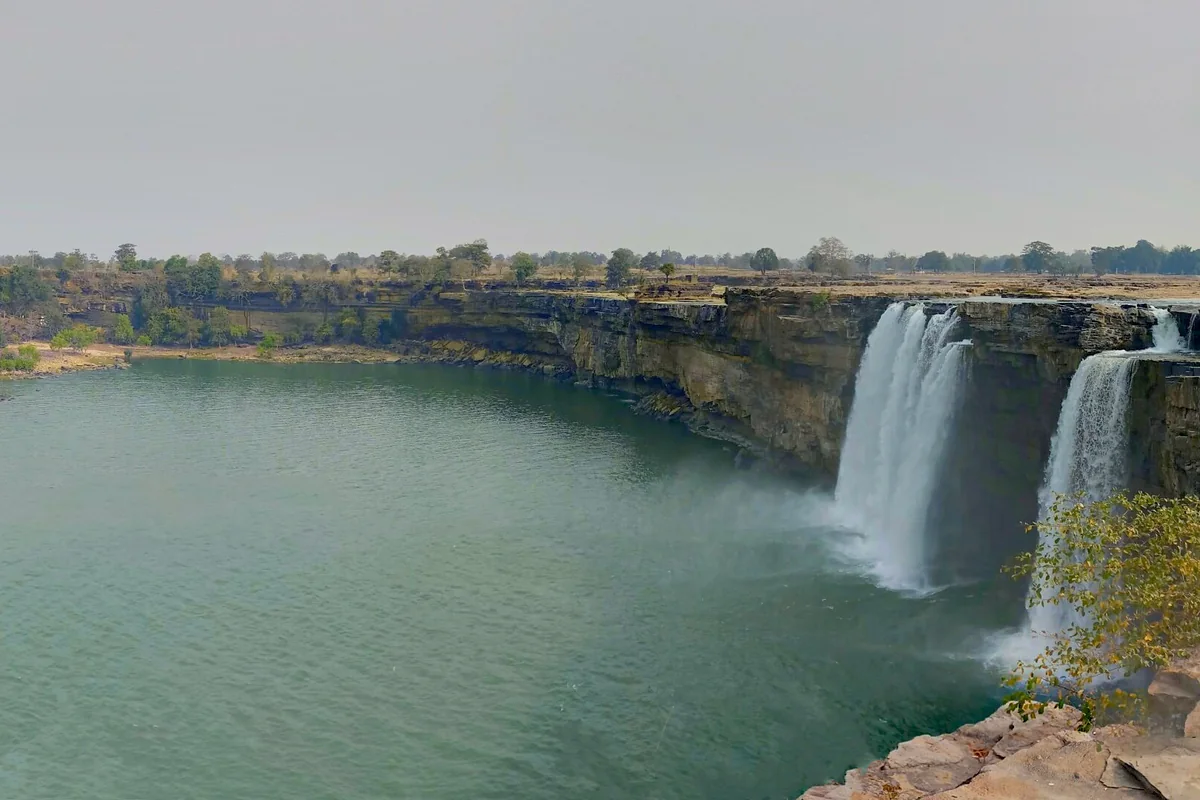
March to June (thin): the falls narrow to a few streams over exposed rock and daytime temperatures climb past 40°C. Worth a stop only if you are here for something else.
Boat rides at the base of the falls run only when the water level allows — they are commonly suspended at peak monsoon flow and may not operate at the very lowest water either. Treat a boat ride as a bonus, not the reason you came.
Things to do at Chitrakote
The falls themselves are the point, but a night here stretches into a genuinely full day and a half.
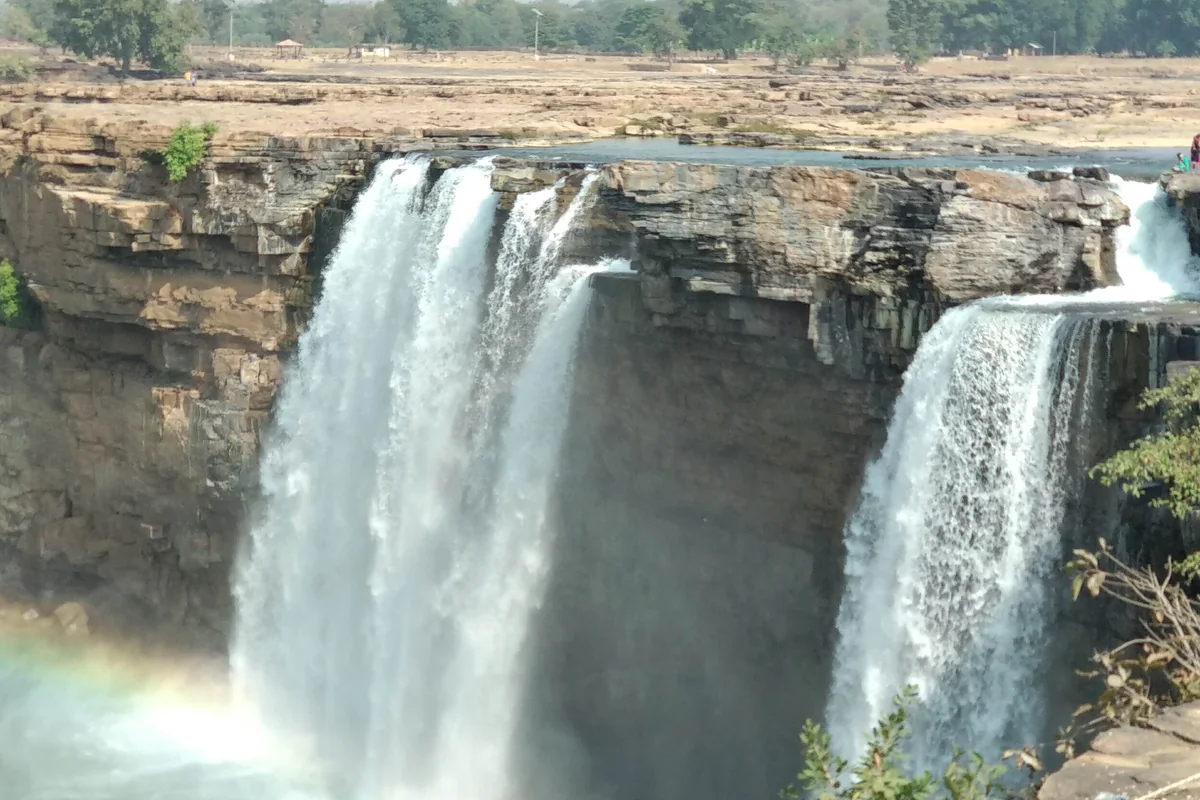
The main viewpoint at first light
The principal viewing area looks straight along the horseshoe. Get there early — the light is better, the spray catches the sun, and the domestic day-trippers have not arrived from Jagdalpur yet.
Take a boat toward the base
When levels are safe, local boats run out toward the foot of the falls. It is the one way to feel the scale properly — but it depends entirely on flow, and operators will refuse in dangerous conditions. Do not push it.
Walk down to the lower rocks
Steps lead down to the rock shelves beside the plunge pool for a view back up at the rim. Wet rock here is genuinely slippery in and after the monsoon — sensible shoes, and no climbing past the barriers.
Stay for the evening floodlights
The falls are lit after sunset, which is the argument for sleeping here rather than day-tripping from Jagdalpur. It is a simple pleasure — the noise of the water in the dark and a lit curtain in front of you.
Kanger Valley and Tirathgarh
An hour or so away, Kanger Valley National Park holds the stepped Tirathgarh Falls and the limestone caves of Kutumsar and Kailash. The caves usually close during the monsoon, so this pairs best with a dry-season visit.
A Bastar weekly haat
Every village around Jagdalpur holds its market on a fixed weekday. If yours coincides, go — it is the most interesting hour you will spend in Bastar, and nothing like a market laid on for visitors.
What to eat
This is not a food destination. Eating at Chitrakote means the resort restaurant or a handful of simple stalls; Jagdalpur, an hour away, has more range. What is worth seeking out is Chhattisgarhi home cooking, which barely appears on menus anywhere else in India.
Chhattisgarhi staples
Ask for chila, faraa or bafauri — rice-flour pancakes, steamed dumplings and steamed lentil cakes. Rice-led, lightly sour, and completely different from the wheat-based food of Madhya Pradesh next door.
The resort restaurant
The state tourism property above the falls runs the only proper restaurant at Chitrakote. The food is straightforward Indian; the view is the reason to eat there.
Poha and chai
Central India runs on poha and hot sweet tea. Eat before you leave Jagdalpur if you are heading out early for the falls, because options thin out fast on the road.
Salfi
The sap of the sulphi palm, tapped fresh and mildly fermented, is the drink of Bastar and turns up at every haat. Sold and drunk fresh — an acquired taste, and very much of this place.
Where to stay
Two realistic choices: sleep at the falls, or sleep in Jagdalpur and drive out. Staying at the falls is the better experience if you can get a room.
At the falls
State tourism runs cottages on the rim with a direct view of the water. Limited rooms, and they book out at weekends and through the post-monsoon peak — reserve well ahead rather than arriving hopeful.
Jagdalpur
Comfortable mid-range hotels, reliable food and the best base for the wider Bastar region — the caves, the markets and onward roads. The sensible choice if you want more than one night in the area.
Getting there and around
From Raipur: the state capital has the only well-connected airport, and Chitrakote is roughly 300 km south. Allow a full day — six to seven hours is realistic, and the road is slower than the distance suggests. This is a drive, not a hop.
From Jagdalpur: about 38 km west, roughly an hour by car. Jagdalpur has a railway station and a limited regional air service, which makes it the practical gateway to the whole south of the state.
Getting around: hire a car and driver. Public transport to the falls exists but is slow and infrequent, and you will want the flexibility to chase a market day or an early start. A driver who knows the Bastar roads is worth the money.
Chitrakote is not a stop you slot into a wider central India route by accident — it is a long way from anywhere else. Either give southern Chhattisgarh three or four nights, or leave it for a trip of its own.
A simple 2-day plan
One night at the falls, one day for the caves — the shape most people should take.
Arrive, and the falls twice
Drive in from Jagdalpur or Raipur and check in. See the falls in the late afternoon when the light comes across the rim, eat early, and come back after dark for the floodlights. If levels allow, take a boat before sunset.
First light, then the caves
Back to the viewpoint at opening for the quietest hour, then drive to Kanger Valley for Tirathgarh Falls and the Kutumsar caves. Return to Jagdalpur for the night, or continue north toward the rest of Chhattisgarh.
Practical tips that actually help
Come in October
High water and dry roads at the same time. It is a narrow window and it is the single best piece of timing advice for this place.
Sleep at the falls
The floodlit evening and the empty first hour are the two best moments here, and both need you to be staying on site.
Budget the drive honestly
Raipur to Chitrakote is a full day. Plan arrival for the afternoon rather than hoping to see the falls the same morning.
Carry cash
ATMs are reliable in Raipur and Jagdalpur and scarce beyond. Entry fees, boats and small restaurants all run on cash.
Wet rock is dangerous
The shelves below the rim are slick after rain. Stay behind the barriers — people drown at Indian waterfalls every monsoon.
Check the haat calendar
Ask your driver or hotel which village market falls on which weekday, and shift your plan by a day if it lets you catch one.
Mistakes first-time visitors make
- Coming in the dry season expecting the postcard. Between March and June the falls are a fraction of the photographs. The pictures you have seen were taken in the monsoon.
- Day-tripping from Jagdalpur. You miss the floodlit evening and the quiet first hour, which are the two things that make the trip worth it.
- Underestimating the drive from Raipur. Three hundred kilometres here is a full day, not an afternoon.
- Counting on the boat. It runs when the water allows and not otherwise. Build the visit around the view, not the ride.
Planning Chhattisgarh beyond Chitrakote?
Chitrakote works best as part of a wider Bastar loop — the Kanger Valley caves, a weekly haat, and the long road back north past Sirpur. Tell me your dates and I will tell you whether the falls will actually be running.
Chitrakote FAQs
What is the best time to visit Chitrakote Falls?
August to early October for maximum flow, with October the sweet spot because the monsoon has filled the river but the roads have dried out. From November the falls shrink steadily, and between March and June they reduce to a few narrow channels.
Is Chitrakote really the widest waterfall in India?
Yes. At full flow the Indravati spreads roughly 300 metres across the horseshoe rim, which makes it the widest in the country, though at about thirty metres it is far from the tallest. The shape is why it gets compared to Niagara.
How do you reach Chitrakote Falls?
Fly or take a train to Raipur, then drive roughly 300 km south — a full day. Jagdalpur, about 38 km east of the falls, is the nearest town with a railway station and a limited regional air service, and makes the most practical base.
How many days do you need at Chitrakote?
One night is enough for the falls themselves, seen in the late afternoon, floodlit after dark and again at first light. Add a second day if you want the Kanger Valley caves and Tirathgarh Falls, which are about an hour away.
Can you swim or take a boat at Chitrakote?
Boats run out toward the base of the falls when the water level is safe, and are commonly suspended at peak monsoon flow. Swimming is not sensible here — the current below the rim is strong and the rocks are slippery.
Related guides
Keep planning your Chhattisgarh trip with these:
Chhattisgarh Travel Guide
Waterfalls, limestone caves, Bastar’s weekly markets and the brick temples of Sirpur — how to put a Chhattisgarh trip together.
Plan my Chhattisgarh trip
Share your dates and I will tell you whether the falls will be running, and how to line the trip up with a market day.

Written by Ashvinee Nagle
I travel India slowly and write it down honestly - practical guides and real itineraries from someone who lives here.
About Ashvinee →Plan your India trip with us
Get one short, honest India travel guide a week — plus a free 7-day Rajasthan itinerary to start.
Free. Unsubscribe any time.