
Travel to Shantiniketan: A First-Timer’s Guide to Tagore’s Abode of Peace
The town Rabindranath Tagore built around his open-air university — Baul folk singers, the Sonajhuri forest market, red earth and rural calm, now a UNESCO World Heritage cultural landscape.
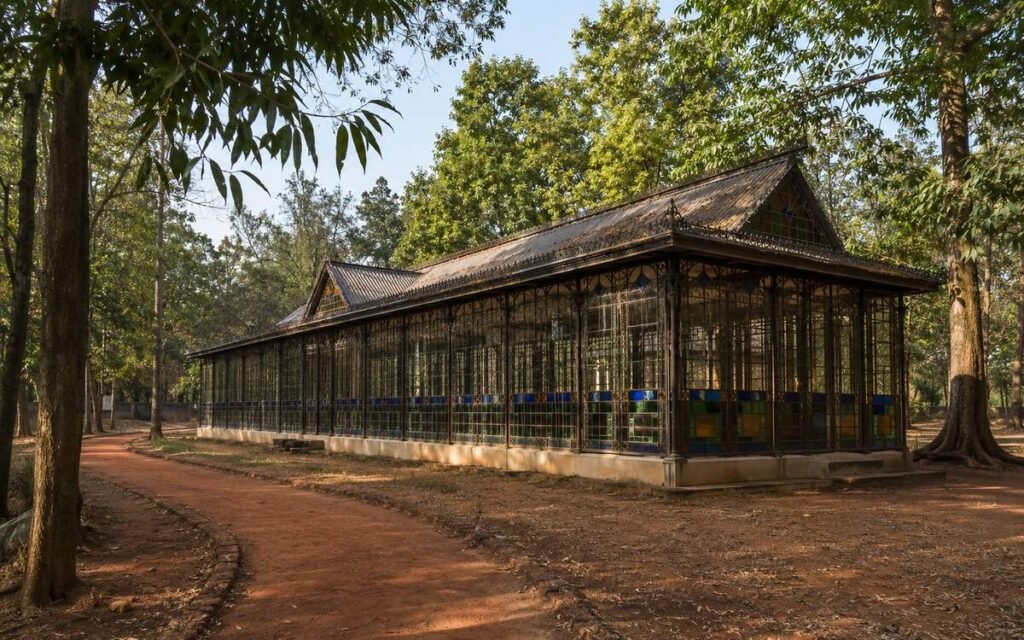
Shantiniketan — “the abode of peace” — is less a sightseeing town than a mood. In the red-earth countryside of Birbhum, the poet Rabindranath Tagore built a school and then a university, Visva-Bharati, around the radical idea of learning in the open air, in harmony with nature and the arts. Inscribed as a UNESCO World Heritage Site in 2023, it remains a place of shade trees and open-air classrooms, mud-relief sculpture and song, where wandering Baul minstrels still sing and a weekend forest market fills with crafts. Come to slow down, not to tick off monuments.
Why visit Shantiniketan
Tagore’s living legacy
This is where India’s Nobel-winning poet reimagined education and art. Visva-Bharati, its open-air classrooms, murals and museums keep his vision alive, and the whole town carries his imprint.
Baul music and folk arts
Shantiniketan is a heartland of the Baul tradition — wandering mystic minstrels whose songs you can still hear at the forest market and festivals, alongside dance, crafts and the region’s distinctive art.
Rural Bengal at its gentlest
Red soil, palm trees, tribal villages and open skies give Shantiniketan a calm, unhurried beauty. It’s a window onto rural Bengal, and a genuine change of pace from the cities.
When to go to Shantiniketan
October to March is the most pleasant time to visit, with cool, comfortable weather. It also spans the town’s great festivals — Poush Mela in late December, a huge fair of Baul music and crafts, and Basanta Utsav, the spring/Holi festival, usually in March. Summers (April to June) are hot, and the monsoon is humid, though the red earth turns lush and green. If you can, time your trip for a weekend to catch the Sonajhuri forest market.
Top things to do in Shantiniketan
Visva-Bharati & the campusDo not miss
Tagore’s open-air university is the heart of Shantiniketan, with its shaded classrooms, sculptures and gardens. Wander the grounds (respecting class times and rules) to feel the ideals the place was built on.
Sonajhuri forest market (Khoai)Do not miss
Held in the Sonajhuri forest, this weekend haat is Shantiniketan’s magic hour — tribal crafts, handloom, Baul singers and food under the trees, on the red-earth Khoai landscape. Come Saturday afternoon.
Kala Bhavana & the muralsDo not miss
The famed art school within Visva-Bharati, home to celebrated murals, frescoes and sculptures by masters like Nandalal Bose and Ramkinkar Baij — a highlight for anyone interested in modern Indian art.
Rabindra Bhavana museum
A museum dedicated to Tagore’s life and work, set among the buildings where he lived, with manuscripts, photographs and personal effects. The best place to understand the man behind the town.
Hear the BaulsDo not miss
Shantiniketan is one of the best places in India to hear live Baul music — at the forest market, at festivals, or in villages nearby. The haunting, one-stringed ektara songs are unforgettable.
Amar Kutir & craft villages
A cooperative showcasing Bengal’s crafts — leather, batik, kantha embroidery — and nearby villages where you can see artisans at work. Good for meaningful souvenirs that support local makers.
What to eat in Shantiniketan
Rural Bengali thali
Simple, seasonal Bengali meals — rice, dal, vegetables and fish — served in homestays and small eateries, often using local produce.
Bolpur’s sweets
Nearby Bolpur is known for Bengali sweets; look for local specialities alongside the usual rosogolla and sandesh.
Forest-market food
At the Sonajhuri haat, seasonal snacks and simple hot food are part of the experience — eat under the trees between the craft stalls.
Nolen gur (winter)
In winter, sweets and treats made with date-palm jaggery (nolen gur) are a regional delight worth seeking out.
Where to stay in Shantiniketan
Bolpur guesthouses
The town of Bolpur, next to Shantiniketan, has the most budget rooms and easy transport links.
Art & garden stays
A growing number of charming boutique resorts and art-themed homestays sit amid gardens and red earth on the town’s fringes.
Village homestays
Family homestays offer home cooking and a gentle, local feel — in keeping with the town’s spirit.
WBTDC & older lodges
Government and long-running lodges provide simple, reliable stays close to the campus and market.
How to get to Shantiniketan & around
By train: the easiest way — frequent trains from Kolkata (Howrah/Sealdah) reach Bolpur–Shantiniketan station in around 2–2.5 hours; the fast Shatabdi and other expresses are convenient. By road: Shantiniketan is roughly 160 km from Kolkata, about 3.5–4 hours by car. By air: Kolkata airport is the nearest, then train or road. Getting around: the campus, market and sights are spread out but close; use toto (e-rickshaw), cycle-rickshaw, or a hired car or bike. Many places are pleasant to explore on foot or by cycle.
Best trips around Shantiniketan
Bakreshwar
A temple town with hot springs, a traditional pilgrimage and relaxation stop within easy reach.
Bishnupur
Bengal’s terracotta temple town is combinable with Shantiniketan for a rich culture-and-heritage loop.
Tribal & craft villages
Santhal and craft villages around Shantiniketan offer music, dance and a look at rural artisan life.
Tarapith
A well-known Shakti-peeth temple town, an important pilgrimage site in Birbhum.
A simple 1–2 day Shantiniketan plan
Tagore’s town
Explore the Visva-Bharati campus, Kala Bhavana’s murals and the Rabindra Bhavana museum in the morning, then Amar Kutir and the craft villages in the afternoon. Keep the evening slow.
Full day
Forest market & Bauls
If it’s a weekend, spend the afternoon at the Sonajhuri forest market — crafts, food and Baul music under the trees — and soak up the red-earth countryside before heading back.
Full day
Practical tips that actually help
Come on a weekend if you can — the Sonajhuri forest market and its Baul music are the highlight, and it only runs Saturdays (and some Sundays). Respect the working university: keep quiet near classes and follow campus rules and timings. The train from Kolkata is faster and easier than driving. Rent a cycle or take a toto to get between spread-out sights. Book well ahead if visiting during Poush Mela or Basanta Utsav, when the town fills up completely.
Mistakes first-time visitors make
Visiting midweek and missing the weekend forest market. Rushing it as a half-day trip — Shantiniketan is about atmosphere, not a monument checklist. Treating the campus as a free-for-all tourist site rather than a working university. Coming during a major festival without booking accommodation far in advance. And expecting grand sights: the pleasure here is gentle and cultural, not monumental.
Shantiniketan FAQs
How many days do you need in Shantiniketan?
One full day covers the main sights; two days let you enjoy the campus, museums and crafts and still catch the weekend forest market at a relaxed pace. Time it for a Saturday if you can.
What is Shantiniketan famous for?
It’s the town Rabindranath Tagore built around his open-air university, Visva-Bharati — a UNESCO World Heritage cultural landscape known for Tagore’s legacy, Baul folk music, the Sonajhuri forest market, and festivals like Poush Mela and Basanta Utsav.
When is the Sonajhuri forest market held?
The Khoai haat in the Sonajhuri forest is mainly a Saturday afternoon market (sometimes extending to Sunday). It’s the best place to see crafts and hear live Baul music, so plan a weekend visit.
What is the best time to visit Shantiniketan?
October to March, for cool, comfortable weather and the big festivals — Poush Mela in late December and Basanta Utsav around Holi in spring. Summers are hot and the monsoon humid.
How do I reach Shantiniketan?
The easiest way is by train from Kolkata to Bolpur–Shantiniketan station (about 2–2.5 hours). You can also drive (around 3.5–4 hours, ~160 km) or fly into Kolkata and continue by train or road.
Is Shantiniketan worth visiting?
For anyone interested in Tagore, art, folk music or rural Bengal, yes. It’s a cultural and atmospheric destination rather than a monument-heavy one, best enjoyed slowly.
Related guides
West Bengal Travel Guide
Darjeeling’s tea hills, the Sundarbans, Kolkata and Tagore’s countryside — the whole state, and how to plan it.
Kolkata Travel Guide
The City of Joy — Victoria Memorial, Howrah Bridge, College Street and the best street food in India.

Written by Ashvinee Nagle
I travel India slowly and write it down honestly - practical guides and real itineraries from someone who lives here.
About Ashvinee →Plan your India trip with us
Get one short, honest India travel guide a week — plus a free 7-day Rajasthan itinerary to start.
Free. Unsubscribe any time.