
Travel to Kolkata: A First-Timer’s Guide to the City of Joy
India’s cultural capital — colonial-era grandeur, the Victoria Memorial and Howrah Bridge, College Street’s book stalls and adda, the dazzle of Durga Puja, and a street-food scene worth the trip on its own.
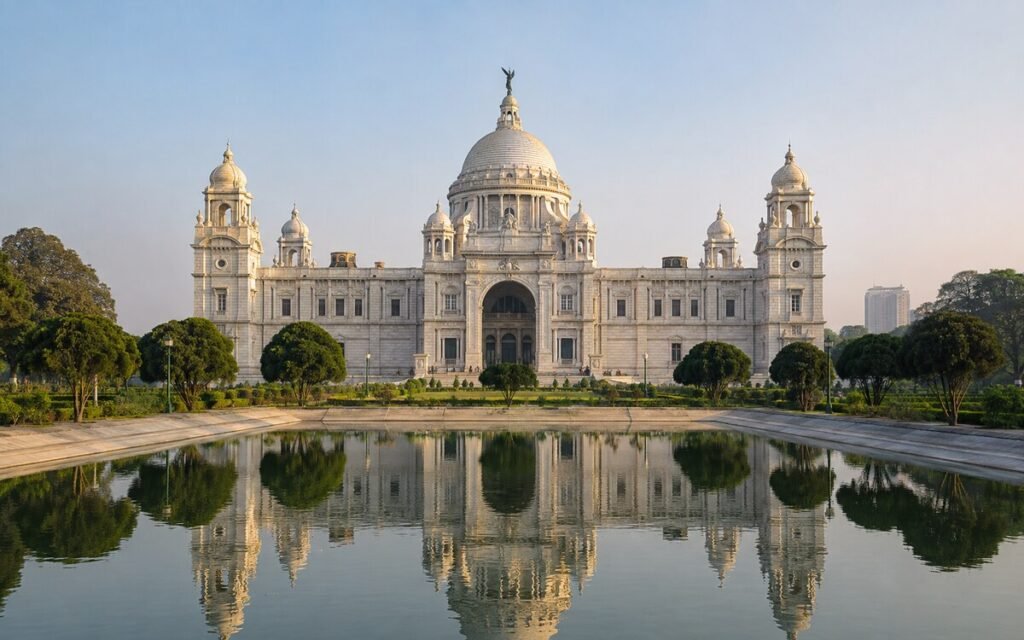
Kolkata is India’s cultural capital and one of its most characterful cities — a place of crumbling colonial-era palaces, rattling trams, riverside temples, and a fierce love of poetry, football, fish and argument. The former capital of British India wears its history everywhere, from the marble Victoria Memorial to the great span of Howrah Bridge, yet it’s the everyday life — the book stalls of College Street, the coffee-house adda, the pandals of Durga Puja, the roll shops at midnight — that makes people fall for it. Warm, chaotic and endlessly rewarding, Kolkata doesn’t so much show you around as pull you in.
Why visit Kolkata
Colonial grandeur and living history
No Indian city carries the British-era legacy quite like Kolkata. The Victoria Memorial, the Indian Museum, the mansions of BBD Bagh and the churches and cemeteries of the old European quarter make the whole centre feel like an open-air history lesson — faded, atmospheric, and very much alive.
The cultural heart of India
This is the city of Tagore and Satyajit Ray, of College Street’s books and the Coffee House’s endless debates, of theatre, cinema and adda. Culture here isn’t confined to museums — it’s in the daily rhythm of the para (neighbourhood) and comes to a head each autumn with Durga Puja.
Food, faith and the river
Few cities eat as passionately as Kolkata, from street-side kathi rolls and puchka to elaborate Bengali fish and some of India’s finest sweets. Add the sacred pull of Kalighat and Dakshineswar, the Hooghly’s ghats and ferries, and you have a city that engages every sense at once.
When to go to Kolkata
October to March is by far the best time to visit — cooler, drier days ideal for walking the old city, and the season of Durga Puja (usually September–October), when Kolkata transforms into a citywide festival of themed pandals and lights. April to June is hot and intensely humid and best avoided; the monsoon (June to September) brings heavy rain but keeps the city green and dramatic. If you can time it for Durga Puja, do — just book everything far ahead, as the city fills up completely.
Top things to do in Kolkata
Victoria MemorialDo not miss
The white-marble monument to the British Raj, set in manicured gardens, is Kolkata’s signature sight. Wander the museum galleries of colonial-era paintings and city history inside, then circle the reflecting pools outside — it’s at its best in the soft light of late afternoon and lit up after dark.
Howrah Bridge & Mullick Ghat flower marketDo not miss
The great cantilever bridge over the Hooghly is the city’s icon. Come at dawn to the riverside Mullick Ghat flower market beneath it — a riot of marigolds, porters, and bathing pilgrims — then take a short ferry across the river for the classic view of the bridge and the ghats.
Dakshineswar Kali Temple & Belur Math
On the river north of the centre, the Dakshineswar Kali Temple is one of Bengal’s most revered shrines, forever linked with the mystic Ramakrishna. A short ferry across the Hooghly reaches Belur Math, the serene riverside headquarters of the Ramakrishna Mission, whose main temple blends Hindu, Islamic and Christian design.
College Street & the Indian Coffee House
The largest second-hand book market in the world spills along College Street in a maze of stalls. Duck into the faded, high-ceilinged Indian Coffee House upstairs for a coffee and a taste of Kolkata’s legendary adda — the hours-long, put-the-world-to-rights conversation the city runs on.
Kumartuli — the idol-makers’ quarter
In a warren of North Kolkata lanes, generations of artisans sculpt the clay idols of Durga and other deities that preside over Bengal’s festivals. Visiting in the weeks before Durga Puja, when hundreds of half-finished goddesses line the alleys, is unforgettable — ask before photographing people at work.
The Indian Museum
Founded in 1814, the oldest and largest museum in India fills a grand colonial building near Park Street with everything from an Egyptian mummy and Gandhara sculpture to fossils and Bengal folk art. It’s vast and a little old-fashioned — pick a few galleries rather than trying to see it all.
Kalighat Temple & Mother Teresa’s Motherhouse
The Kalighat Kali Temple is the ancient shrine that gave the city its name and still draws a constant press of devotees. Nearby, the simple Motherhouse of the Missionaries of Charity holds Mother Teresa’s tomb and a small museum — a quiet, moving contrast to the temple’s intensity.
Ride a heritage tram
Kolkata runs Asia’s oldest operating tram network, and rattling through the city in one of the surviving wooden cars is a lovely, slow way to see street life unfold. Routes have shrunk over the years, so check which lines are running — the joyride matters more than the destination.
What to eat in Kolkata
Kathi roll
Kolkata’s gift to street food — kebab and egg rolled in a flaky paratha with onions and a squeeze of lime. Invented in the city; eat one hot from a busy Park Street or New Market stall.
Puchka
The Kolkata version of pani puri — crisp shells filled with spiced potato and a fierce, tamarind-tart water. Sharper and more sour than elsewhere in India, and fiercely defended by locals.
Kolkata biryani
A gentle, fragrant Awadhi-style biryani distinguished by a soft potato and often a boiled egg alongside the meat. Milder and subtler than Hyderabadi biryani — a whole local institution.
Fish — jhol & fry
Bengal runs on fish: everyday macher jhol (a light fish curry with rice), the beloved crumbed bhetki fish fry, and, in season, prized hilsa cooked in mustard. Best in an old-school Bengali eatery.
Mishti
The city’s sweet tooth is world-class — spongy rosogolla, delicate sandesh, and cool, caramelly mishti doi (sweet set yogurt) in a clay pot. Every neighbourhood has a beloved sweet shop.
Telebhaja & jhalmuri
Rainy-day favourites: hot telebhaja (assorted fritters) and jhalmuri, puffed rice tossed with mustard oil, spices, and crunch, mixed to order in a paper cone.
Where to stay in Kolkata
Sudder Street
The long-standing backpacker hub near New Market and the Indian Museum — cheap guesthouses, cafes, and easy access to the central sights.
Park Street & Esplanade
Central and well-connected, with comfortable hotels a walk or short metro ride from most sights, restaurants and nightlife on the doorstep.
BBD Bagh & boutique stays
A handful of restored heritage buildings and boutique hotels put you among the colonial-era architecture of the old business district.
Grand old five-stars
Kolkata’s classic luxury names — the Oberoi Grand on Chowringhee, the Taj, and ITC Royal Bengal — offer old-world grandeur and full comfort.
How to get to Kolkata & around
By air: Netaji Subhas Chandra Bose International Airport (CCU) is about 15–17 km from the centre, with wide domestic and international connections. By train: Howrah and Sealdah are two of India’s busiest railway terminals, linking Kolkata to cities across the country. By road: national highways connect the city to the rest of Bengal and beyond. Getting around: the metro — India’s oldest — is fast and cheap along the main north–south corridor; beyond it, use the famous yellow Ambassador taxis, app cabs, buses, heritage trams, and cycle-rickshaws in the northern lanes. The colonial core is best explored on foot.
Best day trips from Kolkata
Chandannagar
A former French colony on the Hooghly, with a riverside promenade, a striking church, and Franco-Bengali mansions — a relaxed half- or full-day trip.
The Sundarbans
The world’s largest mangrove forest and tiger land begins a few hours south via Godkhali. Best done as an overnight boat trip rather than a rushed day.
Bishnupur
Bengal’s terracotta temple town, famous for its 17th-century carved shrines and Baluchari silk — a long day trip, or better as an overnight.
Shantiniketan
Tagore’s university town, with Baul singers and the Sonajhuri forest market. Reachable by morning train from Howrah; an overnight lets you slow down.
A simple 2-day Kolkata plan
Colonial core & the river
Start at the Victoria Memorial and the Indian Museum, lunch around Park Street, then head to the Hooghly for the Mullick Ghat flower market and Howrah Bridge as the light softens. Finish with a Bengali dinner and mishti.
Full day
North Kolkata & the sacred
Ferry out to Dakshineswar and Belur Math in the morning, then dive into North Kolkata — Kumartuli’s idol-makers and College Street with a coffee at the Indian Coffee House. End at Kalighat and Mother Teresa’s Motherhouse.
Full day
Practical tips that actually help
See Howrah Bridge and the flower market at dawn, when the light and the bustle are at their best. Carry small cash for street food, trams and rickshaws. Dress modestly for the temples at Kalighat, Dakshineswar and Belur Math, and ask before photographing people — especially the artisans at work in Kumartuli. Use the metro to skip the worst of the traffic on the north–south run, and come hungry: Kolkata is a city you eat your way through.
Mistakes first-time visitors make
Trying to “do” Kolkata in a single day — it rewards a slower pace. Sticking only to the colonial centre and missing the atmospheric north (College Street, Kumartuli, the old lanes). Visiting during Durga Puja without booking months ahead. Underestimating the April–June heat and humidity. And skipping the everyday pleasures — a tram ride, a coffee-house adda, a roll from a busy stall — that are the real point of the city.
Kolkata FAQs
How many days do you need in Kolkata?
Two days cover the essentials — the Victoria Memorial, Howrah Bridge and the river, College Street, the temples of the north, and a proper food crawl. A third day lets you slow down for museums, markets, or a day trip to Chandannagar.
What is the best time to visit Kolkata?
October to March is the most comfortable, with cooler, drier weather — and it takes in Durga Puja, the city’s spectacular main festival. April to June is hot and very humid, and the monsoon from June to September brings heavy rain.
When is Durga Puja in Kolkata?
Durga Puja usually falls in September or October (the exact dates shift with the lunar calendar). For a few days the whole city becomes an open-air gallery of themed pandals and lights. It’s magical but extremely crowded, so book accommodation and travel far in advance.
Is Kolkata easy to get around?
Yes. Kolkata has India’s oldest metro (fast and cheap along the main north–south spine), plus iconic yellow Ambassador taxis, app cabs, buses, heritage trams, and cycle-rickshaws in the northern lanes. Much of the colonial core is walkable.
What food is Kolkata famous for?
The kathi roll (invented here), sharp-and-sour puchka, the gentle potato-and-egg Kolkata biryani, everyday fish curry and bhetki fry, and a legendary range of sweets — rosogolla, sandesh and mishti doi.
How do I reach Kolkata?
Fly into Netaji Subhas Chandra Bose International Airport (about 15–17 km from the centre), or arrive by train at Howrah or Sealdah, two of India’s busiest terminals, well connected to cities across the country.
Related guides
West Bengal Travel Guide
Darjeeling’s tea hills, the Sundarbans, Kolkata and Tagore’s countryside — the whole state, and how to plan it.
Browse all destinations
Explore more Indian states and cities, from the Himalayas to the coast.
Written by Ashvinee Nagle
I travel India slowly and write it down honestly - practical guides and real itineraries from someone who lives here.
About Ashvinee →Plan your India trip with us
Get one short, honest India travel guide a week — plus a free 7-day Rajasthan itinerary to start.
Free. Unsubscribe any time.