
Week guide · Meghalaya
A slow week in Meghalaya: Shillong, Sohra, Dawki and the living root bridges
Six days in the Khasi hills, taken at the pace the place actually rewards — one base at a time, one long walk down to a root bridge, and a river that turns to glass once the rain stops.
- Northeast India
- Post-monsoon
- 6 days
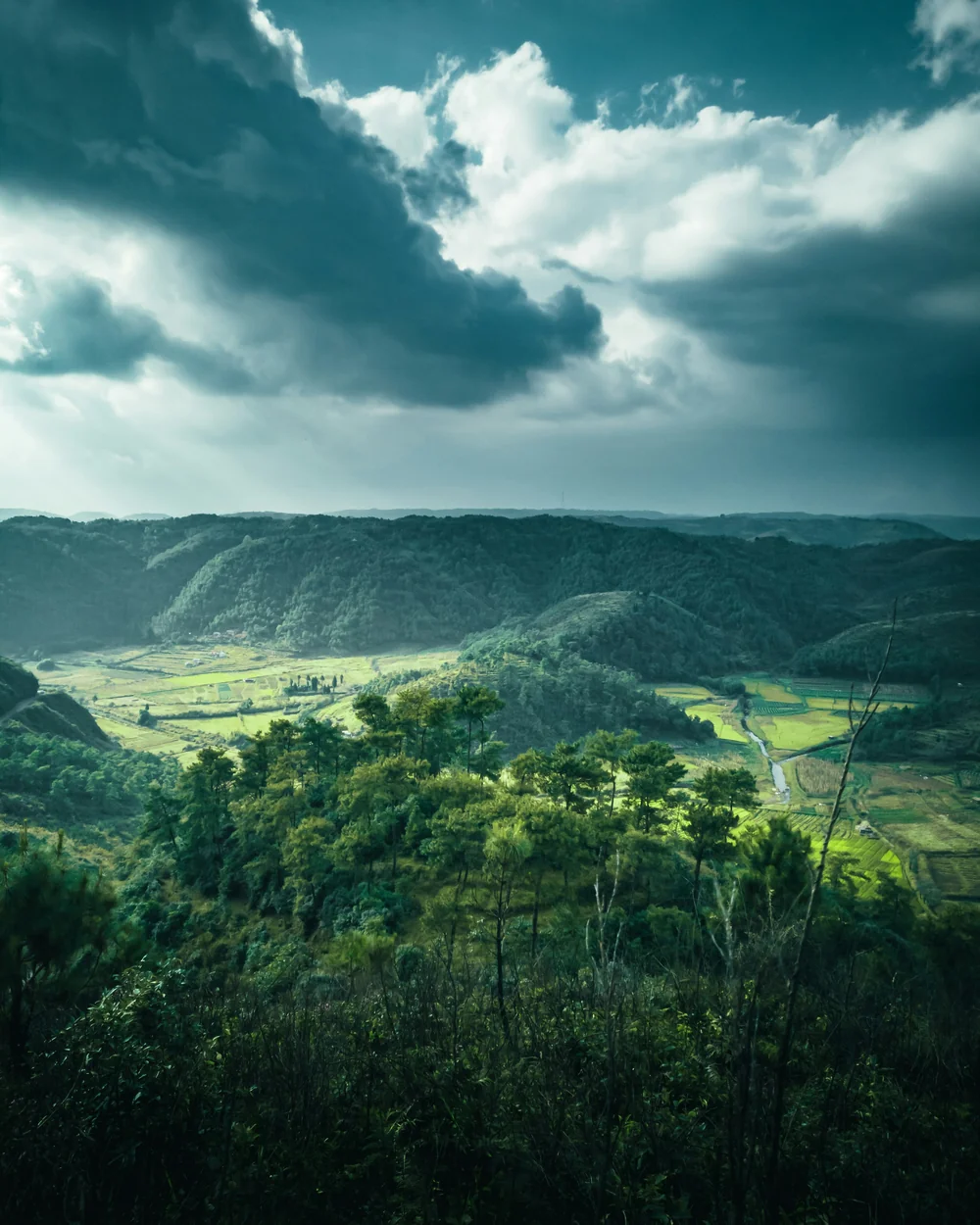
- From Guwahati100 km2.5–3.5 hr to Shillong
- Best seasonOct–AprClear air, rivers settle
- Time needed6 days4 is rushed, 8 is better
- PermitNonePhoto ID is enough
The short version
Meghalaya sits above the Assam plains, an hour’s climb from Guwahati. Six days is the honest minimum: two nights in Shillong, two in Sohra for the waterfalls and the root bridge trek, and two in the east near Dawki and Mawlynnong. Go between October and April — the monsoon here is genuinely extreme, and the Umngot river only turns clear once it stops. No permit is needed for Indian travellers, and the whole route is drivable on decent roads.
Why Meghalaya
Meghalaya is a plateau that ends in a cliff. The land climbs out of the Assam plains to around 1,500 m, runs flat and green for a while, then drops away south towards Bangladesh in a wall of rock that the monsoon hits head-on. That one piece of geography explains almost everything about the state — the waterfalls, the caves, the rainfall records, and the bridges people grew out of tree roots because conventional ones kept washing away.
It is also a place that punishes rushing. Most itineraries sold as “Meghalaya in four days” are really a lot of driving with photo stops attached. The distances look small and the roads are mostly good, but the hills make everything slower than the map suggests, and the two things genuinely worth the trip — the root bridge trek and a still morning on the Umngot — both need an unhurried half-day each.
Close
An hour above Assam
Guwahati to Shillong is about 100 km, or 115–120 km from the airport. You can land mid-morning and be in the hills for lunch.
Wet
Rain on a different scale
Sohra and nearby Mawsynram trade the record for the wettest inhabited place on earth. The landscape is a direct product of it.
Open
No permit, no fuss
Unlike Arunachal or Nagaland, Meghalaya needs no Inner Line Permit for Indian travellers. A photo ID covers you.
When to go
The season runs October to April, but it is not one season — the early and late halves give you noticeably different trips. Pick based on whether you care more about waterfalls or about the river.
What you get
Waterfalls still carrying real volume from the monsoon, clear skies, and cool dry air. The classic postcard version of the state.
What it costs
December and January get genuinely cold at altitude, and mornings in Sohra are often fogged in until nine or ten.
The river
The Umngot is clear from about October, but not yet at its glassy best. Good, not remarkable.
What you get
Peak water clarity on the Umngot, roughly late February through April — this is when boats genuinely look like they are floating on air.
What it costs
The waterfalls thin out. Nohkalikai and the Seven Sisters are a shadow of their October selves by late March.
The trek
Warmer and drier underfoot for the Nongriat descent, which makes 3,500 steps meaningfully easier.
Avoid
June to September. This is not ordinary monsoon — Sohra can take several metres of rain in a season. Waterfalls are spectacular, but viewpoints sit inside cloud for days, the Umngot runs brown, and the root bridge trail turns dangerous. Come in the shoulder of October if you want the water without the risk.
Getting there
Nearly everyone arrives through Guwahati in Assam, which has the region’s best-connected airport and railhead. Shillong has its own small airport at Umroi, but the schedule is thin and it is rarely the better option.
- FlyGuwahati (GAU), then roadBest option by far. Airport to Shillong is roughly 115–120 km, about 3 hours.
- FlyShillong Umroi (SHL)About 30 km from the city, but few flights — mostly Kolkata. Check before planning around it.
- RailGuwahati Jn., then roadThere is no railway into Meghalaya. Everything from Guwahati is by road.
- RoadGuwahati → Shillong (NH-6)~100 km from the city, 2.5–3.5 hr. A good four-lane climb for most of it.
- LocalHired car with driverThe practical choice. Shared sumos run the main routes but tie you to their timings.
- PermitNone for Indian citizensCarry a government photo ID. Foreign nationals must register on arrival.
Base yourself rather than day-tripping. Shillong to Sohra is only about 55 km, but it is an hour and a half each way, and doing Dawki as a day trip from Shillong — which many packages sell — means five hours in a car to spend one hour on the river, arriving exactly when the light is worst.
Shillong: use it, don’t linger
Shillong is a hill capital with a genuine music culture and some of the best food in the Northeast, but it is also congested in a way the rest of the state is not. Two nights is right: one to arrive and eat, one to see a little before moving on.
- 01
Ward’s Lake and the Bara Bazar
The lake is pleasant and ten minutes is enough. The market next to it is the reason to walk — a working Khasi bazaar with produce, dried fish and textiles, and none of it arranged for visitors.
- Central
- 1–2 hr
- Mornings
- 02
Laitlum Canyons
Thirty-odd kilometres out and much better than Shillong Peak, which is often hazy and has a military checkpost. Laitlum drops away into the Ri Bhoi valley and is usually near-empty on a weekday.
- ~25 km
- Half day
- Clear mornings
- 03
Eat properly here
Jadoh — rice cooked with pork and black sesame — is the dish to seek out, along with dohneiiong. The small Khasi eateries do it far better than the hotels, and it is the last reliable food stop before Sohra.
- Khasi food
- Lunch
- Cash helps
Sohra and the falls
Sohra is the local and official name for what maps still call Cherrapunji. It is about 55 km south of Shillong, and the drive is the first point in the trip where the plateau edge becomes obvious — the road runs along a rim with the plains of Bangladesh hazy and flat far below.
- 04
Nohkalikai Falls
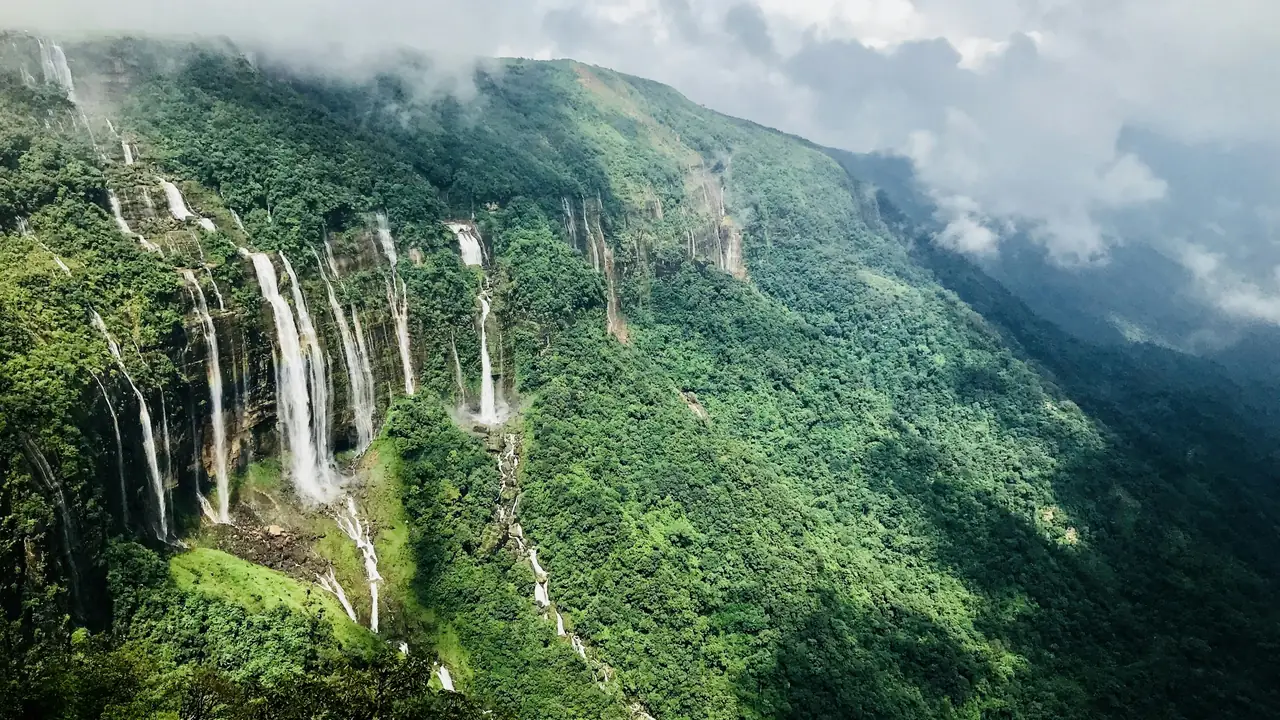
India’s tallest plunge waterfall, dropping in a single column into a pool that turns an improbable green. Volume is at its best October to December; by March it can be a thread. Go early — the viewpoint clouds over most afternoons.
- Near Sohra
- 45 min
- Best Oct–Dec
- 05
Seven Sisters and Mawsmai Cave
The Seven Sisters falls spill off the escarpment in a row and are, honestly, a monsoon spectacle — in winter expect a fraction of it. The limestone cave next door is short, lit and genuinely good, though tight in a couple of places.
- Near Sohra
- 1–2 hr
- Small entry fee
- 06
The rim viewpoints
Arwah cave, Thangkharang park and the various named viewpoints along the rim road are pleasant but interchangeable. If time is short, skip most of them and keep the morning for the root bridge instead.
- Rim road
- Optional
- Skippable
The root bridge trek: the one thing to get right
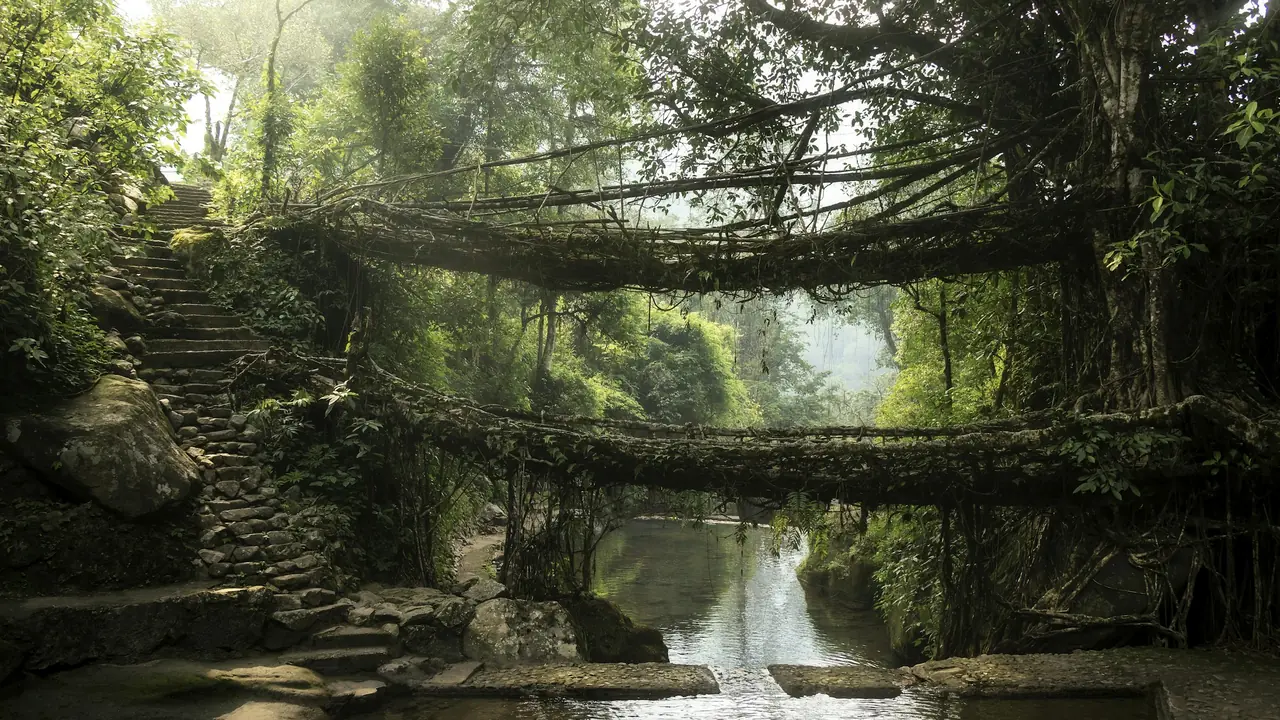
The living root bridges are made by training the aerial roots of rubber fig trees across a stream over decades until they knit into a structure strong enough to walk on. They are not a reconstruction or a tourist installation — they are working village infrastructure, and some are well over a century old.
The famous one is the double-decker at Nongriat, two bridges stacked one above the other. Getting there means a descent from Tyrna village of roughly 3,500 stone steps each way, crossing three steel suspension bridges on the way down. Allow four to six hours round trip. It is not technical, but it is relentless, and the climb back out in the afternoon heat is what people underestimate.
Be honest with yourself
If stairs are a problem for your knees, this trek is not a “push through it” situation — the descent is the hard part and there is no shortcut back. The single-decker bridge at Riwai, near Mawlynnong, is a five-minute walk from the road and gives you the same idea for none of the effort.
- Start early. Leave Tyrna by 7am. You want the climb out finished before the middle of the day.
- Stay the night if you can. Nongriat has basic guesthouses. Sleeping down there turns a punishing day trip into a genuinely memorable overnight, and you get the bridge to yourself at dawn.
- Carry water and cash. There are small shops on the trail selling water and lemon soda, but no card payments and no ATM.
- Shoes with grip. The steps are wet and mossy in patches year-round. This is the single most common mistake.
Dawki and Mawlynnong
The southeast corner is a different landscape again — lower, warmer, and pressed right up against the Bangladesh border. Two nights here, or one long one, rounds out the week.
- 07
The Umngot at Dawki
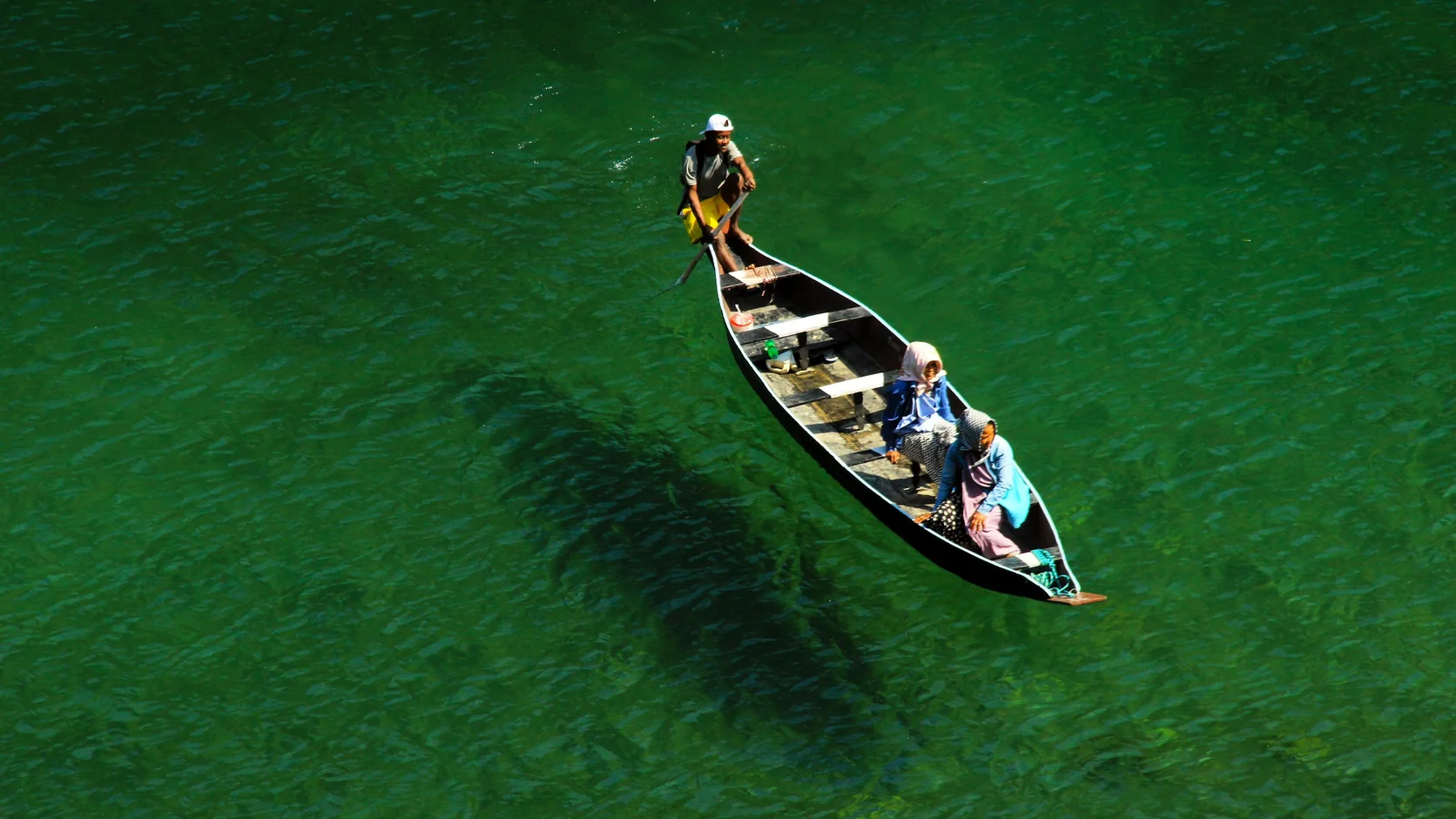
The river everyone comes for. In the clear months the water is transparent enough that boats appear to hang in mid-air over the stones. The effect is real, but it needs the right conditions: flat light, still water and an early start before the boats churn it up.
- ~80 km from Sohra
- Dawn
- Peak Feb–Apr
- 08
Mawlynnong
Billed as the cleanest village in Asia, which has made it busier and more self-conscious than it once was. It is still a pleasant hour — bamboo walkways, tidy lanes, a viewing platform over the plains — but treat it as a stop, not a destination.
- Near Dawki
- 1 hr
- Small entry fee
- 09
The Riwai root bridge
A few minutes from Mawlynnong, and the easiest living root bridge to reach in the state. Short, crowded at midday, and the sensible option for anyone skipping the Nongriat descent.
- Near Mawlynnong
- 30 min
- Easy access
The rule
Two bases beat four. The driving is what ruins a Meghalaya week, not the distance.
— Travel India
Where to stay
Accommodation splits cleanly by base. Booking ahead matters more than usual between November and February, and in Nongriat it matters absolutely — there are only a handful of beds.
Shillong
Anything central
Plenty of mid-range hotels and a growing set of homestays. Staying near Police Bazar saves you from the traffic.
Sohra
Resorts on the rim
A handful of places sit right on the escarpment with valley-facing rooms. Worth paying up for the view here; there is little else to do after dark.
Nongriat
Basic guesthouses
Shared bathrooms, limited electricity, and the best night of the trip. Book directly and expect to confirm by phone.
Around Dawki and Mawlynnong the options are simpler — village homestays and a few riverside camps. Riverside tents at Shnongpdeng, upstream of Dawki, are the pick if you want to wake up on the water.
A six-day plan
Built around two real bases and one overnight on the trail. If you only have four days, cut the Nongriat overnight and do Riwai instead — do not cut a base.
- Day 1Guwahati → ShillongLand, drive up, eat jadoh, sleep. Nothing else scheduled.
- Day 2Laitlum, then the bazarEarly at the canyons while it is clear; afternoon in town.
- Day 3Shillong → SohraNohkalikai early, cave and rim road after. Two nights here.
- Day 4Tyrna → NongriatDown at 7am, night at the bridge. The best day of the week.
- Day 5Climb out → DawkiOut by midday, drive east. Sleep at Shnongpdeng or Mawlynnong.
- Day 6Umngot at dawn → GuwahatiOn the water early, Riwai and Mawlynnong after, then the long drive back.
Day 6 is long
Dawki to Guwahati airport is roughly 170 km and takes five hours or more. If your flight is before mid-afternoon, sleep in Shillong the night before instead of pushing it in one go.
Practical tips that actually help
- Carry cash. UPI works in Shillong and patchily elsewhere. Below Tyrna and around the smaller villages it is cash only, and the nearest ATM can be an hour away.
- Sunday is quiet. Meghalaya is largely Christian and Sunday closures are real — shops, many eateries, and some transport. Plan a travel day or a trek day around it.
- Ask before photographing people. This holds anywhere, but village tourism here has grown fast and the courtesy is noticed.
- Book Nongriat beds ahead. A handful of rooms serve the whole trail. Turning up and hoping is how people end up climbing 3,500 steps twice in one day.
- Signal is patchy. Download offline maps before leaving Shillong. Jio and Airtel hold up on the main roads and disappear in the gorges.
- Layers, not a jacket. Sohra can be 10°C and fogged at 8am and pleasant by noon. Dawki, 1,000 m lower, is warm all day.
FAQs about Meghalaya
Do I need a permit to visit Meghalaya?
No. Unlike Arunachal Pradesh, Nagaland or Mizoram, Meghalaya does not require an Inner Line Permit for Indian citizens — a government photo ID is enough. Foreign nationals do not need an ILP either but are required to register on arrival, and hotels will usually handle that.
How many days do I need?
Six is the honest number for Shillong, Sohra, the root bridge trek and Dawki without rushing. Four works only if you drop the Nongriat overnight. Eight lets you add Mawsynram, the Garo hills or a second day on the river.
Is the Nongriat trek hard?
It is not technical, but it is around 3,500 steps down and the same back up, four to six hours in total. Reasonable fitness is enough; problem knees are the real disqualifier. Staying overnight at Nongriat splits it into two manageable halves.
When is the Umngot river actually clear?
Clear from roughly October, at its most transparent from late February through April. During and just after the monsoon it runs brown. Go at first light in any month — boat traffic stirs the bed by mid-morning.
Can I do Dawki as a day trip from Shillong?
You can, and many tours sell it, but it is a poor trade — roughly five hours of driving to arrive in the worst light of the day. Sleep at Shnongpdeng or Mawlynnong and see the river at dawn instead.
Is Meghalaya good for solo travellers?
Broadly yes. Shared sumos connect the main towns, homestays are used to independent travellers, and the trekking routes see steady traffic. Standard precautions apply: book ahead in season, avoid driving hill roads after dark, and tell someone before descending to Nongriat.
Plan with us
Planning a Northeast trip?
I help travellers plan slow, well-paced India trips that get the seasons, distances and logistics right — including Meghalaya, Assam and the wider Northeast. Free 48-hour reply.
Plan my India trip →
Written by Ashvinee Nagle
I travel India slowly and write it down honestly - practical guides and real itineraries from someone who lives here.
About Ashvinee →Plan your India trip with us
Get one short, honest India travel guide a week — plus a free 7-day Rajasthan itinerary to start.
Free. Unsubscribe any time.