
Raghurajpur and Pipili: Where Odisha’s Crafts Are Still Made by Hand
A practical guide to Odisha’s craft villages — the pattachitra painters and palm-leaf engravers of Raghurajpur, the bright appliqué of Pipili, and how to visit both from Puri without getting the hard sell.
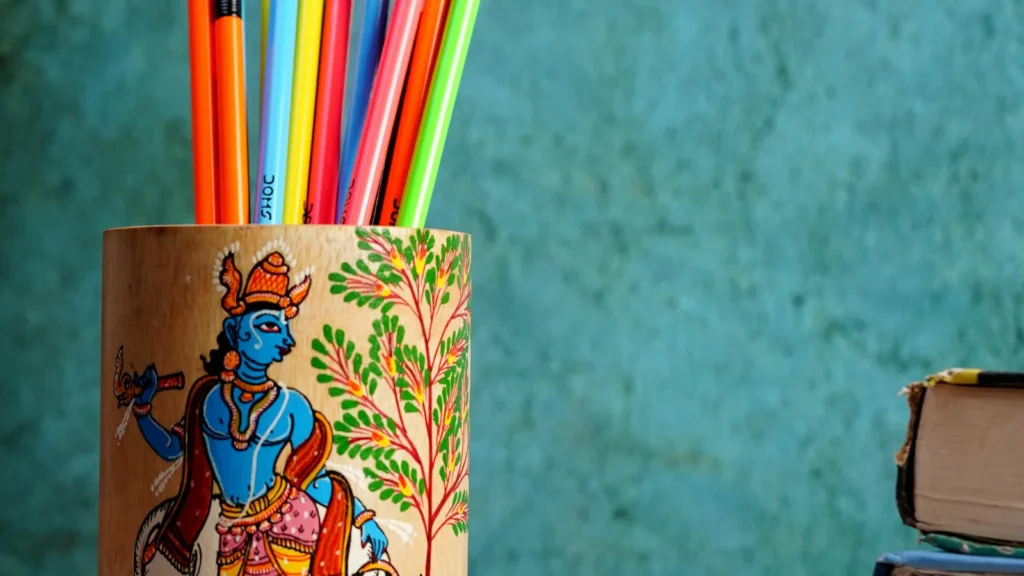
Raghurajpur is a village where art is the main occupation, not a sideline. Set among coconut and palm groves about 14 km from Puri, its two long rows of houses are decorated on the outside and full of artists on the inside — almost every household paints pattachitra, the intricate cloth-based scroll painting Odisha is known for, and works palm-leaf engraving, papier-mâché masks and stone. It is also a cradle of the Gotipua dance tradition that fed into Odissi. Half an hour up the road toward Bhubaneswar, Pipili sells its own craft — the bright appliqué canopies and lampshades that hang across its main street. Together they are the easiest, most rewarding craft outing in Odisha.
Raghurajpur, about 14 km from Puri, is a heritage crafts village where nearly every household paints pattachitra and works palm-leaf engraving, masks and Gotipua dance. Pipili, on the Bhubaneswar–Puri road, is the home of Odisha’s colourful appliqué work. Half a day covers both, easily as a stop on a Konark day trip from Puri. Buy directly from the artists, carry cash, and it becomes one of the best value experiences on a wider Odisha trip.
Why visit Raghurajpur
Three reasons to make time for the craft villages — and one honest note.
A whole village of artists
Raghurajpur is not a showroom; it is a working village where painting has been the family trade for generations. You watch pattachitra being made on the veranda where the artist lives, in natural pigment on treated cloth, and buy it from the person who painted it.
Crafts you can only get here
Pattachitra, palm-leaf (tala pattachitra) engraving, Ganjapa playing cards, papier-mâché masks and Pipili’s appliqué are Odishan specialities. Bought at the source, they are cheaper, better and come with the story of who made them.
A living dance tradition
Raghurajpur is a recognised home of Gotipua, the boy-dancer tradition that shaped classical Odissi, and the birthplace of the great Odissi guru Kelucharan Mohapatra. In season you may catch young dancers training in the village.
When to go
The villages are open and outdoors, so timing is about comfort and, for buying, about the makers being at home and working.
October to February (the season): pleasant weather for wandering the two rows of Raghurajpur and Pipili’s main street, and the busiest time for artists working ahead of the tourist and festival season. The best window.
March to May (hot): workable but warm; go in the morning. The July–September monsoon is humid and quiet, though the greenery around Raghurajpur is at its best.
Time it with Konark: because Raghurajpur sits just off the Puri–Konark road, the natural plan is to fold it into a Konark morning rather than making a separate trip.
Things to do in Raghurajpur
Both villages are small and walkable. The pleasure is in going slowly, watching the work and talking to the makers.
Pattachitra in Raghurajpur
Walk the two decorated streets and step into the artists’ verandas to watch pattachitra being painted — mythological scenes and Jagannath imagery in fine natural pigment on cloth stiffened with tamarind paste. Prices scale with detail and size; buy from the maker.
Palm-leaf & other crafts
Beyond painting, the village works tala pattachitra (images engraved on stitched palm leaves and inked), papier-mâché masks, painted Ganjapa cards and stone and cow-dung toys. Ask to see the palm-leaf work — it is astonishing up close.
Gotipua heritage
Raghurajpur is a home of the Gotipua boy-dance tradition and the birthplace of Kelucharan Mohapatra. There is a small heritage presence in the village, and in season you may see young dancers rehearsing — ask locally.
Pipili appliqué
On the Bhubaneswar–Puri highway, Pipili’s main street is hung with the bright appliqué (chandua) canopies, umbrellas, lampshades and wall hangings the town is famous for. A quick, colourful stop and easy to fit in either direction.
Combine with Konark
Raghurajpur is a few kilometres off the Puri–Konark Marine Drive, so the standard plan is to see the Sun Temple in the morning and stop at the village on the way back — one half-day, two very different highlights.
Meet the master artists
Several Raghurajpur painters hold national craft honours and their homes are marked. Seeking them out — and paying a fair price for their best work — is the most direct way your visit supports the village.
What to eat
The villages have little in the way of restaurants; most visitors eat in Puri around the trip.
Eat in Puri
Puri’s seafood shacks and hotel restaurants are the real choice. Most people fold the villages into a half-day and eat a proper meal back in town.
Pipili & highway eateries
Simple dhabas and sweet shops along the Bhubaneswar–Puri road do thalis, snacks and Odia sweets — fine for a quick bite while craft shopping in Pipili.
Odia sweets
The road is dotted with sweet shops selling chhena poda, rasagola and khaja. A good place to pick up a box while you’re passing.
Water
There is little shade and few facilities in Raghurajpur itself. Carry water, especially outside the winter months, and small denominations of cash for purchases.
Where to stay
Almost nobody stays in the craft villages — Puri is the base, with the villages an easy half day out.
Puri
The natural base — widest choice of hotels on the coast and a short drive to Raghurajpur, usually combined with Konark. How everyone does it.
Village homestay
A small number of artist families offer simple homestays for travellers who want to spend longer learning the craft. Arrange ahead; facilities are basic but the access is unmatched.
Getting there and around
From Puri: Raghurajpur is about 14 km, 30–40 minutes by road, signposted off the Puri–Bhubaneswar highway near Chandanpur. Easiest by hired car or auto, and naturally combined with a Konark day trip.
Pipili: sits on the Bhubaneswar–Puri highway (NH-316), about 20 km from Puri and 40 km from Bhubaneswar — a convenient stop when driving between the two.
Getting around: both villages are walked on foot once you arrive. There is no useful public transport to Raghurajpur itself, so a car and driver for the half day is by far the simplest approach.
Fold the craft villages into a Konark day trip from Puri: Sun Temple in the morning, Raghurajpur on the way back, and Pipili if you are continuing toward Bhubaneswar. One efficient half-day of very different highlights.
A simple half-day plan
Half a day covers both villages; combine with Konark for a full, varied day out.
Konark, then the craft villages
See the Konark Sun Temple in the good morning light, then drive back toward Puri and turn off for Raghurajpur — an hour or two watching the pattachitra painters and buying from the makers. If you’re continuing to Bhubaneswar, stop at Pipili for its appliqué. Back in Puri for a late lunch.
Practical tips that actually help
Buy directly and carry cash
Purchasing from the artist in Raghurajpur puts the money where it belongs and gets you the best work. Many verandas don’t take cards, so carry small-denomination cash.
Watch before you buy
Spend a few minutes watching the painting or palm-leaf engraving. Understanding the work makes the price make sense and helps you spot the genuinely fine pieces.
Go in the morning
The light is kinder, the artists are working and the villages are quieter. Afternoons can be hot and, in peak season, busier with tour groups.
Combine with Konark or Pipili
Raghurajpur alone is a short stop. Pairing it with the Sun Temple, or with Pipili on the Bhubaneswar road, turns it into a satisfying half-day.
Ask about the natural pigments
Real pattachitra uses natural colours and a cloth-and-tamarind base. Asking about the materials is both interesting and a gentle way to gauge the quality of what you’re buying.
Plan how you’ll carry it home
Scrolls travel rolled and palm-leaf pieces are delicate. Ask the artist to pack the work properly for transport, especially if you’re flying.
Mistakes first-time visitors make
- Bargaining hard with the artists. This is fine craftwork, not a tourist trinket. Pay a fair price for good work — it’s how the village survives.
- Making a separate trip for it. Raghurajpur is a short stop best folded into a Konark day. Going all the way just for the village underuses the day.
- Forgetting cash. Most of the artists’ verandas are cash-only. Arrive with small denominations or you’ll miss out on buying.
- Rushing through. The pleasure is in watching the work and talking to the makers. Give it an hour or two, not a ten-minute walk-through.
Adding the craft villages to your Odisha trip?
Raghurajpur and Pipili slot neatly into a Konark day from Puri. Tell me your dates and I’ll build them into a route that also covers the temples and the coast.
Raghurajpur FAQs
What is Raghurajpur famous for?
Raghurajpur, about 14 km from Puri, is a heritage crafts village where almost every household makes pattachitra scroll paintings, along with palm-leaf engraving, papier-mâché masks and painted cards. It is also a recognised home of the Gotipua dance tradition and the birthplace of the Odissi guru Kelucharan Mohapatra.
What is pattachitra?
Pattachitra is Odisha’s traditional cloth-based scroll painting — detailed mythological and Jagannath scenes done in natural pigment on cloth stiffened with tamarind paste. In Raghurajpur you can watch it being painted and buy it directly from the artist.
How far is Raghurajpur from Puri?
About 14 km, or 30 to 40 minutes by road, signposted off the Puri–Bhubaneswar highway. It is most easily visited as a stop on a Konark day trip from Puri.
What is Pipili known for?
Pipili, on the Bhubaneswar–Puri highway, is famous for its bright appliqué work (chandua) — canopies, umbrellas, lampshades and wall hangings that hang across its main street. It’s an easy stop when driving between Bhubaneswar and Puri.
How long do you need in Raghurajpur?
An hour or two is enough to walk the village, watch the artists and buy some work; half a day if you also stop at Pipili. It combines naturally with a Konark morning from Puri.
Is it better to buy crafts in the village?
Yes. Buying pattachitra and palm-leaf work directly from the artists in Raghurajpur gets you better pieces at fairer prices, and the money supports the makers. Carry cash, as many verandas don’t take cards.
Related guides
Keep planning your Odisha trip with these:
Odisha Travel Guide
The temple triangle, the crafts, the lagoon and the wild coast — how to put an Odisha trip together.
Konark
The 13th-century Sun Temple, a few kilometres up the Marine Drive — the natural pairing for a Raghurajpur half-day.

Written by Ashvinee Nagle
I travel India slowly and write it down honestly - practical guides and real itineraries from someone who lives here.
About Ashvinee →Plan your India trip with us
Get one short, honest India travel guide a week — plus a free 7-day Rajasthan itinerary to start.
Free. Unsubscribe any time.