
Travel to Tirthan Valley: A First-Timer’s Guide to Himachal’s Quiet Escape
A practical, no-fluff guide to Tirthan Valley for first-time visitors — when to go, Great Himalayan National Park, trout fishing, Jalori Pass and Serolsar Lake, Jibhi, where to stay, what to eat, how to get there, and an easy 3-day plan.
Tirthan Valley is the Himachal that the crowds haven’t reached. Tucked off the Kullu highway around the buffer of the Great Himalayan National Park, it’s a valley of clear trout streams, wooden villages and riverside homestays where the loudest sound is the water. There are no big hotels or honking jeeps here — just forest walks, a famous mountain pass, and the kind of slow, unplugged days that are getting harder to find.
Tirthan Valley is a quiet, uncrowded corner of Himachal beside the UNESCO-listed Great Himalayan National Park. Come for three slow days of riverside homestays, trout fishing, a national-park eco-trek, and the drive up to Jalori Pass for Serolsar Lake and the Chehni Kothi tower — with pretty Jibhi next door. Go March to June or September to November, and pair it with the wider Himachal mountains.
Why visit Tirthan Valley
Three reasons Tirthan is the antidote to Himachal’s busier hill stations — and why slow travellers fall hard for it.
A UNESCO wilderness
The Great Himalayan National Park, a UNESCO World Heritage Site, begins right at the head of the valley — a vast, roadless expanse of forest, meadow and peak, home to rare wildlife and some of the best eco-trekking in the western Himalayas.
Trout streams & homestays
The Tirthan river runs clear and cold past riverside homestays where you can fish for trout, eat what the kitchen cooks, and fall asleep to the sound of the water. This is slow, rooted, home-style travel.
Quiet by design
With no big resorts and limited rooms, Tirthan stays peaceful even in season. Add the drive up to Jalori Pass, Serolsar Lake and the ancient Chehni Kothi tower, and you have variety without the crowds.
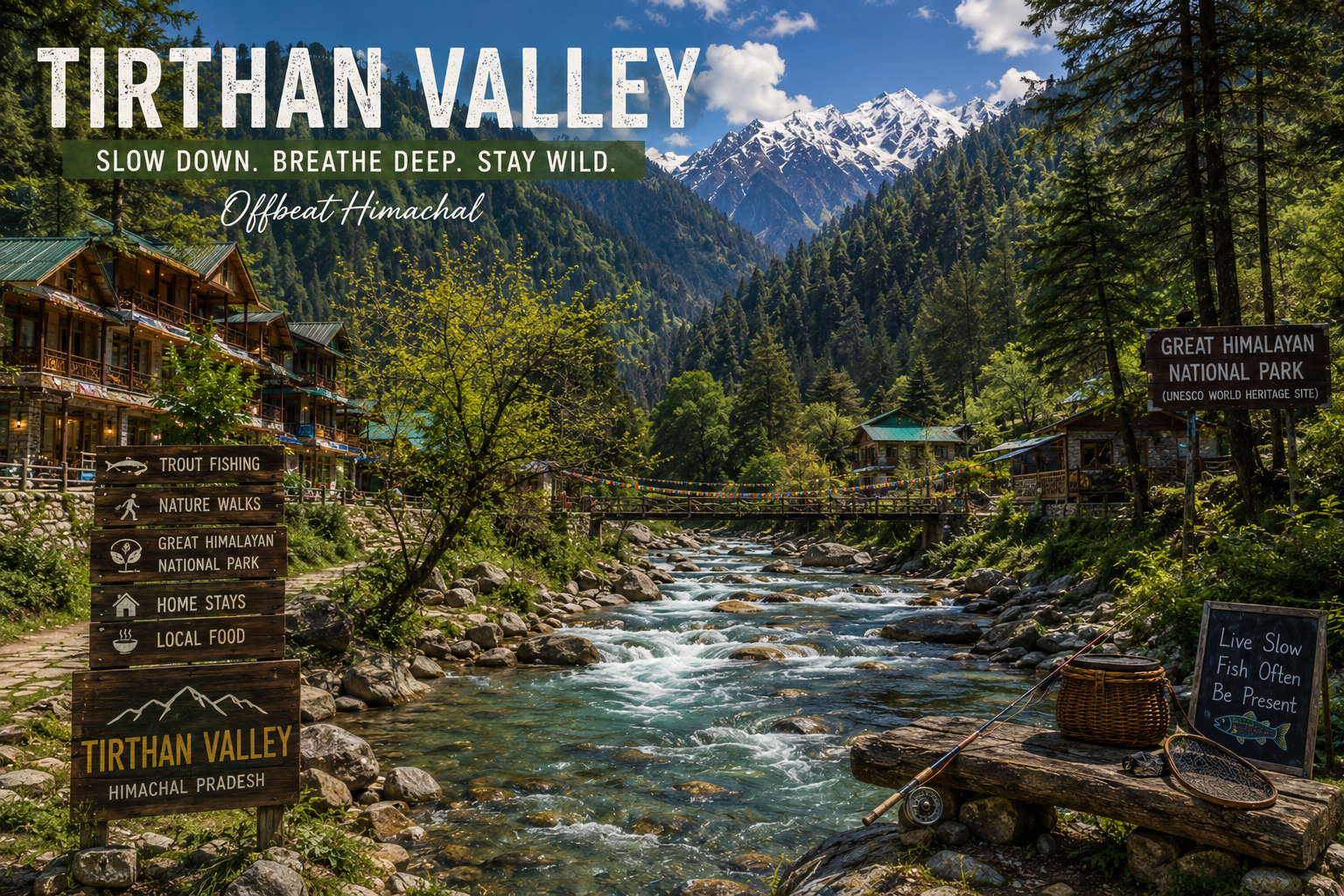
The Tirthan river and forest near the Great Himalayan National Park.
When to go
March to June (best): warm, green valley days, full trout streams and clear trails into the national park, with Jalori Pass open and the meadows coming alive. The most reliable all-round season.
September to November: the quiet, golden window — crisp post-monsoon air, autumn colour in the forest and the fewest visitors. Beautiful for walking, with cold nights setting in by late autumn.
December to February (cold): hushed, frosty and sometimes snowy, with riverside homestays at their cosiest. Jalori Pass and the higher trails often close under snow, so plan around the lower valley.
Trekking into the Great Himalayan National Park requires a permit and, for deeper routes, a registered guide — arrange both through your homestay. The Jalori Pass road closes under winter snow, and the monsoon (July–August) can bring landslides on the approach.
Top things to do in Tirthan Valley
From the national park to the high pass, here’s what fills three unhurried days in the valley.
Great Himalayan National Park
Day-trek into the buffer zone of this UNESCO wilderness — routes like the walk to Rolla follow the river through deep forest. Arrange a permit and guide through your homestay for the full experience.
Trout fishing
The Tirthan is one of India’s best trout streams. Homestays can sort a permit and gear, and there’s no better way to spend a slow morning than casting into the cold, clear water.
Jalori Pass & Serolsar Lake
Drive up to the 3,120 m Jalori Pass, then walk through mossy forest to the serene Serolsar Lake and its little temple. One of the loveliest, easiest high walks in Himachal.
Chehni Kothi
A short, steep walk leads to this remarkable centuries-old stone-and-timber tower, one of the tallest traditional structures in the western Himalayas. A glimpse of old Himachali architecture and village life.
Jibhi & its waterfall
The neighbouring hamlet of Jibhi, with its wooden cottages, little waterfall and the photogenic “Mini Thailand” river pools, makes an easy, scenic half-day from Tirthan.
Riverside days
Sometimes the best thing to do is nothing — read by the Tirthan, walk the village paths, and let the valley set the pace. This is what people really come for.
What to eat in Tirthan Valley
Food in Tirthan is home-cooked and hyper-local — fresh trout, hearty Himachali staples, and whatever your homestay’s kitchen sends out that evening.
Fresh trout
The valley’s signature dish — trout pulled from the Tirthan and pan-fried simply with local herbs. As fresh as it gets, and the thing to order.
Siddu & dham
Steamed stuffed siddu with ghee, and the festive dham thali of rice, rajmah and madra — the real food of the Himachali hills, cooked the traditional way.
Home-cooked thali
Simple, generous plates of dal, rice, seasonal vegetables and rotis, often with produce from the host’s own garden. Wholesome and unhurried.
Babru & apple
Try babru, a stuffed Himachali fried bread, and the valley’s apples, plums and walnuts in season — fresh from the surrounding orchards.
There are few standalone restaurants in the valley — most meals are at your homestay, so it’s worth letting them know your timings and any preferences in advance.
Where to stay
This is homestay country — stay riverside in Gushaini, in pretty Jibhi, or in a quiet village guesthouse around Banjar.
Riverside homestay
Simple, characterful homestays right on the Tirthan, with home-cooked meals, fishing on the doorstep and the river for a soundtrack. The classic Tirthan stay.
Jibhi cottages
Wooden cottages and small guesthouses in the neighbouring hamlet — photogenic, slightly livelier, and handy for Jalori Pass and Serolsar.
Banjar / village guesthouse
Family-run guesthouses in the villages around Banjar offer a calm, rooted base a little away from the river, often with the warmest hosts.
How to get to Tirthan Valley & around
Tirthan sits just off the main Kullu highway — closer and easier to reach than its remote feel suggests.
Get off the Kullu–Manali bus at the Aut tunnel, not Kullu town — the turn-off into the Tirthan and Banjar valley is right there, saving you a long backtrack.
A simple 3-day plan
Three slow days that balance riverside time, the national park and the high pass.
Settle by the river
Arrive, check into a riverside homestay in Gushaini, and ease into the pace — a walk along the Tirthan, a go at trout fishing, and a home-cooked dinner by the water.
Into the national park
Take a guided day trek into the Great Himalayan National Park buffer zone — a route like the riverside walk to Rolla — through deep forest, with a real chance of birds and wildlife.
Jalori Pass & Jibhi
Drive up to Jalori Pass and walk to Serolsar Lake, stop at the Chehni Kothi tower, and end in pretty Jibhi — or continue on to Manali.
Practical tips that actually help
Sort park permits early
Arrange your national-park permit and guide through your homestay a day ahead — it’s quick but needs doing.
Check Jalori in winter
The pass closes under snow, roughly December to March. Confirm it’s open before planning that day.
Carry cash
Homestays and the valley run largely on cash; ATMs are back down near Banjar and Aut.
Book stays ahead
Rooms are limited and good homestays fill up in season — reserve before you arrive, especially on weekends.
Mind the monsoon
July–August can bring landslides on the approach. Check conditions before travelling or trekking.
Don’t over-plan
Tirthan is a place to slow down. Leave plenty of unscheduled time by the river.
Mistakes first-time visitors make
- Rushing through on the way to Manali. Tirthan rewards at least two nights — a flying visit misses the whole point.
- Skipping the national-park trek. The GHNP is the valley’s crown jewel — arrange a permit and guide and go in.
- Planning Jalori in deep winter. The pass is often snow-closed; check before you build a day around it.
- Over-scheduling. This is a slow valley — leave space to do nothing by the river.
Planning Himachal beyond Tirthan?
Tirthan pairs beautifully with Manali and the Kullu Valley, or a quieter run through Jibhi and Banjar. Tell me your dates and pace, and I’ll map a Himachal route that links them up.
Plan my Himachal trip →Tirthan Valley FAQs
How many days do you need in Tirthan Valley?
Three days is ideal — one to settle in by the river and fish, one for a guided trek into the Great Himalayan National Park, and one for Jalori Pass, Serolsar Lake and Jibhi. Two nights is the realistic minimum to do the valley justice.
What is the best time to visit Tirthan Valley?
March to June for warm, green days and open trails, and September to November for clear post-monsoon air and golden forest with few visitors. Winter is cold and atmospheric but often closes Jalori Pass under snow, while July to August can bring monsoon landslides.
Do you need a permit for Great Himalayan National Park?
Yes. Entering the national park requires a permit, and deeper treks need a registered guide, both of which your homestay can usually arrange. Day walks into the buffer zone are straightforward to organise; longer multi-day treks need more planning and a licensed guide.
Is Tirthan Valley good for families?
Yes — its gentle pace, riverside homestays, easy walks and trout fishing make it relaxing for families looking for a quiet nature break. The lighter activities suit children well, while the national-park treks and Serolsar walk reward older kids and adults.
How do you reach Tirthan Valley from Delhi?
Take an overnight bus from Delhi toward Manali and get off at the Aut tunnel (about 12 hours), then continue by local taxi or bus to Banjar and Gushaini. The nearest airport is Bhuntar (Kullu), around 50 km away with limited flights, and Chandigarh is the larger hub further out.
Related guides
Keep planning your Himachal trip with these:
Himachal Pradesh Travel Guide
Hill stations, Tibetan towns, Spiti and quiet valleys — how to string Himachal together.
Travel to Dharamshala
The Dalai Lama’s town, the Triund trek and Tibetan calm — another quieter side of Himachal.
Ashvinee Nagle
I’m Ashvinee — I help first-time travellers plan India trips that actually work. I’ve spent years exploring the country’s regions, from Rajasthan’s forts to the Himalayan valleys of Himachal, and I write the guides I wish I’d had on my own first trips.
Written by Ashvinee Nagle
I travel India slowly and write it down honestly - practical guides and real itineraries from someone who lives here.
About Ashvinee →Plan your India trip with us
Get one short, honest India travel guide a week — plus a free 7-day Rajasthan itinerary to start.
Free. Unsubscribe any time.