
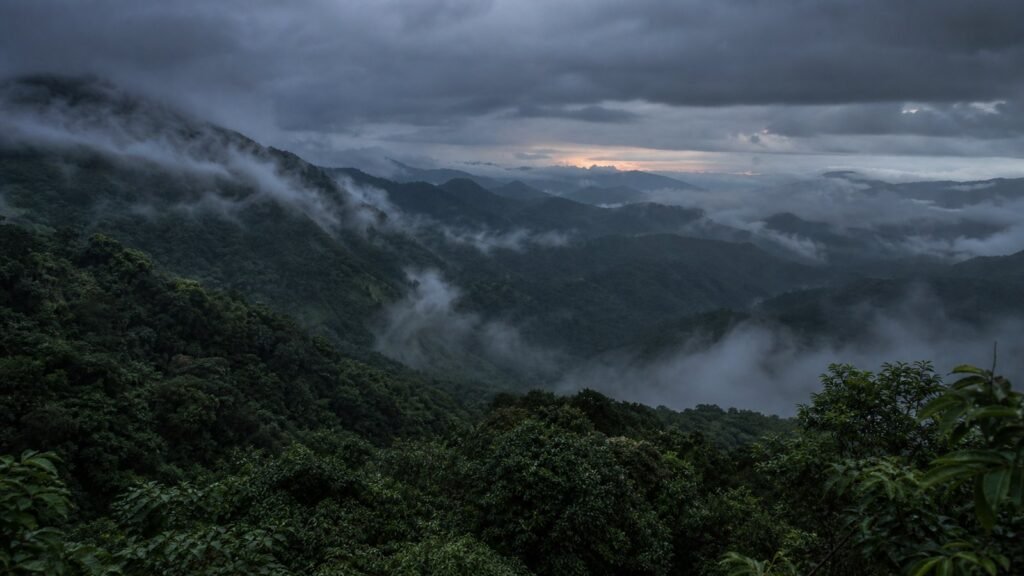
The hill station that wakes up at night
Amboli is Maharashtra’s rainiest hill station — and one of the great wildlife secrets of the Western Ghats. A slow monsoon weekend where the waterfalls roar by day and the forest floor comes alive after dark.
Most Sahyadri hill stations give you one thing to fall for. Amboli gives you two — and the second only shows itself after dark.
By day this is classic monsoon country: the last hill station before the land tumbles down to the Konkan coast, drenched in some of the heaviest rain anywhere in Maharashtra, its ghat roads streaming with waterfalls and its viewpoints lost in cloud. But Amboli is also one of the most biodiverse pockets in the entire Western Ghats, and on a guided night walk in the rains its forest floor becomes a living gallery of frogs, snakes and creatures found nowhere else on earth. Come for the waterfalls; stay for the things that only appear when the sun goes down.
Amboli is a small, extremely rainy hill station in Sindhudurg, best in the monsoon (June–September) for its waterfalls, misty viewpoints and remarkable biodiversity. It’s a two-day trip anchored on Sawantwadi (nearest railhead, ~37 km) and pairs beautifully with Goa or the Konkan coast, which are closer than Pune or Mumbai. Do the falls and forts by day, book a local guide for a night walk, drive the ghat with care, and tread lightly — this is a protected Biodiversity Heritage Site.
The place
Amboli sits at about 690 metres in the Sahyadri, in Sawantwadi taluka of Sindhudurg — the last hill station on the road before the Western Ghats drop away to the Konkan coast and, a little further, to Goa. Its defining feature is water. Amboli catches an enormous amount of monsoon rain, among the highest totals in Maharashtra, which is why it’s so often called the “Cherrapunji of Maharashtra.” All that rain feeds a landscape of roadside waterfalls, cloud-wrapped viewpoints and streams running hard through dense forest.
But the rain does something rarer here too. Amboli is one of the most biologically rich corners of the Western Ghats — itself a UNESCO World Heritage site and one of the planet’s great biodiversity hotspots — and in 2021 the area was declared a Biodiversity Heritage Site. It shelters a startling number of endemic species, several discovered here and named after the place. That mix — big dramatic waterfalls and delicate, world-class wildlife — is what sets Amboli apart from the more famous ghats to the north.
Timing
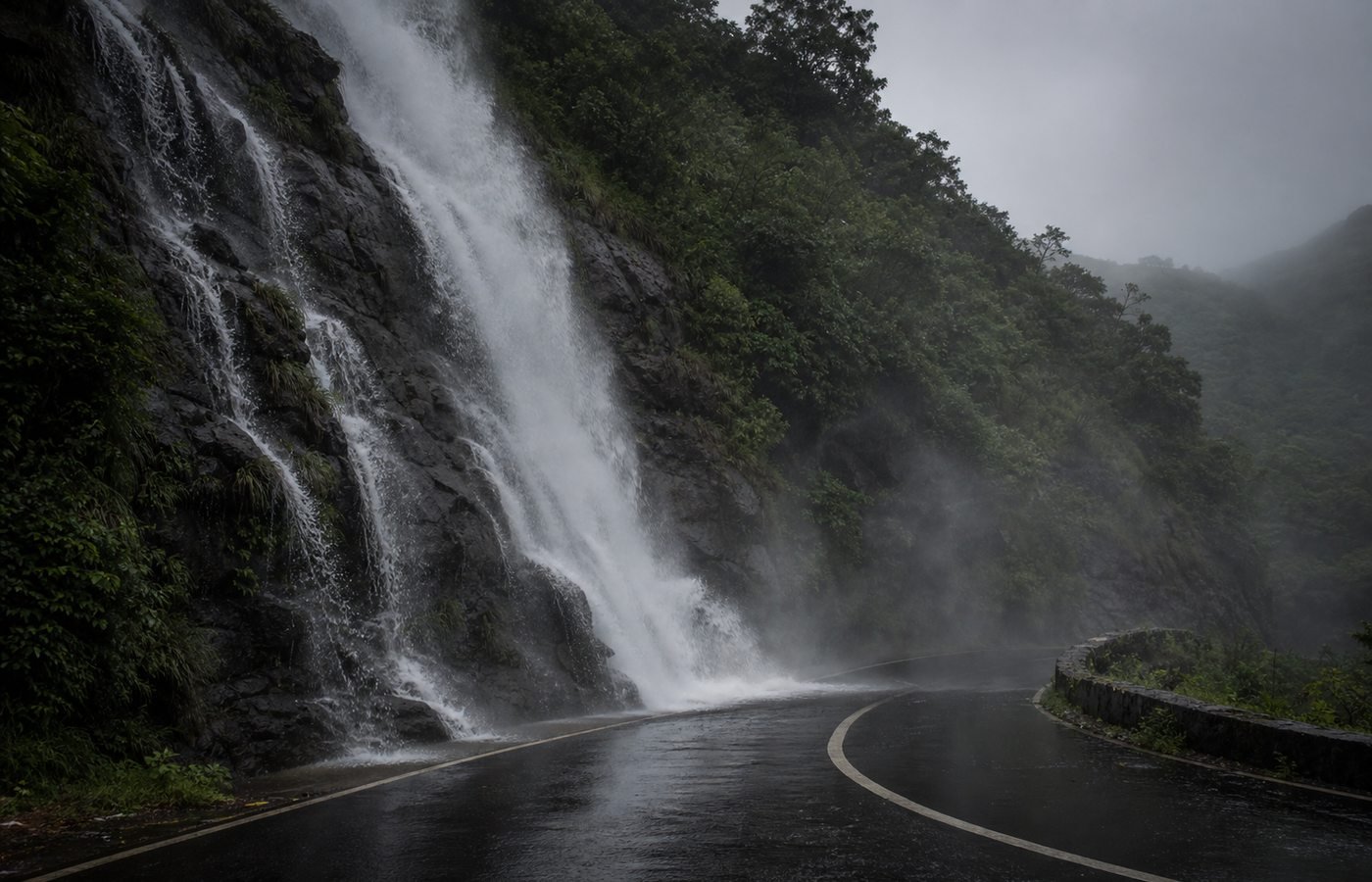
Amboli is a monsoon destination first and foremost. June through September is when the waterfalls run hardest, the mist is thickest and — crucially — the forest wildlife is most active. July and August are the wettest and most dramatic; this is the window naturalists aim for, because the amphibians and reptiles are breeding and out in force.
October into early winter keeps much of the green as the rain fades, with clearer viewpoints and easier driving, though the waterfalls shrink. Winter is mild and pleasant for the forts and points but quiet on the wildlife front. Peak summer is best avoided. If the night forest is your reason to come, commit to peak monsoon — there’s no substitute for it.
Amboli is remote and thinly serviced. Mobile signal is patchy, ATMs and fuel are limited, and heavy rain occasionally makes the ghat slow going. Carry cash, download offline maps, and be ready to be a little cut off — that isolation is part of the charm, but plan for it.
Logistics
Amboli is genuinely far from the big metros, and the honest framing matters: this is a trip you anchor on Sawantwadi (or pair with Goa), not a quick dash from Pune or Mumbai. Sawantwadi has the nearest railway station and the closest reliable services; from there it’s a short climb up into the hills.
~30 km · 1 hr
The main gateway — nearest railhead, fuel and cash before you climb. Your practical base.
~100 km · ~3 hr
Dabolim airport and north Goa are an easy drive. The smartest way to combine hills and coast.
~400 km · 8–9 hr
A long haul south, worth it only as a proper multi-night trip looped with the Konkan.
Sawantwadi hub
Sawantwadi Road station ~37 km; Belagavi airport ~80 km; Goa’s Dabolim ~100 km.
Direct state buses run to Amboli from Sawantwadi, which connects to Mumbai, Pune, Kolhapur, Belagavi and Goa. But buses won’t pause for waterfalls or viewpoints, and they’re no use for a night trail, so a private or hired vehicle is the way to actually enjoy the area.
The Amboli ghat is steep, winding and often thick with fog and rain, and it carries busy Kolhapur–Goa traffic. Drive slowly, keep fog lights on, don’t overtake on blind bends, and avoid the ghat after dark unless you’re with a local guide who knows it. Watch for monkeys near the falls.
By day
Amboli’s sights cluster close to the town, so a relaxed day covers the headline falls, viewpoints and a fort without much driving. Let the weather set the order — chase clear spells for the viewpoints, save the falls for the downpours.
Amboli Waterfall
The famous one, just a few kilometres from the bus stand and right beside the road, which makes it wonderfully easy to reach and correspondingly crowded on weekends. In peak monsoon the water thunders down the rock face in a cloud of spray, with chai and kanda-bhaji stalls alongside. Go early to have it to yourself, and keep well back from the slippery rock.
Kavlesad Point & the reverse waterfall
A dramatic valley viewpoint famous for its “reverse waterfall” — on very windy monsoon days, updraughts from the valley catch falling water and push it back upward in a strange, mesmerising plume. It only performs when the wind is strong, so it’s a matter of luck, but the sweeping valley view rewards the short trip regardless.
Shirgaonkar & Mahadevgad points
A pair of panoramic viewpoints looking over forested valleys that fill and empty with cloud through the day. Shirgaonkar is an easy stop close to the main stand; Mahadevgad, on an old fort site, gives one of the finest sunset-over-the-Konkan views when the mist lifts. Both are at their most atmospheric between showers.
Hiranyakeshi Temple & river source
A short drive from town, an old Shiva temple sits beside a cave from which the Hiranyakeshi river emerges — the source of a river that gave its name to a fish species found only here. It’s a peaceful, green, spiritually charged spot, and the surrounding forest is one of the productive areas for spotting wildlife.
After dark
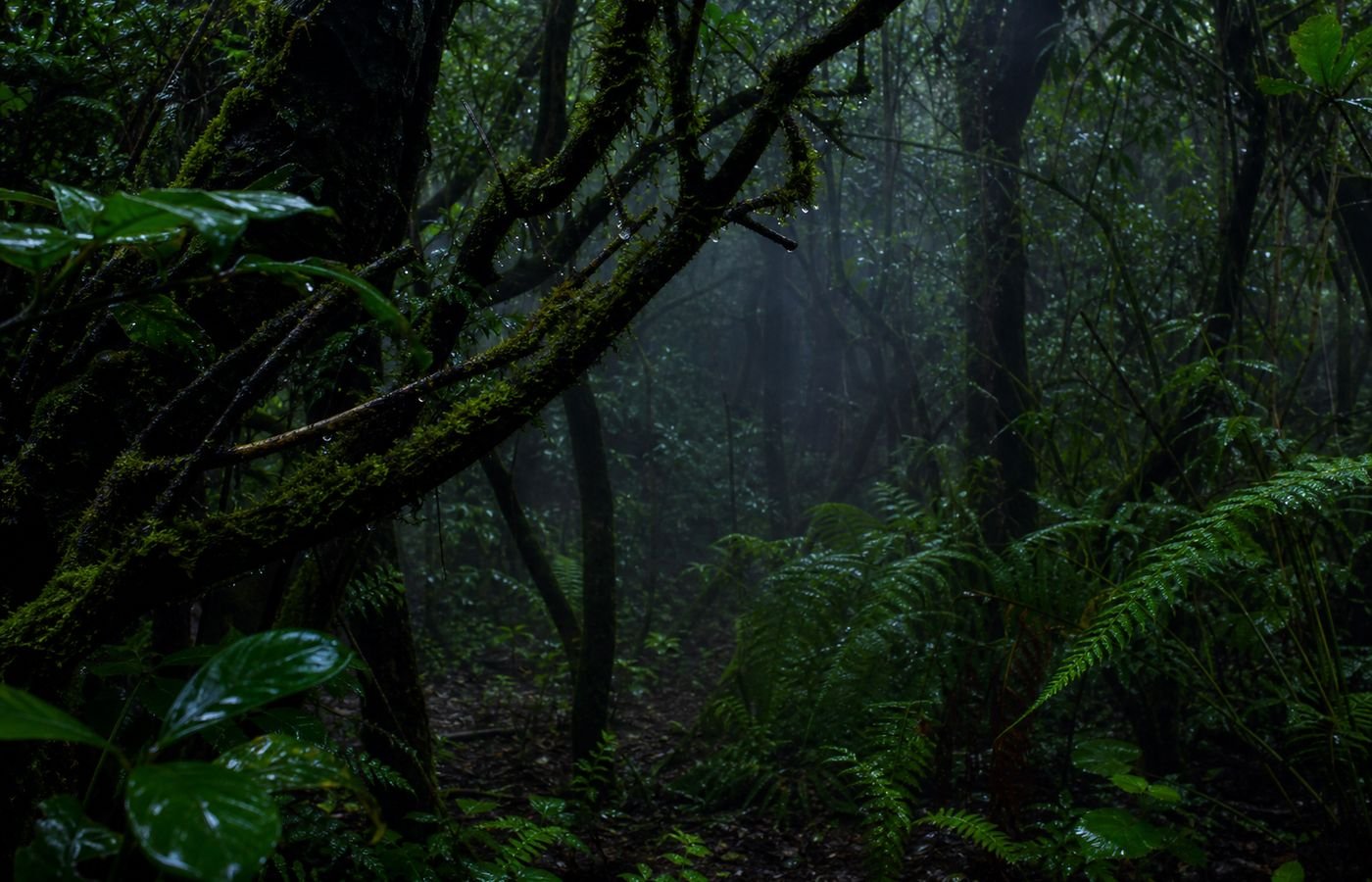
This is what truly sets Amboli apart. In 2021 the area was declared a Biodiversity Heritage Site, and it’s become one of the most important spots in Asia for “herping” — searching out reptiles and amphibians — and for macro photography. On a guided walk after dark in the monsoon, the dripping forest reveals an astonishing cast of tiny, jewel-like creatures, many endemic to this narrow belt of the ghats. A few of the residents you might meet:
Amboli bush frog
A rare, critically endangered shrub frog discovered here and named after the town. Superbly camouflaged; males call from vegetation with large transparent vocal sacs.
Amboli toad
Described by science only in 2009, this striking toad breeds in temporary monsoon rock pools. Critically endangered and found only in this corner of the Sahyadri.
Malabar gliding frog
A large, vivid-green tree frog with webbed feet it uses to glide between branches. A star of night trails and a favourite of macro photographers.
Malabar pit viper
A beautifully patterned, slow-moving pit viper in several colour morphs, often coiled on branches at night. Admire from a safe distance; never handle it.
The forest also shelters the endemic Amboli leaping frog, the freshwater fish Schistura hiranyakeshi (whose discovery helped trigger the heritage-site status), Malabar giant squirrels, more than 200 bird species, and legless amphibians called caecilians. Trails toward Parikshit Point, Mahadevgad and the Hiranyakeshi source are among the most productive.
Always do night trails with an experienced local naturalist — several operate around Amboli and homestays can arrange them. This is a protected, fragile habitat: don’t handle animals, keep torch light minimal and off breeding frogs, never bait or move creatures for a photo, and stay on paths.
Eating
Amboli is small and its eating is simple, hearty and very local — and being on the edge of the Konkan, it comes with a Malvani coastal accent you won’t find up in the northern ghats.
- Malvani thali — the regional star: coconut-rich, fiery Konkani curries with rice and bhakri, veg or with fish and chicken. Small eateries and homestays do the best versions.
- Kanda bhaji & chai — the monsoon ritual, fried hot at the stalls beside the waterfall and viewpoints, exactly what you want in the drizzle.
- Malvani seafood — with the coast so close, fresh fish thalis and prawn curry appear on many menus.
- Roasted corn & vada pav — reliable roadside snacks around the falls and the bus stand.
- Homestay home cooking — as so often in the Sahyadri, the best meals are the simple home-cooked thalis at your stay. Ask ahead so they can cater.
Sleeping
Amboli itself has a modest cluster of small hotels and homestays; for more comfort, the wider Sawantwadi–Sindhudurg belt opens up villas and coastal stays.
Amboli homestays
Wake inside the cloud, close to the falls and the night trails, with home-cooked Malvani food. Rustic; book well ahead in season.
Sindhudurg villas
A dry, well-equipped base to regroup between downpours, with space to dry gear and a kitchen. Best for families and groups.
Konkan / Goa side
Base near the coast or north Goa and day-trip up. The pick to pair misty hills with beaches in one trip.
Check the essentials
Confirm access roads survive heavy rain, power backup, and whether your host can arrange a night-walk guide.
The plan
Two nights, anchored on Sawantwadi or a coastal base, is the natural shape — one full day for the falls and viewpoints, one night for the forest, and time to slow down between showers.
Arrive & the daytime sights
Reach Amboli by midday via Sawantwadi. Head to the waterfall while the light is good, then Hiranyakeshi Temple and the river source. Close at Sunset or Shirgaonkar Point for the evening mist.
Into the night forest
After dinner, out with a local naturalist for a guided herping walk — the signature Amboli experience. Bush frogs calling, a gliding frog on a leaf, maybe a pit viper on a branch.
Viewpoints, a fort, then on
Start early for Nangartas Falls before the crowds, then Kavlesad and Mahadevgad points between showers, and Madhavgad fort if the footing’s safe. Descend well before dusk.
Down to the coast
Instead of turning for home, roll on down the ghat to the Sindhudurg coast or Goa — beaches, backwaters and Malvani seafood, all within easy reach.
Field notes
- Anchor on Sawantwadi or Goa. Sort fuel, cash and rail connections there; Amboli itself has few services.
- Book a night guide. The forest after dark is the reason to come, and it needs an expert. Arrange one through your homestay in advance.
- Never handle the wildlife. Look, photograph, move on — many species are endangered and this is protected habitat.
- Carry cash & offline maps. Signal and card payments are unreliable; draw cash and download routes before you climb.
- Pack for serious rain. The wettest hill station in the state — full waterproofs, dry bags, a torch and grippy closed shoes.
- Respect the ghat & the fog. Steep, busy and often blind with cloud. Slow right down and avoid the descent after dark.
Planning a Maharashtra monsoon trip?
I help travellers plan slow, well-paced India trips that get the seasons, distances and logistics right — including off-the-map Sahyadri escapes like Amboli, Gaganbawda and Tamhini. Free 48-hour reply.
Questions
Is Amboli worth visiting?
Very much so in the monsoon, if you like your hill stations wild and green rather than polished. The waterfalls are superb and the biodiversity — especially the guided night trails — is genuinely world-class and unlike anywhere else in the northern Sahyadri. Outside the rains it’s quieter and much less dramatic.
How do I get to Amboli?
Anchor on Sawantwadi, which has the nearest railway station (about 37 km) and connects to Mumbai, Pune, Kolhapur, Goa and Belagavi. From Sawantwadi it’s roughly an hour up into the hills. Goa (~100 km) and Belagavi (~80 km) are the nearest airports, and the coast makes an easy pairing.
Why is Amboli famous for wildlife?
It’s one of the most biodiverse parts of the Western Ghats and was declared a Biodiversity Heritage Site in 2021. It shelters many endemic species — including the Amboli bush frog and Amboli toad, found only here — and is one of Asia’s premier “herping” destinations for spotting frogs, snakes and other creatures on monsoon night walks.
When is the best time to visit?
June to September, peak monsoon, for the waterfalls and the most active wildlife — July and August especially. October keeps some green with easier driving, and winter is mild but quieter on wildlife. Avoid peak summer, when the falls dry up.
Do I need a guide for the night trails?
Yes. Night herping walks should always be done with an experienced local naturalist — they know where to look, how to spot camouflaged species safely, and how to protect the habitat. Homestays and local operators around Amboli can arrange them; book ahead in peak season.
Can I combine Amboli with Goa or the coast?
Absolutely — it’s one of Amboli’s advantages. Goa and the Sindhudurg coast are far closer than Pune or Mumbai, so many travellers pair a couple of misty days in the hills with beaches and Malvani seafood down on the Konkan.
Keep exploring
Written by Ashvinee Nagle
I travel India slowly and write it down honestly - practical guides and real itineraries from someone who lives here.
About Ashvinee →Plan your India trip with us
Get one short, honest India travel guide a week — plus a free 7-day Rajasthan itinerary to start.
Free. Unsubscribe any time.