
A slow weekend at Gaganbawda
Kolhapur’s cloud-wrapped corner of the Sahyadri — where the ghat roads vanish into fog, the rain never really stops, and almost nobody else has thought to come.
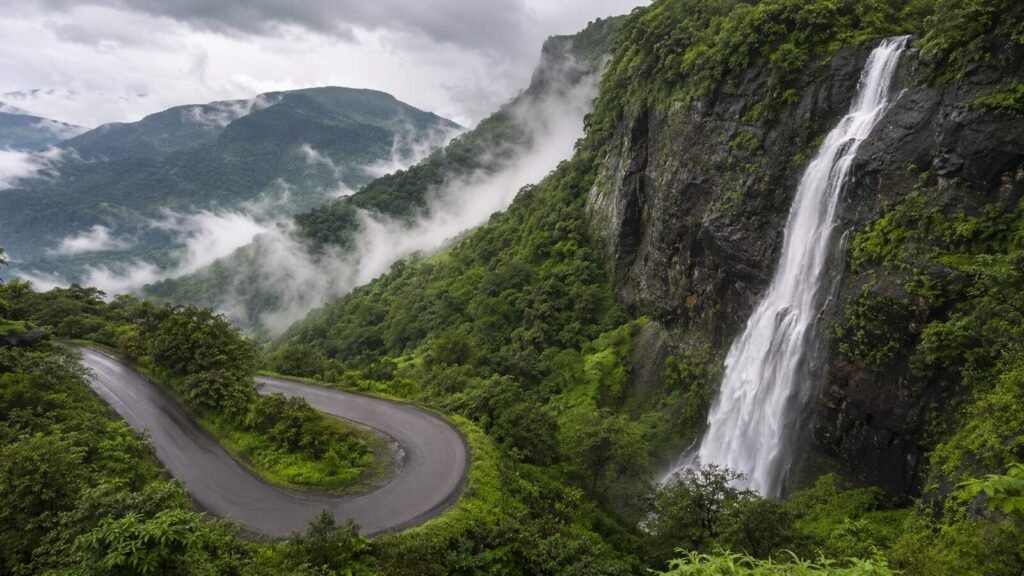
Some places in the Sahyadri hide in plain sight. Gaganbawda is one of them — a small, barely-developed town on the crest of the Western Ghats, about 55 km west of Kolhapur, that most travellers have simply never heard of. The name roughly means “sky settlement,” and in the monsoon that’s exactly what it feels like: perched around 2,000 feet up, wrapped in cloud, with fog so thick it can swallow the road ahead in seconds. There are no big resorts, no crowds pouring off a highway, no famous single sight. What there is instead is weather, forest, and two of the most beautiful ghat descents in this part of the range.
Gaganbawda is a high, remote Sahyadri town about 55 km from Kolhapur, best in peak monsoon (July–September) for fog, waterfalls and the Karul and Bhuibawda ghat roads. It’s a Kolhapur-anchored weekend, not a Pune or Mumbai day trip — base yourself in Kolhapur city or at a forest stay near Gaganbawda, drive your own vehicle, keep the plan loose, and treat the fog and the waterfalls with real respect. Come for atmosphere, not a checklist.
Why Gaganbawda
Gaganbawda sits at the far southern end of the Sahyadri, in Kolhapur district, right where the plateau breaks and drops steeply toward the Konkan coast. That geography is the whole draw. Two great ghat roads — the Karul Ghat and the Bhuibawda Ghat — wind down from the town into the lowlands, and in the monsoon they turn into some of the most atmospheric drives in Maharashtra: hairpins disappearing into grey cloud, temporary waterfalls pouring straight onto the tarmac, and forest so dense and wet it drips.
This is one of the rainiest pockets of the state — parts of the surrounding valley record enormous seasonal rainfall — and everything about the place is shaped by that. The hills stay a deep, saturated green, the streams run hard, and low cloud sits over the town for days at a stretch. It’s also genuinely wild: the forests here are part of the same Western Ghats belt that shelters rare species, and the area has a scatter of history too, from the ruined Gagangad Fort to the old Gagangiri math. What it doesn’t have is polish — and if you like your hill stations raw, quiet and half-hidden, that’s exactly the appeal.
Proper cloud country
At ~2,000 ft on the edge of the ghats, Gaganbawda spends the monsoon inside the cloud, not below it. Fog is the main event.
Two spectacular ghats
The Karul and Bhuibawda ghat roads are the reason to come — waterfall-lined descents most tourists never see.
Wild, not built-up
Dense forest, bison country nearby at Dajipur, and almost no commercial tourism. You come for the quiet.
When to go
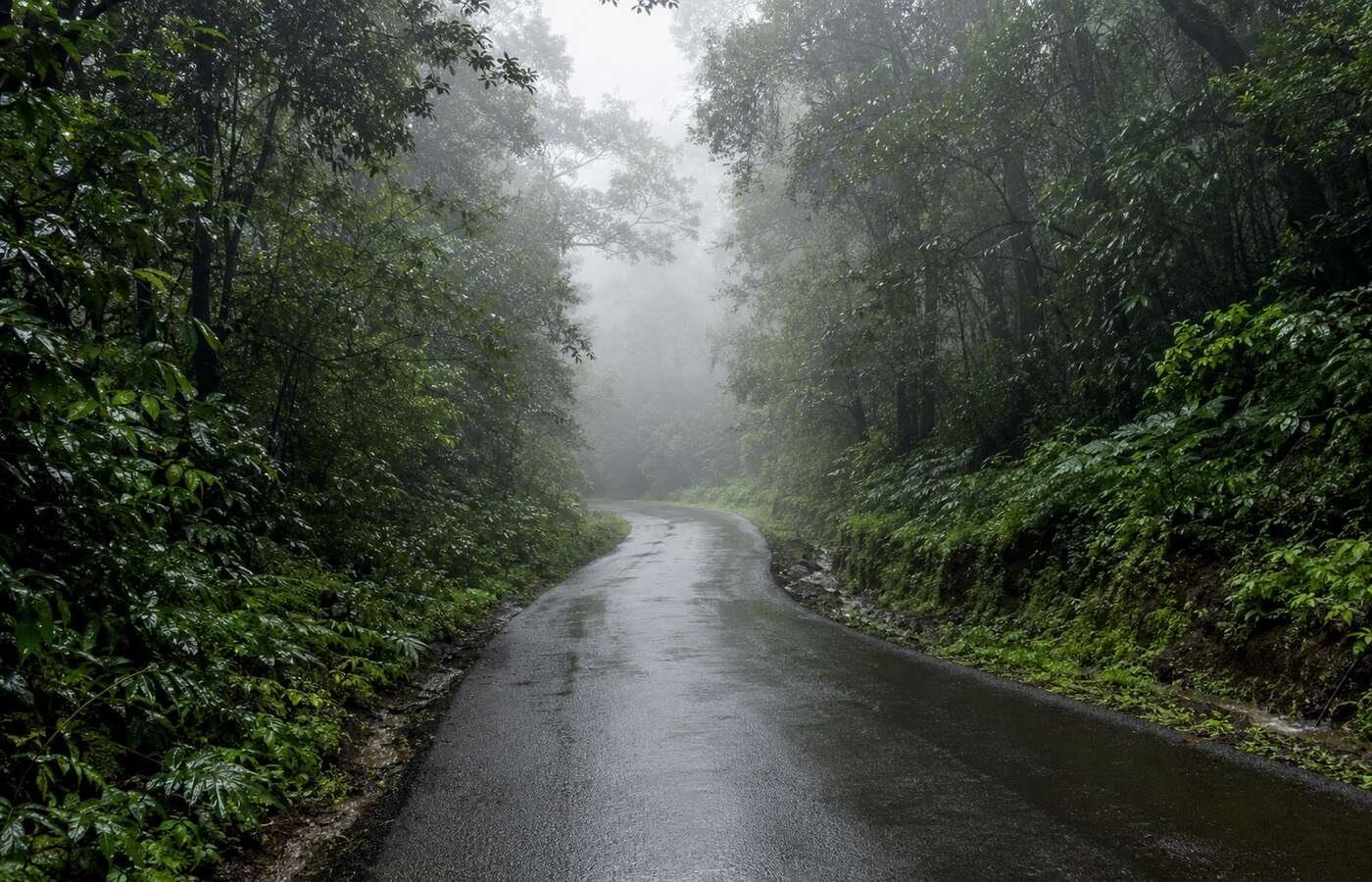
Gaganbawda is, first and last, a monsoon place. July through September is when it’s at its most dramatic — the ghats streaming with water, the fog at its thickest, everything impossibly green. If you want the full cloud-forest experience, this is the window, with July and August the wettest and moodiest.
October holds on to a lot of the green as the rain eases, and the roads get a little safer and clearer — a good compromise if heavy monsoon driving worries you. Winter (November–February) is cool, calm and pleasant for the views and the forts, though the waterfalls shrink to a trickle. Avoid peak summer (April–May), when the drama drains out of the landscape and there’s little reason to make the long climb up.
This is a remote, thinly-serviced area. Mobile signal is patchy, fuel and ATMs are back in the larger towns, and heavy rain can make ghat sections slow or briefly impassable. Come prepared to be a little cut off — that’s part of the charm, but plan for it.
Getting there
The honest framing: Gaganbawda is a Kolhapur trip, not a quick Pune or Mumbai getaway. Kolhapur is your gateway city for transport, fuel, cash and a comfortable bed, and the hills are an easy drive west from there.
~55 km · 1.5–2 hours
The main approach, climbing steadily west into the ghats. Your base for the whole trip.
~285 km · 5–6 hours
Via the Pune–Bengaluru highway to Kolhapur, then up. Best as a two-night trip, not a day run.
~430 km · 8–9 hours
A long haul down the expressway and NH48. Worth it, but plan a proper weekend.
Kolhapur is the hub
Nearest railhead and airport are both at Kolhapur (roughly 50–55 km); hire a car or taxi from there.
State transport buses run between Kolhapur and Gaganbawda (some continuing toward the Konkan and Kankavali), but they won’t stop for waterfalls or viewpoints. To actually enjoy the ghats you want your own vehicle — a car or a confident rider on a well-serviced bike. Fill the tank in Kolhapur and carry cash before you head up.
The Karul and Bhuibawda ghats are steep, narrow and often shrouded in fog and rain. Drive slowly, keep fog lights on, never overtake on a blind hairpin, and avoid the descents after dark. If cloud closes in completely, wait it out rather than crawling forward blind.
The best monsoon stops
Gaganbawda rewards wandering more than ticking off a list, but a few stops anchor a weekend. Take them slowly, and let the weather set the pace.
Karul & Bhuibawda ghatsThe main event
The two ghat roads dropping from Gaganbawda toward the Konkan are the whole reason to come. In peak monsoon the cliffs above them run with dozens of temporary waterfalls, the road threads through moving cloud, and every bend opens onto a green valley you can barely see the bottom of. Just drive slowly, stop at the safe pull-offs, and soak it in.
Gagangad FortHistory & views
About a kilometre from the town lie the ruins of Gagangad Fort, an old hill fort with origins going back centuries, once the administrative heart of the region. Little of the structure survives beyond stretches of wall, but the setting — high, green and often above the cloud line — is the payoff. The adjoining Gagangiri math gives the spot a quiet, contemplative feel.
Palsambe & the Kumbhi valleyQuiet corner
A few kilometres before Gaganbawda, the village of Palsambe sits beside the Kumbhi river with an old riverside wada that’s appeared in Marathi films. It’s a peaceful, photogenic stop, and the nearby Kumbhi and Kode dam backwaters fill dramatically in the rains — classic slow-monsoon scenery with almost no one around.
Wildlife & detours worth the drive
Gaganbawda pairs naturally with the wild country to its south and east. Add one of these as a dedicated half or full day rather than trying to cram everything in.
Dajipur & Radhanagari wildlife country
South of Gaganbawda lies Dajipur, part of the Radhanagari sanctuary belt — the first wildlife sanctuary declared in Maharashtra and a recognised biodiversity hotspot. It’s best known for its population of Indian bison (gaur) and for rich birdlife, including forest species like the Malabar grey hornbill. In the monsoon the forest is at its lushest, though some trails and safari access can be restricted by the rains, so check locally before setting out.
Rautwadi Waterfall & Radhanagari Dam
Over in Radhanagari taluka, about an hour from Kolhapur, the roughly 100-ft Rautwadi Waterfall is one of the area’s most rewarding monsoon stops, with a short walk in and the seven-gated Radhanagari Dam nearby. It’s easily paired with a Gaganbawda weekend if you’re basing in Kolhapur. As with every waterfall here, the rocks near the base turn treacherously slippery in the rain — keep well back from fast water.
Where to eat
This is not a restaurant destination, and that’s fine — the eating here is simple, local and best sought out where you find cars pulled over. Kolhapur itself, at the start and end of the trip, is where you’ll get the memorable meals.
- Kolhapuri thali & tambda-pandhra rassa. Base in Kolhapur and you’re in one of Maharashtra’s great food cities — fiery mutton rassa, rich thalis and the famous local spice. Fuel up here before and after the hills.
- Kanda bhaji & chai. The monsoon ghat staple. Small stalls near the viewpoints and villages fry hot onion bhaji to eat in the drizzle with a glass of strong tea.
- Zunka bhakri & pithla. Rustic Maharashtrian village food — spiced gram-flour with jowar or bajra bhakri — served at small eateries around Gaganbawda and Palsambe.
- Roasted corn. Sold hot and spiced at the popular waterfall stops around Radhanagari — the classic thing to eat while watching the water come down.
- Forest-stay meals. If you stay at a homestay or forest lodge near Gaganbawda, home-cooked meals are usually part of the deal, and often the best food you’ll have on the trip.
Where to stay
You have two sensible options, and which you pick depends on how remote you want your nights to feel.
Kolhapur city hotels
The easy, reliable base — a full range of hotels, good food, fuel and connections, with the hills a short drive away. Best if you want to day-trip up into the ghats and return to comfort.
Gaganbawda forest stays
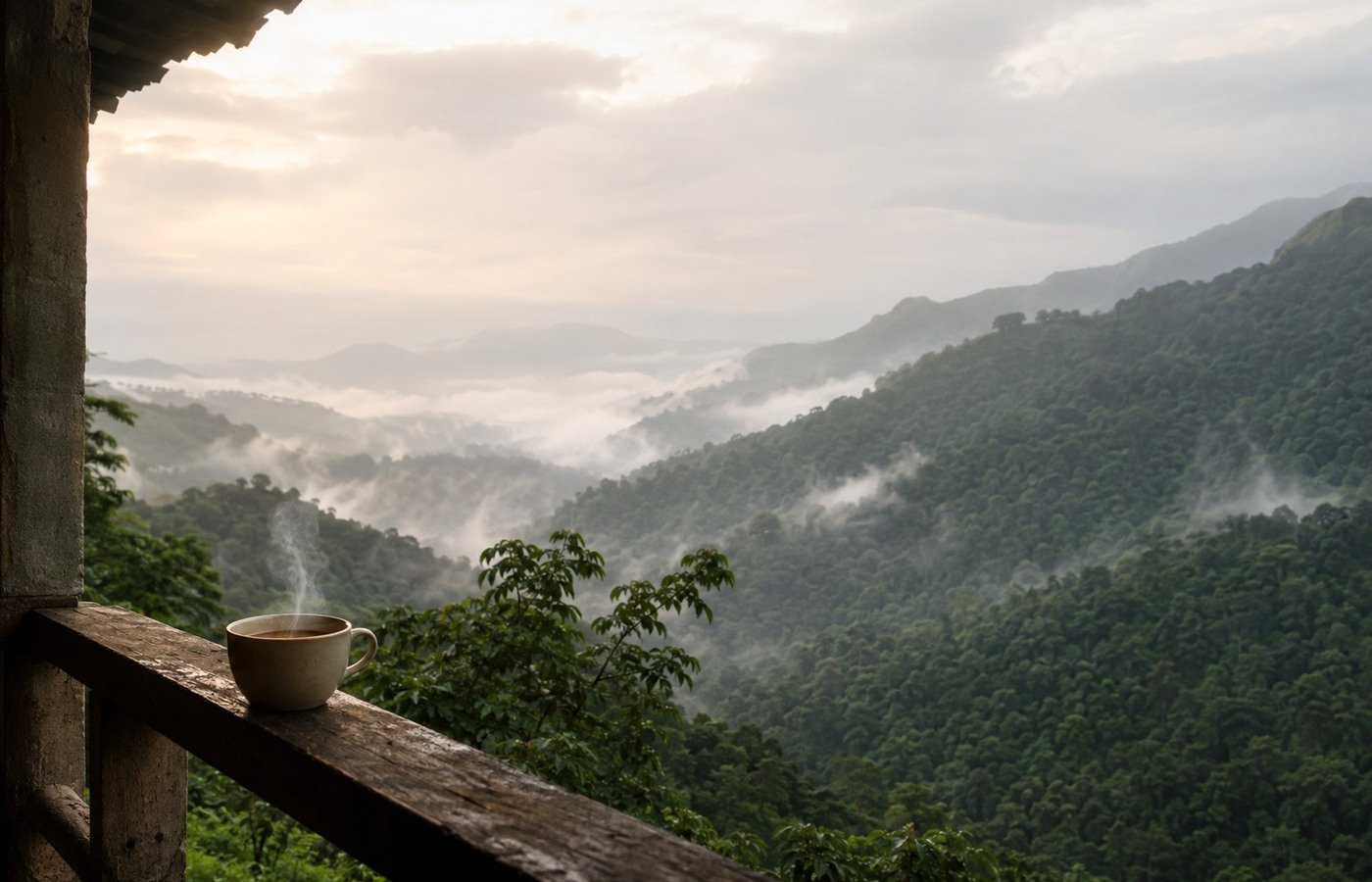
A handful of forest lodges and homestays sit in and around Gaganbawda for those who want to wake up inside the cloud. Rustic, quiet and atmospheric — book ahead and set expectations for basic facilities.
Radhanagari / Dajipur side
If wildlife and waterfalls are your focus, a stay toward Radhanagari puts you closer to Dajipur and Rautwadi. Options are limited and simple, so plan in advance.
Wherever you stay, book ahead for monsoon weekends, confirm that access roads are passable in heavy rain, and check on power and water — both can be intermittent up here during a big spell.
A suggested slow itinerary
Two nights, based in and around Kolhapur, is the natural shape of this trip — enough to enjoy the ghats without rushing, and to add one wildlife or waterfall day.
Arrive in Kolhapur
Reach Kolhapur by evening, settle in, and eat well — this is your food night. If you’re coming from Pune or Mumbai, this drive is the day. Sleep early; the hills want an early start.
Into the ghats
Drive up to Gaganbawda early, while the fog is heaviest and the roads are empty. Spend the morning on the Karul or Bhuibawda ghat, stopping for waterfalls and viewpoints, then walk up to Gagangad Fort. Long, slow lunch. Drift back down as the light goes — before dark.
Wildlife or waterfalls, then home
Point the morning at Radhanagari — Rautwadi Waterfall and the dam, or a Dajipur forest drive if access is open. Grab roasted corn and chai, then start the drive home by early afternoon to beat the traffic and the failing light.
Practical tips that actually help
Treat it as a Kolhapur trip
Sort fuel, cash and a good meal in Kolhapur. The hills have almost no services — go up prepared and self-sufficient.
Respect the fog
Visibility can vanish in seconds on these ghats. Fog lights on, slow right down, and pull over safely if it closes in fully.
Keep back from the water
Waterfall rocks turn lethally slippery in the rain and currents are stronger than they look. Admire from a safe distance.
Download offline maps
Signal drops out across the ghats and forest. Save your routes and stay points before you lose connectivity.
Pack for real rain
This is one of the wettest belts in the state. Full waterproofs, dry bags for electronics, and grippy footwear, not fashion shoes.
Check access for wildlife stops
Dajipur and some trails can close or restrict entry in heavy monsoon. Confirm locally before building a day around them.
Planning a Maharashtra monsoon trip?
I help travellers plan slow, well-paced India trips that get the seasons, distances and logistics right — including off-the-map Sahyadri escapes like Gaganbawda, Tamhini and Malshej. Free 48-hour reply.
FAQs about Gaganbawda
Is Gaganbawda worth visiting?
If you like your hill stations quiet, wild and undeveloped, very much so — especially in the monsoon, when the ghats and forest are at their most dramatic. If you want shops, cafes and organised sightseeing, it will feel too remote; this is a place for atmosphere and slow drives, not attractions.
How far is Gaganbawda from Kolhapur?
Roughly 55 km, or about 1.5 to 2 hours by road, climbing west into the Western Ghats. Kolhapur is the practical base for the whole trip — it’s where the nearest railway station and airport are, along with fuel, ATMs and hotels.
Can I visit Gaganbawda as a day trip?
From Kolhapur, yes — an early start gets you the ghats, a fort and a waterfall in a full day. From Pune or Mumbai it’s too far for a day trip; plan a two-night weekend based in Kolhapur instead.
When is the best time to visit?
July to September for peak monsoon fog and waterfalls, October for greener, calmer post-monsoon conditions, and the winter months for clear, cool weather if you don’t mind the waterfalls being reduced. Peak summer is best skipped.
Is the drive safe in the monsoon?
With caution, yes. The Karul and Bhuibawda ghats are steep, narrow and frequently foggy, so drive slowly, use fog lights, don’t overtake on blind bends and avoid the descents after dark. If cloud closes in completely, wait rather than crawl forward blind.
What can I combine with Gaganbawda?
It pairs well with Radhanagari and Dajipur wildlife country, the Rautwadi Waterfall and Radhanagari Dam, and Kolhapur city’s temples and food. With more time, the Konkan coast lies just down the ghats to the west.
More slow monsoon weekends
If Sahyadri monsoon country is your thing, these companion guides cover more of it at the same unhurried pace.
Written by Ashvinee Nagle
I travel India slowly and write it down honestly - practical guides and real itineraries from someone who lives here.
About Ashvinee →Plan your India trip with us
Get one short, honest India travel guide a week — plus a free 7-day Rajasthan itinerary to start.
Free. Unsubscribe any time.