
A slow weekend at Bhandardara: a lake, a few waterfalls, and a forest full of fireflies
The Sahyadri weekend where you don’t chase a checklist — you sit by a still lake, watch the dam overflow, and let the hills set the pace.
There’s a certain kind of monsoon weekend that Bhandardara does better than almost anywhere else in the northern Sahyadri. Not the tick-every-box kind — the slow one, where you wake up to mist sitting on a lake, drive out to watch a century-old dam spill over the edge, eat hot bhutta in the drizzle, and spend the afternoon doing very little except looking at water. Most people treat Bhandardara as a checklist — dam, waterfall, fort, done — and drive home tired. Give it a slower weekend and it turns into something else entirely.
Bhandardara is a lake-and-mountains weekend in the northern Sahyadri, on the Pravara river in Ahilyanagar district. Best late June through September, when the Wilson Dam overflows into the Umbrella Falls and everything turns green. It’s closest to Nashik, an easy run from Mumbai, and a longer haul from Pune. Two days is right — Friday evening to Sunday afternoon. Stay by the lake, eat what the stalls are frying, drive the bumpy internal roads slowly, and — if you catch the fireflies in May — go quietly and leave no trace.
Why Bhandardara
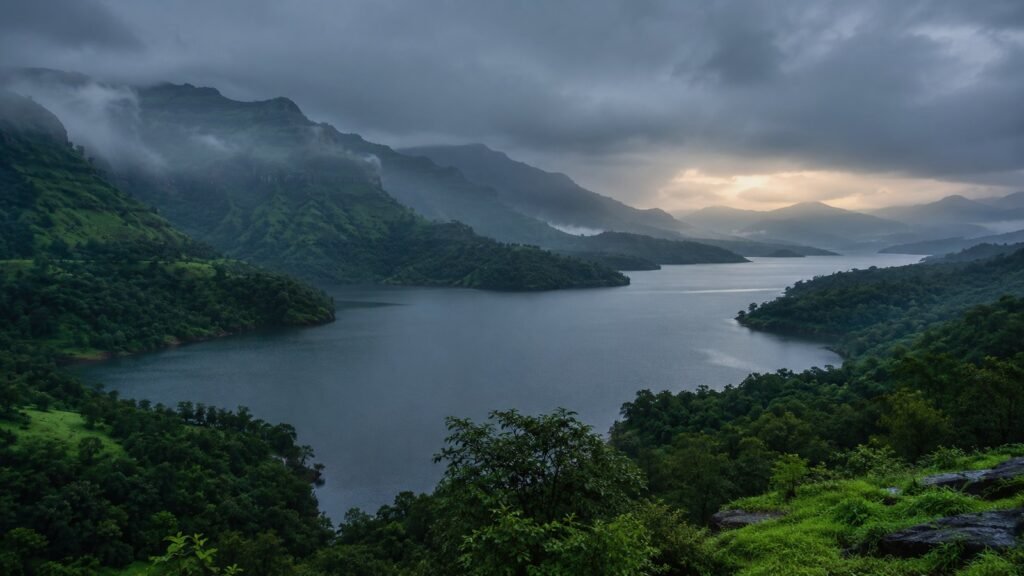
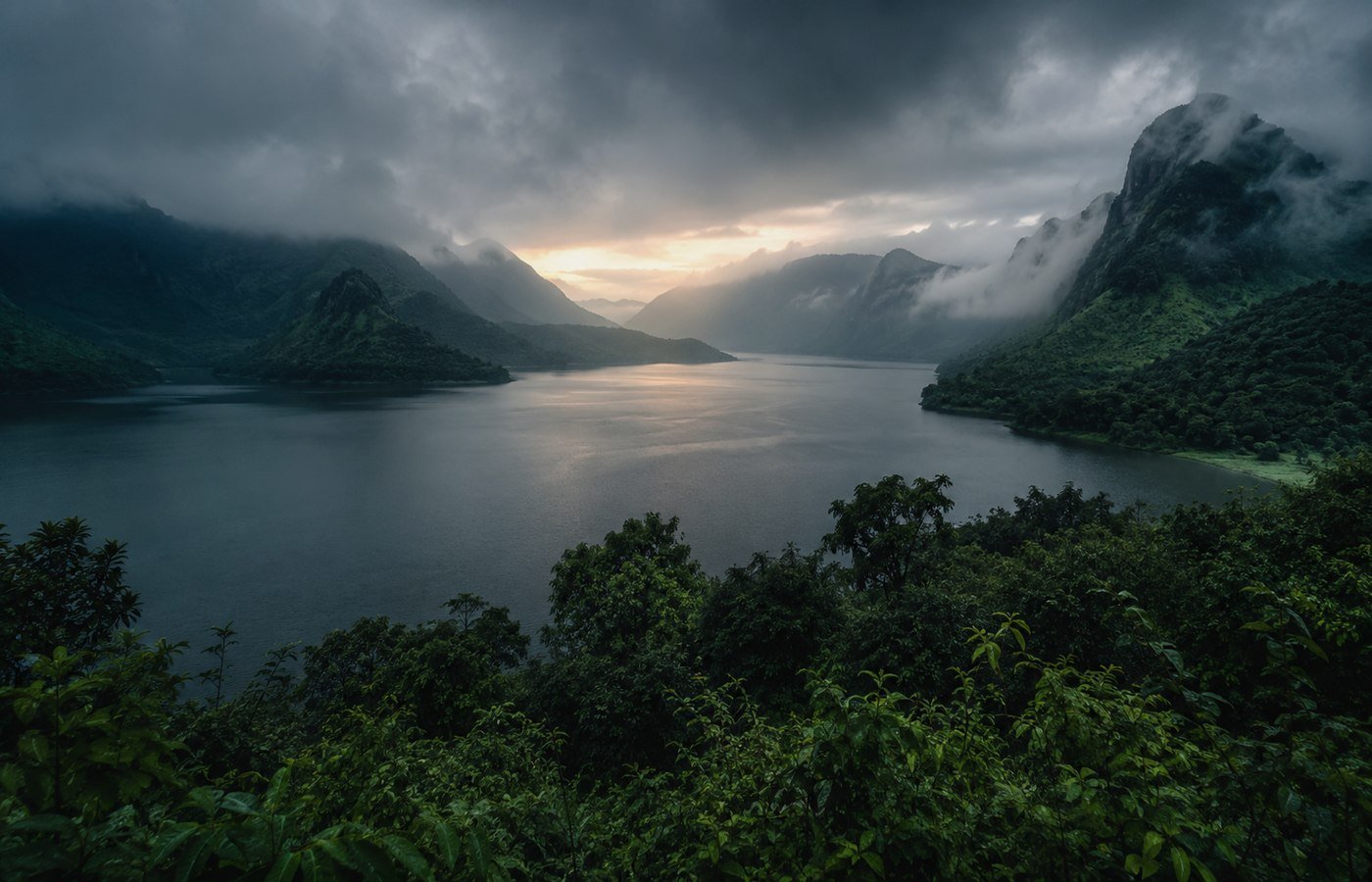
Bhandardara sits high in the Sahyadri in the Akole tehsil of Ahilyanagar district, on the banks of the Pravara. What makes it work is water. Back in 1910 the British finished the Wilson Dam across the river — one of the oldest dams in the country — and the reservoir it backed up, Arthur Lake, is the thing most people come for. It sits in a bowl of green hills, dead still on a calm morning, and everything else on the trip happens around its edges: the boating, the sunsets, the camps along the shore, the mist that hangs over it at dawn.
But what tips Bhandardara from “nice lake” into “why haven’t I been here before” is everything crowded in around it. Kalsubai, the highest peak in Maharashtra, rises just to the side. The Sandhan Valley gorge, the old forts of Ratangad and Harishchandragad, and a beautiful ninth-century stone temple at Ratanwadi are all within reach of the same weekend. In the monsoon the whole place turns a deep, soaked green and the waterfalls appear out of nowhere. And for a few weeks before the rains break, the forest fills with fireflies. That’s a lot to pack around one small lake — and outside firefly season, it’s still surprisingly quiet.
A lake to slow down by
Arthur Lake, held back by the 1910 Wilson Dam, gives Bhandardara a calm centre most ghat towns just don’t have. The whole trip orbits it.
Big country all around
Kalsubai, Sandhan Valley, Ratangad, Harishchandragad — a serious amount of Sahyadri packed into one weekend’s reach.
The fireflies
For a few pre-monsoon weeks the forest lights up with thousands of them, pulsing together in the dark. There’s not much like it.
When to go
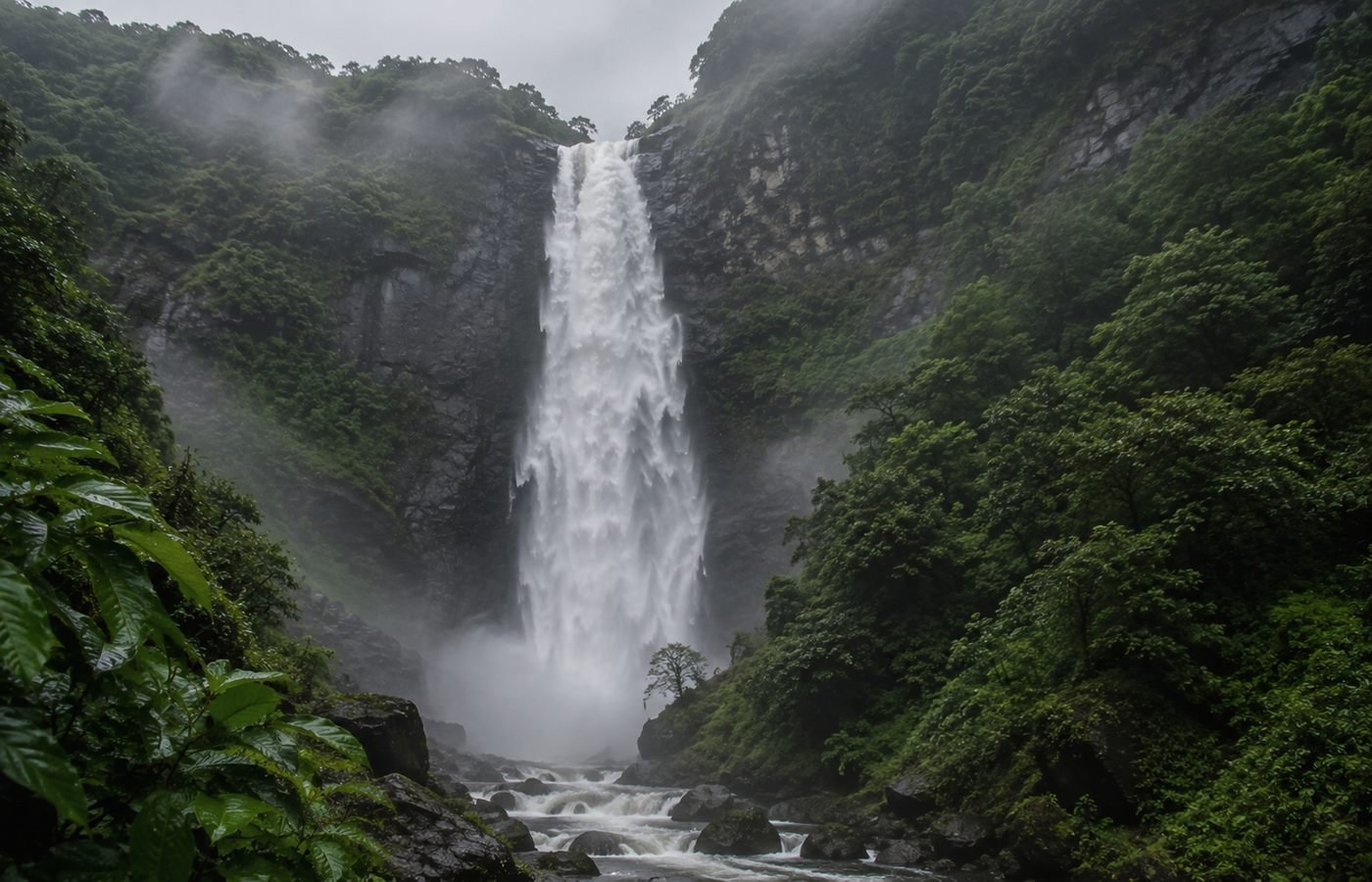
Bhandardara is a monsoon place first, and it has a rare second season on top. Late June through September is the big one — the Wilson Dam fills and spills over into the Umbrella Falls, Randha Falls turns thunderous, the lake brims, and the hills go electric green. July and August are the wettest and the most dramatic. The trade-off is the usual monsoon one: weekends get busy, and the rough internal roads get slower. Come on a weekday or claim the quiet early hours if you can.
Then there’s the odd, wonderful firefly window in May — a completely different reason to come, covered just below. November through February is dry and calm, good for the lake, the temple and a gentle trek, though the waterfalls shrink to a trickle. Peak summer before the fireflies is hot and worth skipping.
The roads inside Bhandardara are famously bumpy and barely lit, and the phone signal comes and goes in the hills. This is a place that rewards a full fuel tank and a loose plan — expect to be a little cut off, and don’t count on driving the internal roads after dark.
The firefly weeks
Here’s the part a lot of weekenders don’t know about. For a few weeks each year, right before the monsoon breaks, the forests around Bhandardara put on one of the strangest, loveliest shows in the Sahyadri: the Kajwa Mahotsav, the firefly festival (kajwa is just Marathi for firefly). From roughly mid-May to mid-June, as the first humid air rolls in ahead of the rains, thousands upon thousands of fireflies gather in the trees and start pulsing almost in unison. You switch your torch off, let your eyes adjust, and the whole forest breathes light.
It’s magical — and it needs a couple of honest caveats. It’s become genuinely crowded in the last few years, so the quiet you came for can be hard to find; pick a smaller, well-run campsite away from the busiest spots. More importantly, the fireflies are living creatures in their brief breeding window, and it’s alarmingly easy to harm them.
Torches off, phones down, and please don’t catch or chase them. Steer well clear of camps that run bonfires, loud music or barbecues in the firefly forest — the smoke and light genuinely kill the insects everyone came to see. Choose a quiet, conservation-minded host, and let the show happen in the dark. It’s better that way anyhow.
The drive up
Half of any Sahyadri weekend is the drive, so it’s worth getting right. The honest version: Bhandardara is closest to Nashik, an easy run from Mumbai, and a longer, rougher haul from Pune. Whichever way you come, sort your fuel, cash and snacks in the last proper town before you climb, because the services thin out fast once you’re in the hills.
~185 km · 4–5 hours
The usual approach, up the Mumbai–Nashik highway and past Igatpuri, then down to the lake. The most popular way in.
~70–75 km · 2–2.5 hours
The closest city and nearest railhead — the shortest, easiest run. A smart base for the whole trip.
~165–185 km · 5–6 hours
A longer haul via Sangamner and Akole, with some rough patches. Best as a proper two-night weekend, not a dash.
Igatpuri / Nashik
Nearest stations are Igatpuri and Nashik Road; nearest airport is Nashik. Private car or hired taxi only once you’re up.
There are state buses from Nashik and Igatpuri, but they won’t pause for a waterfall or a lake sunset, and they’re no help at all for the treks — so realistically this is a drive-your-own-vehicle trip. Fill the tank in Igatpuri or Nashik, carry cash for the stalls and boat rides, and give yourself margin for the slow last stretch.
The roads inside the Bhandardara belt are rough in patches — narrow, potholed, poorly lit, with sharp drops and fog in the rains. Take it slowly, keep well within your limits, skip the internal roads after dark, and don’t push a low car up the steeper approaches after heavy rain.
The best monsoon stops
The good news is that Bhandardara’s headline sights sit close together around the lake and the dam, so you don’t spend the weekend driving. Let the weather set the order, keep well back from fast water everywhere, and don’t try to cram it all into one frantic day — that’s exactly the trap.
Arthur Lake & Wilson DamThe heart of it
This is the centre of everything. The still, hill-ringed reservoir and the century-old dam that made it are where the whole trip settles. Take a boat out, watch the sun go down from the water, walk the dam wall for the long Sahyadri view. In the monsoon the basin fills to the brim and the green around it is almost too much.
Umbrella FallsMonsoon only
When the dam fills and overflows in the rains, the spill fans out over the rocks below into a broad, umbrella-shaped sheet of water — hence the name. It only shows up when the dam is actually overflowing, which is part of what makes catching it feel like a small win. Best seen from the bridge near the dam. No overflow, no falls.
Randha FallsThe loud one
A few kilometres downstream the Pravara drops around 170 feet into a gorge — one of the tallest falls in Maharashtra, and a proper roar in full monsoon. There’s a viewing area above the drop. The rocks turn slick as glass in the rain, so admire the force from a safe distance and resist the urge to edge closer for the photo.
Amruteshwar Temple, RatanwadiThe quiet one
Across the lake at Ratanwadi is a beautiful ninth-century Shiva temple in the old Hemadpanthi stone style, looked after by the ASI. You can reach the village by road, but the nicer way is to boat across Arthur Lake. The carved stonework and the hush around it make this the most atmospheric stop on the trip — and it’s where the Ratangad trek starts.
Forts & treks, if the legs are willing
Bhandardara is one of the great trekking bases in the Sahyadri, and you could easily build a whole trip around the climbs alone. These aren’t casual strolls, though — treat each as a dedicated half or full day, take a guide in the monsoon, and check conditions before you commit.
Kalsubai, the top of Maharashtra
At 1,646 metres, Kalsubai is the highest point in the state, and hauling yourself up to the little summit temple is a Sahyadri rite of passage. It’s a demanding day, with ladders bolted onto the steeper rock. On a clear morning the view over the ranges — Alang, Madan, Kulang — is the payoff. In heavy monsoon it turns slippery and cloud-blind, so pick your day and start early.
Ratangad & Sandhan Valley
From Ratanwadi it’s a three-to-four-hour climb to Ratangad, an old fort with a natural rock “eye” (the Nedhe) and long views down the valley. Nearby, the deep, narrow Sandhan Valley gorge near Samrad is a favourite for guided rappelling and canyon walks. Both are best done with local guides — Sandhan especially needs the right conditions and kit, so don’t wing it.
Where to eat: lake views and roadside plates
Bhandardara food is simple, local, and mostly happens either at your own stay or off the coals at a roadside stall — and honestly that’s the appeal. Don’t come looking for restaurants with menus. Come hungry for what the hills do well, and save the bigger meals for Nashik at either end.
- The MTDC lake-view restaurant. The state tourism place by Arthur Lake has the best seat in Bhandardara — reliable Maharashtrian food with the water right there. Worth it for the view alone.
- Bhutta in the rain. Roasted corn off the coals at the viewpoints and dam, dusted with lemon, salt and chilli. The correct thing to eat standing in the drizzle.
- Zunka bhakri and pithla. Rustic village Maharashtrian food — spiced gram flour with jowar or bajra bhakri — at the small eateries around the lake. Simple and exactly right after a wet morning.
- Kanda bhaji and cutting chai. The unofficial food of a Sahyadri monsoon, fried hot at the stalls. You know the good ones by the local cars parked outside.
- Whatever your homestay is cooking. As so often up here, the best meal of the trip is the home-cooked thali at your stay. Ask ahead so they can plan for you.
Where to stay
Bhandardara isn’t a hotel town, and that’s part of why it stays quiet. Your options sort into a few types, and the right one depends on how rustic you’re willing to go — and, in firefly season, how responsible your host is.
MTDC & lakeside resorts
The MTDC resort and a handful of lakeside hotels put you right by Arthur Lake, close to the dam and the boats. The reliable, scenic pick — and it fills fast for monsoon weekends, so book well ahead.
Lakeside camps & homestays
Tented camps and village homestays get you closest to the water, the stars and the quiet. Rustic and atmospheric — go in expecting basic facilities and you’ll love it.
Igatpuri or Nashik
Want a proper room to come back to? Base in Igatpuri or Nashik and day-trip in. Best if you’d rather trade lake-side atmosphere for a dry, well-serviced bed.
Wherever you land, book ahead for monsoon and firefly weekends, check that the access road survives heavy rain, and ask about backup power and water — both can go intermittent up here during a big spell.
A suggested slow itinerary
Two nights is the right length — anything shorter and you spend more time driving than enjoying, anything longer and you start running out of things to do, which up here might honestly be the point.
Drive up, settle by the lake
Leave in the evening, come up via Igatpuri or Nashik, and reach your stay after dark. Eat something hot and local, sleep early. If you’ve timed it for the fireflies, tonight’s the night — head out quietly with your host once it’s properly dark.
Dam, falls, temple, and a long lunch
Start early at the Wilson Dam and Umbrella Falls while the light’s soft, then Randha Falls in full roar. Mid-afternoon, boat across to Ratanwadi for the Amruteshwar temple. Long, slow lunch by the water. Evening: do nothing in particular — the whole point of the trip.
A climb or a lazy morning, then home
Point the morning at a trek if the legs are willing — Kalsubai for the fit and early, or the gentler Ratangad from Ratanwadi — or just have a slow lake morning if they’re not. Grab bhutta and chai, then start home by early afternoon to beat the traffic and the failing light.
Practical tips that actually help
Sort everything in Nashik or Igatpuri
Fuel, cash, snacks — get it all before you climb. The hills have almost no services, so go up self-sufficient.
Take the rough roads slowly
The internal roads are bumpy, narrow and dark. Drive gently, avoid them after nightfall, and don’t push a low car after heavy rain.
Keep back from the water
Waterfall and dam rocks turn lethally slippery in the rain, and currents run stronger than they look. Admire from a distance.
For fireflies, tread lightly
No torches, no chasing, no bonfires or loud camps. Pick a quiet, conservation-minded host and let the show happen in the dark.
Take a guide for the big treks
Kalsubai, Ratangad and Sandhan Valley all deserve a local guide in the monsoon — for safety, route-finding and current conditions.
Pack for real rain & dead signal
Full waterproofs, dry bags for electronics, grippy shoes — and download your maps first, because the signal drops out in the hills.
Planning a Maharashtra monsoon trip?
I help travellers plan slow, well-paced India trips that get the seasons, distances and logistics right — including off-the-map Sahyadri escapes like Bhandardara, Malshej and Amboli. Free 48-hour reply.
FAQs about Bhandardara
How many days do I need in Bhandardara?
Two nights is the sweet spot — Friday evening to Sunday afternoon. One night feels rushed once you count the drive each way. Three is comfortable if you want to add a serious trek like Kalsubai or pair it with Igatpuri.
When is the best time to visit Bhandardara?
Late June through September for the full monsoon show — overflowing dam, Umbrella and Randha falls, brimming lake, green everywhere. Mid-May to mid-June for the pre-monsoon fireflies. Winter is calm and clear but the waterfalls shrink. Peak summer is best skipped.
What are the fireflies at Bhandardara?
For a few weeks before the monsoon (roughly mid-May to mid-June), thousands of fireflies gather in the forests around Bhandardara and the nearby villages and pulse together after dark — the Kajwa Mahotsav. It’s beautiful but fragile, and it gets crowded, so choose a quiet, responsible campsite and avoid the lights, noise and bonfires that harm the insects.
Can I do Bhandardara as a day trip?
From Nashik, just about — an early start gets you the lake, dam and a waterfall. From Mumbai or Pune it’s too far to do well in a day; you’d spend the whole time driving. An overnight changes the trip completely, and this is a place that’s all about slowing down.
Is the drive safe in the monsoon?
Yes, with care. The approaches are fine, but the internal roads are rough, narrow and poorly lit, and the treks turn slippery. Drive slowly, keep headlights on, avoid the internal roads after dark, and take a local guide for Kalsubai, Ratangad or Sandhan Valley.
Can I combine Bhandardara with other Maharashtra trips?
Easily. It pairs naturally with Igatpuri and the lake country just north, with Nashik and its vineyards, or with the Kalsubai–Harishchandragad trekking belt. A longer monsoon road trip can string several of these together over four or five days.
More slow monsoon weekends
If this is your kind of Sahyadri weekend, these companion guides cover more of it at the same unhurried pace.
Written by Ashvinee Nagle
I travel India slowly and write it down honestly - practical guides and real itineraries from someone who lives here.
About Ashvinee →Plan your India trip with us
Get one short, honest India travel guide a week — plus a free 7-day Rajasthan itinerary to start.
Free. Unsubscribe any time.