
Jagdalpur and the Bastar Haats: Weekly Markets, Bell Metal, and a Dussehra That Runs for Seventy-Five Days
A practical guide to Jagdalpur — the base for everything in southern Chhattisgarh, and the town to plan around if you want to see a working village market rather than a craft fair put on for visitors.
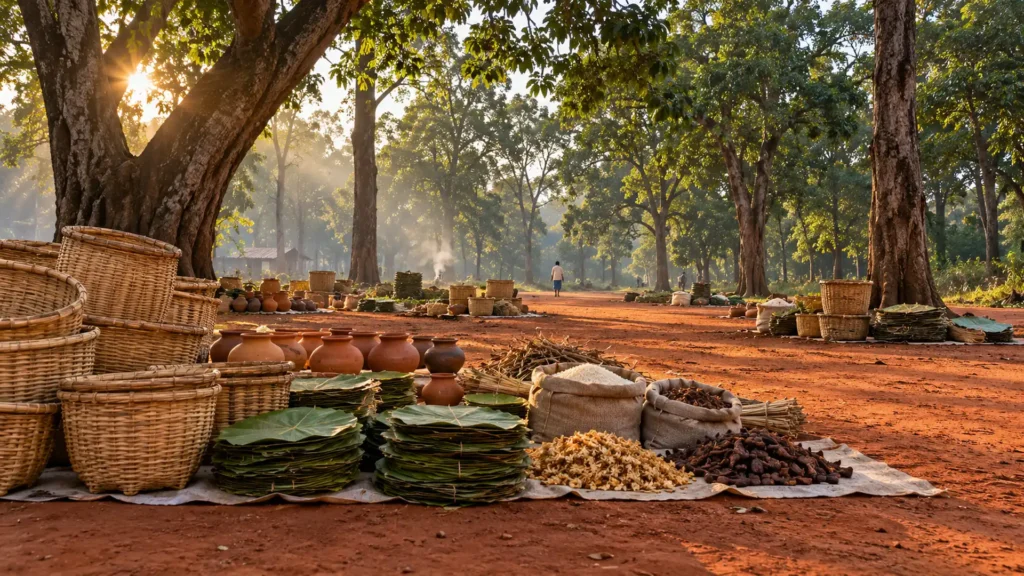
Everyone who comes to southern Chhattisgarh stays in Jagdalpur, and most of them treat it as a bed between waterfalls. That is a mistake, but an understandable one: the town itself is unremarkable, and the thing worth planning around is not in it. Every village in the district around Jagdalpur holds a weekly market — a haat — on a fixed day, and those markets are where Bastar actually happens. Produce, tools, bell metal, wrought iron, leaf plates, salfi. People come in from the surrounding hamlets, do their week’s business, drink, argue and go home. Nothing about it is arranged for visitors, which is exactly why it is the most interesting hour you will spend in the state.
Jagdalpur is the district town of Bastar in southern Chhattisgarh and the base for Chitrakote Falls and Kanger Valley. Its own draw is the ring of weekly village haats around it, each on a fixed weekday, plus the Danteshwari temple, the old palace and a genuinely good anthropological museum. Give the area two to three nights and time at least one of them to land on a market day. October to March. Bastar Dussehra, which runs for around seventy-five days and has little to do with the Ramayana, is the other reason to time a visit carefully.
Why visit Jagdalpur
Three reasons to give Jagdalpur real days rather than treating it as a car park — and one thing to be careful about.
The haats are the real thing
These are working markets, not craft fairs. Nobody is performing, nothing is priced for tourists, and the goods on the ground are what people in the surrounding villages actually buy and sell that week.
Craft you can trace to its source
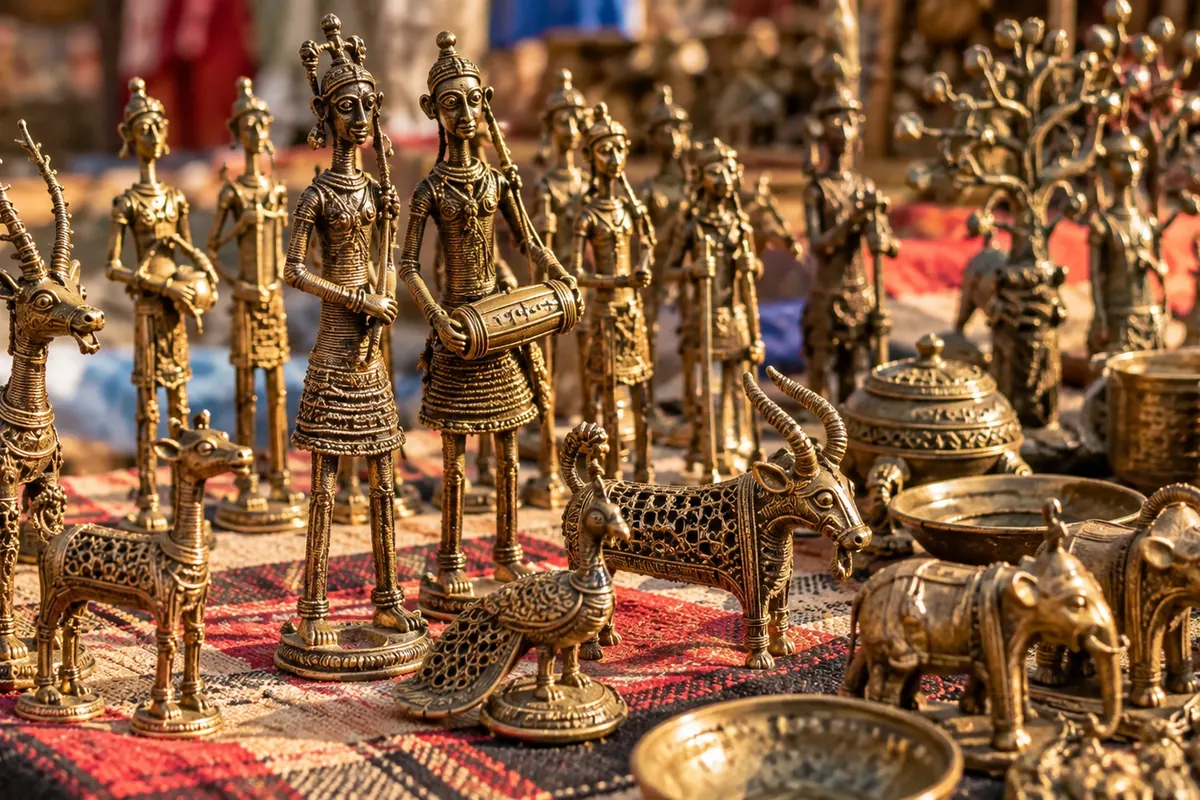
Dhokra bell metal, wrought iron and terracotta are all made in villages within reach of town. Buying at the haat or at the workshop puts the money where it belongs and costs less than a city gallery.
A seventy-five-day festival
Bastar Dussehra is one of the longest festivals in India and is built around local tradition and the Danteshwari temple rather than the Ramayana story told elsewhere. If your dates overlap even a part of it, plan around that.
When to go
Two calendars matter here and they are not the same one: the season, and the day of the week.
October to March (the season): dry, comfortable and the right window for everything else in Bastar. October in particular is the sweet spot, with the waterfalls still high and the roads dry.
The weekday (the bit people forget): each village haat runs on a fixed day of the week, so which markets you can see depends entirely on which days you are in the district. Shifting your arrival by a day is often the difference between catching a big haat and catching none.
Bastar Dussehra (roughly August to October): a very long festival with its main public days clustered near the end. Accommodation tightens and the town is busy. Excellent if you have come for it, disruptive if you have not — either way, check the dates before booking.
April to June: hot, above 40°C, and the markets start early and empty out by mid-morning. Go at dawn or not at all.
The haats are somebody’s weekly shop, not a photo opportunity. Ask before photographing anyone, accept a refusal without argument, and do not photograph people drinking. If you buy something, pay the asking price rather than bargaining hard — the sums involved are trivial to you and are not to the seller.
Things to do in and around Jagdalpur
One market morning, one temple, one museum and one palace — plus the two big sights outside town that most people actually came for.
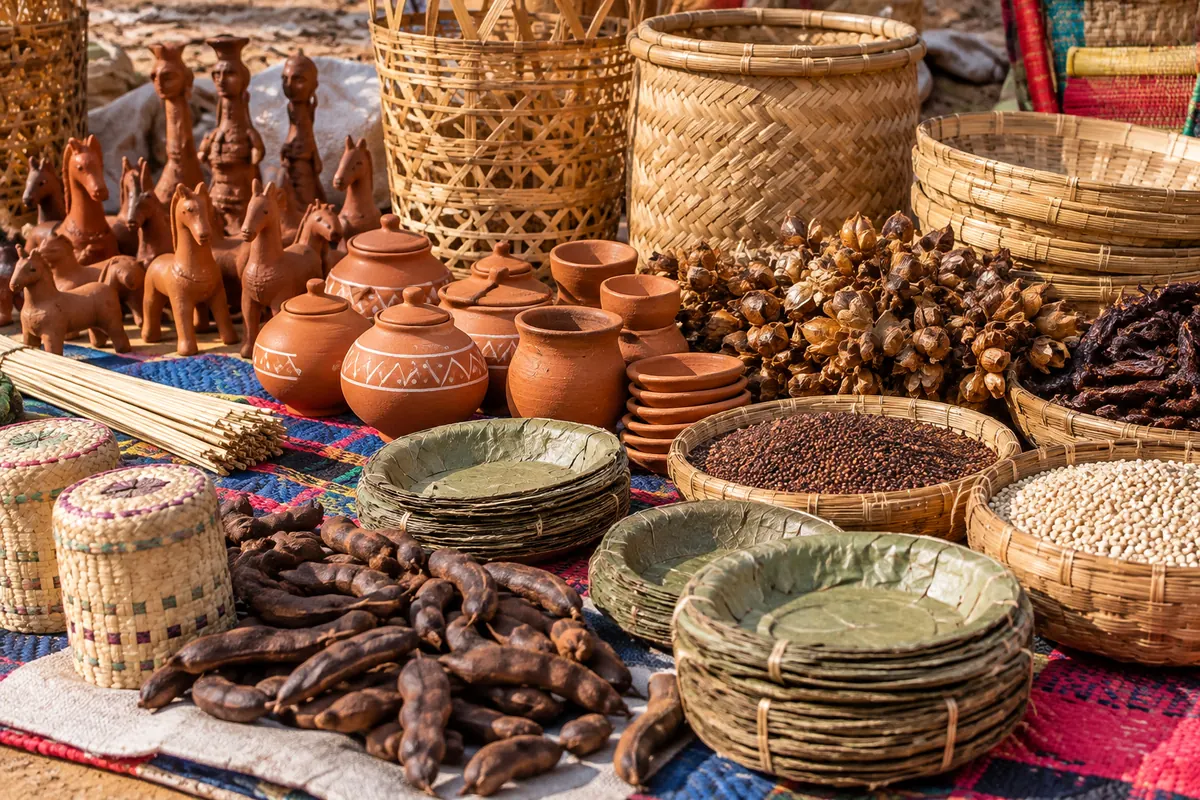
A village haat
Ask your driver or hotel which market falls on which day and build the plan around it. Goods spread on cloth under trees, bamboo baskets, leaf plates, grain, dried fish, iron tools, salfi. Go mid-morning, walk slowly, buy something small, and photograph less than you want to.
The anthropological museum
Small, serious and much better than it needs to be — material culture from the Bastar communities, laid out clearly. Do this before your first haat rather than after; it changes what you notice.
Danteshwari temple
The temple at the heart of Bastar Dussehra and an active place of worship year-round. Modest, busy and central to local life rather than a monument. Dress and behave accordingly.
The old palace
The former seat of the Bastar rulers, in the middle of town. Not a grand set-piece and not extensively open, but worth twenty minutes for the context it gives the Dussehra story.
A bell-metal workshop
Dhokra is cast by the lost-wax method in villages around the district. Several can be visited with a local driver who knows them. Watching a piece being made is worth more than buying three finished ones.
Chitrakote and Kanger
The two sights that bring most people south. Chitrakote is about 38 km west and Kanger Valley roughly 30 km south, and both are day trips from a Jagdalpur base.
What to eat
Jagdalpur has the widest choice in southern Chhattisgarh, which is a low bar but a real one. It is also the best place in the state to eat actual Chhattisgarhi food.
Chhattisgarhi staples
Chila, faraa, bafauri, aamat and bore basi — rice-led, lightly sour, and essentially absent from menus elsewhere in India. Ask for the local thali; the default will be north Indian.
Salfi
The fresh, mildly fermented sap of the sulphi palm, tapped that morning and sold by the pot. It is the drink of Bastar and it is a market-day thing rather than a restaurant one.
Poha and chai
The default breakfast, and necessary if you are heading out early to a market or to Chitrakote for first light.
Eat with care
Freshly cooked and hot is fine; sitting-out and cut fruit less so. Carry your own water rather than buying loose. Nothing exotic — the same rule as any Indian market.
Where to stay
Jagdalpur is the practical base for the whole south. The only real alternative is a night at Chitrakote for the falls.
Jagdalpur
Comfortable mid-range hotels, reliable food, ATMs, and the shortest drives to Chitrakote, Kanger and the market villages. If you are giving Bastar three nights, give them all to Jagdalpur.
Chitrakote
State tourism cottages on the rim of the falls. Worth one night for the floodlit water in the evening and the empty viewpoint at dawn, then back to Jagdalpur. Limited rooms; book well ahead.
Getting there and around
From Raipur: roughly 300 km north, and a full day on the road — six to seven hours is realistic. Everyone underestimates this drive. Do not plan to arrive and sightsee the same day.
By train and air: Jagdalpur has a railway station and a limited regional air service, which makes it the practical gateway to the south of the state. Check current schedules rather than assuming; both are thin.
Getting around: hire a car and driver for the whole stay. The haats are in villages with no useful public transport, the good ones change by the day, and a driver who knows the district is the single most valuable thing you can arrange here — he will know which market is on and how to get there.
Parts of rural Bastar have a longer history of insurgency. The main routes to Chitrakote, Kanger Valley and the well-known market villages are travelled normally, but go with a local operator or driver, stick to established roads, and check your government’s current travel advice before fixing an itinerary.
A simple 2-day plan
One day for the town and a market, one for the falls or the caves. Three nights if you can.
Museum, market, and the makers
Start at the anthropological museum for an hour, then out to whichever village haat is running that day — mid-morning is the peak. Back into town for the Danteshwari temple and the old palace in the afternoon, or out to a bell-metal workshop if the market has left you wanting more of it.
Out to the water or the caves
Either Chitrakote, 38 km west, ideally with a night there for the floodlights and the dawn viewpoint — or Kanger Valley, 30 km south, for Kutumsar cave at opening and Tirathgarh Falls after. With three nights you do both.
Practical tips that actually help
Come October to March
Dry roads, comfortable markets and the waterfalls still running. April to June the haats empty out by mid-morning because of the heat.
Plan around the market day
Each village haat is on a fixed weekday. Ask before you book your dates, not after you arrive — a day either way changes what you get to see.
Get a driver who knows the district
He will know which haat is on, which road is passable and which workshop is worth the detour. This matters more here than anywhere else in the state.
Carry small notes
Everything at a haat is cash and small sums. Turning up with a 500 rupee note for a 20 rupee purchase is a nuisance for the seller.
Ask before you photograph
And accept no. These are people doing their weekly shop, not subjects. Put the camera away around anyone drinking.
Check the Dussehra dates
Bastar Dussehra runs for around seventy-five days with the busiest public days near the end. It will either make your trip or fill every hotel in town.
Mistakes first-time visitors make
- Using Jagdalpur only as a bed. The markets around it are the most distinctive thing in Chhattisgarh, and they are the part most visitors drive straight past.
- Arriving without knowing the haat calendar. Turn up on the wrong two days and you will see no market at all. One question before booking solves it.
- Underestimating the drive from Raipur. Three hundred kilometres here is a full day. Plan the arrival day as a travel day and nothing else.
- Treating the haat as a photo shoot. It is a working market in a living community. Buy something, ask before you shoot, and put the camera down more than you pick it up.
Want your Bastar days to land on a market?
The haat calendar is the one thing that genuinely rewards planning here, and it is almost impossible to work out from outside the district. Tell me your dates and I will line the trip up around a market day, plus Chitrakote and Kanger.
Jagdalpur FAQs
What are the Bastar haats?
Weekly village markets held around Jagdalpur, each on a fixed day of the week. They are working markets where people from the surrounding hamlets buy and sell produce, tools, bell metal, leaf plates and salfi — not craft fairs arranged for visitors, which is what makes them worth planning a trip around.
How do I find out which haat is on which day?
Ask locally once you are in the district — your hotel in Jagdalpur or a driver who works the area will know. The schedule is well established but it is not reliably published, so it is worth asking before you fix your dates rather than after.
What is Bastar Dussehra?
A festival lasting around seventy-five days, centred on the Danteshwari temple in Jagdalpur, and one of the longest in India. Despite the name it has little to do with the Ramayana story told elsewhere and follows its own local tradition. It usually falls across roughly August to October, with the main public days near the end.
How many days do you need in Jagdalpur?
Two to three nights. One day for the town, the museum and a village haat, one for Chitrakote Falls and one for Kanger Valley. Two nights works if you skip one of the two big sights; three lets you do everything without rushing.
Is Jagdalpur safe for tourists?
Jagdalpur itself and the main routes to Chitrakote, Kanger Valley and the well-known market villages are travelled normally. Parts of rural Bastar have a longer history of insurgency, so travel with a local operator or driver, stay on established routes, and check your government’s current travel advice before fixing an itinerary.
Related guides
Keep planning your Chhattisgarh trip with these:
Chhattisgarh Travel Guide
Waterfalls, limestone caves, Bastar’s weekly markets and the brick temples of Sirpur — how to put a Chhattisgarh trip together.
Chitrakote Falls
India’s widest waterfall, and the reason most people come this far south. Best with a night on the rim.
Written by Ashvinee Nagle
I travel India slowly and write it down honestly - practical guides and real itineraries from someone who lives here.
About Ashvinee →Plan your India trip with us
Get one short, honest India travel guide a week — plus a free 7-day Rajasthan itinerary to start.
Free. Unsubscribe any time.