
Kanger Valley National Park: Limestone Caves, a Stepped Waterfall, and When the Gates Are Actually Open
A practical guide to Kanger Valley in Bastar — the three cave systems you can walk into, Tirathgarh Falls, why the park shuts for the monsoon, and how to fit it around a night at Chitrakote.
Kanger Valley is the reason to give Bastar a second day. It is a narrow, densely forested national park south of Jagdalpur, named for the river that runs through it, and it holds three things you will not find together anywhere else in central India: limestone caves you walk down into by lamplight, a waterfall that drops in stone steps rather than a single curtain, and one of the last strongholds of the Bastar hill myna. The catch is access. The park closes for the monsoon and the caves close with it, so the trip only works in a specific half of the year — and that is the single most important thing to get right.
Kanger Valley National Park sits roughly 30 km south of Jagdalpur in the Bastar region. The headline sights are Kutumsar cave, Kailash cave and the stepped Tirathgarh Falls. The park and its caves usually close through the monsoon and reopen around late October or November, so plan for the November-to-February window. One full day is enough. Base yourself in Jagdalpur and pair it with Chitrakote Falls as part of a wider Chhattisgarh trip.
Why visit Kanger Valley
Three things make it worth a full day out of a short Bastar trip — and one thing you must check before you go.
Caves you actually enter
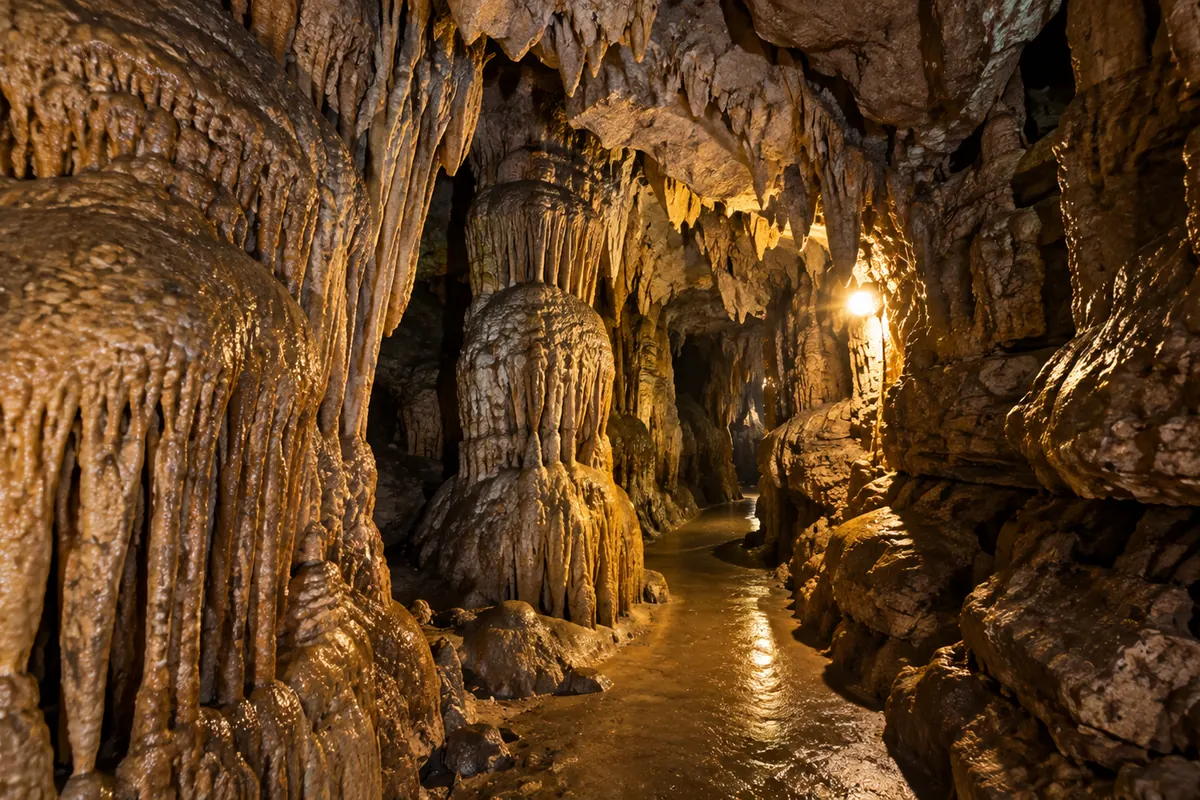
Kutumsar is a long limestone passage well below ground, walked by lamp rather than viewed from a platform. It is a genuinely different experience from anything else on a central India itinerary, and it is over quickly enough to leave the afternoon free.
A waterfall with a different shape
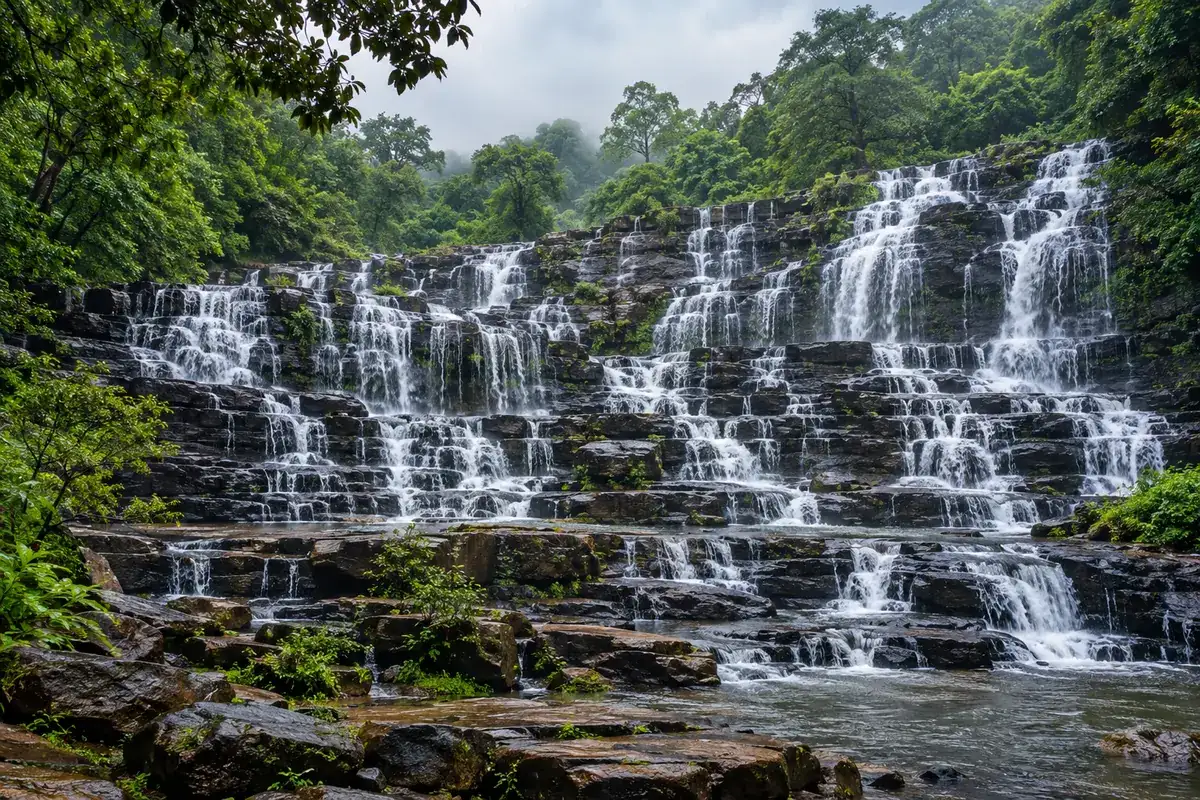
Tirathgarh drops in broad stone steps rather than one sheet, which means you can walk down beside it. After Chitrakote’s single wide curtain the contrast is the point — two very different waterfalls within an hour of each other.
Forest that still feels like forest
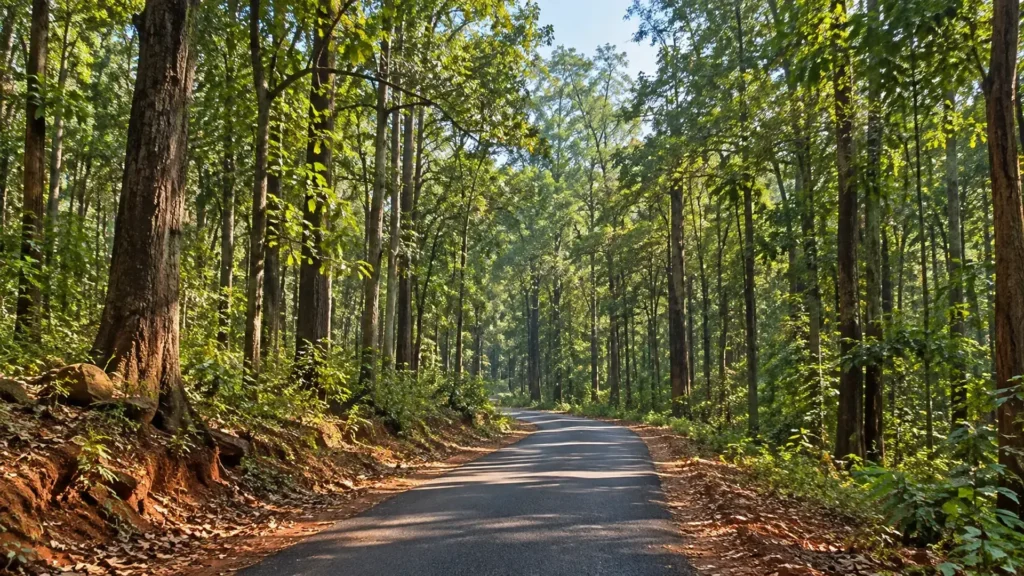
Tall sal, bamboo thickets and red laterite tracks, with very little traffic. This is also hill myna country — Chhattisgarh’s state bird — and the reason birdwatchers make the trip at all.
When to go
The park works on a seasonal calendar and it is not flexible. Getting this wrong is the difference between a good day and a locked gate.
November to February (the window): the park is open, the caves are open, the air is cool and dry, and the forest tracks are firm. This is when to come, and it is not a close call.
March to early June (open but hot): still accessible, but daytime temperatures climb hard and the waterfall thins as the dry season sets in. The caves are the comfortable part of the day.
Mid-June to October (largely closed): the park normally shuts for the monsoon and the caves close with it, because the lower passages flood. Tirathgarh is at its fullest in exactly this period, which is the frustrating part — you may be able to see the falls without entering the park proper, but do not count on the caves.
Opening dates shift year to year with the rains, and individual caves can be closed while the rest of the park is open. Confirm on the day with your hotel in Jagdalpur or the forest department gate rather than trusting a date you read online — including this one.
Things to do in Kanger Valley
The park is compact enough to do properly in a day if you start early and take the caves first.
Walk into Kutumsar cave
A long limestone passage that you enter on foot and follow well below ground, lit by lamps rather than fixed lighting. Stalactites, narrow sections, and complete darkness beyond the lamp. It is also known for blind cave fish that live in its pools. Go first thing — entry is managed in small groups and queues build later.
Kailash cave
Smaller and less visited than Kutumsar, with formations that ring when tapped — which is where the name comes from. Worth adding if you have the morning and the cave is open; the two make a natural pair.
Tirathgarh Falls
A stepped fall that comes down in broad stone terraces. Steps lead down alongside it, so unlike Chitrakote you can get level with the water at several heights. Busiest at midday with families from Jagdalpur; early or late is better.
Look for the Bastar hill myna
Chhattisgarh’s state bird, and Kanger is one of the places it still holds on. Early morning along the forest road is the best chance. Even without it the birding here is strong — bring binoculars rather than hoping for a hide.
Drive the forest road
The road through the park is the underrated part: tall sal, bamboo, red earth verges and almost no traffic. Take it slowly with the windows down rather than treating it as transit between two ticketed sights.
Bhainsa Darha
A quiet water body inside the park, known locally for crocodiles and turtles. Low-key and not always on the standard circuit — ask at the gate whether it is accessible on the day before building it into the plan.
What to eat
There is no real dining inside the park. Eat in Jagdalpur before you leave, and carry water and something for the middle of the day.
Chhattisgarhi staples
Chila, faraa and bafauri — rice-flour pancakes, steamed dumplings and steamed lentil cakes. Rice-led and lightly sour, and almost impossible to find outside the state.
Poha and chai
The park rewards an early start, which means eating at 7am. Poha and hot sweet tea is what everyone else is having and it is the right answer.
Carry your own lunch
Options at the gates are thin and unreliable. Pack water, fruit and something filling in Jagdalpur — and carry your rubbish back out with you.
Salfi
The mildly fermented sap of the sulphi palm, sold fresh at Bastar’s weekly haats. Not available in the park, but worth trying if a market day lines up with your trip.
Where to stay
Almost everyone sleeps in Jagdalpur and drives out. The alternative is to stay at Chitrakote and do the park as a long day from there.
Jagdalpur
Comfortable mid-range hotels, reliable food, ATMs and the shortest drive to the park gate. It is also the base for the weekly haats and the road onward to Chitrakote — the sensible centre of a Bastar trip.
Chitrakote
State tourism cottages on the rim of Chitrakote Falls. A longer drive to Kanger, but it buys you the floodlit falls at night and the empty viewpoint at dawn. Book well ahead.
Getting there and around
From Jagdalpur: roughly 30 km south, about an hour depending on which gate and which sight you are heading for first. This is the standard approach and the one every local driver knows.
From Raipur: around 330 km, a full day’s drive. Nobody should attempt Kanger as a day trip from the capital — stay in Jagdalpur the night before.
Inside the park: you need your own vehicle. There is no shuttle between the caves and the falls, distances are several kilometres, and walking between them is not practical. Guides for the caves are arranged at the entry point and are not optional.
Cave entry is managed in small groups with a guide and a lamp, and numbers are capped. Arriving at opening is worth far more here than at most Indian sights — it is the difference between walking straight in and waiting out several groups.
A simple 1-day plan
Caves first, waterfall second. Doing it the other way round means queueing.
Caves at opening, falls after lunch
Leave Jagdalpur early and be at Kutumsar when it opens — first group in, no queue, and the cave to yourselves for most of it. Add Kailash if it is open. Drive the forest road slowly toward Tirathgarh, walk down beside the steps, and be back in Jagdalpur by evening. If you are continuing to Chitrakote, go straight there and catch the floodlights.
Practical tips that actually help
Come November to February
The park and the caves are open, the tracks are dry and the heat is manageable. Outside that window you are gambling on access.
Be there when it opens
Cave entry is capped and grouped. The first hour is the whole difference between a good visit and standing in a line in the sun.
Shoes with grip
Cave floors are damp and uneven and the steps beside Tirathgarh are wet. Sandals are the wrong choice on both counts.
Carry cash
Entry, guide fees and parking are cash. ATMs are reliable in Jagdalpur and absent once you leave it.
No phone signal
Coverage drops away inside the park and disappears underground. Agree a meeting point with your driver before you go in.
Do not count on the monsoon
This is the one park in the region where the wet season genuinely closes the main attraction. Confirm the day before rather than driving out on faith.
Mistakes first-time visitors make
- Treating it as a half-day add-on. Two caves, a waterfall and the forest road do not compress into three hours. Give it the day.
- Arriving at midday. Cave groups are capped and the queue builds from mid-morning. You can lose an hour to it, in full sun.
- Assuming the caves are open because the park is. They are separately managed and separately closed. Check both.
- Planning it in the monsoon because the waterfall looks best then. Tirathgarh is at its fullest exactly when the park is most likely to be shut. Chitrakote is the monsoon waterfall; Kanger is the dry-season day.
Working out whether the caves will be open?
Kanger’s calendar is the trickiest bit of timing in Chhattisgarh, and it moves with the rains. Tell me your dates and I will tell you whether the park and the caves will both be open — and how to build Chitrakote and a haat day around them.
Kanger Valley FAQs
What is the best time to visit Kanger Valley National Park?
November to February. The park and its caves are open, the forest tracks are dry and the weather is cool. The park normally closes through the monsoon, roughly mid-June to October, and the caves close with it because the lower passages flood.
Are the Kutumsar caves open all year?
No. Kutumsar and the other caves normally shut for the monsoon and reopen once the water has drained, usually around late October or November. Exact dates move with the rains and individual caves can close while the park is open, so confirm locally on the day.
How far is Kanger Valley from Jagdalpur?
About 30 km south, roughly an hour by road depending on which gate you use. Jagdalpur is the practical base for the park and for the wider Bastar region.
How long do you need at Kanger Valley?
One full day. Kutumsar takes an hour or two including the walk in, Tirathgarh Falls another one to two, and the forest road between them is worth taking slowly rather than rushing.
Can you visit Kanger Valley and Chitrakote on the same day?
It is possible but tight — they are about 60 km apart on slow roads. The better shape is a night at Chitrakote for the floodlit falls and dawn viewpoint, then a full day at Kanger, basing yourself in Jagdalpur.
Related guides
Keep planning your Chhattisgarh trip with these:
Chhattisgarh Travel Guide
Waterfalls, limestone caves, Bastar’s weekly markets and the brick temples of Sirpur — how to put a Chhattisgarh trip together.
Chitrakote Falls
India’s widest waterfall, an hour and a half away, and the natural other half of a Bastar trip. Very different water, very different season.
Written by Ashvinee Nagle
I travel India slowly and write it down honestly - practical guides and real itineraries from someone who lives here.
About Ashvinee →Plan your India trip with us
Get one short, honest India travel guide a week — plus a free 7-day Rajasthan itinerary to start.
Free. Unsubscribe any time.