
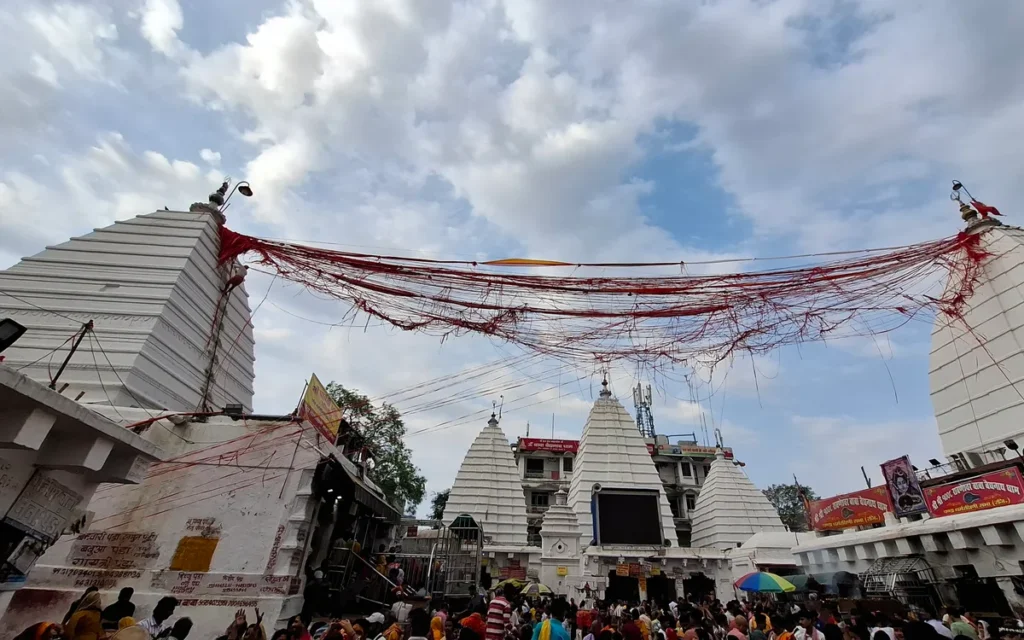
Deoghar: The Baidyanath Jyotirlinga and Baba Dham
A practical guide to Deoghar — the Baba Baidyanath Jyotirlinga, the great Shravani Mela and kanwar pilgrimage, the temples and hills around Baba Dham, and how to visit one of the holiest Shiva shrines in India.
Deoghar — “the abode of the gods”, and known to pilgrims as Baba Dham — is one of the holiest places in India: home to the Baba Baidyanath temple, which enshrines one of the twelve Jyotirlingas of Shiva and is also counted among the Shakti Peethas. For most of the year it is a busy but manageable temple town in eastern Jharkhand; for one month in the monsoon it becomes the stage for one of the largest religious gatherings on earth, when millions of saffron-clad kanwariyas walk barefoot over a hundred kilometres to pour Ganga water over the linga. It is the great Hindu pilgrimage of the state.
Deoghar (Baba Dham), in eastern Jharkhand, enshrines the Baba Baidyanath Jyotirlinga — one of the twelve holiest Shiva shrines, and also a Shakti Peetha. Its temple complex of 22 shrines is the focus; during the month of Shravan (July–August) the Shravani Mela draws millions of kanwariyas walking barefoot ~105 km from Sultanganj. Give it a day or two, come October to March for a calmer visit, and note the Trikut ropeway has been closed since 2022. It pairs with Parasnath on a Jharkhand trip.
Why visit Deoghar
Three reasons Deoghar is the great pilgrimage of Jharkhand.
A Jyotirlinga and a Shakti Peetha
Baba Baidyanath is one of only twelve Jyotirlingas of Shiva in all of India, and is also revered as a Shakti Peetha — a rare double sanctity that makes it one of the most powerful pilgrimage sites in the country.
The Shravani Mela
For the month of Shravan, Deoghar hosts one of the largest religious gatherings on earth, as millions of kanwariyas carry Ganga water on foot from Sultanganj. To witness the saffron tide is extraordinary — overwhelming if you want quiet.
A whole temple landscape
Beyond the main shrine, Deoghar and its surroundings hold Naulakha Mandir, the Tapovan caves, Nandan Pahar, the Satsang ashram and the paired pilgrimage of Basukinath nearby — enough devotional depth for a day or two.
When to go
Deoghar’s season is really about the festival calendar and the heat.
October to March (the calm season): pleasant weather and far smaller crowds — the easiest time for an unhurried darshan and to see the town and hills.
Shravan (July–August, the Shravani Mela): the great pilgrimage month, with millions of kanwariyas and enormous queues. An unforgettable spectacle, but plan meticulously or avoid the dates if you want calm.
April to June (hot): fierce heat makes long temple queues draining. If you come, go very early.
Things to do in Deoghar
The Baidyanath temple is the heart of a visit; the other shrines and hills round out a day or two.
Baba Baidyanath Temple
The Jyotirlinga shrine at the centre of a complex of 22 temples, where the main linga and the Parvati temple are tied together by a sacred thread (gathbandhan). Expect queues, security and a dress code; VIP/sheeghra darshan passes can cut the wait.
Naulakha Mandir
A tall, elegant temple a couple of kilometres from Baba Dham, built in the style of the Belur Math and named for its (then) nine-lakh cost — a graceful counterpoint to the main complex.
Tapovan & Satsang
The Tapovan hills, with meditation caves and a Shiva shrine, and the large Satsang ashram founded by Sri Anukulchandra draw their own pilgrims — quieter, reflective stops around the town.
Nandan Pahar & Trikut
Nandan Pahar is a small hilltop park with views and a funfair feel; Trikut Pahar, the source of the Mayurakshi, has a hilltop shrine — but note its ropeway has been closed since the 2022 accident, so check access.
Basukinath
About 45 km away, the Basukinath temple is traditionally paired with Baidyanath — many pilgrims complete their vows here after Deoghar, especially during Shravan.
What to eat
Food is simple, vegetarian and pilgrim-oriented, with a famous local sweet to take home.
Veg thali & prasad
Simple North Indian vegetarian meals and thalis at the dharamshalas and eateries around Baba Dham are the mainstay, alongside temple prasad.
Peda
Deoghar is famous for its peda, a dense milk sweet sold by the boxful around the temple — the classic edible souvenir of Baba Dham.
Tiffin & chai
Tiffin centres and tea stalls do cheap, quick breakfasts and snacks — handy fuel for an early darshan.
Expect queues
On weekends, Mondays (Shiva’s day) and through Shravan, expect long queues. Consider a sheeghra-darshan pass and go very early.
Where to stay
Deoghar has plenty of pilgrim-oriented stays, from dharamshalas to comfortable hotels — book far ahead for Shravan.
Hotels near Baba Dham
Comfortable mid-range and a few upscale hotels cluster around the temple and the main roads, handy for early darshan. They fill and surge in price during Shravan.
Dharamshalas & lodges
Numerous dharamshalas and budget lodges serve the pilgrim crowds — inexpensive and central, if basic.
Getting there and around
By air: Deoghar Airport, opened in 2022, has made the pilgrimage far easier to reach, with flights from Delhi, Kolkata and other cities.
By train: Jasidih Junction, about 7 km away, is the main railhead on the Delhi–Kolkata line, with a branch line to Baidyanathdham (Deoghar) station; trains run from across the country.
Getting around: the temple area is walkable (and often closed to vehicles near the shrine); autos and taxis cover the town, Jasidih and Basukinath. A car with a driver helps for the outlying hills and Basukinath.
During Shravan the whole town reorganises around the kanwar route and queues can run for kilometres. If you’re not coming for the Mela, the cool months give a far calmer darshan.
A 1-day plan
One day covers the main darshan and the key shrines; add a half day for Basukinath or the hills.
Darshan and the shrines
Start very early for Baba Baidyanath darshan before the queues build, then visit Naulakha Mandir and, if time allows, Tapovan or Nandan Pahar. Pick up Deoghar peda before you leave, or drive on to Basukinath.
Practical tips that actually help
Go at dawn for darshan
Queues at Baba Baidyanath build through the day and are longest on Mondays and in Shravan. Early morning is calmest.
Consider a darshan pass
Sheeghra-darshan (quick-darshan) passes can save hours in the queue at busy times — worth it on weekends and festival days.
Decide about Shravan
The Shravani Mela (July–August) is spectacular but draws millions. Come deliberately and plan far ahead, or choose the cool months for a quiet visit.
Don’t count on the Trikut ropeway
It has been closed since the 2022 accident. Check its status before planning a Trikut trip around it.
Dress modestly
Cover shoulders and knees, be ready to remove shoes and footwear-cloak, and follow the temple’s rules on phones and offerings.
Take home peda
Deoghar’s peda is the classic souvenir — buy from an established shop near the temple.
Mistakes first-time visitors make
- Arriving at Shravan unprepared. The month-long Mela brings millions and kilometre-long queues. Book months ahead for it, or pick quieter dates.
- Turning up mid-morning for darshan. Queues peak through the day, especially on Mondays. Go at dawn or buy a sheeghra-darshan pass.
- Planning a trip around the Trikut ropeway. It’s been shut since the 2022 accident. Don’t rely on it — check the current status first.
- Coming in peak summer. Long queues in April–June heat are draining. The October–March window is far more comfortable.
Planning Deoghar into a Jharkhand trip?
Deoghar pairs naturally with the Jain peak of Parasnath and the rest of eastern Jharkhand. Tell me your dates and I’ll build the route.
Deoghar FAQs
What is Deoghar famous for?
Deoghar, known as Baba Dham, is famous for the Baba Baidyanath temple, which enshrines one of the twelve Jyotirlingas of Shiva and is also a Shakti Peetha — one of the holiest pilgrimage sites in India — and for the vast Shravani Mela held there each monsoon.
What is the Shravani Mela?
The Shravani Mela is a month-long festival in Shravan (July–August) when millions of saffron-clad kanwariyas collect Ganga water at Sultanganj and walk barefoot about 105 km to pour it over the Baidyanath linga at Deoghar. It is one of the largest religious gatherings on earth.
How do you reach Deoghar?
Deoghar now has its own airport (opened 2022) with flights from Delhi, Kolkata and elsewhere. By rail, Jasidih Junction (about 7 km away) is the main railhead on the Delhi–Kolkata line, with a branch to Baidyanathdham station.
What is the best time to visit Deoghar?
October to March, for pleasant weather and far smaller crowds and queues. Shravan (July–August) is the great pilgrimage season but extremely crowded; the April–June summer is hot and hard for long queues.
Is the Trikut ropeway at Deoghar open?
The Trikut ropeway has been closed since a serious accident in 2022. Check its current status before planning a visit around it, and don’t rely on it being operational.
Can you combine Deoghar with other sites?
Yes. Basukinath (about 45 km) is the traditionally paired temple, and Deoghar sits in eastern Jharkhand near Parasnath (Shikharji) and within reach of Patna and the Bihar circuit, so it’s easy to combine on a wider trip.
Related guides
Keep planning your Jharkhand trip with these:
Jharkhand Travel Guide
Waterfalls, the plateau hill station, tiger-reserve forests and the great pilgrimages — how to put a Jharkhand trip together.
Parasnath (Shikharji)
The holiest Jain tirtha and the state’s highest peak — the natural pairing with Deoghar in the east.
Baidyanath temple complex photo by Pinakpani, CC BY 4.0, via Wikimedia Commons; cropped and converted to WebP.

Written by Ashvinee Nagle
I travel India slowly and write it down honestly - practical guides and real itineraries from someone who lives here.
About Ashvinee →Plan your India trip with us
Get one short, honest India travel guide a week — plus a free 7-day Rajasthan itinerary to start.
Free. Unsubscribe any time.