
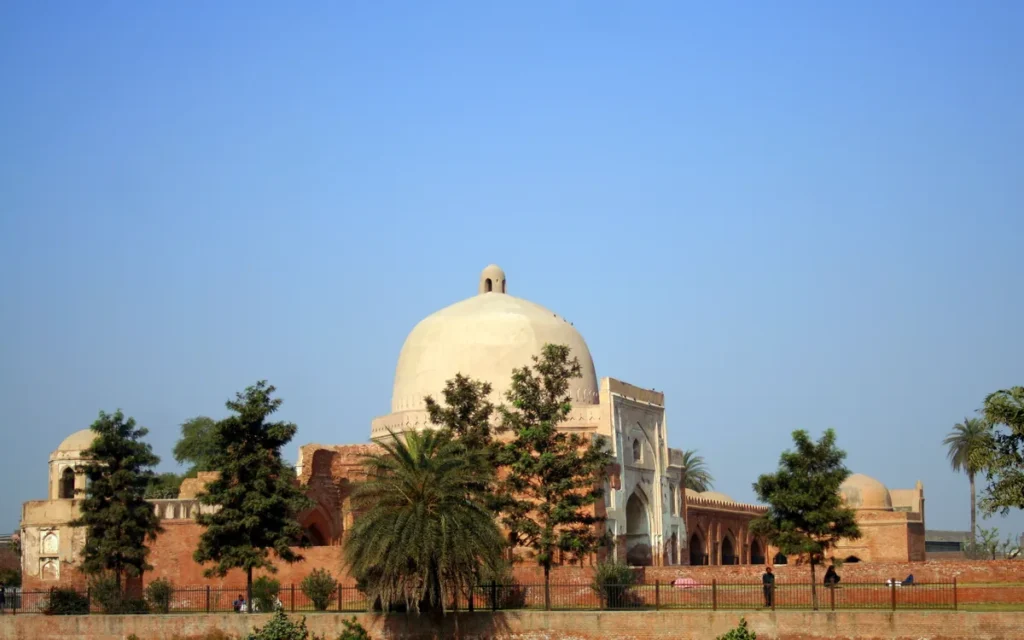
Panipat: The Town Where India’s Fate Turned Thrice
A practical guide to Panipat — the three decisive battles of 1526, 1556 and 1761, Babur’s Kabuli Bagh Mosque, the Kaala Amb memorial and Panipat Museum, the Sufi dargah, and the handloom city they stand in.
Few towns have shaped Indian history like Panipat. On these plains north of Delhi, three battles decided the fate of the subcontinent: in 1526 Babur defeated Ibrahim Lodi and founded the Mughal empire; in 1556 the young Akbar’s forces secured it against Hemu; and in 1761 Ahmad Shah Abdali broke the Maratha advance in one of the bloodiest battles of the age. The monuments are modest and scattered through a busy industrial city now famous for its handlooms, but for anyone drawn to history, standing where empires turned is reason enough to stop.
Panipat, about 90 km north of Delhi in Haryana, is the town of three history-changing battles — 1526 (Babur vs Lodi), 1556 (Akbar vs Hemu) and 1761 (Abdali vs the Marathas). The sites are modest: Babur’s Kabuli Bagh Mosque, the Kaala Amb battlefield memorial, the Panipat Museum and the Bu Ali Shah Qalandar dargah, in a city now known for handloom textiles. It’s a half-day stop on the Delhi–Chandigarh corridor, best October to March, and pairs with Kurukshetra on a Haryana trip.
Why visit Panipat
Three reasons the history buff should stop at Panipat — and one note on expectations.
Three battles that made history
1526, 1556 and 1761 — the founding of the Mughal empire, its consolidation under Akbar, and the shattering of Maratha power. Few places on earth have hosted three such decisive battles on the same ground.
Babur’s victory mosque
The Kabuli Bagh Mosque, built by Babur to mark his 1526 victory over Ibrahim Lodi, is a rare early-Mughal monument and the most tangible link to the first battle.
Battlefield memory & a museum
The Kaala Amb memorial marks the field of the third battle, and the Panipat Museum tells the story of all three — turning an ordinary city into a place where you can trace the hinges of Indian history.
When to go
Panipat is a hot plains city, so the cool season is clearly the best time.
October to March (the season): pleasant for walking the scattered sites. The best window, and it fits a Delhi–Chandigarh corridor trip.
April to June (hot): very hot and dusty; sightseeing is draining. Go early if you must.
July to September (monsoon): humid, with the usual plains rains — manageable between showers.
Things to do in Panipat
The battle sites and the museum are the draw; the Sufi dargah and the textile bazaars round out a half day.
Kabuli Bagh Mosque
Built by Babur around 1527 to commemorate his victory over Ibrahim Lodi in the First Battle of Panipat, this early-Mughal mosque (named for his wife Kabuli Begum) is the town’s key monument.
Kaala Amb memorial
The site, marked by a memorial tower and park, where the Third Battle of Panipat was fought in 1761 — the clash that broke the Maratha advance in the north. A sombre, evocative stop.
Panipat Museum
The regional museum lays out the stories of all three battles with maps, models and artefacts — the best single place to make sense of what happened here and when.
Bu Ali Shah Qalandar Dargah
The shrine of the 13th-century Sufi saint Bu Ali Shah Qalandar is one of Panipat’s most revered sites, drawing pilgrims of many faiths — a quieter, devotional side of the town.
The handloom bazaars
Panipat is one of India’s great textile towns — the “city of weavers” — famous for carpets, blankets and home furnishings. The markets are a browse for rugs and textiles.
What to eat
Food is hearty North Indian and Haryanvi — eat in the city or on the highway.
North Indian & Haryanvi
Punjabi–North Indian food dominates, with hearty Haryanvi touches: paratha, chole, kadhi, dal and plenty of ghee and lassi.
Highway dhabas
The NH44 corridor around Panipat is lined with famous dhabas and Haryana Tourism complexes — a classic highway meal on the Delhi–Chandigarh drive.
Street snacks & sweets
The city bazaars do chaat, samosas and North Indian sweets for a quick bite between sites.
A half-day town
Panipat’s sights are quick to see. Plan it as a half-day stop and eat en route rather than lingering.
Where to stay
Most visitors see Panipat on a day trip; there are business hotels in town and more in Delhi.
Business & mid-range hotels
Panipat has a reasonable spread of business and mid-range hotels along the highway and in the city — fine for a night if you’re breaking the Delhi–Chandigarh drive.
Delhi / Kurukshetra
Most people visit from Delhi (about 90 km) or combine it with Kurukshetra (about 70 km north) rather than staying in Panipat itself.
Getting there and around
By train: Panipat Junction is on the busy Delhi–Ambala–Chandigarh line, with frequent trains — a quick, easy way to arrive from Delhi.
By road: Panipat sits on NH44, about 90 km (around 2 hours) north of Delhi — a straightforward drive, and an easy combine with Kurukshetra further north.
Getting around: the battle sites, museum and dargah are spread across the city, so use autos or a hired car to link them in a half day.
Panipat and Kurukshetra sit on the same Delhi–Chandigarh corridor (NH44), about 70 km apart — the natural way to do Haryana’s history-and-Gita leg in one trip.
A half-day plan
Half a day covers the battle sites, the museum and the dargah on a Delhi–Chandigarh corridor trip.
Battles, museum and dargah
See Kabuli Bagh Mosque and the Kaala Amb memorial, make sense of it all at the Panipat Museum, and visit the Bu Ali Shah Qalandar dargah. Then drive on to Kurukshetra or back to Delhi.
Practical tips that actually help
Read the battles first
The sites are modest. A little background on the three battles turns them from ordinary markers into the turning-points they were.
Come by train or on the drive
Panipat Junction is on the Delhi–Chandigarh line, and the town is an easy stop on the NH44 drive north — fit it in rather than making a special trip.
Group the sites
Kabuli Bagh, Kaala Amb, the museum and the dargah are scattered. Use a car or auto to do them efficiently in a half day.
Browse the textiles
Panipat is a famous handloom town. If you like rugs, blankets or home furnishings, the bazaars are worth a wander.
Come in the cool months
October to March is far more comfortable than the hot, dusty summer for walking the open sites.
Eat on the highway
The NH44 dhabas and Haryana Tourism complexes around Panipat are an institution — a good excuse for a proper road meal.
Mistakes first-time visitors make
- Expecting grand monuments. Panipat’s sites are modest and scattered. Come for the history, not the architecture, and read up first.
- Making a special long trip for it. It’s a half-day stop. Combine it with Kurukshetra or do it on the Delhi–Chandigarh drive.
- Skipping the museum. The Panipat Museum ties the three battles together. Without it the scattered sites don’t add up.
- Coming in peak summer. The plains bake in April–June. The cool October–March months are far better for the open sites.
Planning Panipat into a Haryana trip?
Panipat pairs with Kurukshetra on the Delhi–Chandigarh corridor. Tell me your dates and I’ll build it into a Haryana route.
Panipat FAQs
Why is Panipat historically important?
Panipat, north of Delhi, was the site of three decisive battles: 1526 (Babur defeated Ibrahim Lodi and founded the Mughal empire), 1556 (Akbar’s forces defeated Hemu) and 1761 (Ahmad Shah Abdali broke the Marathas). Each shaped the course of Indian history.
What is there to see in Panipat?
The main sites are Babur’s Kabuli Bagh Mosque (marking the first battle), the Kaala Amb memorial of the third battle, the Panipat Museum on all three battles, and the Bu Ali Shah Qalandar Sufi dargah. Panipat is also a famous handloom-textile city.
How do you reach Panipat?
Panipat Junction is on the Delhi–Ambala–Chandigarh railway line with frequent trains. By road it’s about 90 km (2 hours) north of Delhi on NH44, and around 70 km south of Kurukshetra.
How much time do you need in Panipat?
Half a day is enough to see the battle sites, the museum and the dargah. Most visitors combine it with Kurukshetra or see it on the Delhi–Chandigarh drive rather than staying overnight.
What is the best time to visit Panipat?
October to March, when the weather is pleasant for walking the scattered, open sites. Avoid the hot, dusty April–June summer.
What is Panipat famous for besides the battles?
Panipat is one of India’s great textile towns — often called the “city of weavers” — known for carpets, blankets, rugs and home furnishings, much of it exported worldwide.
Related guides
Keep planning your Haryana trip with these:
Haryana Travel Guide
Kurukshetra, Panipat, the Mughal gardens, the hills and the birding wetlands — how to put a Haryana trip together.
Kurukshetra
The land of the Mahabharata and the Gita — the great sacred tanks and the Jyotisar shrine, just up NH44.
Kabuli Bagh Mosque photo by Ramesh Lalwani, CC BY-SA 3.0, via Wikimedia Commons; cropped and converted to WebP.

Written by Ashvinee Nagle
I travel India slowly and write it down honestly - practical guides and real itineraries from someone who lives here.
About Ashvinee →Plan your India trip with us
Get one short, honest India travel guide a week — plus a free 7-day Rajasthan itinerary to start.
Free. Unsubscribe any time.