
Kurukshetra: The Land of the Mahabharata and the Gita
A practical guide to Kurukshetra — the battlefield of the Mahabharata and the place where the Bhagavad Gita was spoken, the sacred tanks of Brahma Sarovar and Sannihit Sarovar, the Gita shrine at Jyotisar, and how to visit Haryana’s spiritual heart.
Kurukshetra is the ground on which the Mahabharata was fought and the Bhagavad Gita was spoken — the “Dharmakshetra”, the field of righteousness, where Krishna is believed to have counselled Arjuna on the eve of the great war. For Hindus it is one of the most sacred places in India, a town of enormous bathing tanks, Gita shrines and pilgrimage circuits in the plains of northern Haryana. It is a devotional and historical destination rather than a scenic one, at its most powerful during the International Gita Mahotsav, and an easy, meaningful stop on the Delhi–Chandigarh corridor.
Kurukshetra, in northern Haryana, is where the Mahabharata was fought and the Bhagavad Gita was delivered. Its highlights are the vast Brahma Sarovar and Sannihit Sarovar sacred tanks, the Gita-birthplace shrine at Jyotisar (with its light-and-sound show and museum), the Krishna Museum and Sheikh Chilli’s Tomb. It’s busiest and most spectacular during the International Gita Mahotsav (November–December). Give it a day or two, come October to March, and reach it easily on the Delhi–Chandigarh line. Part of a Haryana trip.
Why visit Kurukshetra
Three reasons Kurukshetra is the spiritual heart of Haryana.
Where the Gita was spoken
By tradition the Bhagavad Gita was delivered here, at Jyotisar, on the eve of the Mahabharata war — making Kurukshetra one of the most sacred and resonant places in all of Hindu tradition.
The great sacred tanks
Brahma Sarovar is among the largest sacred tanks in Asia, and Sannihit Sarovar is believed to gather all the holy waters of India on certain days. Ritual bathing here, especially during eclipses and the Gita Mahotsav, is the heart of the pilgrimage.
A whole landscape of sites
Beyond the tanks and Jyotisar, Kurukshetra has the Krishna Museum, the Gita light-and-sound show, Sthaneshwar Mahadev temple, the Mughal-era Sheikh Chilli’s Tomb and the 48-kos pilgrimage circuit — enough for an absorbing day or two.
When to go
Kurukshetra sits in the hot northern plains, so season and festival timing both matter.
October to March (the season): pleasant and comfortable for the tanks, shrines and museums. The best window for an unhurried visit.
Gita Mahotsav (November–December): the International Gita Mahotsav, around Gita Jayanti, fills Brahma Sarovar with lamps, aarti and crowds for a multi-day festival — extraordinary to witness, overwhelming if you want calm.
April to June (hot): fierce heat makes long outdoor visits draining. Solar eclipses (whenever they fall) also draw enormous bathing crowds to Brahma Sarovar.
Things to do in Kurukshetra
The tanks and Jyotisar are the heart of a visit; the museums and the Mughal tomb round out a day or two.
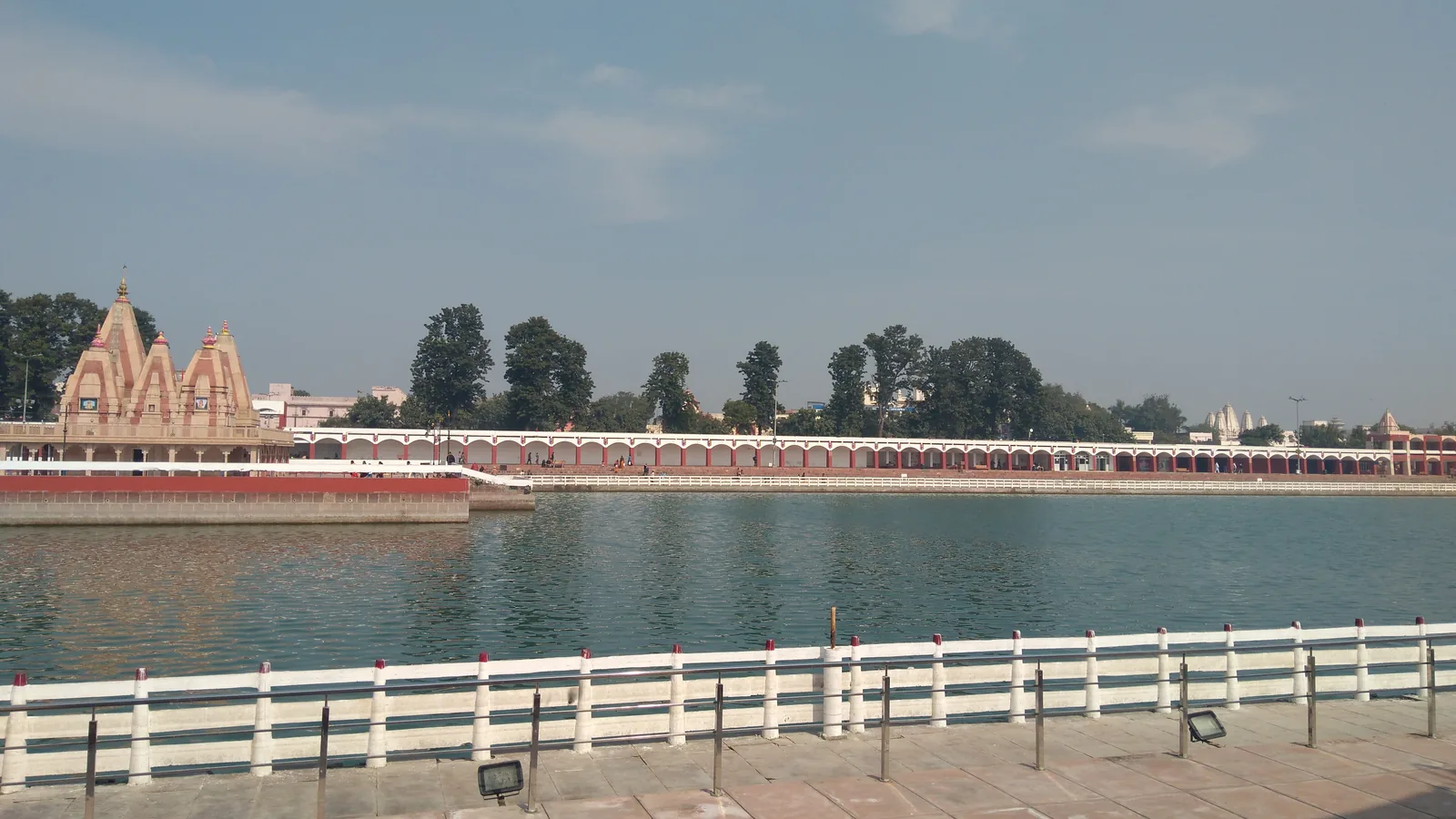
Brahma Sarovar
One of the largest sacred tanks in Asia, ringed by ghats, temples and the Sarveshwar Mahadev shrine on an island. It’s the centre of Kurukshetra’s ritual life — and the stage for the Gita Mahotsav’s evening aarti and lamps.
Jyotisar
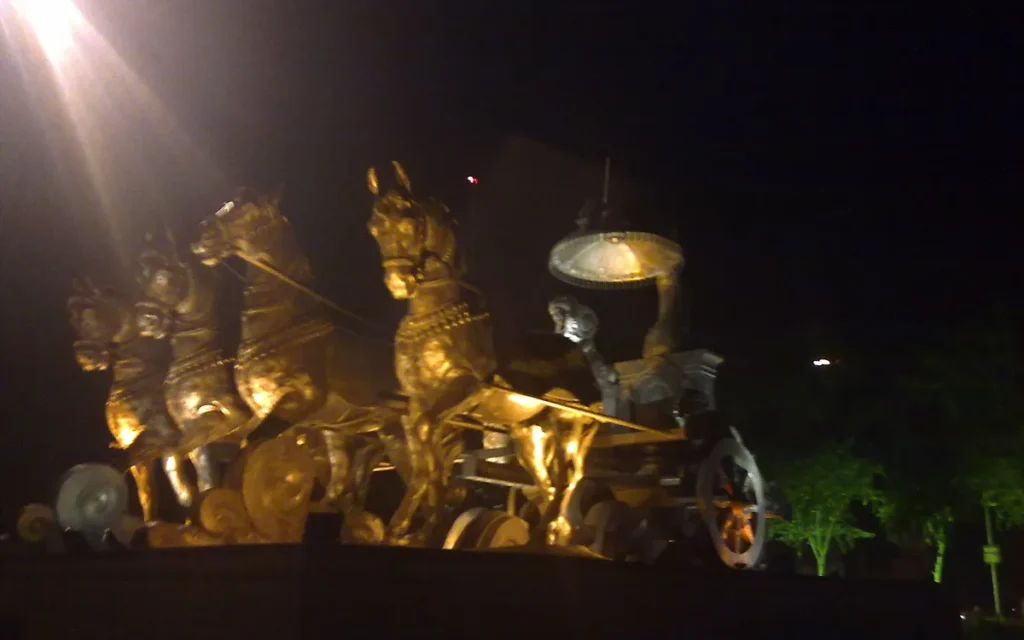
The lakeside shrine, ancient banyan and chariot sculpture marking the spot where Krishna is said to have delivered the Bhagavad Gita to Arjuna, with a light-and-sound show and a modern experiential museum. The soul of the pilgrimage.
Sannihit Sarovar
A second great tank, believed to gather all of India’s holy waters on Amavasya and during eclipses, lined with temples including Dhruv Bhagat and Lakshmi Narayan. A key stop on the pilgrimage.
Krishna Museum & Panorama
The Krishna Museum, the Gita-themed Panorama & Science Centre and the Kalpana Chawla Planetarium make a good cluster for understanding the Mahabharata story and the town.
Sheikh Chilli’s Tomb
At Thanesar, the elegant Mughal-era tomb of the Sufi Sheikh Chilli — sometimes called the “Taj of Haryana” — sits beside the ancient Harsh Ka Tila mound of old Thanesar.
The 48-kos tirtha trail
Kurukshetra anchors the traditional 48-kos parikrama linking scores of Mahabharata-era tirthas across the region — a deeper journey for pilgrims with time and a car.
What to eat
Food is simple, vegetarian and pilgrim-oriented, with hearty Haryanvi staples.
Veg thali & chole bhature
Simple vegetarian meals, thalis and North Indian favourites like chole bhature and paratha are the mainstay around the tanks and in the town.
Kadhi, saag & lassi
For local flavour try Haryanvi kadhi-chawal, seasonal sarson ka saag with bajra roti, and thick, sweet lassi — this is the dairy heartland.
Prasad & langar
Temple prasad and, at times, langar (community meals) are part of the pilgrim experience around the sarovars.
Water & sun cover
The tanks and open sites get hot and shadeless outside winter. Carry water and sun cover, and something to cover your head at the shrines.
Where to stay
Kurukshetra has pilgrim-oriented hotels, dharamshalas and a Haryana Tourism property — book ahead for the Gita Mahotsav.
Hotels & Haryana Tourism
Comfortable mid-range hotels and the Haryana Tourism (Neelkanthi Yatri Niwas-style) property near Brahma Sarovar are the handiest bases. They fill and surge during the Gita Mahotsav, so book well ahead.
Dharamshalas & lodges
Dharamshalas and budget lodges around the sarovars serve pilgrims — inexpensive and central, if basic.
Getting there and around
By train: Kurukshetra Junction is on the busy Delhi–Ambala–Chandigarh line, with frequent trains; it’s one of the easiest ways to arrive.
By road: Kurukshetra sits just off NH44, about 160 km (3 hours) from Delhi and around 90 km from Chandigarh — a straightforward drive on the Delhi–Chandigarh corridor.
Getting around: the tanks and town sites are close together; for Jyotisar, Thanesar and the wider circuit, use autos or a hired car for the day.
Kurukshetra pairs naturally with Panipat (the battlefields) on the Delhi–Chandigarh corridor, and with Pinjore and Morni further north — an easy northern-Haryana sequence.
A 1-day plan
One full day covers the tanks, Jyotisar and the museums; add time for Thanesar or the wider circuit.
Tanks, Jyotisar and the museums
Start at Brahma Sarovar in the cool morning, then Jyotisar for the Gita shrine and museum, and Sannihit Sarovar. After lunch, the Krishna Museum cluster and, if time allows, Sheikh Chilli’s Tomb at Thanesar; return to Brahma Sarovar for the evening aarti.
Practical tips that actually help
Time the Gita Mahotsav
The International Gita Mahotsav (Nov–Dec) is Kurukshetra at its most spectacular, but also its most crowded. Come deliberately and book ahead, or choose quieter dates.
See the tanks at golden hour
Brahma Sarovar is most beautiful at sunrise and sunset, and especially during the evening aarti — plan your visit around the light.
Dress modestly
This is a pilgrimage town. Cover shoulders and knees, remove shoes at shrines, and carry something to cover your head.
Mind eclipse crowds
Brahma Sarovar draws enormous bathing crowds during solar eclipses and on Amavasya. Wonderful to witness, but plan around it if you want calm.
Come by train
Kurukshetra Junction on the Delhi–Chandigarh line is a quick, easy way in — often simpler than driving.
Carry water and sun cover
The tanks and open sites are hot and shadeless outside winter. Bring water, sun cover and patience for crowds at peak times.
Mistakes first-time visitors make
- Expecting a scenic hill-town visit. Kurukshetra is a devotional and historical place of tanks and shrines, not scenery. Come for the Gita and the pilgrimage.
- Arriving at the Gita Mahotsav unprepared. The festival brings huge crowds and full hotels. Book well ahead for it, or pick quieter dates.
- Skipping Jyotisar. The Gita-birthplace shrine is the soul of the visit. Don’t cut it to save time at the tanks.
- Coming in peak summer. The open tanks and sites bake in April–June. The October–March window is far more comfortable.
Planning Kurukshetra into a Haryana trip?
Kurukshetra pairs with Panipat and the northern hills. Tell me your dates and I’ll build it into a Haryana route from Delhi or Chandigarh.
Kurukshetra FAQs
Why is Kurukshetra famous?
Kurukshetra, in northern Haryana, is where the Mahabharata war was fought and the Bhagavad Gita was delivered by Krishna to Arjuna. It’s one of Hinduism’s most sacred sites, famous for the Brahma Sarovar and Sannihit Sarovar tanks, the Gita shrine at Jyotisar and the great Gita Mahotsav.
Where was the Bhagavad Gita spoken in Kurukshetra?
By tradition at Jyotisar, a lakeside spot marked by an ancient banyan tree and a chariot sculpture, where Krishna is believed to have delivered the Gita to Arjuna. It has a light-and-sound show and a modern experiential museum.
What is the best time to visit Kurukshetra?
October to March, for comfortable weather. The International Gita Mahotsav (November–December) is the most spectacular time but very crowded, and solar eclipses draw huge bathing crowds to Brahma Sarovar. Avoid the fierce April–June heat.
How do you reach Kurukshetra?
Kurukshetra Junction is on the Delhi–Ambala–Chandigarh railway line with frequent trains. By road it’s about 160 km (3 hours) from Delhi and 90 km from Chandigarh, just off NH44 — the Delhi–Chandigarh corridor.
How much time do you need in Kurukshetra?
One full day covers Brahma Sarovar, Jyotisar, Sannihit Sarovar and the Krishna Museum cluster. Add time for Sheikh Chilli’s Tomb at Thanesar or the wider 48-kos pilgrimage circuit.
What else can you combine with Kurukshetra?
Panipat and its battlefields sit on the same Delhi–Chandigarh corridor to the south, and the Pinjore gardens and Morni hills lie to the north near Chandigarh — making an easy northern-Haryana sequence.
Related guides
Keep planning your Haryana trip with these:
Haryana Travel Guide
Kurukshetra, Panipat, the Mughal gardens, the hills and the birding wetlands — how to put a Haryana trip together.
Panipat
The town of the three great battles — Babur’s mosque, the Kaala Amb memorial and the Panipat Museum, on the way back toward Delhi.
Krishna Chariot photo by Gagan.leonidas and Brahma Sarovar photo by Ashish Bhatnagar, both CC BY-SA 3.0, via Wikimedia Commons; cropped and converted to WebP.
Written by Ashvinee Nagle
I travel India slowly and write it down honestly - practical guides and real itineraries from someone who lives here.
About Ashvinee →Plan your India trip with us
Get one short, honest India travel guide a week — plus a free 7-day Rajasthan itinerary to start.
Free. Unsubscribe any time.