
Five days · Odisha
A slow five days in Odisha: Puri, Konark and the Chilika lagoon
The old temple coast at winter pace — what you can actually see at Jagannath if you are not Hindu, what is left standing at Konark, and the lagoon where the dolphins are.
- Eastern India
- Temples and coast
- 5 days
- From Bhubaneswar60 km~1.5 hr to Puri
- Best windowNov–FebBirds, dolphins, cool air
- Time needed5 days3 for the temple triangle
- JagannathHindus onlyThere is a rooftop view
The short version
Odisha’s coast holds the best temple architecture in eastern India and a lagoon that is one of the few places on earth with Irrawaddy dolphins. Five days covers Bhubaneswar, Puri, Konark and Chilika without rushing. Go between November and February, when the migratory birds are in and the heat has gone. One thing to know before you plan: the Jagannath temple at Puri admits Hindus only, with no exceptions for visitors — but there is a rooftop opposite the east gate that gives you the tower, and Konark, the other great monument here, is open to everyone.
Why Odisha
Odisha gets a fraction of the visitors that Rajasthan or Kerala do, which is odd given what is here. The Kalinga temple style produced some of the finest stone carving in India between the 7th and 13th centuries, and a good deal of it is still standing on this stretch of coast. Konark alone would justify the trip.
The state also has Chilika, a brackish lagoon the size of a small county, which is one of only a handful of places in the world where you can see Irrawaddy dolphins, and which takes in something like two hundred thousand migratory birds each winter. Temples in the morning, a boat in the afternoon, and almost nobody else around: that is the shape of a good Odisha week.
Carved
The best stonework in the east
Konark, Lingaraj, Mukteshwar and Rajarani are all within an hour of each other. Few places concentrate this much of it.
Wild
Dolphins and 300 bird species
Chilika is Asia’s largest brackish lagoon and a serious birding destination between November and February.
Quiet
Genuinely uncrowded
Outside Rath Yatra and the New Year weekend, you will share these monuments with very few people.
When to go
The season is October to March and the coast is unpleasant outside it — hot and humid from April, then the monsoon. Within the season there is a clear best half.
What you get
Cool, dry days in the low twenties, calm water for the Chilika boats, and the migratory birds in full residence at Mangalajodi.
The dolphins
Calmer water means better odds at Satapada. Go on the first boats; the lagoon gets choppier and busier as the day warms.
What it costs
Puri fills at Christmas and New Year, and Bengali holiday season keeps the beach hotels busy. Book ahead for late December.
October
Warm and humid still, with the monsoon barely gone, but green and very quiet. The birds have not arrived yet.
March
Pleasant early in the month and emptier than the peak, though the migratory flocks start thinning out and the heat builds fast.
Avoid
April to September. Summer on this coast is punishing, and the monsoon brings cyclone risk as well as rain.
If you are coming for Rath Yatra
The chariot festival at Puri falls in June or July and is on a different scale entirely — hundreds of thousands of people, booked-out accommodation for weeks around it, and heat. It is a remarkable thing to witness but it is not a relaxed trip, and nothing in this guide’s pacing applies. Plan that one separately and book months out.
Who can enter which temple
This catches people out, so it is worth being plain about it. Two of the major living temples here admit Hindus only, and the rule is enforced at the gates. It is not a ticketing matter — there is no pass, no fee and no exception for visitors, including Indian nationals who are not Hindu.
The workaround that actually works
Opposite the Singha Dwara, the east gate of the Jagannath temple, the Raghunandan Library lets visitors up to its roof. From there you get a clear view over the compound wall of the 65-metre vimana and the Sudarshana Chakra at its top. It is the standard answer for non-Hindu visitors and worth doing even if you can go inside — it is the only place you see the tower whole.
- Jagannath Temple, Puri — Hindus only. A queue system operates for darshan and the temple is busiest early morning and around the daily rituals. Leave phones, cameras, leather and bags outside; there are lockers near the gates.
- Lingaraj Temple, Bhubaneswar — Hindus only. There is a raised viewing platform outside the north wall, built for exactly this purpose, which gives a good view of the main tower.
- Konark Sun Temple — open to everyone. It is a monument rather than a working temple, ticketed and managed by the Archaeological Survey.
- Mukteshwar, Rajarani and the cave sites — open to everyone. Rajarani is no longer in worship, so there is no restriction at all.
Getting there
Bhubaneswar is the gateway and the three main sights sit in a rough triangle around it.
- FlyBhubaneswar (BBI)Biju Patnaik International, well connected domestically. About 60 km to Puri.
- RailBhubaneswar or Puri stationPuri is a terminus with direct trains from Kolkata, Delhi and the south.
- RoadPuri → Konark Marine Drive~35 km of coast road through casuarina. The nicest drive of the trip.
- RoadPuri → Satapada (Chilika)~50 km, about 1 hr 15. The dolphin jetty.
- RoadBhubaneswar → Mangalajodi~70 km southwest, for the birds rather than the dolphins.
- LocalHired car for the days outAutos work inside Puri; the lagoon and Konark need a vehicle.
Puri
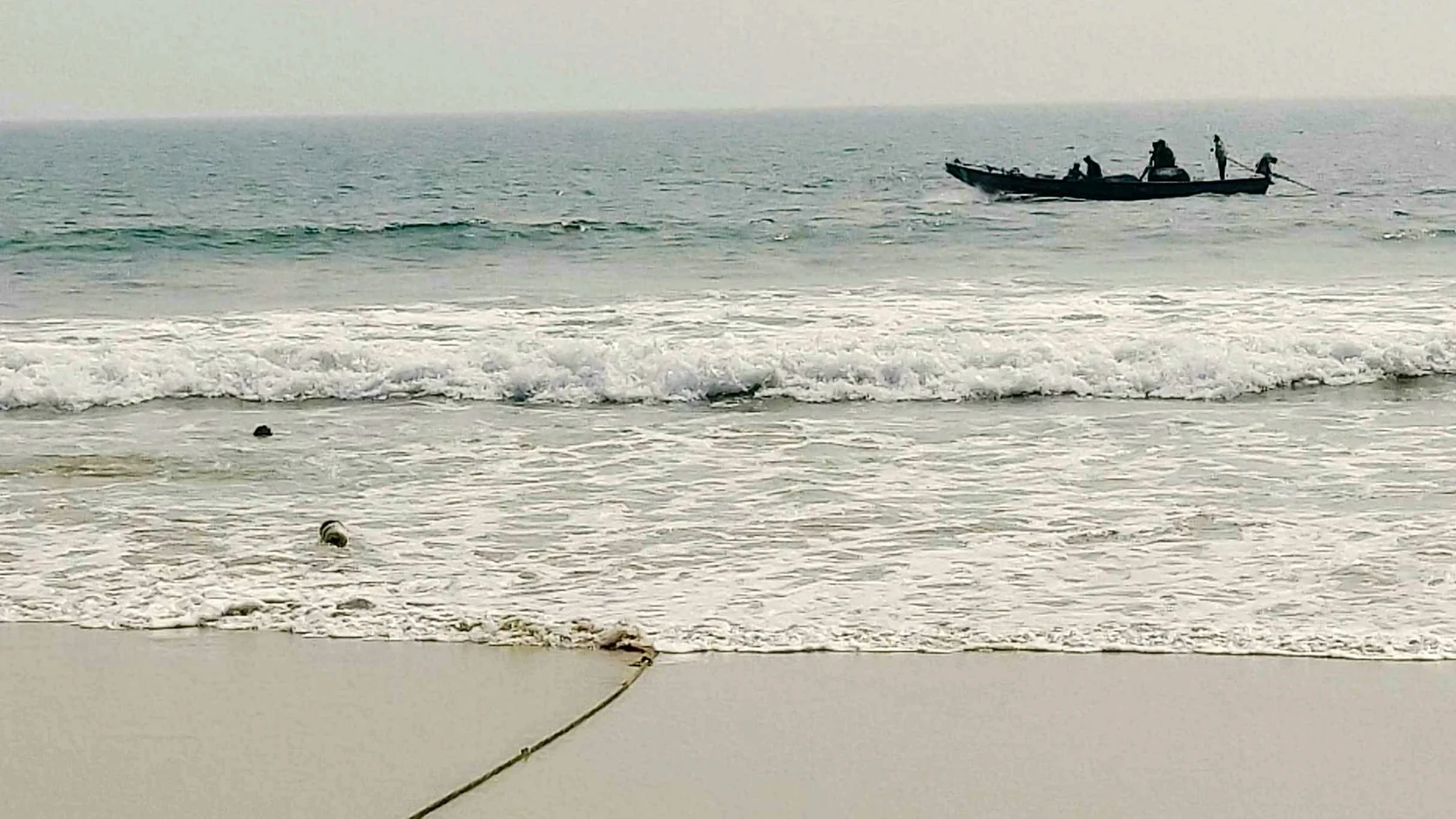
Puri is a pilgrimage town first and a beach town second, and it is much better for it. The seafront is busy and used — fishing boats, families, horse rides, hawkers — rather than a resort strip.
- 01
The temple and the Grand Road
Whether or not you can go inside, walk the Bada Danda — the wide processional road the chariots run down at Rath Yatra. The scale of it makes sense of the festival even in an empty month.
- Old town
- 1–2 hr
- Early morning
- 02
Puri beach at dawn
Go before six and it is fishing boats and sunrise rather than crowds. Swim with care: this is an open coast with a real undertow, and the safe stretches are the patrolled ones near the main hotels.
- Central
- Sunrise
- Mind the undertow
- 03
Raghurajpur
A craft village about 14 km out where nearly every household paints pattachitra — narrative scroll painting on treated cloth. It is a working village, not a showroom; buy directly and expect to be shown the whole process.
- ~14 km
- 2 hr
- Buy direct
Konark
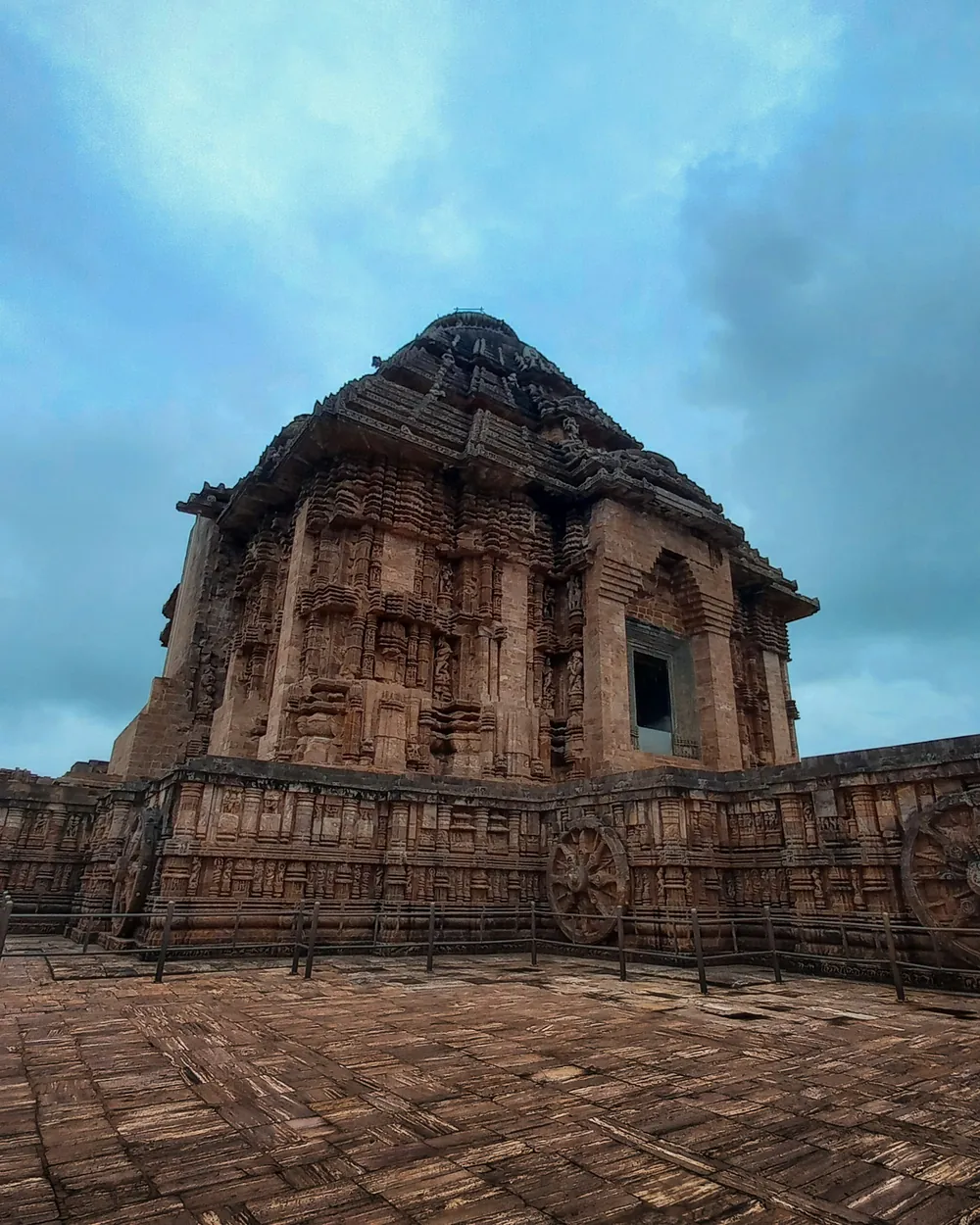
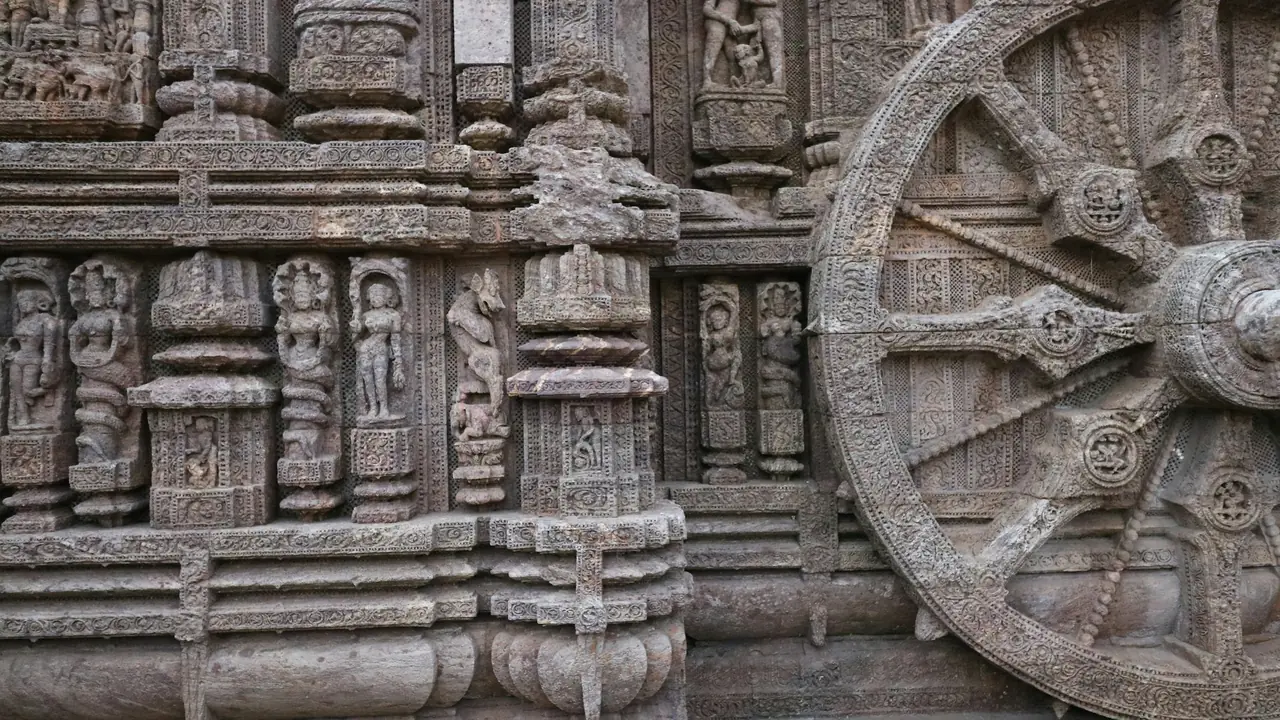
The Sun Temple was built in the 13th century as a colossal stone chariot for Surya — twenty-four carved wheels along its base, drawn by seven horses. It is a UNESCO World Heritage Site and the single best reason to come to Odisha.
Set expectations, though. The great tower over the sanctum collapsed centuries ago. What stands is the jagamohana, the audience hall, about 39 m tall — and its interior was packed with sand by British engineers in 1903–04 to stop it falling too. The Archaeological Survey has been working on removing that fill, so the sanctum may open to visitors at some point; check locally rather than assuming. None of this diminishes the place. You come for the carving on the outside, and there is an enormous amount of it.
- Go early. Gates open in the morning and the light on the east-facing carvings is best then. By midday the stone is glaring and hot.
- Take a guide, or read first. The iconography is dense and much of it is easy to walk past. Licensed guides wait at the entrance.
- The wheels are the thing. Each is a working sundial. Someone will show you how to read the time from the spokes, and it genuinely works.
- The museum is small but worth twenty minutes — it holds sculpture recovered from the collapsed sections.
The rule
Temples in the morning, water in the afternoon. The light and the crowds both work that way round here.
— Travel India
Chilika: dolphins and birds
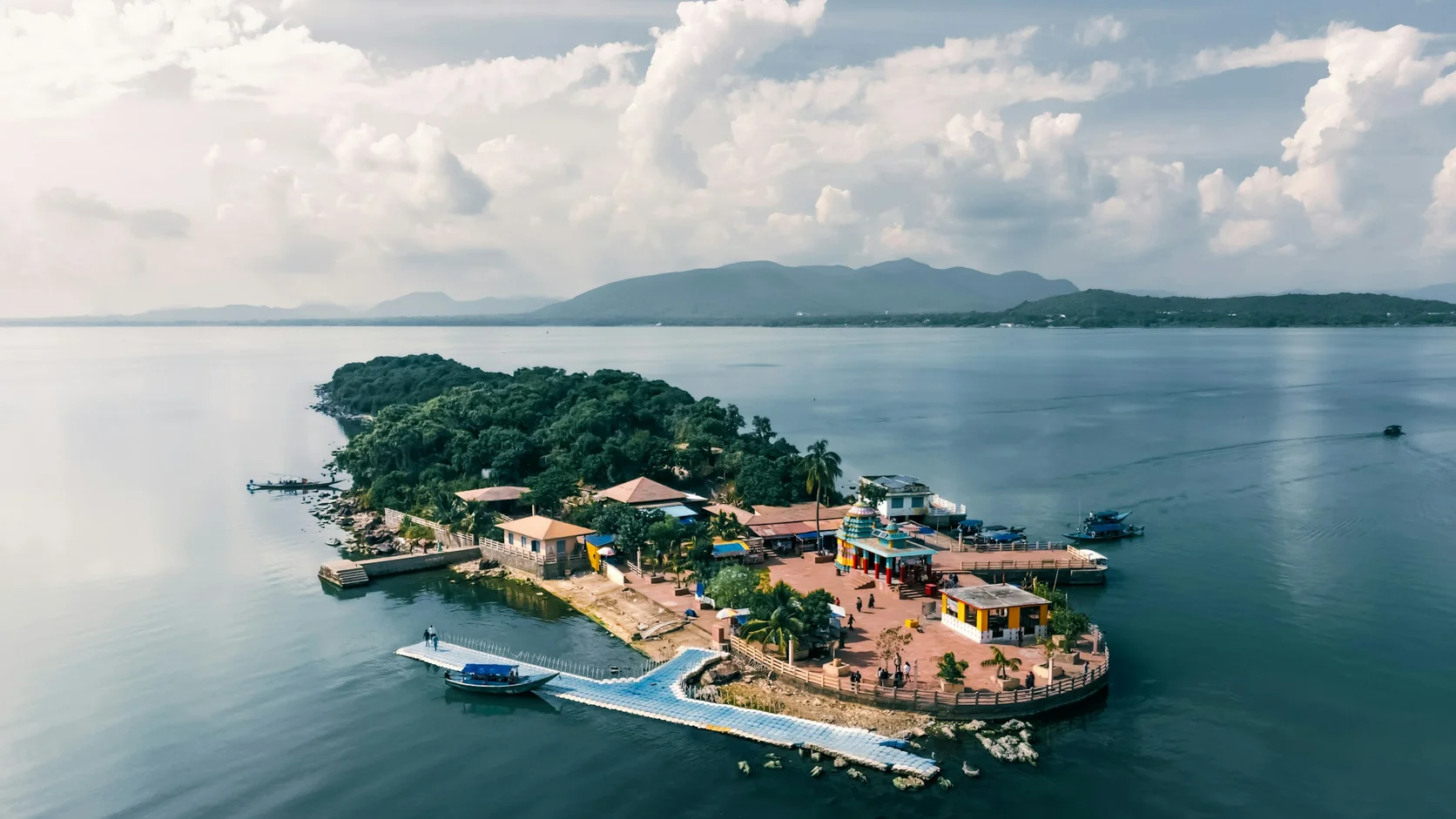
Chilika is Asia’s largest brackish lagoon, roughly 1,100 square kilometres in the wet season, separated from the Bay of Bengal by a long sand bar. It supports one of the few remaining populations of Irrawaddy dolphins anywhere, and in winter it fills with migratory birds from Siberia and Central Asia.
- 04
Satapada, for the dolphins
The usual base, about 50 km from Puri. Boats run out towards the sea mouth. Sightings are good but never guaranteed — and choose an operator who keeps distance rather than chasing, which stresses the animals and is worse for everyone’s photos.
- ~50 km from Puri
- Half day
- Oct–Feb
- 05
Mangalajodi, for the birds
Marshland on the northern edge, about 70 km from Bhubaneswar, with more than 300 species recorded. The village turned from poaching to conservation and the boatmen are now the guides, which is the best part of the story.
- ~70 km from BBI
- Dawn
- Nov–Feb
- 06
Which one to choose
If you only have one lagoon day: Mangalajodi at dawn if you care about birds, Satapada if you want the dolphins and the sea mouth. They are on opposite sides and do not combine well in a day.
- Pick one
- Not both
- Start early
Bhubaneswar’s older temples
The capital was once said to have hundreds of temples, and enough survive to make a very good morning. These are small, early, and far more rewarding at close range than their size suggests.
10th c.
Mukteshwar
The one to see if you see only one. Small, complete, and with a carved stone gateway that is the finest thing of its kind here.
11th c.
Rajarani
No longer in worship, so open to all, and set in a garden. Known for the carved figures around its tower.
2nd c. BCE
Udayagiri and Khandagiri
Rock-cut Jain caves on two facing hills, with inscriptions and carved cells. An easy, shaded hour.
Lingaraj, the largest and most important of them, is the one with the Hindus-only rule — use the viewing platform outside the north wall if that applies to you.
A five-day plan
Two bases: Bhubaneswar at the start, Puri for the rest. It keeps the driving short and the mornings free.
- Day 1Arrive BhubaneswarMukteshwar and Rajarani in the afternoon, Udayagiri if there is light.
- Day 2Mangalajodi → PuriDawn on the marsh, then drive south and check in at Puri.
- Day 3KonarkEarly gates, the Marine Drive back, afternoon at Raghurajpur.
- Day 4SatapadaFirst boat onto the lagoon; back to Puri for the evening.
- Day 5Puri, then outBeach at sunrise, the Grand Road, then the drive or train back.
If you only have three days
Drop the lagoon entirely rather than squeezing it: Bhubaneswar, Konark and Puri make a complete short trip on their own. Chilika deserves a whole unhurried day or none at all.
Practical tips that actually help
- Leave phones and leather at the temple gate. Jagannath and Lingaraj both bar cameras, phones, leather goods and bags. Lockers sit near the entrances; do not plan on photographing inside.
- Dress conservatively at the living temples. Covered shoulders and knees. It matters more here than at the monuments.
- Mornings are for stone, afternoons for water. East-facing carvings light up early and the lagoon is calmest before the wind picks up.
- Carry cash. Boat operators, village craft purchases and temple-area parking are cash businesses, and the ATMs cluster in the towns.
- The sea at Puri is not a swimming pool. There is a genuine undertow. Stay where the lifeguards are and do not go out of your depth.
- Eat the fish. This is a coastal state with its own distinct cooking — mustard-heavy, lighter than Bengali food. Ask for the local preparation rather than the tourist menu.
FAQs about Odisha
Can non-Hindus enter the Jagannath Temple in Puri?
No. The temple admits Hindus only and the rule is enforced at all four gates, with no pass or exception for visitors. The usual alternative is the roof of the Raghunandan Library opposite the east gate, which gives a clear view of the 65-metre tower and the Sudarshana Chakra. Non-Hindus can also see the deities during the Rath Yatra procession, when they leave the temple.
When is the best time to visit?
November to February. The weather is cool and dry, the Chilika water is calm for boats, and the migratory birds are in residence at Mangalajodi. October and March work as quieter shoulders. April to September is hot, humid and cyclone-prone.
How many days do I need?
Five is comfortable for Bhubaneswar, Konark, Puri and one full day on Chilika. Three covers the temple triangle without the lagoon. Anything less and you are mostly in a car.
Can you go inside the Konark Sun Temple?
You can walk the site freely — it is an Archaeological Survey monument, open to everyone. But the main tower fell long ago, and the surviving audience hall was filled with sand in 1903–04 to stabilise it, so its interior has been closed since. Work to remove that fill has been under way, so ask locally whether access has changed.
Are dolphin sightings at Chilika guaranteed?
No, and be wary of anyone who says otherwise. Irrawaddy dolphins are wild and endangered; October to February gives the best conditions, and an early boat helps. Pick an operator who keeps a respectful distance rather than pursuing the animals.
Is Odisha good for solo travellers?
Yes. It is low-key, inexpensive and used to pilgrims travelling alone, with good rail links and plenty of budget accommodation in Puri. Usual precautions apply on the beach after dark and on the quieter lagoon roads.
Plan with us
Planning an eastern India trip?
I help travellers plan slow, well-paced India trips that get the seasons, temple rules and distances right — including Odisha, Bengal and the wider east. Free 48-hour reply.
Plan my India trip →
Written by Ashvinee Nagle
I travel India slowly and write it down honestly - practical guides and real itineraries from someone who lives here.
About Ashvinee →Plan your India trip with us
Get one short, honest India travel guide a week — plus a free 7-day Rajasthan itinerary to start.
Free. Unsubscribe any time.