
Nine days · Ladakh
A slow nine days in Ladakh: Leh, Nubra, the lakes and Hanle’s dark sky
A high-desert trip planned around the two things most itineraries get wrong — the altitude, which costs you two days before you go anywhere, and the permit rule that changed while the guides kept repeating the old one.
- High Himalaya
- Jun and Sep
- 9 days
- Leh sits at3,500 mTwo days of rest first
- Best windowJun and SepNot peak August
- Time needed9 days7 without Hanle
- Indian visitorsNo ILPA fee receipt instead
The short version
Ladakh is a cold desert on the far side of the Himalaya, and almost everything that goes wrong on a trip here comes from treating it like an ordinary mountain holiday. Leh is at 3,500 m and the passes are well over 5,000 m, so the Union Territory requires two full days of acclimatisation in Leh before you cross any of them — that is a rule, not a suggestion, and it means a five-day trip does not work. Indian travellers no longer need an Inner Line Permit; you pay a fee online and carry the receipt. Foreign nationals still need a Protected Area Permit arranged through a registered Leh agent. Go in June or September rather than peak August, which is no longer the safe, dry month it used to be.
Why Ladakh
Ladakh sits in the rain shadow of the Himalaya, which is the whole explanation for what it looks like. The monsoon that soaks the rest of India arrives at the main range and stops. What is left on the far side is bare rock in ochre and violet, a thin green thread of barley and apricot along the rivers, and a sky so dry and thin that the light has a hard edge to it.
It is also a Tibetan Buddhist cultural landscape that has been continuously lived in for a thousand years. The gompas at Thiksey, Hemis, Lamayuru and Diskit are working monasteries with resident monks and dawn prayers, not restored monuments. That combination — an extreme landscape with a living culture inside it — is why Ladakh stays with people who have already seen a lot of mountains.
Two honest caveats before you plan. This is high altitude, and it treats everyone the same regardless of fitness. And it has become popular fast: Ladakh took more than four lakh visitors in the first eight months of 2026, roughly half again on the year before. Go in the shoulder weeks, stay longer in fewer places, and you will still have most mornings to yourself.
When to go
The usable season runs from about May to early October, and within it, June and September are the two best months. That is a slight departure from the standard advice, and it is deliberate.
June has all the roads open, snow still on the passes, and the summer crowds not yet at full volume. September has the clearest air of the year, the harvest in the barley fields, thinner traffic and identical conditions at Pangong and Nubra. Between them sits the peak, and the peak has become less reliable.
Ladakh is a desert, but it is no longer a dependably dry one in high summer. In August 2025 Leh recorded 80.2 mm of rain — its wettest August in 52 years, more than five times the normal — and the region was hit by a run of cloudbursts and landslides. Flash floods closed the Srinagar–Leh highway at Lamayuru, a landslide shut Zoji La, and travellers were stranded in the Shyok valley. That was an extreme year, not a new normal. But it is enough reason to prefer the months either side of it if your dates are flexible, and to build slack into any August trip.
- May. Srinagar–Leh usually open, Manali–Leh usually not. Cold, quiet, some lakes still frozen at the edges.
- June. Both highways open. The classic month, and the best one for a first visit.
- July and August. Warmest, busiest, and the window where cloudburst and landslide risk is real. Perfectly doable — just do not plan a tight connection out.
- September. The clearest light of the year and the calmest roads. Nights get cold quickly after the middle of the month.
- October onward. Passes start closing, hotels shut, and the trip becomes a winter trip — a different proposition entirely.
The permit rule that changed
This is the single most out-of-date thing on the internet about Ladakh, and it is worth being precise about.
Indian nationals no longer apply for an Inner Line Permit. What you do instead is pay the Ladakh environment and development charges online through the LAHDC Leh portal — an environment fee, a per-day wildlife fee for the Changthang wildlife areas, and an optional Red Cross contribution — and carry the printed receipt. It is a few hundred rupees for a normal trip. That receipt is what gets checked at the barriers on the way to Nubra, Pangong, Tso Moriri, Hanle and Umling La. Almost every operator, sign and blog still calls it “the permit”, which is why the confusion persists.
Foreign nationals still need a Protected Area Permit, and it is a genuinely different process: it goes through a registered Leh travel agent rather than the public portal, and it is normally issued for a group rather than an individual. Nationals of Pakistan, China and Afghanistan, and holders of diplomatic, UN and journalist passports, face additional clearances through the central ministries and should start months rather than days ahead.
- Apply online, print two copies. Checkposts keep one. Phone screenshots are not reliably accepted and there is no signal at most of the barriers.
- Carry original photo ID. The receipt is checked against it.
- Fees are charged per day for the wildlife component, so declare your real trip length rather than the minimum.
- Verify on the official portal, not on a blog. The rules have changed more than once since 2021 and the secondary sources contradict each other. That includes this one — check before you pay.
Altitude, and the 48-hour rule
Leh is at about 3,500 m. Khardung La, on the road to Nubra, is around 5,350 m. Chang La, on the way to Pangong, is similar. Umling La is higher than Everest base camp. If you fly in from Delhi you go from 216 m to 3,500 m in ninety minutes, which is about as abrupt an ascent as it is possible to make.
Because of that, Ladakh requires all visitors to spend two full days acclimatising in Leh before crossing any of the high passes. It has been in force since 2022. Hotels and operators will ask about it. It is also simply good medicine: acute mountain sickness does not care how fit you are, and the people who get into trouble are almost always the ones on a compressed schedule.
Plan around it rather than against it. Those two days are not wasted — Leh old town, Shanti Stupa, Thiksey at dawn and the Indus valley monasteries are all at Leh altitude and all worth a day each.
- Day one is a rest day, properly. No sightseeing, no uphill walking, no alcohol. Lie down, read, drink water.
- Three to four litres of water a day, and more than you think you need. The air is extraordinarily dry.
- Know the early signs: headache, nausea, loss of appetite, poor sleep, breathlessness at rest. A headache that does not respond to paracetamol is a signal, not an inconvenience.
- Descending is the treatment. If symptoms worsen, go down. Leh has good hospitals and every hotel knows the drill.
- Talk to your doctor about acetazolamide before you travel if you have a history of altitude trouble or a short schedule. It is a prescription decision, not a packing-list item.
- Coming in by road from Manali or Srinagar acclimatises you as you go, which is one of the strongest arguments for driving in and flying out.
Getting there
Three routes in, and the choice shapes the whole trip.
- 01
Fly to Leh
Kushok Bakula Rimpochee (IXL) has frequent direct flights from Delhi, with connections from other metros. One quirk worth planning around: flights operate in the morning only, because afternoon mountain turbulence makes the approach unreliable. Cancellations and diversions happen, so do not book a same-day onward connection out of Delhi.
- ~1 hr 30 from Delhi
- Mornings only
- Abrupt ascent
- 02
Srinagar to Leh
About 420 km over Zoji La, usually the first route to open — often by April, ahead of the Manali road. It gains height gradually, which makes it the better road for acclimatising. The Z-Morh tunnel at Sonamarg opened in January 2025 and has already taken the worst section out of the drive; the much longer Zojila tunnel is still under construction.
- ~420 km
- 2 days
- Opens earliest
- 03
Manali to Leh
The famous one: roughly 475 km across five high passes, and the reason people bring motorcycles. It opens later — typically the second half of May, once the Border Roads Organisation has cut through — and it climbs hard and fast. Take two days minimum, with a night at Jispa or Sarchu.
- ~475 km
- Opens mid-May
- 5 passes
Leh and the Indus valley
Leh is a small town under a ruined palace, and it rewards two unhurried days far more than most people expect from a place they think of as a base camp.
- Leh old town. The lanes below the palace are being carefully restored by the Tibet Heritage Fund. Walk them in the late afternoon.
- Thiksey at dawn. The morning prayers, with the horns and the butter tea, are the best hour you will spend in Ladakh. Get there before seven.
- Hemis. The largest and wealthiest of the monasteries, an hour out, with a genuinely good museum.
- Lamayuru. Further west on the Srinagar road, set in eroded badlands that everyone calls moonland. Worth the day trip, or an easy stop if you are driving in.
- Shanti Stupa and Namgyal Tsemo. Both involve stairs. Save them for day two, not day one.
- Skip the magnetic hill. It is an optical illusion and a car park. The valley around it is the interesting part.
Nubra and the Shyok
North over Khardung La, the Shyok and Nubra rivers meet in a broad valley that is both greener and stranger than anything on the Leh side — apricot orchards on one bank, cold sand dunes on the other.
- 04
Diskit and Hunder
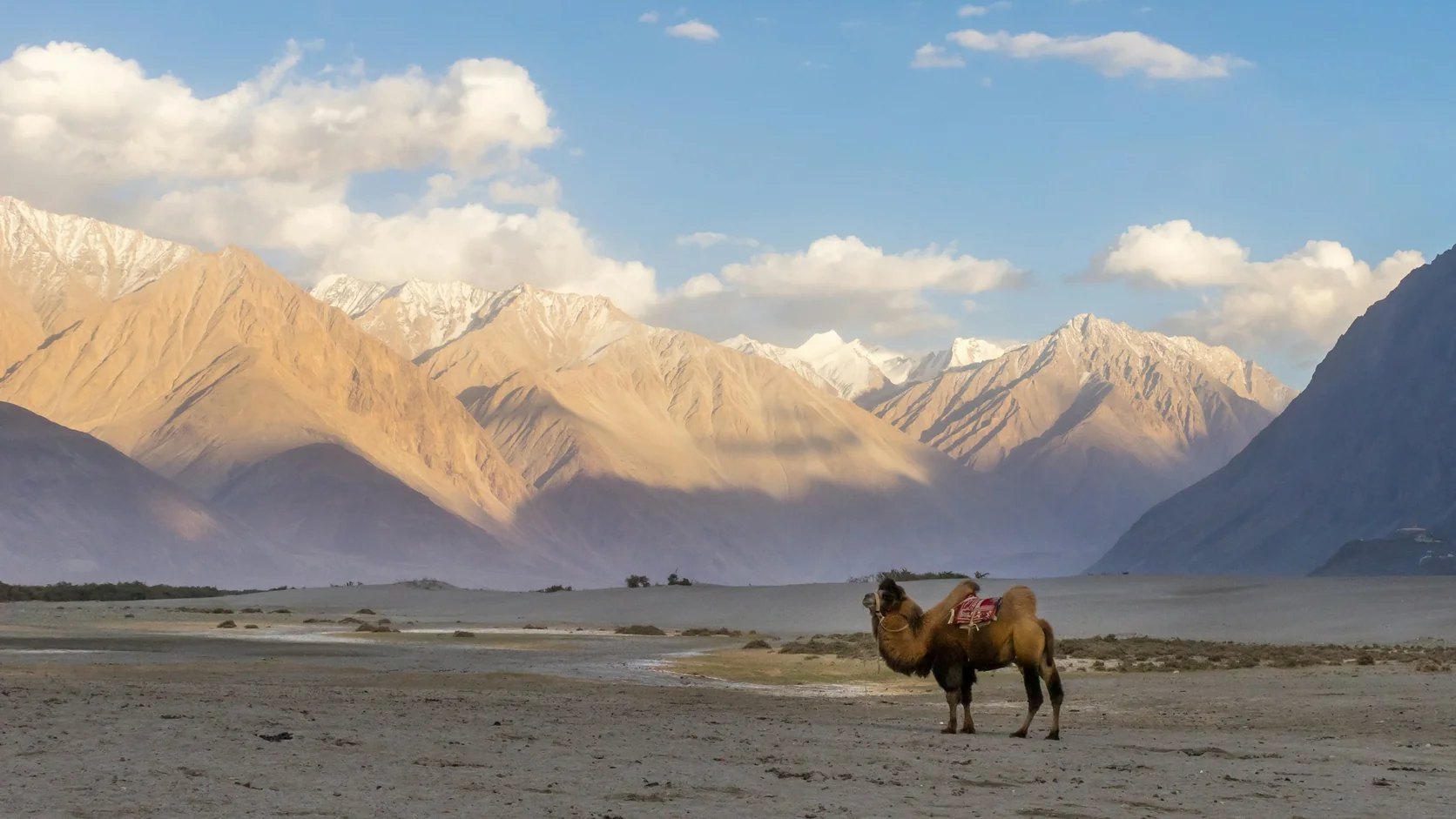
Diskit has the valley’s oldest monastery and a 32-metre Maitreya Buddha looking up the Shyok. Hunder, ten minutes on, has the dunes and the double-humped Bactrian camels — descendants of Silk Road caravan stock, and the one piece of Ladakh tourism that is genuinely as odd as it sounds.
- ~120 km from Leh
- 2 nights
- Dunes at sunset
- 05
Turtuk
Four hours further down the Shyok, close to the Line of Control, a Balti village that was part of Pakistan until 1971. Different language, different food, apricots everywhere. It is the most interesting overnight in Nubra and most itineraries skip it.
- ~85 km on
- Overnight
- Balti culture
- 06
Khardung La itself
The pass is the point of the drive for a lot of people, and the signboard claiming it is the world’s highest motorable road is an old exaggeration. Stop briefly, take the photo, and keep moving — standing around at 5,350 m is exactly how a good day turns into a bad one.
- ~5,350 m
- Stop 15 min
- Do not linger
The rule
Sleep low, travel high, and never sleep much higher than you slept the night before. Every altitude problem in Ladakh starts with breaking that.
— Travel India
Pangong and Tso Moriri
Two very different lakes, and if you have to choose, the choice is not obvious.
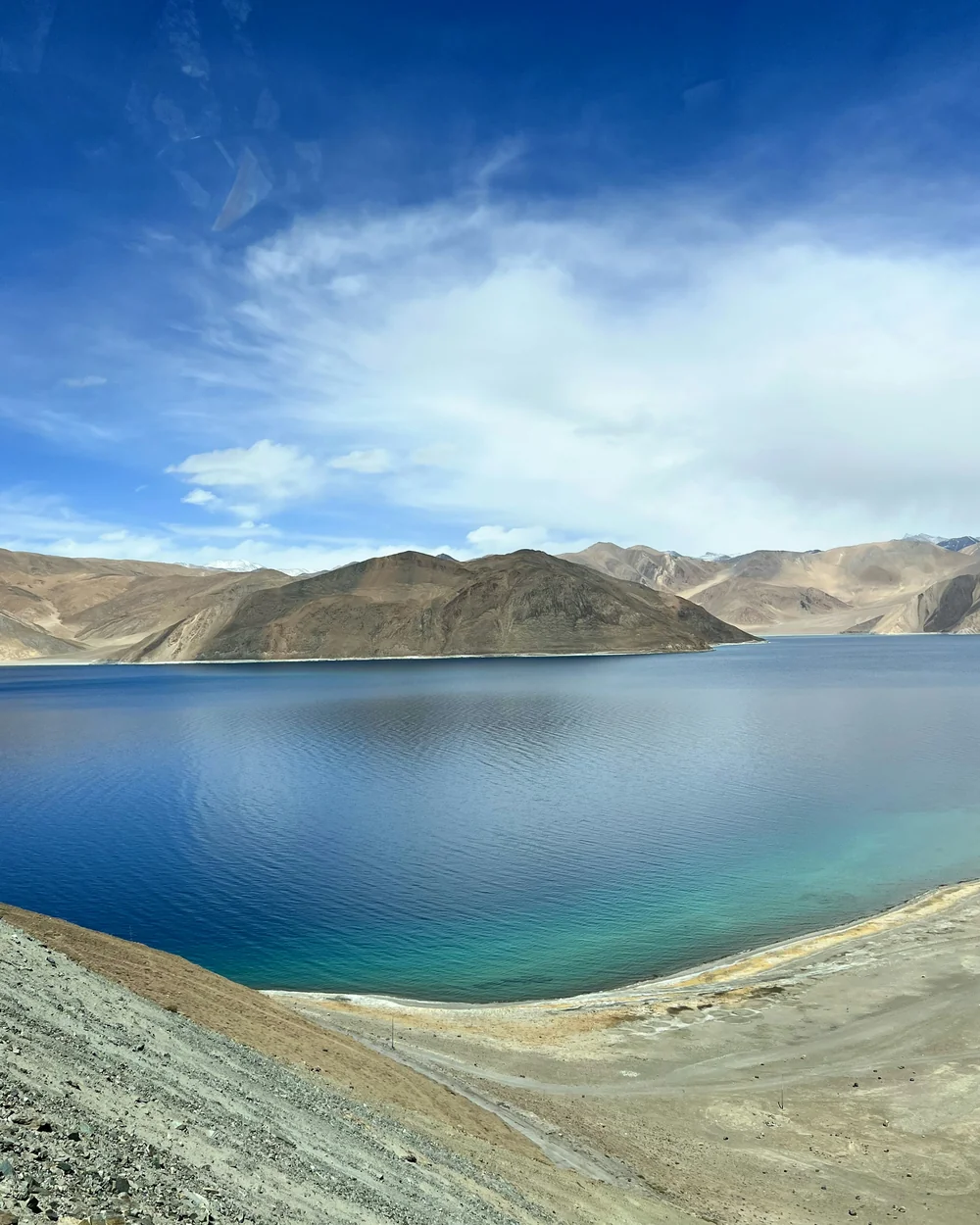
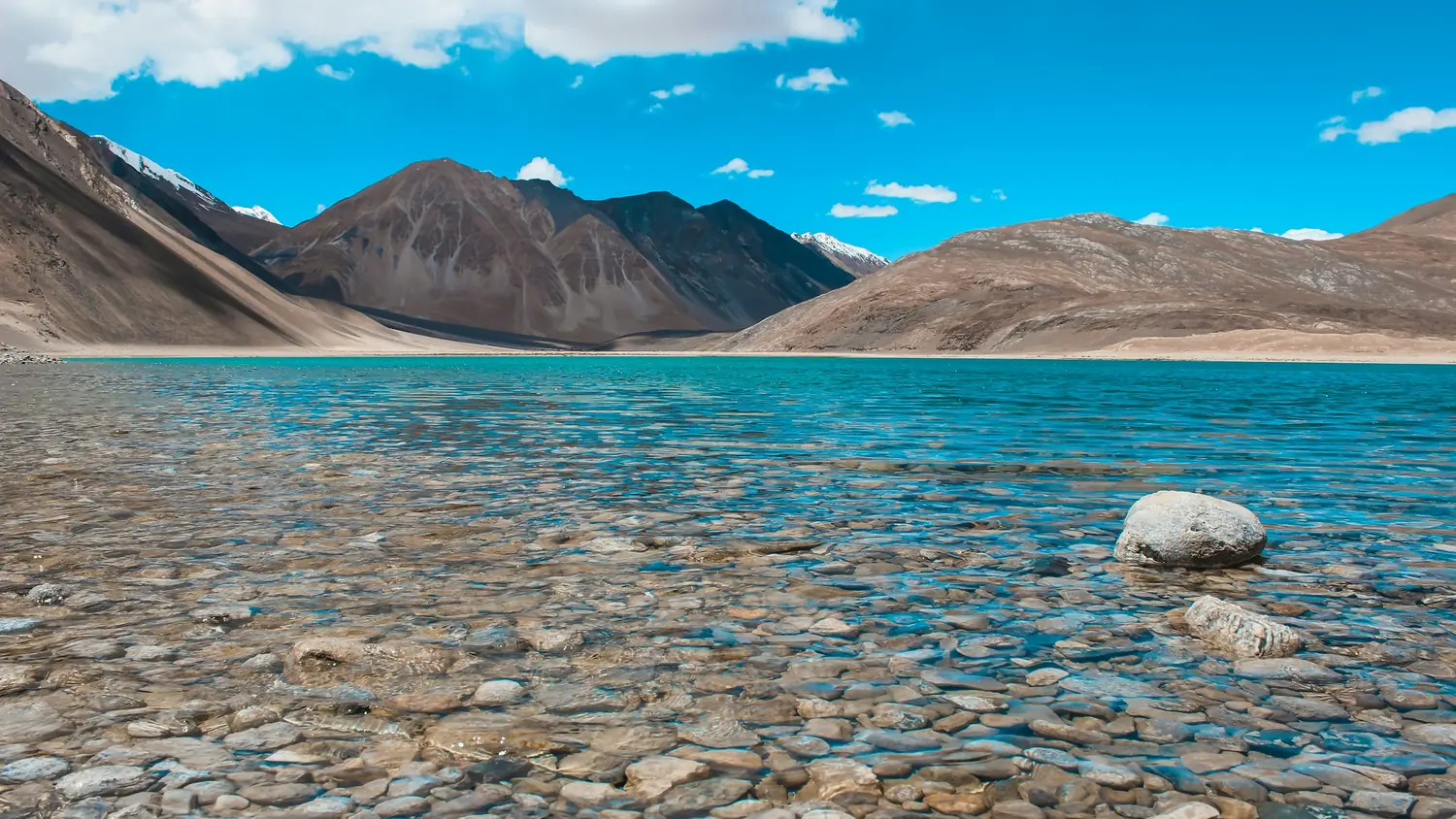
Pangong Tso is the famous one — 134 km long, most of it in Tibet, at 4,250 m, and genuinely the colour the photographs suggest. It is also the busiest place in Ladakh. Camping on the shoreline itself is not permitted, since the lake is a protected wetland; organised camps sit back from the water near Spangmik and Man. Stay a night rather than day-tripping: the crowd thins after four in the afternoon and the lake changes colour every hour until dark.
Tso Moriri, south in Changthang at 4,500 m, is quieter, harder to reach and, for a lot of people, the better lake. It is a Ramsar wetland with breeding bar-headed geese and black-necked cranes, and the Changpa herders still move through with their pashmina goats. Facilities are basic and the altitude is serious — it is not the place to go on day two.
- Pangong needs a night, not a day trip. The round trip from Leh in one day is nine hours of driving and crosses Chang La twice.
- You can link the two via Chushul and the Tsaga road, but it is a long, rough day. Confirm the route is open before committing.
- There is no reliable mobile signal at either lake. Only Indian postpaid SIMs work anywhere in Ladakh, and not out here.
- Carry your own water and take your rubbish out. Waste management at both lakes is stretched well past its limit.
Hanle and the dark sky
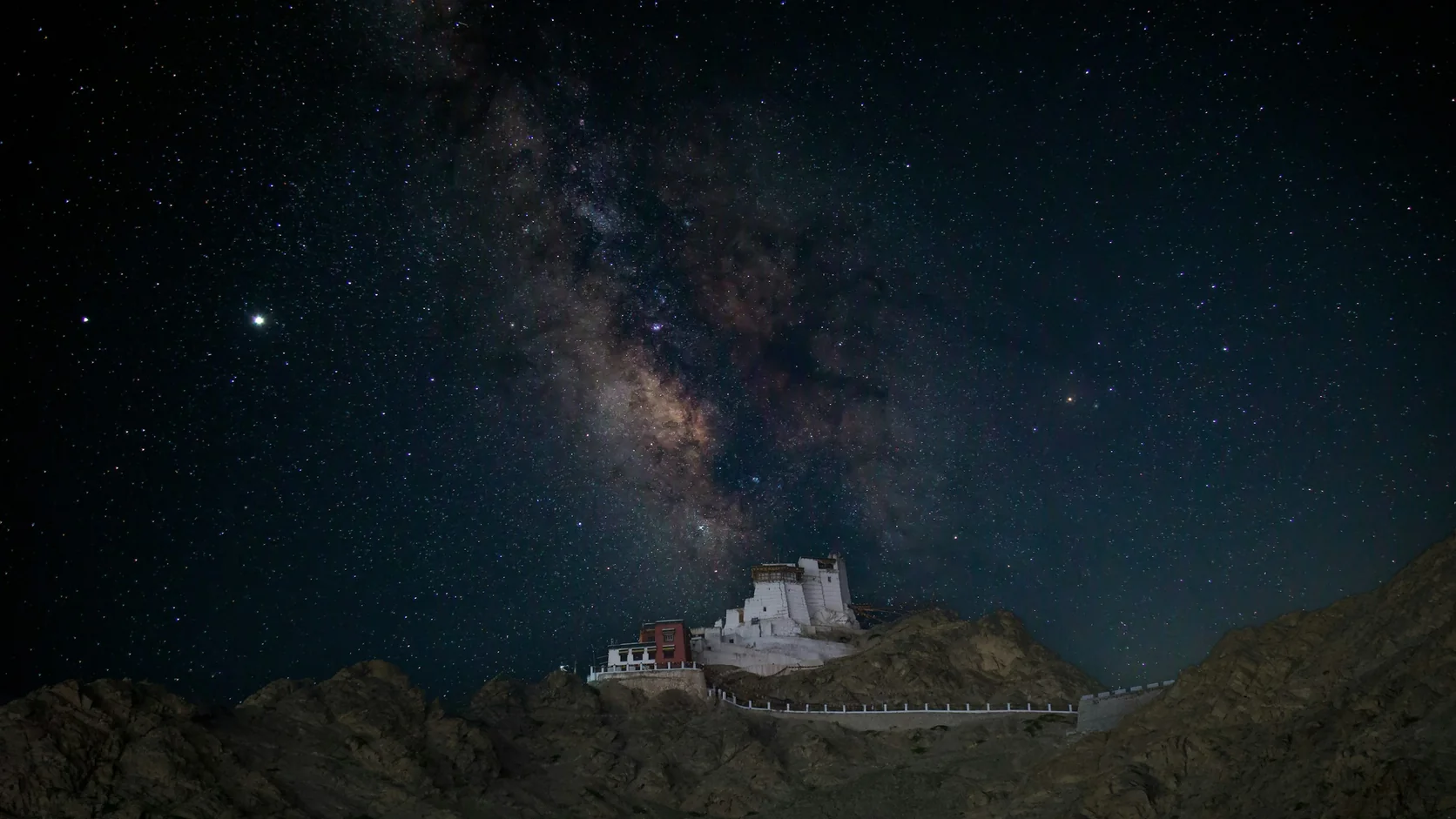
Hanle sits at about 4,500 m in the far southeast, and in December 2022 the area around it became India’s first Dark Sky Reserve — roughly a 22 km radius inside the Changthang Wildlife Sanctuary, with lighting controls on the village. It rates Bortle Class 1, the darkest category there is. On a moonless night the Milky Way casts a shadow.
The thing to understand before you go: the Indian Astronomical Observatory on the ridge is not a public night-viewing site. It is a working research facility, open for daytime visits only, and there are no visitor telescopes for evening use. What you do instead is better. The Indian Institute of Astrophysics has trained more than forty local Ladakhis as Astronomy Ambassadors, each with an 8-inch telescope at their own homestay, and you book a session with them. The fee is standardised, the money stays in the village, and you get someone who knows both the sky and the valley.
- Go on a new moon. A full moon at Bortle 1 wastes the entire trip. Check the lunar calendar before you fix dates.
- Book the homestay and the session together. Most Hanle homestays arrange the stargazing directly.
- Acclimatise thoroughly first. You are sleeping at 4,500 m; Hanle belongs late in a trip, never early.
- Foreign nationals can now visit Hanle under current district norms, staying at registered astro-stays and keeping to the marked roads near the observatory. Confirm this with your agent when the permit is arranged.
- It is properly cold after dark, even in July. Bring more layers than the daytime temperature suggests.
A nine-day plan
Built around the acclimatisation rule rather than squeezed against it, and arranged so you sleep progressively higher.
- Day 1Arrive LehRest. Nothing else. This day is not negotiable.
- Day 2Leh, gentlyOld town on foot, Shanti Stupa late. Still no passes.
- Day 3Indus valleyThiksey at dawn, Hemis after. Sleep in Leh again.
- Day 4Leh → NubraOver Khardung La, Diskit monastery, night at Hunder.
- Day 5TurtukDown the Shyok and back, or stay the night if you can.
- Day 6Nubra → PangongThe Shyok route if open. Night on the lake at Spangmik.
- Day 7Pangong → HanleA long drive south into Changthang. Stargazing after dark.
- Day 8Hanle → Tso MoririThe Changthang crossing, with the herders and the geese.
- Day 9Back to LehVia Tso Kar and Tanglang La. Fly out the following morning.
If you only have seven days
Drop Hanle and Tso Moriri, not the rest days. Leh, Nubra and Pangong make a complete trip on their own, and the two acclimatisation days are the part that keeps you well enough to enjoy any of it. Hanle in particular deserves its own unhurried visit — it is a long way to go for one cloudy night.
Practical tips that actually help
- Only Indian postpaid SIMs work. Prepaid connections from the rest of India do not function in Ladakh at all, and coverage outside Leh is patchy to non-existent. Download offline maps and tell people at home you will be out of contact.
- Carry cash. ATMs are in Leh and effectively nowhere else. Homestays, fuel in the remote valleys and the astro-stay sessions are cash businesses.
- Fuel up in Leh. The pumps beyond it are few and sometimes dry. Diskit and Karu are the practical ones.
- Layers, and better sun protection than you think. The UV at 4,000 m in thin dry air is brutal even when the temperature is not. High-factor sunscreen, lip balm, sunglasses, a hat.
- Single-use plastic is banned and the ban is taken seriously. Bring a bottle you can refill; Leh has refill stations.
- Hire local. Ladakh has a taxi union with fixed published rates, and non-local vehicles are restricted on many routes. A Leh-registered driver who knows the passes is worth more than the saving.
- Ladakh has an active political movement for statehood and Sixth Schedule protections, and talks with the central government have been running alongside it. In September 2025 protests in Leh turned violent, and the town was under curfew with mobile internet suspended for several days. The seasons since have been normal and busy, but shutdowns can close businesses and roads at short notice. Check the news in the week before you travel and keep your itinerary flexible.
- Winter is a separate trip with separate rules. The Chadar trek on the frozen Zanskar was called off in January 2026 because the river did not freeze sufficiently, and it has been cancelled before. Never book non-refundable travel around it. The reliable winter draw is the snow leopard, in February and March around Hemis, Rumbak and Ulley — cold, slow, and one of the great wildlife experiences in Asia.
FAQs about Ladakh
Do Indians still need an Inner Line Permit for Ladakh?
No. The ILP requirement for Indian nationals was replaced by the Ladakh environment and development fee, which you pay online through the LAHDC Leh portal and carry as a printed receipt. It covers Nubra, Pangong, Tso Moriri, Hanle, Umling La and the other Changthang areas. Almost everyone still calls it a permit, and the checkposts still check it — but the application process is no longer an ILP. Foreign nationals still need a Protected Area Permit through a registered Leh agent.
How many days do I actually need?
Nine is comfortable for Leh, Nubra, Pangong, Hanle and Tso Moriri. Seven covers Leh, Nubra and Pangong well. Five does not work, because two of those days must be spent acclimatising in Leh before you are allowed to cross the passes. If you only have five days, spend them in Leh and the Indus valley rather than rushing the high country.
Is the two-day acclimatisation rule actually enforced?
It is the stated requirement for all tourists crossing to Khardung La, Chang La, Pangong and Tso Moriri, and hotels and operators will ask about it. More to the point, it is the single most effective thing you can do to avoid acute mountain sickness, which sends people to hospital in Leh every season regardless of age or fitness.
When do the roads to Ladakh open?
The Srinagar–Leh highway generally opens first, often in April. The Manali–Leh highway usually follows in the second half of May, once the Border Roads Organisation has cleared the passes. Both dates shift by a week or two depending on the winter, and both roads can close temporarily after landslides or heavy rain during the season.
Can you look through the telescope at the Hanle observatory?
No. The Indian Astronomical Observatory is a working research facility that admits visitors during the day only, and it has no telescopes for public night viewing. Stargazing at Hanle is arranged with the trained local Astronomy Ambassadors, who each keep an 8-inch telescope at their homestay. Book a session through your accommodation, and go on a new moon.
Is Ladakh safe for solo travellers?
Yes, and it is one of the easier parts of India to travel alone — low crime, a well-organised taxi system and a large community of travellers in Leh to share vehicles with. The real risks here are altitude, road conditions and weather rather than personal safety. Share vehicle costs from the noticeboards in Leh, and do not go into the high country on your first two days.
Plan with us
Planning a Ladakh trip?
I help travellers plan slow, well-paced India trips that get the altitude, permits, road openings and distances right — including Ladakh, Spiti and the wider Himalaya. Free 48-hour reply.
Plan my India trip →
Written by Ashvinee Nagle
I travel India slowly and write it down honestly - practical guides and real itineraries from someone who lives here.
About Ashvinee →Plan your India trip with us
Get one short, honest India travel guide a week — plus a free 7-day Rajasthan itinerary to start.
Free. Unsubscribe any time.