
Jamshedpur: India’s First Planned City
A practical guide to Jamshedpur — the Tata steel city’s leafy Jubilee Park, the zoo and Dimna Lake, the elephant hills of Dalma, and how to visit India’s original planned industrial city in southern Jharkhand.
Jamshedpur — Tatanagar to the railways, and “Tata” to almost everyone — is unlike any other Indian city: the country’s first planned industrial town, laid out in the early 1900s around the Tata Iron and Steel works and named for its founder, Jamsetji Tata. More than a century on it remains famously green, clean and orderly, built around wide roads, the big Jubilee Park, a zoo and lakes, with the elephant-rich Dalma hills rising on its edge. It is a relaxed, comfortable stop in southern Jharkhand — a city built on an idea, with nature close at hand.
Jamshedpur, in southern Jharkhand, is India’s first planned industrial city, built by the Tatas around their steel works and named for Jamsetji Tata. It’s known for being green and orderly, with the large Jubilee Park, the Tata Steel Zoological Park, Dimna Lake at the foot of the Dalma hills, and the elephant-rich Dalma Wildlife Sanctuary nearby. Give it a day or two, come October to March, and reach it easily by rail (Tatanagar) on a Jharkhand trip.
Why visit Jamshedpur
Three reasons the steel city is a worthwhile stop.
A city built on an idea
Jamshedpur is the realisation of Jamsetji Tata’s vision of a planned, liveable industrial town — green avenues, parks and civic order that make it one of the most distinctive and pleasant cities in eastern India.
Parks, a zoo and lakes
The sprawling Jubilee Park, the well-run Tata Steel Zoological Park and the scenic Dimna Lake give the city a genuinely relaxed, outdoorsy feel — easy, family-friendly days out.
Nature on the doorstep
The Dalma Wildlife Sanctuary, famous for its elephants, and Dimna Lake at the foot of the Dalma hills put real wilderness within half an hour of a modern city.
When to go
Jamshedpur is a lowland city, so the cool season is clearly the best time.
October to March (the season): pleasant and comfortable for the parks, lake and Dalma. Early March brings Founder’s Day, when Jubilee Park is spectacularly lit.
April to June (hot): hot and humid; stick to mornings, the lake and shaded parks.
July to September (monsoon): green and fresh, with Dimna Lake and Dalma at their lush best, though rain can interrupt plans.
Things to do in Jamshedpur
The parks, zoo and Dimna Lake fill a relaxed day; Dalma adds a half-day of wildlife.
Jubilee Park
The city’s huge central park, modelled in the spirit of Mysore’s Brindavan Gardens, with lawns, fountains, a rose garden and a lake. It’s the green heart of Jamshedpur, dazzling when lit for Founder’s Day in early March.
Tata Steel Zoological Park
A well-regarded zoo and safari within the city, with a nature education focus and a boating lake — a popular, easy outing beside Jubilee Park.
Dimna Lake
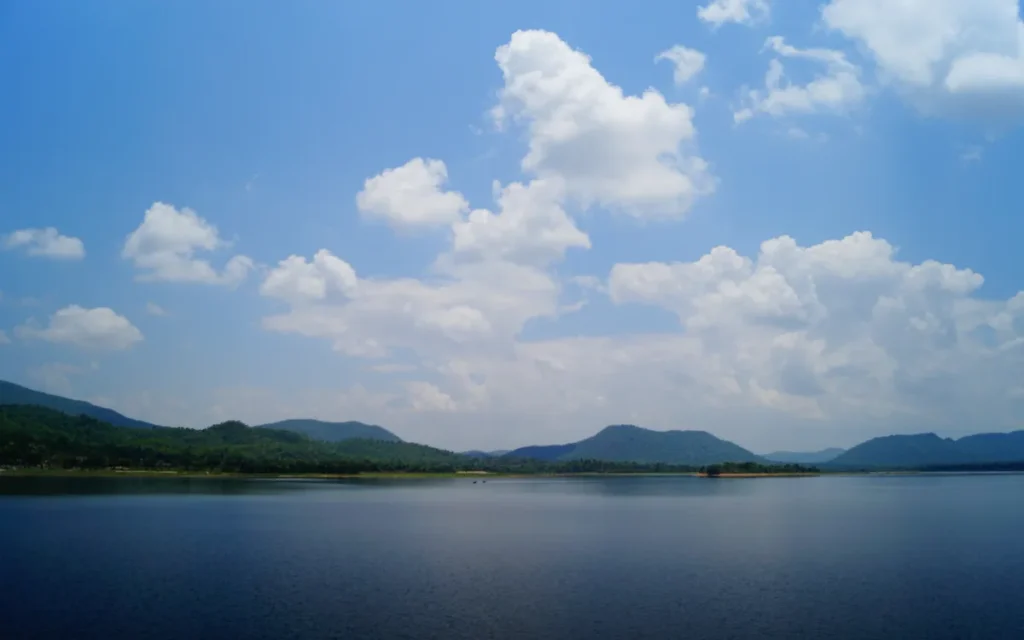
An artificial lake at the foot of the Dalma hills, about 13 km out, with boating, water sports and picnic spots — the city’s favourite lakeside escape.
Dalma Wildlife Sanctuary
The forested Dalma hills rising above the city are famous for their elephants, with a hilltop Shiva temple and viewpoints reached by a winding road — a half-day of nature on the city’s edge.
Temples & parks
The Bhuvaneshwari Temple on Telco hill, the riverside parks and the planned-city avenues themselves make for a pleasant drive around what a modern Indian city can be.
What to eat
A cosmopolitan steel-city crowd means a better-than-expected food scene, plus Jharkhand staples.
Bengali & North Indian
Jamshedpur’s mixed, cosmopolitan population means strong Bengali and North Indian food; the Bistupur and Sakchi markets are the main eating areas.
Dhuska & litti
Jharkhand staples like dhuska and litti chokha turn up at street stalls across the city — cheap and tasty.
Cafes & restaurants
Bistupur has the smartest cafes and multi-cuisine restaurants for familiar food and good coffee.
Picnic at Dimna
Dimna Lake is a classic picnic spot — carry snacks, or use the lakeside stalls, for a relaxed afternoon by the water.
Where to stay
Jamshedpur has a good range of business and mid-range hotels — a comfortable base in the south-east.
Business & mid-range hotels
The Bistupur area has the city’s best business and mid-range hotels, central and handy for the parks, zoo and markets.
Guesthouses & lodges
Budget hotels and lodges around Sakchi and the station cover cheaper stays — plain but practical.
Getting there and around
By train: Tatanagar Junction is a major station on the Howrah–Mumbai line, so Jamshedpur is very well connected by rail across the country — often the easiest way in.
By air: the nearest major airports are Ranchi (about 130 km) and Kolkata’s; Jamshedpur’s own Sonari airport has limited operations.
Getting around: app cabs and autos cover the planned, easy-to-navigate city; for Dimna Lake and Dalma a car or auto for the half-day is simplest.
Jamshedpur is about 130 km (3 hours) from Ranchi and well linked by rail as Tatanagar. It makes an easy, comfortable stop on the way between Ranchi and the Bengal/Odisha coast.
A 1-day plan
One day covers the parks, zoo and lake; add a half day for Dalma.
Parks, zoo, lake and Dalma
Start at Jubilee Park and the Tata Steel Zoological Park, then head out to Dimna Lake for the afternoon. With time or an extra half-day, drive up into the Dalma hills for the elephants, temple and views.
Practical tips that actually help
Time Founder’s Day if you can
Around 3 March, Jubilee Park is spectacularly illuminated for Founder’s Day — the city’s signature sight, though busy.
Come by train as Tatanagar
Tatanagar Junction is a major railway stop and often the easiest way into Jamshedpur from across the country.
Half-day for Dalma
The Dalma hills reward a half-day for the elephants, the hilltop temple and the views over the city — go in the morning.
Relax at Dimna Lake
Dimna Lake is the city’s favourite lakeside escape, with boating and picnics at the foot of the Dalma hills.
Use it as a comfortable stop
Green, orderly and well-connected, Jamshedpur is an easy, pleasant base between Ranchi and the coast — a good place to slow down.
Come in the cool months
October to March is far more comfortable than the hot, humid summer for the parks, lake and Dalma.
Mistakes first-time visitors make
- Writing it off as just a steel town. Jamshedpur is green, planned and genuinely pleasant, with parks, a zoo, a lake and elephant hills. Give it a day.
- Missing Dalma. The elephant sanctuary and its views are right on the city’s edge. Skipping it wastes the best of the setting.
- Coming in peak summer. Lowland heat and humidity in April–June are draining. The October–March window is far better.
- Not using the rail link. Tatanagar is a major junction. The train is often easier than flying into distant airports.
Planning Jamshedpur into a Jharkhand trip?
Jamshedpur is an easy, green stop between Ranchi and the coast. Tell me your dates and I’ll build it into a Jharkhand route.
Jamshedpur FAQs
What is Jamshedpur famous for?
Jamshedpur is famous as India’s first planned industrial city, built by the Tatas around their steel works and named for Jamsetji Tata. It’s known for being unusually green and orderly, with the big Jubilee Park, the Tata Steel Zoological Park, Dimna Lake and the Dalma elephant hills.
How many days do you need in Jamshedpur?
One to two days. A full day covers Jubilee Park, the zoo and Dimna Lake; adding a half-day lets you drive up into the Dalma Wildlife Sanctuary for the elephants and views.
What is the best time to visit Jamshedpur?
October to March, for pleasant weather across the parks, lake and Dalma. Early March brings Founder’s Day, when Jubilee Park is beautifully lit. Avoid the hot, humid April–June summer.
How do you reach Jamshedpur?
By rail as Tatanagar Junction, a major station on the Howrah–Mumbai line and often the easiest way in. By road it’s about 130 km (3 hours) from Ranchi, whose Birsa Munda Airport is the nearest major airport.
What is there to do around Jamshedpur?
Beyond Jubilee Park and the zoo, visit Dimna Lake for boating, drive up into the Dalma Wildlife Sanctuary for elephants and views, and see the Bhuvaneshwari Temple and the planned-city avenues. Dalma and Dimna are the standout outdoor trips.
Is Jamshedpur worth visiting?
Yes, as a relaxed, green stop rather than a monument-heavy destination. Its distinctive planned-city character, parks, lake and the Dalma elephant hills make it a comfortable and pleasant day or two, especially between Ranchi and the coast.
Related guides
Keep planning your Jharkhand trip with these:
Jharkhand Travel Guide
Waterfalls, the plateau hill station, tiger-reserve forests and the great pilgrimages — how to put a Jharkhand trip together.
Ranchi
The capital and its waterfalls and the Patratu Valley — the gateway and base for a Jharkhand trip.
Dimna Lake photo by Aratrik Dasgupta, CC BY-SA 4.0, via Wikimedia Commons; cropped and converted to WebP.
Written by Ashvinee Nagle
I travel India slowly and write it down honestly - practical guides and real itineraries from someone who lives here.
About Ashvinee →Plan your India trip with us
Get one short, honest India travel guide a week — plus a free 7-day Rajasthan itinerary to start.
Free. Unsubscribe any time.