
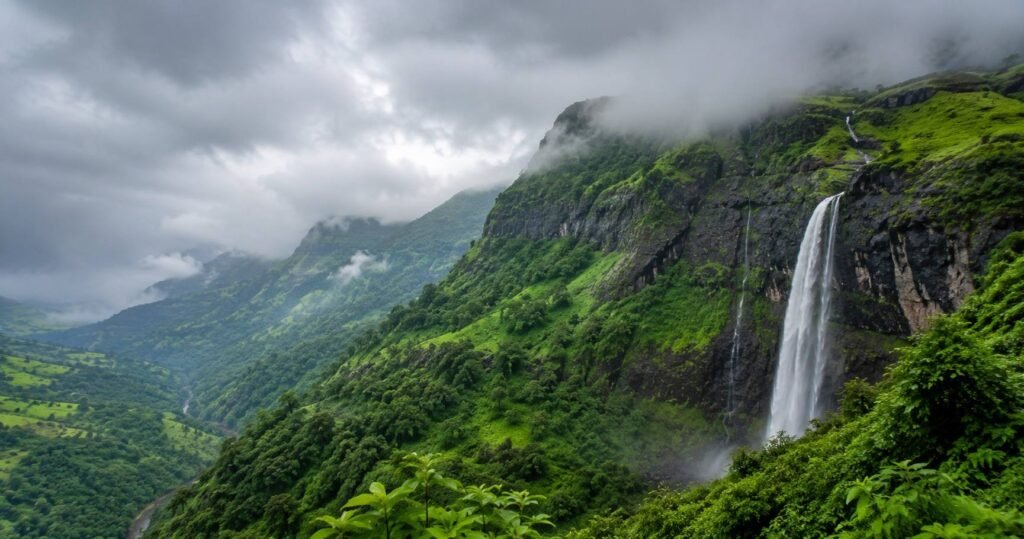
A slow weekend at Tamhini Ghat
A slow guide to the Sahyadri pass most people speed through on the way to somewhere else — the green corridor within an hour of Pune that rewards you for stopping.
There’s a road out of Pune that most people treat as a means to an end. They’re headed to Kolad for rafting, or Devkund for the trek, or the Konkan coast beyond — and Tamhini Ghat is just the scenic bit in the middle. That’s a mistake. In the monsoon, this 15-km mountain pass connecting Mulshi to Tamhini village is the destination, not the drive to it. Slow down, and it gives you everything Lonavala promises — waterfalls, mist, green hills that go on forever — with a fraction of the crowd.
Tamhini Ghat is a Sahyadri mountain pass about 60 km from Pune and 160 km from Mumbai, best visited late June through September for waterfalls and mist. A weekend is right — Friday evening to Sunday afternoon, based in the Mulshi–Paud area. Drive your own vehicle, start mornings early, don’t cross the ghat after dark, and treat the waterfall stops with real caution. This is a place to sit and watch water fall, not to tick off a list.
Why Tamhini
Tamhini Ghat sits on the crest of the Western Ghats, connecting the Mulshi lake country near Pune to the Konkan lowlands around Kolad and Mangaon. The road climbs out of the plains past Mulshi Dam and then threads for about 15 km through some of the densest forest in this part of the Sahyadris. What makes it work is the same thing that makes Malshej work: there’s not much there, in the built sense. No shopping streets, no resorts stacked on top of each other, no famous restaurant. There’s a lake, a ghat road, a scatter of waterfalls, and an enormous amount of weather.
The peak monsoon transformation is the whole point. From late June through September, dozens of seasonal waterfalls appear right beside the road — some big enough to have names, most of them nameless — the hills turn a saturated, luminous green, and low cloud drifts through the valley all day. Unlike the more famous passes, you can experience most of it without leaving the tarmac: pull over on a wide shoulder, step out, and you’re standing next to rushing water. That accessibility is rare, and it’s why Tamhini is such a forgiving trip for families, older travellers, or anyone who just wants the atmosphere without the trek.
An hour from Pune
~60 km from Pune, ~160 km from Mumbai. You can leave after lunch and be in the clouds by evening.
A monsoon specialist
The ghat catches heavy Western Ghats rain — the kind that turns dry ravines into full waterfalls overnight and keeps everything green into October.
Roadside, not trek-only
Most of the best views are right off the road. You can do the whole thing at a gentle pace, no boots required.
When to go
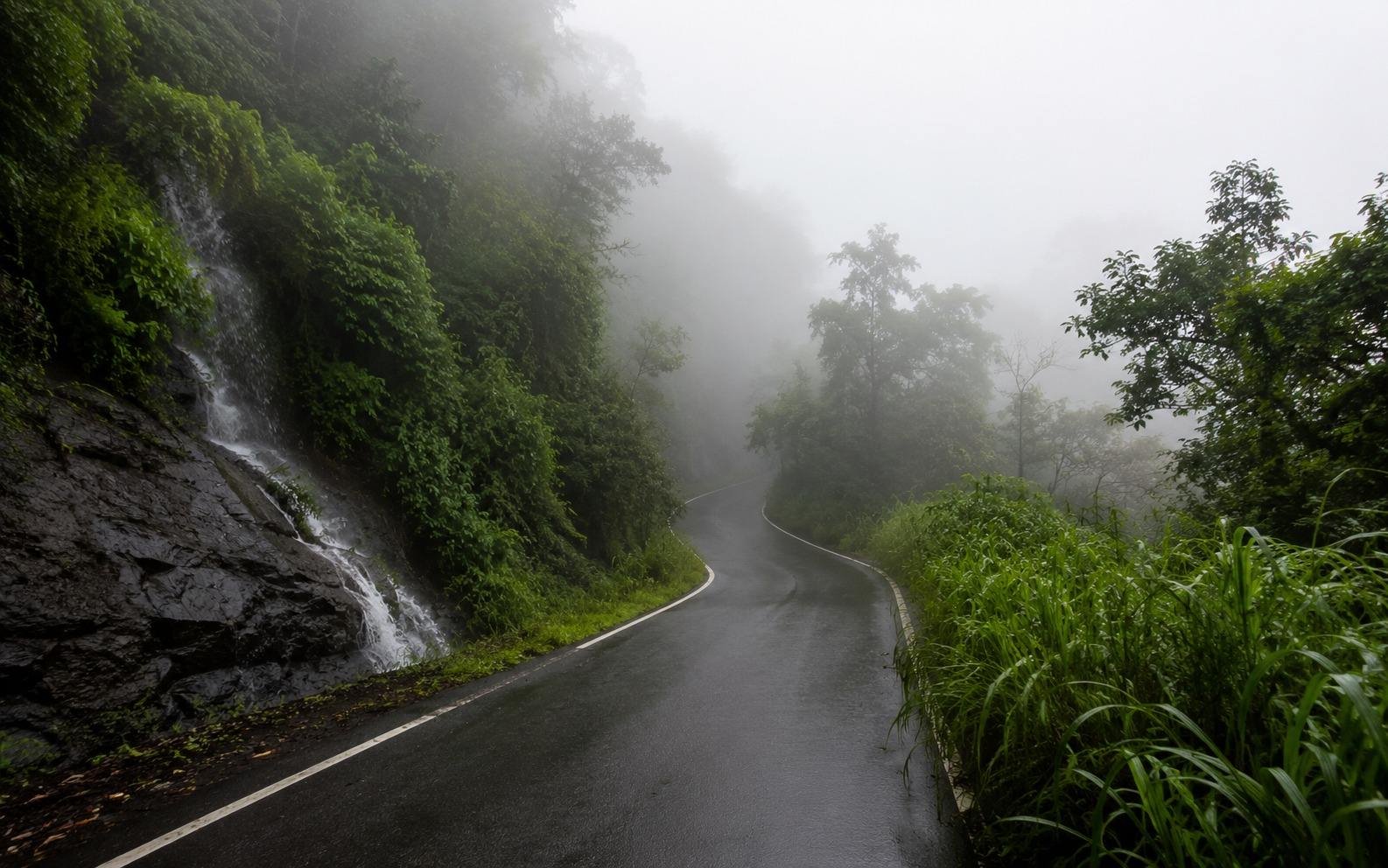
Tamhini is, above all, a monsoon destination. Late June through September is when the ghat is at its most dramatic — waterfalls at full volume, the whole range deep green, and mist moving through the valley all day. The trade-off is the same one every Sahyadri pass faces: weekends in peak monsoon get busy, especially Saturdays when day-trippers pour out of Pune. If you want the slow version, aim for a weekday, or arrive Friday evening and claim the quiet early hours before the crowds wake.
October into early November is an underrated window. The big waterfalls thin out, but the smaller ones linger, the green holds, the air turns crisp, and the roads empty out. November through February is dry and pleasant — good for the Mulshi lake views and long drives, though the waterfall drama is gone. Avoid peak summer (April–early June): the landscape browns off, the heat flattens the atmosphere, and there’s little reason to make the climb.
The ghat road stays open to vehicles through monsoon, but authorities do close short stretches or restrict access near specific waterfalls during very heavy rain, especially after safety incidents. Check the local Pune–Mulshi route status on the morning of departure if you’re driving into a big weather event.
The drive up
Half the experience of Tamhini is the journey, so it’s worth getting right. From Pune it’s a short, rewarding drive; from Mumbai it’s a proper road trip.
~60 km · 1.5–2.5 hours
Via Chandni Chowk, Pirangut, Paud and Mulshi Dam. The ghat proper begins once you cross the dam.
~160 km · 4–5 hours
Via the Mumbai–Goa Highway to Kolad, then up through the ghat from the Konkan side.
Rail & air
Nearest railhead is Pune Junction (~60 km); nearest airport is Pune International.
Private vehicle only
A few state buses ply the route, but they won’t stop for waterfalls. Fill up on fuel and carry cash before the climb.
The standard Pune route runs Chandni Chowk → Pirangut → Paud → Mulshi Dam, and the ghat proper begins once you cross the dam. The tarmac is largely good and recently relaid, though it turns rougher in patches as you climb — normal for a monsoon mountain road.
Don’t cross the ghat late in the evening. Visibility collapses in the rain and fog, the road isn’t lit, and it’s genuinely unsafe after dark. If you must cross the Sahyadris at night, use the Bhor/Varandha Ghat instead. In peak monsoon the road gets foggy and slick — drive slowly, headlights on, and never overtake on a blind curve.
The best monsoon stops
The classic Tamhini experience is pulling over where the road widens and simply watching water come off the hillside. There are several informal stops along the pass, and on a good monsoon morning you’ll be standing inside the cloud rather than above it. Here are the ones worth your time.
Mulshi Lake & dam backwatersEasiest stop
Your first big stop, right at the base of the ghat. The reservoir behind Mulshi Dam is at its most dramatic in July–August when it’s full and occasionally spilling over. It’s the easiest payoff on the route — you barely need to leave the car — which makes it the one stop where small children and grandparents can take in the full monsoon ghat atmosphere with zero effort.
Tamhini (Valse) WaterfallTake care
The signature fall of the ghat, tumbling from a good height into a pool at the base. In peak monsoon it’s a real spectacle. It’s also where caution matters most: local authorities have restricted swimming and risky photography at several waterfalls in this belt in recent monsoons, following drownings. The currents at the base are stronger than they look. Stand back, respect the barricades, and treat any “just one photo at the edge” impulse as the thing that gets people killed here.
Palase WaterfallQuieter pick
A quieter, more accessible alternative near Vaduste village, roughly 50–55 km from Pune. A short 10–15 minute walk through forest brings you to a two-stage cascade. Most people stop at the photogenic upper fall; if you’re up for a small scramble, the lower fall is deeper, quieter, and skipped by nearly everyone.
Lesser-known detours worth your time
Most people drive up, see the main falls, take a few photos, and drive back. Slow travellers do better by adding one deliberate detour — but only one, because the good ones each eat a full day.
The Andharban jungle trek
If you want to actually earn a view, Andharban (“dark forest”) is one of the most-loved monsoon treks in this region — a descending trail through dense, waterfall-laced jungle with wide valley vistas. Fair warning: it’s not a quick add-on. Door-to-door it runs 6–7 hours, and tacking it onto a full Tamhini drive from Pune leaves no time for anything else. Treat it as its own dedicated day, not a side stop.
Devkund Waterfall (Bhira side)
Often mentioned in the same breath as Tamhini, Devkund is really a separate excursion near Bhira village, reached by a trek from the far side of the ghat. It’s spectacular — a plunge pool ringed by cliffs — but access has been restricted in recent monsoons on safety grounds, and it’s been the site of fatal incidents. Check the current status before you build a day around it, and go with a registered local guide if it’s open.
Where to eat: local and roadside food
Tamhini food is roadside food, and that’s exactly the appeal. There are no restaurants with menus up on the ghat — come hungry for what the hills fry well. The surest sign of a good stall is a cluster of local cars parked outside it.
- Kanda bhaji and pakoras. The unofficial official food of a Sahyadri monsoon. Hot, crisp, in newspaper, best eaten standing in the drizzle with a cutting chai. The stalls near Mulshi and along the ghat live for this season.
- Zunka bhakar. A rustic Maharashtrian plate of spiced gram-flour zunka with jowar or bajra bhakri — simple, filling, and exactly right after a cold, wet morning.
- Pithla bhakri. Similar comfort-food territory: a soft gram-flour curry with flatbread, common at small village eateries around Paud and Mulshi.
- Vada pav and misal. Reliable, everywhere, and excellent fuel for the drive up and back.
- Lakeside cafés near Mulshi. A few sit-down spots have come up around the Mulshi backwaters with valley or water views — useful if you want something more structured than a stall.
Where to stay for a peaceful weekend
Tamhini itself isn’t a hotel town — the stays cluster around Mulshi, Paud, and (on the far side) Kolad. Your choice comes down to how rustic you’re willing to go and which end of the ghat you want to wake up on.
Mulshi lakeside resorts & villas
The most established options, many with valley- or water-facing rooms. Book well ahead for monsoon weekends — the good ones fill fast. Quality varies, so read recent reviews carefully.
Paud / Mulshi homestays
For the truly slow weekend — home-cooked food, quiet nights, and a real feel for local life. Best if you want an early start on the ghat before the crowds.
Kolad-side stays
If you’re pairing the trip with rafting or approaching from Mumbai, basing near Kolad puts you at the Konkan end of the ghat with guesthouses and riverside camps.
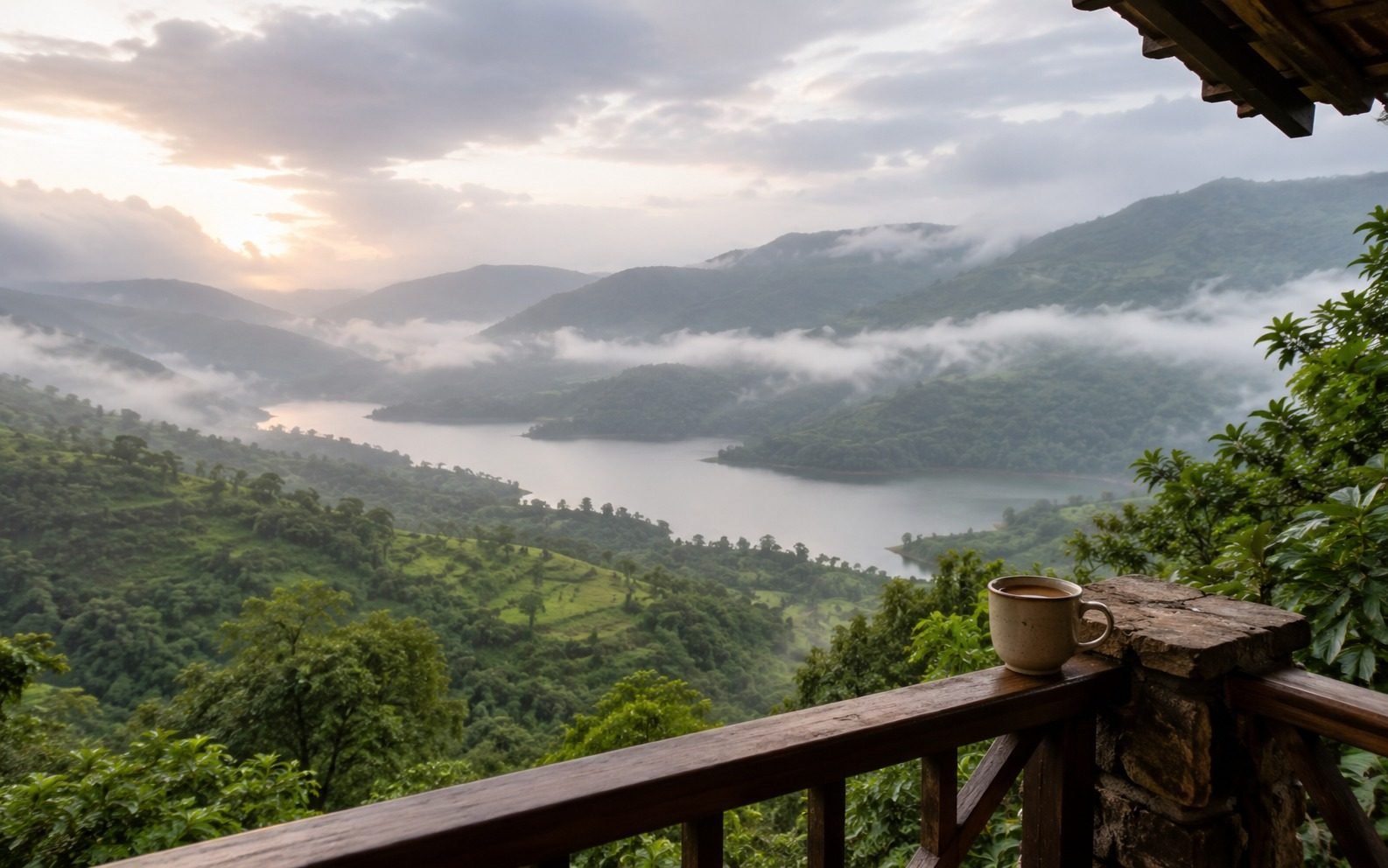
Wherever you stay, book ahead for monsoon weekends and confirm backup power and water — both can be intermittent in the hills during heavy rain. A few operators run monsoon camping near the lake; if that’s your thing, pick a reputable name and check the safety setup carefully.
A suggested slow itinerary
Two nights is the right length. Anything shorter and you spend more time driving than enjoying; anything longer and you’ll start running out of things to do — which, on this trip, may be the point.
Drive up after work
From Pune it’s a short hop — leave by early evening and you can be at a Mulshi stay in under two hours, well before dark (don’t do the ghat at night). Eat something hot and local, sleep early. From Mumbai, this is your main drive day.
Lake, ghat, and one waterfall
Wake before sunrise. Spend the first foggy, crowd-free hours at Mulshi Lake and the ghat viewpoints — the best light of the trip. Mid-morning, drive the pass slowly and stop at one waterfall (Tamhini or Palase). Retreat for a long lunch. Spend the afternoon doing very little, which is the whole point.
One last stop, then home
A slow morning by the lake. One last roadside stop on the way down, then lunch on the road — misal pav at a highway dhaba is the move. Aim to clear the ghat and be home before the Sunday evening traffic builds. Save Andharban or Devkund for a separate dedicated trip.
Practical tips that actually help
Start before sunrise on weekends
By mid-morning the ghat fills with day-trippers and the roadside stops stop being peaceful. The early hours are the whole reason to go.
Never cross the ghat after dark
This is the big one. No lights, thick fog, sheer drops. Use Bhor/Varandha Ghat if you must cross the range at night.
Respect the waterfall barricades
Swimming and edge-photography restrictions in this belt exist because people have drowned here. The fines are real and the currents are worse.
Carry cash
Smaller dhabas and stalls don’t always take UPI, especially when the network drops on the ghat. ₹1,500–2,000 in small notes is plenty.
Fuel up before you climb
Petrol pumps thin out past Pirangut. A full tank means no late stress.
Don’t overpack the plan
Mulshi Lake, the ghat drive, and one waterfall make a genuinely full day. Andharban and Devkund are each a separate trip. Download offline maps — signal drops on the ghat.
Planning a Maharashtra monsoon trip?
I help travellers plan slow, well-paced India trips that get the seasons, distances, and logistics right — including monsoon escapes like Tamhini, Malshej, and the forts around Lonavala. Free 48-hour reply.
FAQs about Tamhini Ghat
How many days do I need at Tamhini?
From Pune, a single well-planned day covers the lake, the ghat drive, and a waterfall — but an overnight in Mulshi changes the trip completely and lets you catch the best morning light. Two nights is the sweet spot if you’re coming from further afield or want to pair it with the Konkan side.
Is the drive safe in heavy monsoon?
Yes, with caution. The ghat is used daily through monsoon, but it gets foggy and slippery, and parts of the surface are rough. Drive slowly, keep headlights on, don’t overtake on blind curves, and — most importantly — don’t attempt the ghat after dark in heavy rain.
Can I do Tamhini as a day trip from Pune?
Absolutely — it’s one of the easiest monsoon day trips from Pune at roughly 60 km. Start early to beat both the city traffic and the crowds, and you’ll be back by evening. From Mumbai, a day trip is possible but rushed; an overnight is far better.
Can I swim at the waterfalls?
Often no. Swimming near several waterfalls in this belt has been restricted during monsoon in recent years after drownings, and the restrictions get renewed each season. Check current signage, respect the barricades, and don’t wade into fast water even where it’s allowed — the base currents are deceptively strong.
Is Tamhini safe for solo travellers, including women?
Broadly, yes. It’s a quiet area with a steady stream of weekend visitors from Pune. Standard precautions apply: book your stay in advance, share your itinerary, don’t drive the ghat alone after dark, and pick homestays with recent positive reviews from solo guests.
Can I combine Tamhini with other Maharashtra trips?
Easily. It pairs naturally with Kolad (river rafting) and the Konkan coast on the western side, with the Mulshi lake country and Pune’s forts to the east, or with the Devkund/Bhira trekking area beyond the ghat. A longer monsoon road trip can string several of these together over 4–5 days.
More slow monsoon weekends
If Sahyadri monsoon country is your thing, these companion guides cover more of it at the same unhurried pace.
Written by Ashvinee Nagle
I travel India slowly and write it down honestly - practical guides and real itineraries from someone who lives here.
About Ashvinee →Plan your India trip with us
Get one short, honest India travel guide a week — plus a free 7-day Rajasthan itinerary to start.
Free. Unsubscribe any time.