
Sirpur: A Seventh-Century Brick Temple, and a Buried City Still Coming Out of the Ground
A practical guide to Sirpur on the Mahanadi — the Laxman Temple, the tilted steps of Surang Tila, the Buddhist monasteries Xuanzang wrote about, and why this is the easiest great sight to reach in Chhattisgarh.
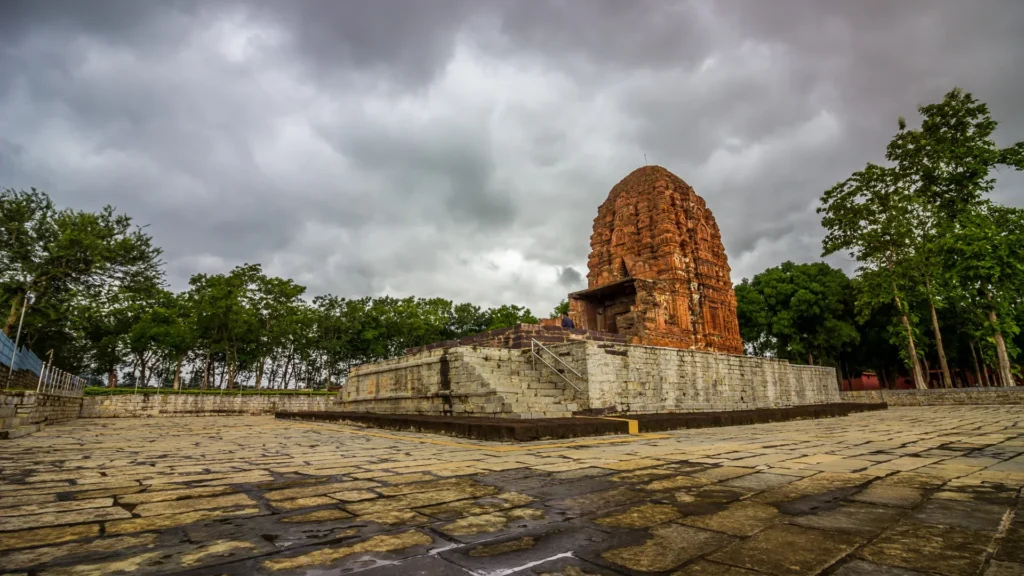
Sirpur is the one major sight in Chhattisgarh you can reach without committing to the long drive south. It sits about eighty kilometres east of Raipur on the bank of the Mahanadi, and it is not a monument so much as a field — a wide, mown archaeological site with a seventh-century brick temple standing at the centre of it and the foundations of a vanished city spreading out around. This was Sripura, capital of Dakshina Kosala, and for a few centuries it was one of the significant places in central India. Then it stopped being one, and most of it went under the soil until archaeologists started taking it out again.
Sirpur is an archaeological site roughly 80 km east of Raipur, on the Mahanadi. The headline is the Laxman Temple, a seventh-century brick shikhara in remarkable condition; around it are excavated Hindu, Buddhist and Jain remains, including the stepped Surang Tila and several monastery sites. Half a day covers it comfortably, a full day if you take the museum and the outlying mounds slowly. October to March is the season. Easiest done as a day trip from Raipur, and the natural first stop on a wider Chhattisgarh trip.
Why visit Sirpur
Three reasons it earns a day out of Raipur — and one honest note about what it is not.
A brick temple that survived
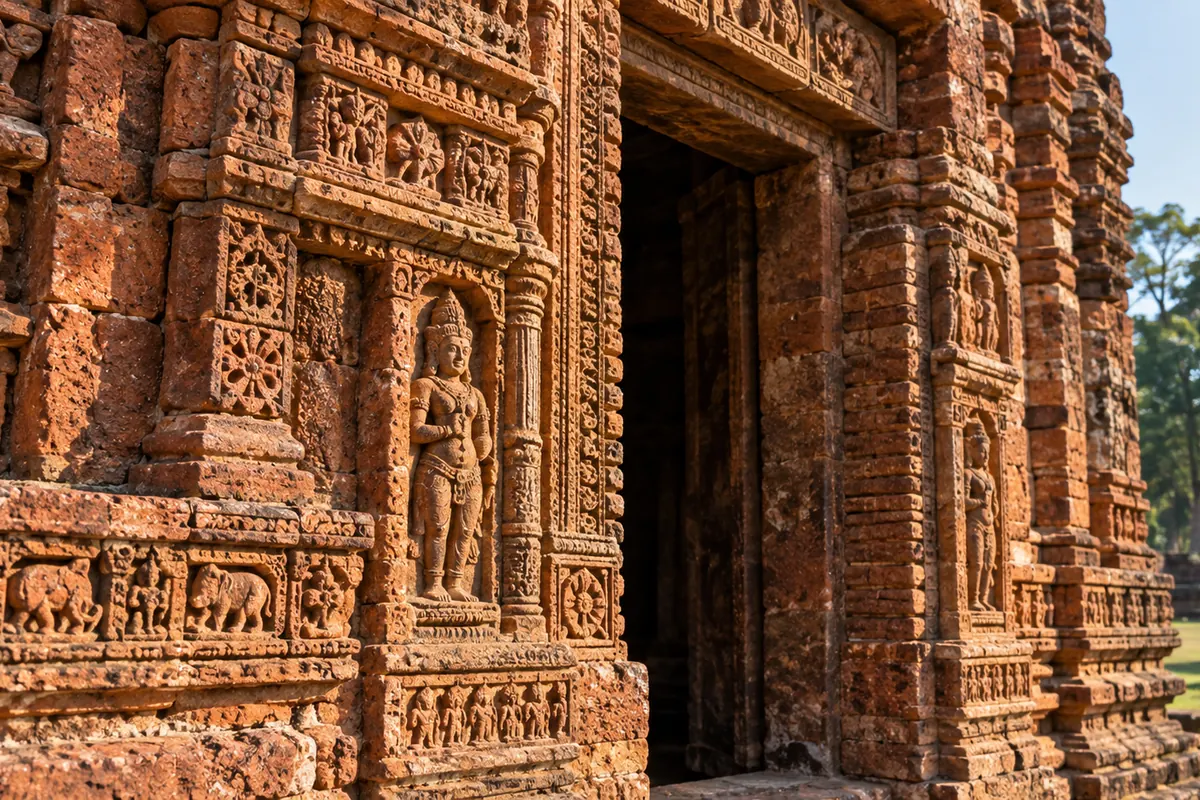
The Laxman Temple is built of moulded and carved brick rather than stone, which almost never lasts fourteen centuries in this climate. That it is still standing, with its carved doorway and tiered tower largely intact, is the whole point of coming.
Three religions in one field
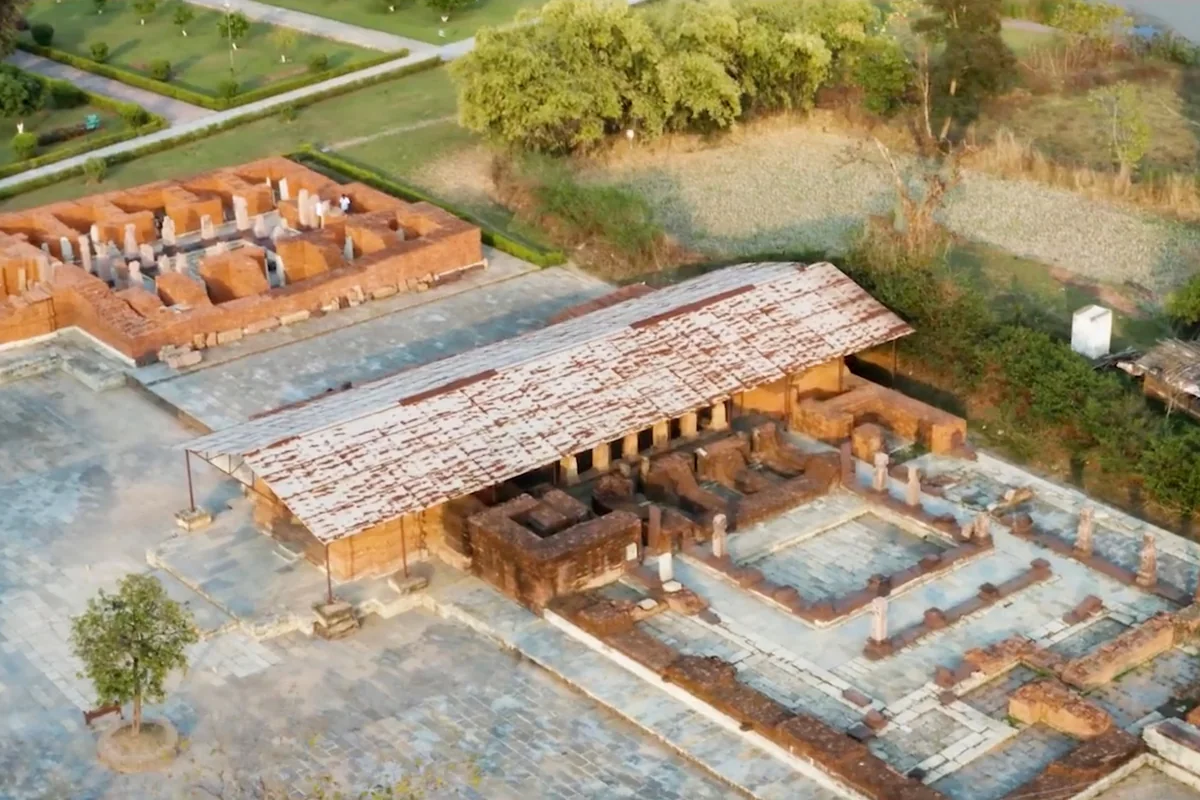
Hindu temples, Buddhist monasteries and Jain remains sit within walking distance of each other. Sirpur was a place where all three were operating at once, and the layout still shows it more clearly than almost anywhere else in India.
It is still being excavated
Large parts of the site have come out of the ground only in recent decades, and mounds around the core have not been touched. You are looking at an unfinished dig, not a finished monument — which is a very different feeling.
When to go
Sirpur is an open site with almost no shade, so this is a question about heat rather than about access. It is open year-round.
October to March (the season): clear light, cool mornings and comfortable walking. December and January are the best of it. This is also when the site’s winter festival is usually held, which brings crowds and performances if you want them and is worth avoiding if you do not.
April to June (hard going): daytime temperatures climb past 40°C and the site offers almost nowhere to get out of the sun. If you must come, be there at opening and leave by mid-morning.
July to September (green but humid): the Mahanadi is full, the surrounding fields are green and the brick takes on a deeper colour after rain. Humid and occasionally muddy underfoot, but far from impossible — and very quiet.
Things to do at Sirpur
The core of the site is walkable and compact. Give the temple proper time, then work outward.
The Laxman Temple
A tall brick shikhara on a high stone plinth, with an ornately carved doorway and courses of moulded brick running up the tower. Walk right around it before going in — the detail is on the outside, and the light is best on the east face early.
Surang Tila and its tilted steps
A stepped temple platform whose flight of stairs runs visibly askew — commonly attributed to seismic movement at some point in the site’s history. Whatever caused it, the effect is strange and immediate, and it is the thing most people photograph after the temple.
The monastery sites
Excavated vihara complexes with cells arranged around courtyards, some with sculpture still in place. The Chinese pilgrim Xuanzang passed through in the seventh century and described a substantial Buddhist community here; this is what is left of it.
The site museum
Small, and worth twenty minutes before you walk out rather than after. Sculpture and bronzes recovered from the digs, which make far more sense of the empty foundations outside than the foundations do on their own.
The outlying mounds
Beyond the mown core the site continues into scrub and farmland, with unexcavated mounds and low walls. Nobody goes out here. It is the part that makes the scale of the old city land properly.
The river bank
The Mahanadi runs just beyond the site, and the reason a capital stood here at all is visible the moment you see it. A short walk, unremarkable in itself, and it completes the picture.
What to eat
There is very little at the site itself. Eat in Raipur before you drive out, or plan a late lunch on the way back.
Eat in Raipur
The capital has the widest choice in the state, from thali houses to hotel restaurants. Eat properly before you leave — the options thin out completely once you turn off the highway.
Chhattisgarhi staples
Chila, faraa, bafauri and aamat — rice-led, lightly sour, and rarely on menus outside the state. Ask for the local thali rather than the north Indian one.
Highway dhabas
Simple dhabas along the route do dal, roti and sabzi through the day. Reliable, cheap and the realistic answer if you are driving back in the afternoon.
Water and shade
There is no cafe worth the name on site and very little shade. Carry more water than you think you need, especially outside the winter months.
Where to stay
Almost nobody sleeps at Sirpur. Raipur is the practical base, and the site works best as a day trip from there.
Raipur
The only city in the state with a genuinely wide hotel choice, including business hotels near the airport. Sirpur is an easy half-day out and back, which is how most people do it.
Barnawapara
The wildlife sanctuary east of Sirpur has forest accommodation and makes a natural overnight if you want to pair ruins with an early game drive. Book ahead; options are limited and fill in season.
Getting there and around
From Raipur: roughly 80 km east, about two hours by road. This is the standard approach and it is genuinely easy — the only sight in Chhattisgarh that does not require a serious drive.
By train: Raipur is the nearest useful railhead, well connected to Nagpur, Mumbai and Kolkata. There is no practical rail approach to the site itself.
Getting around the site: on foot. The core is compact and mown, and the outlying mounds are a short walk beyond it. Hire a car and driver for the day from Raipur rather than relying on buses, which are slow and drop you well short.
Sirpur pairs naturally with Barnawapara Wildlife Sanctuary further east, or with a night in Raipur before flying out. It does not pair with Bastar — the south of the state is a full day’s drive away in the other direction.
A simple half-day plan
Leave Raipur early, be at the site by opening, and be back for a late lunch.
Temple first, then outward
Leave Raipur by 7am and be at the gate when it opens. Start with the Laxman Temple while the light is on its east face and the site is empty, then Surang Tila and the monastery sites. Twenty minutes in the museum, a walk out to the quieter mounds, and back to Raipur by mid-afternoon. Add Barnawapara if you are staying out.
Practical tips that actually help
Come between October and March
The site is open and shadeless. Outside those months the heat is the whole experience, and not in a good way.
Be there at opening
Early light on the brick is much better than midday, and you will have the temple to yourself for the first hour.
Do the museum before you leave
Twenty minutes there makes sense of the foundations outside. Doing it afterwards is the wrong order and most people get it wrong.
Hire a car for the day
Buses are slow and leave you short of the site. A car and driver from Raipur costs little and turns this into a comfortable half day.
Wear real shoes
You are walking on uneven brick, stone and grass, not paved paths. Sandals will do but closed shoes are better.
Check the festival dates
Sirpur’s winter festival fills the site with crowds and staging. Wonderful if that is what you came for, frustrating if you wanted an empty field of ruins.
Mistakes first-time visitors make
- Giving it an hour on the way through. The temple takes forty-five minutes on its own. An hour means you see one building and miss the site.
- Skipping the museum. Without it the excavated foundations are just outlines in the grass. It is small and it is the key.
- Coming in April or May. There is no shade. The site is genuinely punishing in the hot months and nobody enjoys it.
- Trying to combine it with Bastar in one trip leg. Sirpur is east of Raipur; Chitrakote and Kanger are 300 km south. They belong to different days, not the same one.
Fitting Sirpur into a Chhattisgarh trip?
Sirpur is the easy one — the question is usually what to put around it, and whether you have the days for Bastar as well. Tell me your dates and I will tell you what actually fits.
Sirpur FAQs
What is the best time to visit Sirpur?
October to March. The site is open, shadeless ground and the winter months give you cool mornings and clear light. April to June is very hot, and the monsoon is green and quiet but humid underfoot.
How old is the Laxman Temple at Sirpur?
It is generally dated to the seventh century, built when Sirpur was Sripura, capital of Dakshina Kosala. What makes it unusual is the material: it is brick rather than stone, and very few brick temples of that age survive anywhere in India.
How far is Sirpur from Raipur?
About 80 km east, roughly two hours by road. It is the most accessible major sight in Chhattisgarh and works comfortably as a day trip from the capital.
How long do you need at Sirpur?
Half a day covers the Laxman Temple, Surang Tila, the monastery sites and the museum. A full day lets you walk out to the unexcavated mounds and down to the Mahanadi, which most visitors never do.
Can you visit Sirpur and Chitrakote on the same trip?
On the same trip yes, on the same day no. Sirpur is 80 km east of Raipur and Chitrakote is roughly 300 km south of it. Plan Sirpur at the start or end of a Chhattisgarh itinerary and give Bastar its own three or four days.
Related guides
Keep planning your Chhattisgarh trip with these:
Chhattisgarh Travel Guide
Waterfalls, limestone caves, Bastar’s weekly markets and the brick temples of Sirpur — how to put a Chhattisgarh trip together.
Bhoramdeo
An eleventh-century carved stone temple below the Maikal hills, and the other half of a short temples-only trip out of the capital.

Written by Ashvinee Nagle
I travel India slowly and write it down honestly - practical guides and real itineraries from someone who lives here.
About Ashvinee →Plan your India trip with us
Get one short, honest India travel guide a week — plus a free 7-day Rajasthan itinerary to start.
Free. Unsubscribe any time.