
Nagaland — The Hornbill Festival, Naga villages and the hills of Dzukou
Many Naga communities, hilltop villages with stone gateways, a festival that brings them all together every December, and a valley of rolling green hills on the Manipur border. Here’s everything you need to plan it well.
Nagaland, at a glance
Nagaland is a hill state in India’s far Northeast, between Assam and the Myanmar border, and home to many Naga communities, each with its own language, dress and traditions. Most visitors arrive through Dimapur and base themselves in Kohima; from there the state splits into a few trips — Kohima and its villages for history and culture, Dzukou Valley for a trek, and the far north around Mokokchung and Mon for something remote.
Two things shape every Nagaland plan. Visitors who aren’t indigenous inhabitants of Nagaland — Indian or foreign — need an Inner Line Permit, arranged online before you travel. And the roads are slow — the distances look short, but give each area its own days, and avoid tight connections in the monsoon.
Permits checked: 27 October 2026, against the Nagaland ILP portal and Nagaland Tourism’s entry-permits page. Foreign visitors need a Protected Area Permit as well as an ILP. Rules change — confirm before you travel.
Six places that make a classic Nagaland trip
Most first trips stay around Kohima. Pick three or four of these, and give the villages time.

Kohima — The Hill Capital
Nagaland’s capital spreads along a ridge at about 1,400 metres. The Kohima War Cemetery marks one of the decisive battles of the Second World War in Asia; the state museum and the busy local market are worth an unhurried morning. Most trips are planned from here.

Kisama & the Hornbill Festival
Kisama Heritage Village, about 10–12 km from Kohima, has a traditional house (morung) for each of the Naga tribes. Every year from 1 to 10 December it hosts the Hornbill Festival (see Nagaland Tourism’s event calendar) — dances, music, crafts and food from across the state. Outside the festival the site is used mainly for events — check what’s open before making a separate trip.

Khonoma — The Green Village
A hilltop Angami village about 20 km from Kohima, known for stepped rice terraces, stone gateways and a community decision to stop hunting and protect its forests. Walk the village with a local guide, and stay in a homestay to see it after the day visitors leave.
Dzukou Valley — The Rolling Grassland
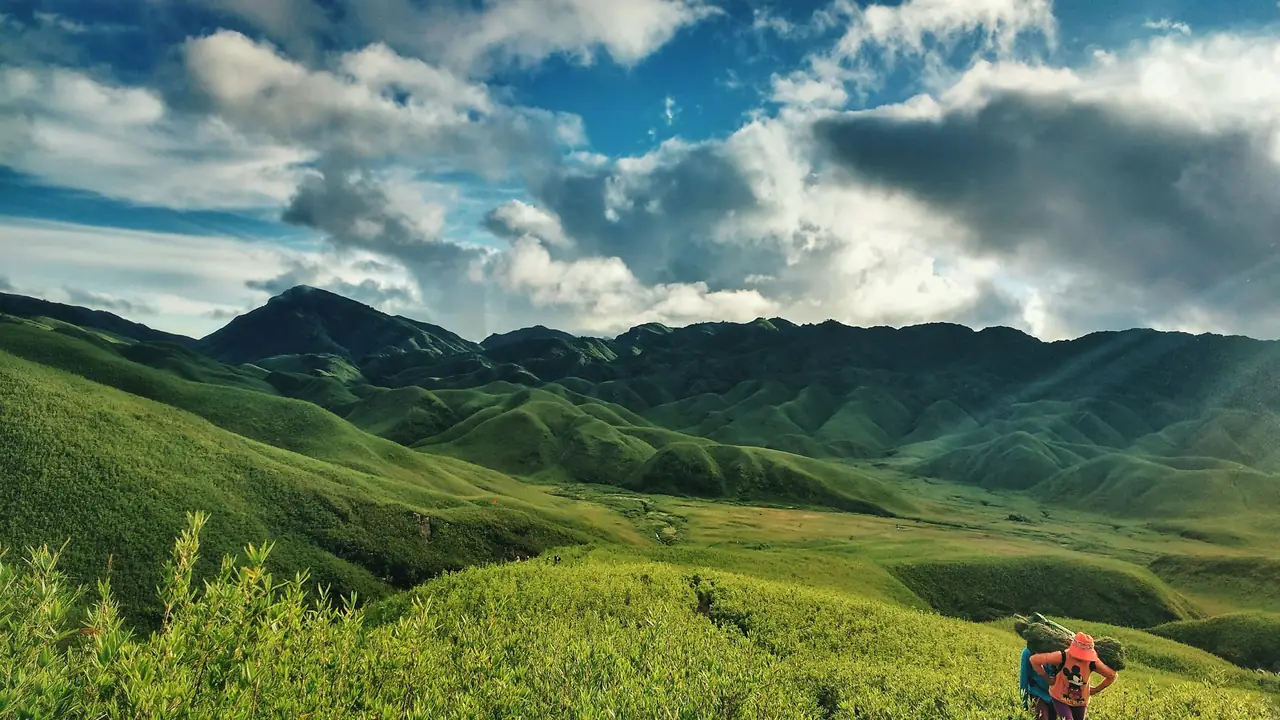
A high valley of rolling green hills on the Nagaland–Manipur border, reached by a steep trek from Viswema or Jakhama (Zakhama), south of Kohima. Most people stay one night in the basic rest house or tents. The valley is greenest in the monsoon, and the Dzukou lily flowers in its summer season (see Nagaland Tourism) — but the trails are muddy and slippery in the rains.

Mokokchung — The Ao Heartland
The cultural centre of the Ao Naga, north-east of Kohima. Old villages such as Ungma and Longkhum, hilltop views and a slower pace make it a good break on the long road to the far north.
Mon & Longwa — The Konyak North
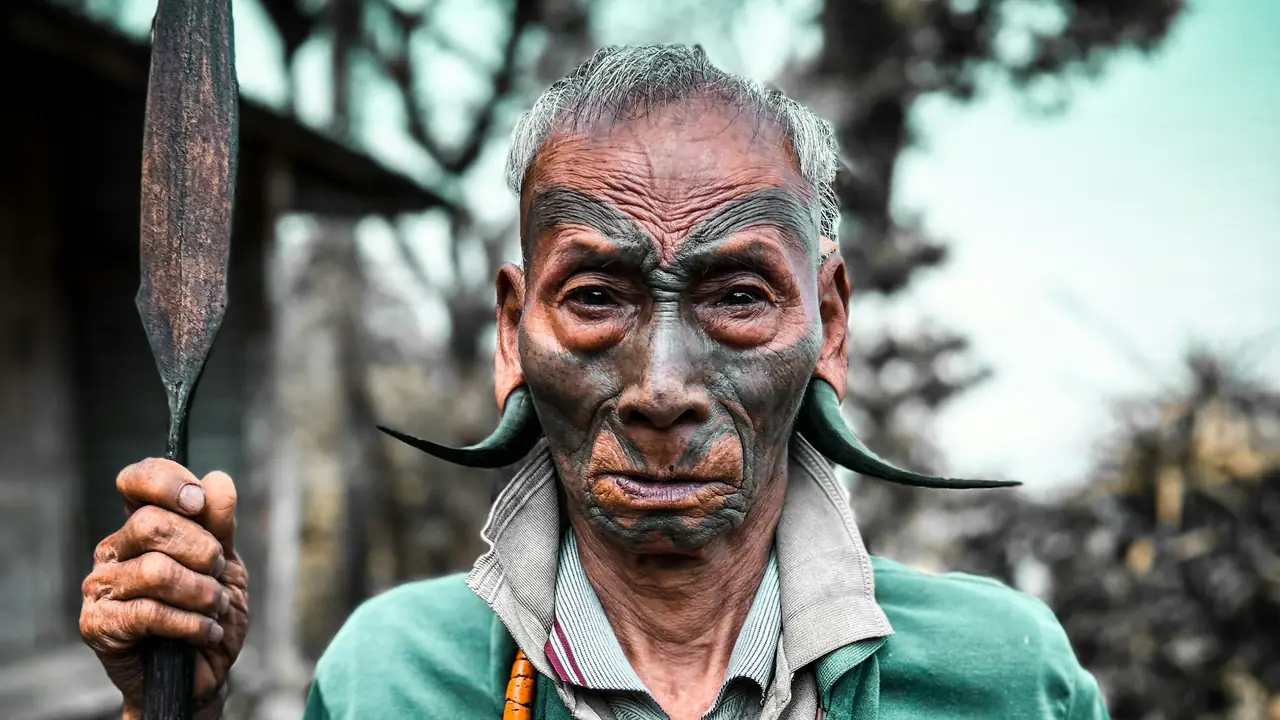
Home of the Konyak Naga, near the Myanmar border. In Longwa the international border runs through the village chief’s house. It’s remote, the roads are slow and rough, and it’s best visited with a local guide and plenty of time. Foreign visitors should check the permit position for border areas before planning it.
Pick the route that fits your dates
Nagaland works at three lengths. Dimapur is the gateway for all of them; build in a buffer day, because roads set the pace here.
Kohima, Khonoma & Kisama
Day 1 arrive at Dimapur and drive to Kohima, about 3 hours · Day 2 Kohima — War Cemetery, museum and market · Day 3 Khonoma village with a local guide (stay the night if you can) · Day 4 Kisama Heritage Village, then back to Dimapur. Add a day if your flight lands late.
Adding the Dzukou trek & Mokokchung
Days 1–3 Kohima and Khonoma · Day 4 Kisama Heritage Village, staying near Kohima · Day 5 trek into Dzukou Valley from Viswema or Jakhama (Zakhama) and stay the night · Day 6 trek out and return to Kohima · Day 7 drive Kohima to Mokokchung, about 6 hours · Day 8 Mokokchung’s villages, then out via Jorhat in Assam. Check trail conditions locally before the Dzukou trek, especially after rain.
Nagaland end to end
Days 1–7 as the eight-day route · Day 8 Mokokchung’s villages · Day 9 drive Mokokchung to Mon, about 210 km and a full day · Days 10–11 Mon and Longwa with a local guide · Day 12 exit through Sonari or Sivasagar into Assam — see our Assam guide · Day 13 a buffer day, because roads in the north are slow.
Six things worth building the trip around
- Spend a day at the Hornbill Festival at Kisama (1–10 December) — and book your room in Kohima months ahead.
- Walk through Khonoma’s terraces and stone gateways with a village guide, and stay the night in a homestay.
- Trek into Dzukou Valley and sleep among the rolling hills — with a local guide, and only when trails are safe.
- Stand quietly at the Kohima War Cemetery, on the slopes where the 1944 battle was fought.
- Try smoked pork with bamboo shoot, and food made with axone (fermented soybean) and raja mircha, the fiery king chilli.
- Ask before photographing people, and let a local guide introduce you in villages — it changes how people receive you.
Where to stay
Kohima has the widest choice, from simple hotels to a few comfortable stays — book months ahead for Hornbill week, when rooms fill and prices rise. Village homestays in Khonoma and around Kisama are the best way to understand Naga life. Dzukou has only a basic rest house and tent sites, and Mon and Mokokchung have simple hotels and homestays.
How to get around
Dimapur is the gateway, with the state’s airport and main railway station; Kohima is about 3 hours away by road. Guwahati, in Assam, has more flights and trains, but adds a long road journey. Within Nagaland, a car with a local driver is by far the easiest way to reach villages and trailheads; shared taxis run between the main towns.
What to eat
Naga food is smoky, spicy and built around pork, rice, bamboo shoot and fermented flavours. Try these at least once:
- Smoked pork with bamboo shoot
- Axone (fermented soybean) dishes
- Galho (rice and vegetable porridge)
- Raja mircha (king chilli) chutney
- Anishi (Ao taro-leaf dish)
- Rice with boiled greens
- Sticky rice snacks
- Local tea
Small things that make a big difference
Do this
- Apply for your Inner Line Permit online before you travel at the official ILP portal — carry a printed or digital copy.
- Hire a local guide for villages, Dzukou and the north; they open doors that are otherwise closed.
- Ask before photographing people or entering homes and morungs.
- Carry cash — ATMs are limited outside Kohima and Dimapur.
- Plan around Sundays — many shops and some sights close in this largely Christian state.
Avoid this
- Don’t arrive without an Inner Line Permit — it’s checked at entry points. Foreign visitors also need a Protected Area Permit.
- Don’t leave Hornbill-week rooms to the last minute; Kohima fills up.
- Don’t trek Dzukou in heavy rain or without checking conditions locally.
- Don’t expect to buy alcohol easily — Nagaland has a liquor prohibition law.
Common Nagaland questions
Do I need a permit to visit Nagaland?
Yes. Visitors who aren’t indigenous inhabitants of Nagaland, Indian or foreign, need an Inner Line Permit — apply online at the official ILP portal. For Indian tourists it costs ₹200 for 30 days and needs a photo and one ID document such as Aadhaar, PAN or a voter ID. Tourists don’t need a guarantor, but must give a local contact on the application — for example, your hotel or homestay. Foreign visitors need an ILP (₹500 for 30 days) and a Protected Area Permit — apply for the PAP on the official e-FRRO portal (see Nagaland Tourism’s entry-permits page). The Protected Area Permit exemption for Hornbill 2025 ended on 10 December 2025; don’t assume it will be repeated in 2026.
When is the Hornbill Festival?
Every year from 1 to 10 December at Kisama Heritage Village, about 10–12 km from Kohima. The 2026 festival runs 1–10 December. Book accommodation and transport well ahead.
What is the best time to visit Nagaland?
October to May is the most reliable, with December for the Hornbill Festival — it gets cold in Kohima in winter. June to September is the monsoon: Dzukou is at its greenest, but expect landslides, muddy trails and slow roads.
How do I reach Nagaland?
Fly or take a train to Dimapur, then drive about 3 hours to Kohima. Guwahati has more connections but adds a long road journey.
How many days are enough for Nagaland?
Four days cover Kohima, Khonoma and Kisama. Eight add the Dzukou trek and Mokokchung without backtracking, and 11–13 let you reach Mon and Longwa in the Konyak north.
Plan your Nagaland trip with Travel India
Whether you want Hornbill week in Kohima, a village stay in Khonoma with the Dzukou trek, or a slow route north to the Konyak villages, Nagaland can be planned around your dates, budget and travel style.
Photos via Unsplash: hero — Arindam Saha, Kohima — Vipin Joseph, Kisama — Mohamed Abdul Rasheed, Khonoma — Ahe Phucho, Dzukou — Arindam Saha, Mokokchung — Muzafar Riyaz, Longwa — shamnas Cv.
Written by Ashvinee Nagle
I travel India slowly and write it down honestly - practical guides and real itineraries from someone who lives here.
About Ashvinee →