
Ranchi: The Plateau Capital and Its City of Waterfalls
A practical guide to Ranchi — the waterfalls that ring it (Hundru, Dassam, Jonha), the scenic Patratu Valley, the hill temples, parks and museums in the city, and how to use Jharkhand’s capital as the base for a plateau trip.
Ranchi, the capital of Jharkhand, sits high on the Chotanagpur plateau, and its cooler air once made it the summer capital of undivided Bihar. It is a working city rather than a pretty one, but it is ringed by some of the finest waterfalls in eastern India — Hundru, Dassam and Jonha all within an hour or two — and backed by the switch-backing Patratu Valley, the hill temples of the city, and a scatter of parks and museums. For most travellers Ranchi is the gateway and base for Jharkhand, and a rewarding couple of days in its own right.
Ranchi, Jharkhand’s capital on the Chotanagpur plateau, is the state’s gateway and the base for its waterfall country. The big draws are the waterfalls — Hundru (the state’s highest), Dassam and Jonha — and the scenic Patratu Valley an hour away, plus the Pahari Mandir hill temple, Rock Garden, Tagore Hill and the tribal museum in the city. Give it two to three days, come October to March (the falls are fullest just after the monsoon), and travel out from here on a Jharkhand trip.
Why visit Ranchi
Three reasons Ranchi is the natural base for a Jharkhand trip.
A city ringed by waterfalls
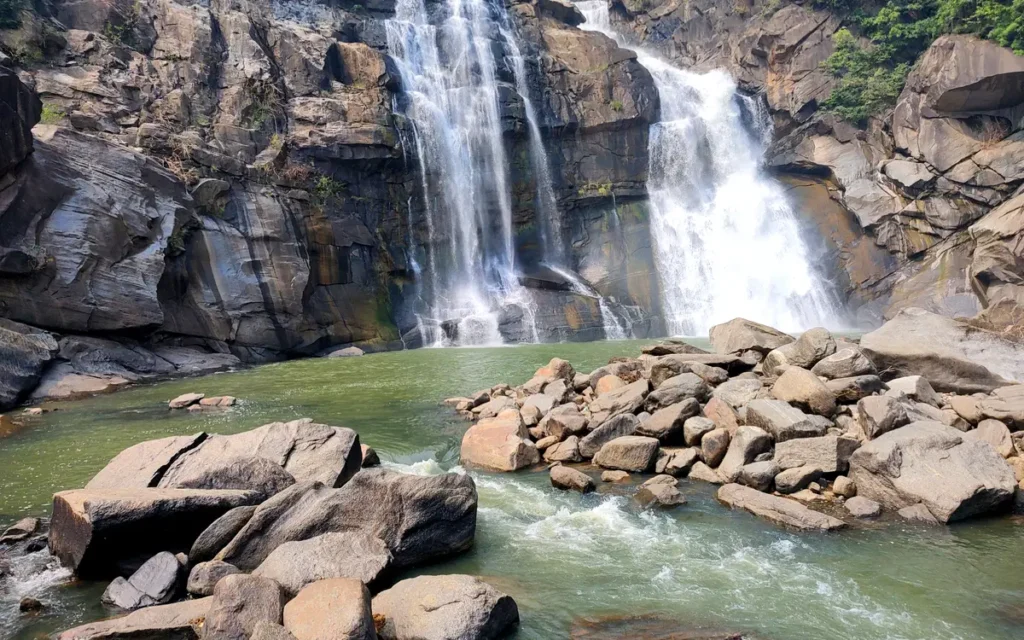
Few state capitals have this: Hundru (the state’s highest, on the Subarnarekha), Dassam and Jonha all thunder off the plateau edge within an hour or two of the city, at their spectacular best just after the monsoon.
The Patratu Valley
An hour from the city, the Patratu Valley ghat road switch-backs down a forested escarpment to a blue reservoir — one of the most scenic drives in eastern India and Ranchi’s signature day out.
The plateau gateway
Ranchi has the state’s main airport and best hotels and transport, so it’s the practical hub from which to reach Netarhat, the Betla forests, Deoghar and the rest of Jharkhand.
When to go
Ranchi sits high enough to be milder than the plains, but season still shapes the trip — especially for the waterfalls.
October to March (the season): cool, clear and comfortable for the city, the falls and the Patratu drive. The best overall window.
September to November (waterfalls at full flow): just after the monsoon the falls are at their thundering best. Spectacular, though spray and slippery rocks call for care.
April to June (hot): the plateau warms up and many falls shrink; doable but less rewarding. July–September brings the monsoon that feeds the falls but makes them dangerous up close.
Things to do in & around Ranchi
The waterfalls and the Patratu Valley are the headline; the city’s temples, parks and museum fill out a couple of days.
Hundru Falls
The Subarnarekha river drops around 98 m at Hundru, the highest waterfall in Jharkhand, about 45 km from the city. Steep steps lead down to viewpoints and pools; it’s at its most dramatic just after the rains.
Dassam & Jonha Falls
Dassam (a broad ~40 m curtain on the Kanchi river) and Jonha, also called Gautamdhara (a hanging-valley fall with a hilltop shrine), lie south-east of the city and pair naturally into a waterfall day.
Patratu Valley
About 40 km away, the Patratu Valley ghat road coils down a forested escarpment to the Patratu dam and reservoir, with viewpoints, boating and cafes. The drive itself is the attraction.
Pahari Mandir & Tagore Hill
The Pahari Mandir, a Shiva temple atop Ranchi Hill, gives city views after a stair climb, while Tagore Hill at Morabadi is a leafy knoll tied to the Tagore family — easy in-city escapes.
Rock Garden & Kanke Dam
The terraced Rock Garden beside Kanke Dam, with boating on the reservoir, is a relaxed late-afternoon stop on the city’s edge.
Tribal museum & temples
Ranchi’s tribal research museum is the best primer on Jharkhand’s Adivasi cultures, and the 17th-century Jagannath Temple (a smaller cousin of Puri’s) and the Sun Temple at Bundu add a devotional note.
What to eat
Ranchi is the best place to try Jharkhand’s tribal-rooted food alongside the usual city fare.
Dhuska & litti
Dhuska (a deep-fried rice-and-lentil snack, often with ghugni) and litti chokha are the local staples, from street carts to simple eateries across the city.
Rugra & bamboo shoot
In season, look for rugra (a wild mushroom prized across Jharkhand), bamboo-shoot dishes and pittha (steamed rice dumplings) in local and tribal-cuisine kitchens.
Cafes & restaurants
Around Lalpur, Main Road and the newer malls you’ll find cafes and multi-cuisine restaurants for familiar food and good coffee.
Water & snacks
The waterfalls are out of town with limited stalls. Carry water and snacks, and grippy shoes for the wet, steep steps.
Where to stay
Ranchi has the widest range of stays in Jharkhand — the obvious base for the city and its waterfall country.
Business & mid-range hotels
The city has the state’s best choice of business and mid-range hotels, around Main Road, Lalpur and the airport road — convenient for day trips to the falls and onward travel.
Guesthouses & lodges
Plenty of budget hotels and lodges cluster near the railway station and in the city centre — cheap and handy if plain.
Patratu stays
A few resorts and the Patratu Lake Resort sit by the reservoir if you want to overnight at the valley rather than day-tripping it.
Getting there and around
By air: Birsa Munda Airport at Ranchi is Jharkhand’s main airport, with frequent flights to Delhi, Kolkata, Mumbai, Bengaluru, Hyderabad and more.
By train: Ranchi Junction and Hatia are well connected across the country, and the city is the rail hub for the plateau.
Getting around: app cabs and autos cover the city. The waterfalls and Patratu are spread out with limited public transport, so hire a car with a driver for the day — the simplest way to string the falls together.
Ranchi is the hub of any Jharkhand trip. From here it’s roughly 4–5 hours west to Netarhat and the Betla forests, and a few hours east to Jamshedpur, Deoghar and Parasnath.
A 2-day plan
Two days cover the waterfalls, the Patratu Valley and the city highlights.
Waterfalls day
Head out early to Hundru Falls while it’s cool, then loop to Dassam and Jonha. Carry water and grippy shoes for the steep, wet steps, and be back in the city by evening.
Patratu Valley & the city
Drive the Patratu Valley ghat road to the dam for the views and a boat or coffee, then back for the city’s Pahari Mandir, Rock Garden and the tribal museum.
Practical tips that actually help
Time the falls after the monsoon
September to November, just after the rains, is when Hundru, Dassam and Jonha are at full flow and most spectacular.
Wear grippy shoes
The waterfall steps are steep and slick with spray. Proper shoes make the descents far safer than sandals.
Hire a car for the day
The falls and Patratu are spread out with little public transport. A car with a driver lets you string them together comfortably.
Don’t swim in spate
Currents and slippery rocks at the falls are dangerous when the rivers run high. Admire from the viewpoints and heed warnings.
Start early
Beat the heat and the day-trip crowds by reaching the first waterfall soon after it opens.
Use Ranchi as your base
It has the airport, the best hotels and the transport links — set up here and day-trip out rather than hopping bases.
Mistakes first-time visitors make
- Visiting the falls in the dry months. By late spring many shrink to a trickle. Come in or just after the monsoon, or in the cool season, for full flow.
- Swimming beneath a waterfall in spate. Post-monsoon currents and rocks are lethal. Stay at the viewpoints when the rivers are high.
- Relying on public transport for the falls. They’re scattered and poorly served. Hire a car with a driver to do them in a day.
- Treating Ranchi only as a transit point. The waterfalls and Patratu Valley are worth two days in their own right before you head deeper into the state.
Planning Ranchi into a Jharkhand trip?
Ranchi is the gateway to Jharkhand’s waterfalls, hills and pilgrimages. Tell me your dates and I’ll build it into a full plateau route.
Ranchi FAQs
What is Ranchi famous for?
Ranchi, the capital of Jharkhand on the Chotanagpur plateau, is famous for the waterfalls that ring it — Hundru (the state’s highest), Dassam and Jonha — and the scenic Patratu Valley, along with hill temples, parks and a cooler climate that once made it a summer capital.
How many days do you need in Ranchi?
Two to three days: one for the waterfalls (Hundru, Dassam, Jonha), one for the Patratu Valley and the city’s temples, parks and museum, and a spare day if you want to slow down or add more falls.
What is the best time to visit Ranchi?
October to March for comfortable weather. For the waterfalls at full flow, come just after the monsoon, from September to November. Avoid the hotter April–June months, when many falls shrink.
How do you reach Ranchi?
Ranchi’s Birsa Munda Airport is Jharkhand’s main airport, with flights to Delhi, Kolkata, Mumbai and other cities, and Ranchi Junction and Hatia are major railway stations connected across the country.
Which waterfalls can you visit from Ranchi?
The main ones are Hundru (about 45 km, the state’s highest), Dassam and Jonha (Gautamdhara), all within an hour or two, plus Hirni and Panchghagh further out. They’re best just after the monsoon and easiest to combine with a hired car.
Is the Patratu Valley worth visiting?
Yes. The Patratu Valley, about 40 km from Ranchi, is one of eastern India’s most scenic drives — a ghat road of hairpin bends dropping to the blue Patratu dam, with viewpoints, boating and cafes. It’s Ranchi’s signature day out.
Related guides
Keep planning your Jharkhand trip with these:
Jharkhand Travel Guide
Waterfalls, the plateau hill station, tiger-reserve forests and the great pilgrimages — how to put a Jharkhand trip together.
Netarhat
The Queen of Chotanagpur — the plateau’s cool hill station of sunrises and pine forest, west of Ranchi.
Hundru Falls photo by Kingshuk Mondal, CC BY 4.0, via Wikimedia Commons; cropped and converted to WebP.
Written by Ashvinee Nagle
I travel India slowly and write it down honestly - practical guides and real itineraries from someone who lives here.
About Ashvinee →Plan your India trip with us
Get one short, honest India travel guide a week — plus a free 7-day Rajasthan itinerary to start.
Free. Unsubscribe any time.